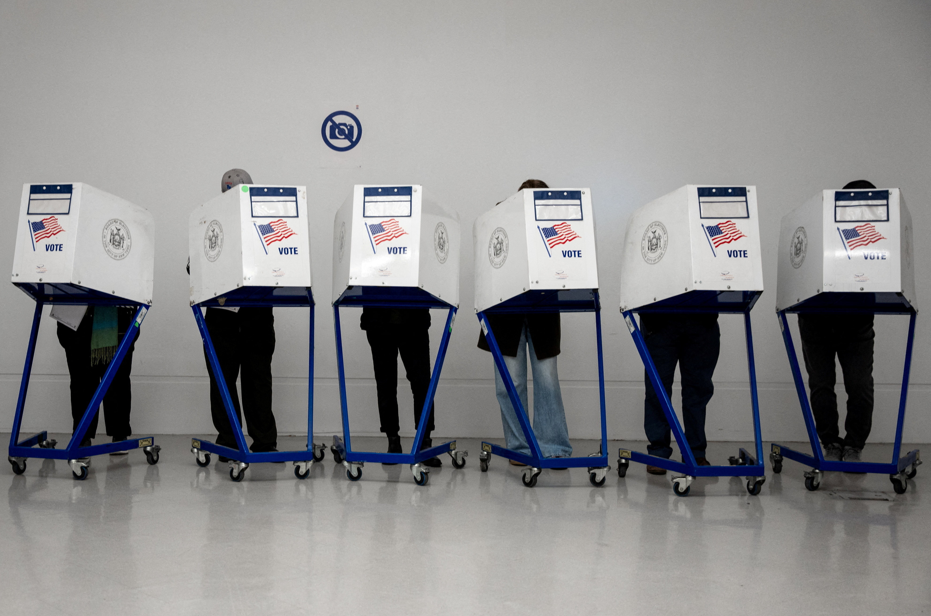
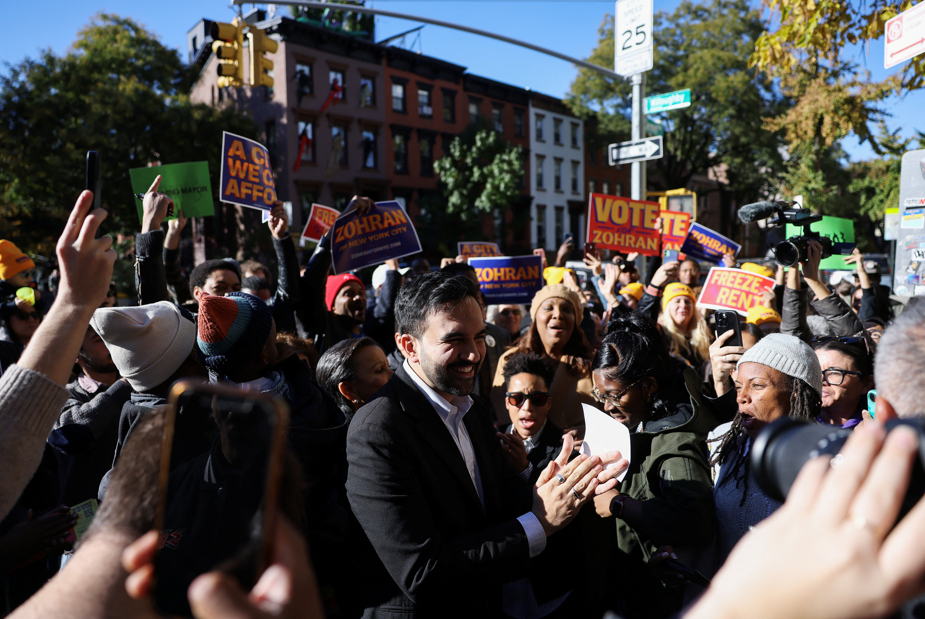
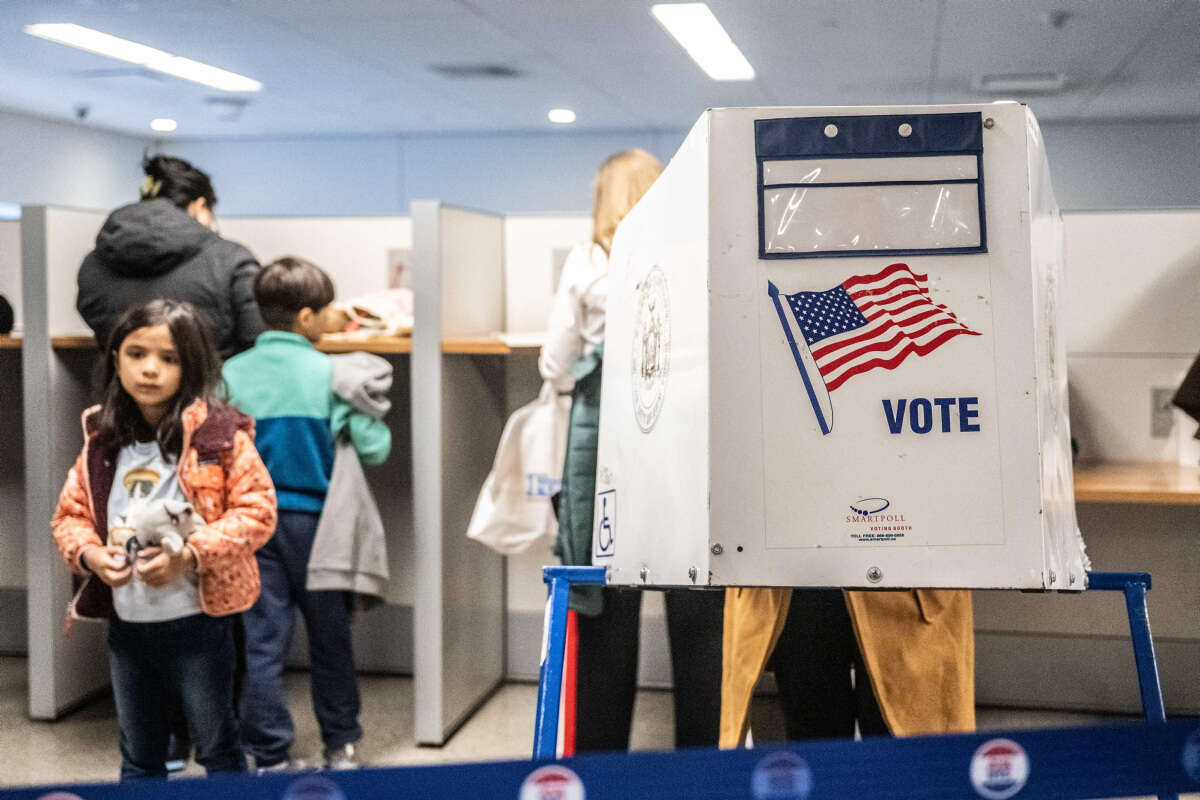
New York woke up Tuesday morning to a historic Election Day that will determine its identity for years to come. Polling stations filled with voters from the early hours, as the three main contenders — state assemblyman and Democratic Socialist candidate Zohran Mamdani, former New York governor Andrew Cuomo, and Republican candidate Curtis Sliwa — fought for every vote.
As of this afternoon, more than one million residents of the Big Apple had turned out, a record for a city election. The atmosphere on the streets reflected a particularly charged campaign, driven not only by local concerns over safety and housing, but also by heated debates surrounding the city's relationship with Israel and its large Jewish community.
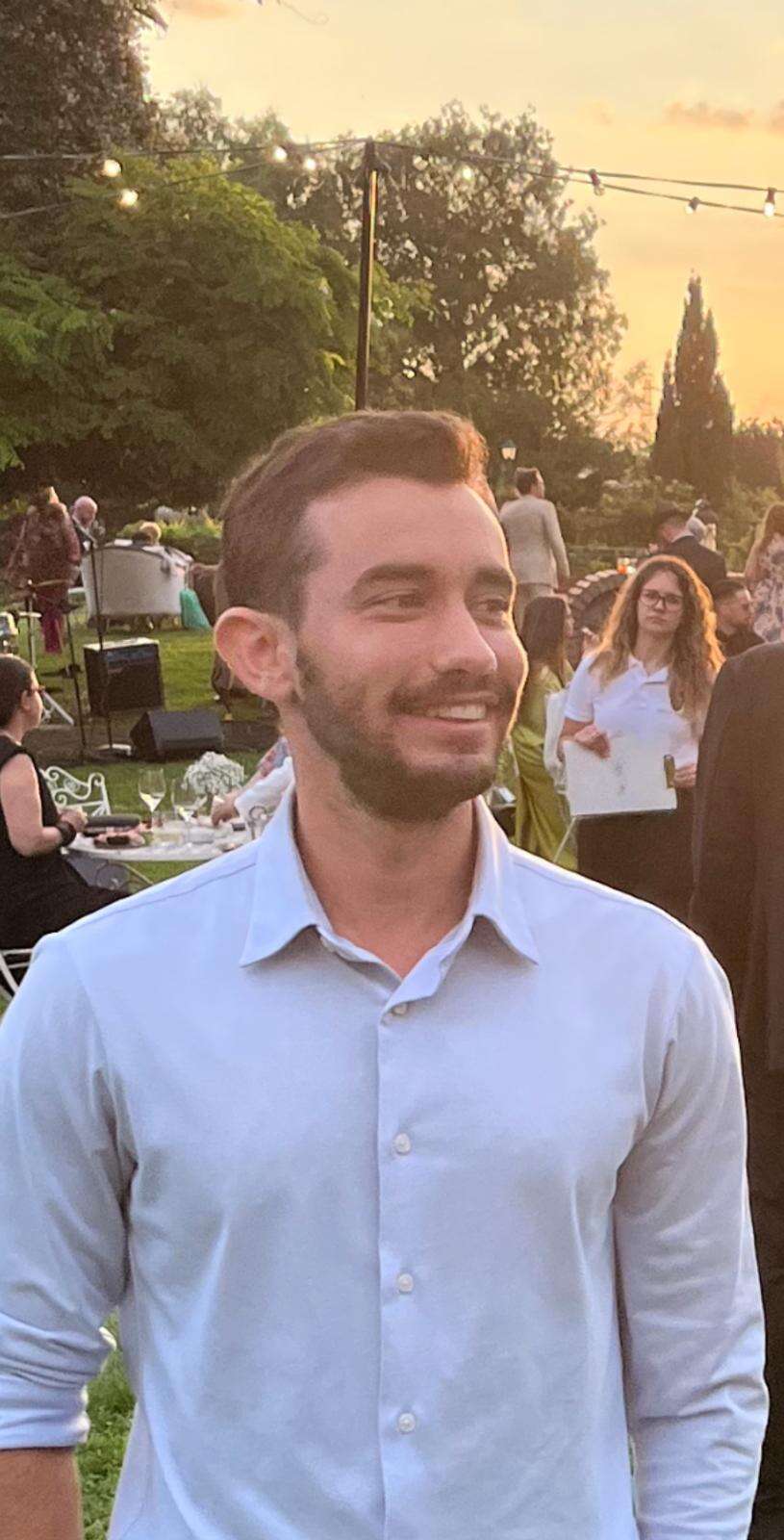
Tomer Mendler, 29, an Israeli who has lived in the city for eight years and works in high-tech, said he would vote for Cuomo, not out of enthusiasm, but out of concern over Mamdani's growing lead.
"I'm voting for Cuomo," Mendler said. "He's not the candidate I would have chosen if there were better options, but given the circumstances, this is what's left. Mamdani represents a vision I just don't believe in. He talks about equality and protecting the weak, but his solutions for issues like the cost of living and crime are dangerous. He wants to inject socialist ideology into a city that is the capital of free-market capitalism, and that doesn't work."
Mendler added that Mamdani's harsh remarks about Israel and the Jewish community only reinforced his decision. "He's made many offensive, borderline antisemitic comments, but even putting that aside, it's about policy and direction. It's not just about who you vote for, it's about what kind of future you're betting on."
Still, Mendler said he does not expect drastic changes for Jewish life in the city if Mamdani wins. "I don't imagine doomsday scenarios where life for Israelis or Jews becomes unsafe," he said. "But his victory could symbolize a win for an extreme worldview that might influence like-minded politicians across the US. That's what really worries me."
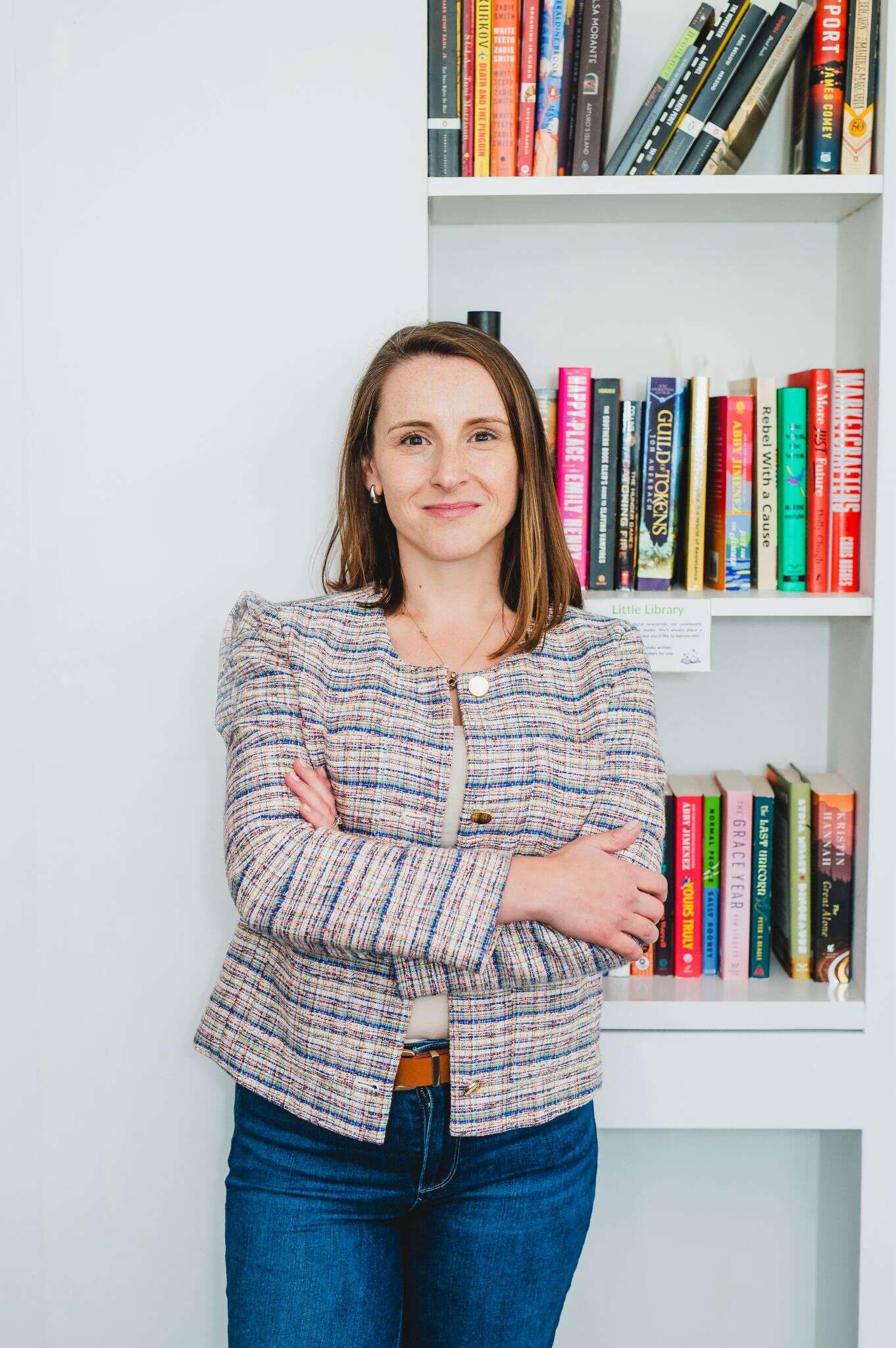
Angie Swenson, a Manhattan resident and granddaughter of Holocaust survivors, was born in Moscow and immigrated to Israel as a child during the Soviet aliyah wave of the early 1990s. She has lived in the US for the 25 years, more than a decade in NYC, and is also voting for Cuomo. "Andrew Cuomo has the experience in New York City's government. He was a governor, and he understands the work that needs to be done as a politician, perfect or not," she said.
"I wanted the person that will have the experience that speaks for the Jewish community in New York and all over the United States. I wanted a representative that wore the hostage pin when he would appear in public appearances. I wanted an ally to the Jewish community and beyond. He's not perfect, but he's an ally."
Speaking passionately about Mamdani, Swenson added, "he represents everything that I fled from, that my family fled from, is communist rhetoric, the socialist approach, the inability to stand with the Jewish community and denounce the actions of a terrorist group on October 7th."
"The rhetoric of him equating the NYPD to the IDF in such a negative and abhorrent light that he said something not too long ago, if the boot of the NYPD is on your neck, be sure that it is with the IDF, The list just continues to go on. The defunding of the police, making public grocery stores, public busing. These are things that my parents experienced and lived through in Soviet Russia in the 1960s and 70s and 80s and 90s," Swenson added.
Swenson said she has been working in recent days with a Russian-Jewish political action committee (PAC) aimed at convincing Republican voters to back Cuomo. "As a descendant of Holocaust survivors, as a Jew, as an American Israeli, this election represents a turning point in my life and in my Jewish children's lives for the future." she said. Swenson added that she and her American Jewish husband have even discussed moving to Israel if Mamdani wins.
At polling stations in Astoria, voters described the election as "the most important of our lives," while others were more pessimistic. One told the New York Post, "The best we can hope for is that the city doesn't get any worse."
Tension was also evident on Wall Street, with reports that several financial firms are considering relocating operations if Mamdani wins. Meanwhile, in Brooklyn, young supporters carrying "Hot Girls for Zohran" signs reflected the enthusiasm surrounding the young socialist candidate.
Andrew Cuomo cast his vote Tuesday morning in Manhattan, joking with reporters that he was "still deciding" whom to choose, but taking a clear jab at his rival: "If anyone can protect New York from Trump, it's me," he told journalists.
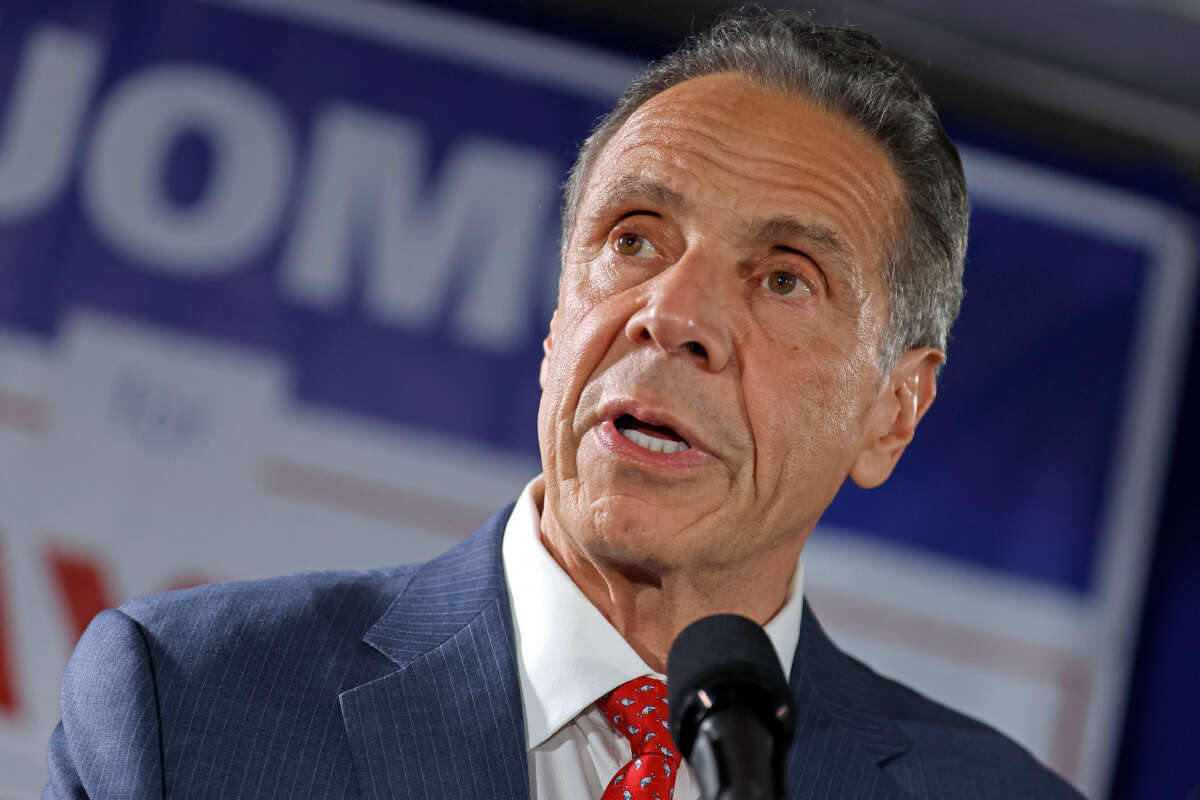
His remark came after US President Donald Trump said he would prefer Cuomo over Mamdani or Sliwa. "If Mamdani becomes mayor," Trump said, "I'll cut through him like a knife through butter."
As polls prepared to close, New Yorkers were gripped by unprecedented tension. A city of eight million residents — home to hundreds of thousands of Jewish voters and diverse communities from around the world — stands at a crossroads: between experienced continuity and bold new identity. The streets were filled with a rare mix of hope, fear, and civic responsibility. "This city has always known how to survive," said one voter leaving the polls. "The only question is, which New York will wake up tomorrow morning?"