

It was cold this week in New York. Cold and beautiful. On some days, the temperature hovered around freezing, but the atmosphere broadcast holiday spirit. From the crowds storming the stores to take advantage of Thanksgiving sales, to the Christmas decorations already twinkling on every street corner. All the markets have already opened, offering all kinds of foods and souvenirs. In short, another December has begun. Business as usual.
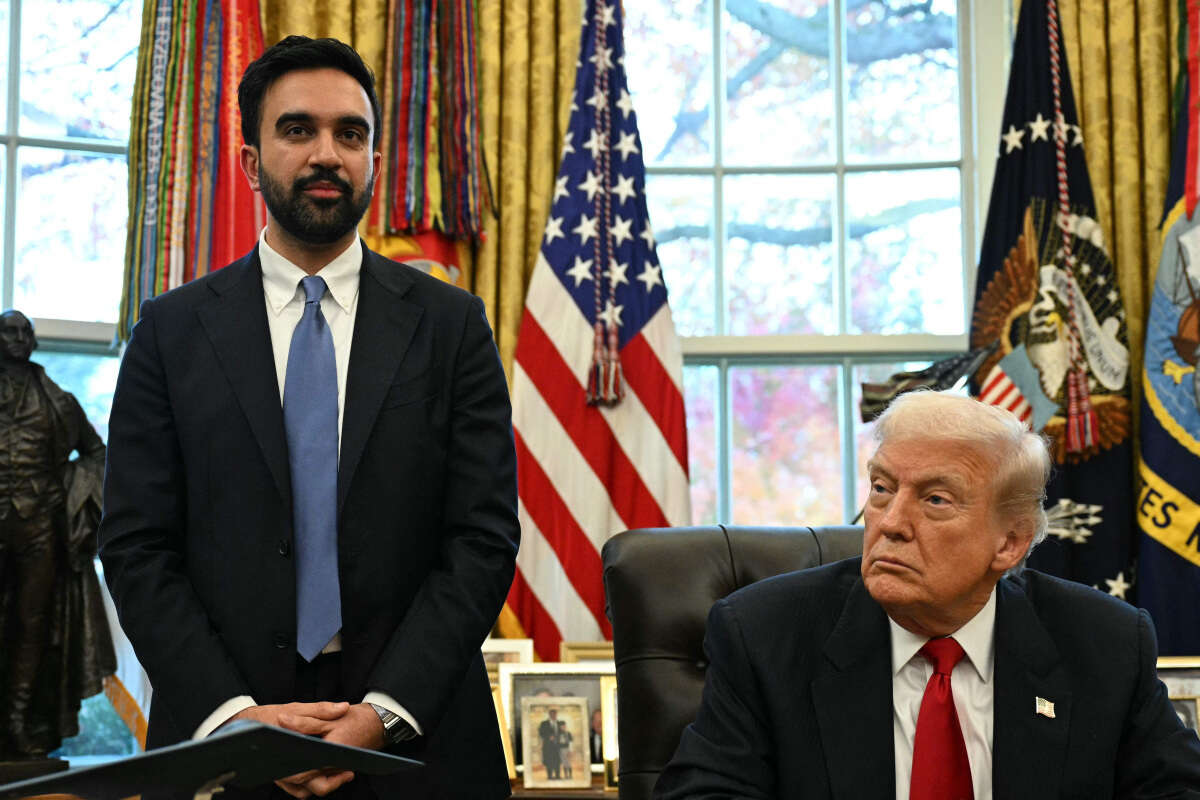
Well, not quite. A question mark now hovers over New York, larger and brighter than any lit Christmas tree. His name is Zohran Mamdani, and he brings with him troubling uncertainty to a city that needs certainty more than anything else. "We'll have to wait and see what happens," Hillary Clinton said when I asked her about Mamdani at the Israel Hayom conference held Tuesday in New York. Others were more direct. Sylvan Adams said Mamdani is a "Trojan horse" supported by Qatar.

The election of Mamdani reflects deep currents that may not have been fully understood. There is protest against the establishment, protest against the cost of living, and more than anything, there is a clear cry from the younger generation. Among voters under 30, Mamdani received a share of the vote reminiscent of Assad in his better days in Syria. True, this is Democratic New York, but it would be a mistake to treat his election as a local event: Mamdani represents something, and that something is very concerning for the US, for American Jews, and for the State of Israel.
Our tendency in Israel is to think that Trump will sort everything out. And if not, AIPAC will pull whatever levers are needed and sort everything out. In short, everything will be okay. The problem is that reality signals to us in every possible way that things are not okay. Not only because Trump will not remain president forever, and even within the Republican Party, there are today quite a few voices openly distancing themselves from Israel, but because Israel – always a protected flower in the American political discourse – has turned into a poisonous fruit.
This is especially evident among young people. Clinton said that half of Americans now consume news from social media (most of them young, of course), and on social media, the anti-Israeli and anti-Jewish discourse dominates. A prominent representative of this phenomenon is the popular and ultra-conservative host Tucker Carlson, whom Gilad Erdan aptly described this week as "Qatar Carlson," hinting at his harmful and dangerous influence.
This influence steadily seeps into the mainstream media as well. Last month, during a short visit to Chicago, a Jewish congressional candidate told me that in an interview he gave to the media, out of six questions asked, four were about Israel. And this is someone meant to represent his district with all its residents and their issues, of which Israel is probably the last of them.
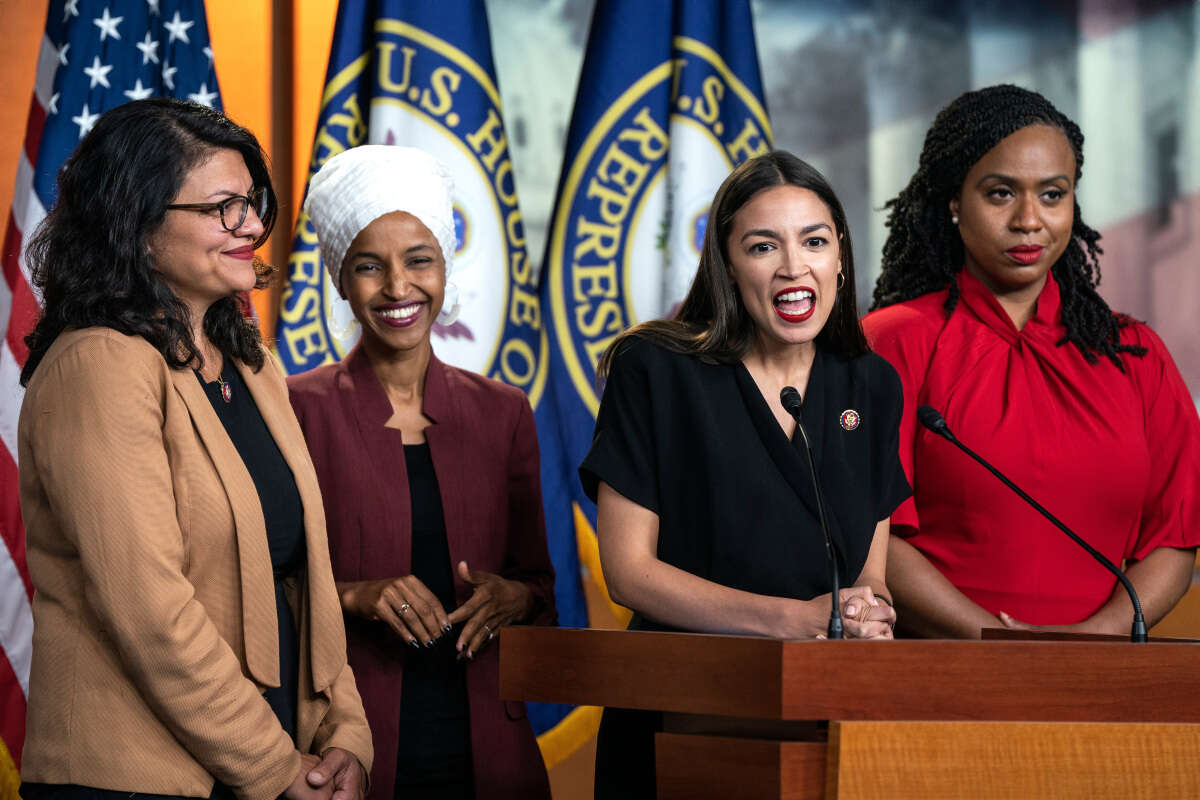
It is unclear how far the phenomenon will expand geographically within the US and ideologically in its radicalism. But after Mamdani's election, it's clear that nothing can be ruled out. Not even that Alexandria Ocasio-Cortez will become the Democratic Party's presidential nominee. Clinton, who a decade ago led the party and ran as its presidential candidate, did not hide her dissatisfaction with what's happening in her former political home. Still, she said, Israel would be mistaken to think its problem in the US is partisan: it's generational.
And Israel is doing nothing about this problem. Erdan, who served as ambassador to the UN and Washington and knows a thing or two about the subject, said it's a "failure of the government." Clinton was sharper, saying that among all the bodies she has encountered in her life, "Israel has the worst public relations." One could interpret her remarks in two ways. One, that the world is so hypocritical and biased that it readily embraces any anti-Israel idea. The second, that Israel simply does public diplomacy poorly. If I may interpret Clinton, she meant both just in reverse order: Israel does poor public diplomacy, and does not make it difficult for the world (hypocritical and biased as it is) to embrace any anti-Israel idea.
There is no way to explain this failure, whose consequences are destructive across every time frame and every relevant group (Israelis, Jews, and foreigners alike). It's unclear why the government doesn't wake up and act to recruit the best forces – and there are excellent forces on both sides of the ocean – into a war plan that would be launched immediately, backed by technology, government, and private funding. Qatar is doing exactly this to blacken Israel's image, and there is no reason for Israel to leave the field empty. It's time to launch a counteroffensive before the situation truly gets out of control.
This message arose from many conversations held at and around the conference in New York. It stood out particularly against the backdrop of the strong connection between American Jewry and Israel, and the strong connection between the current American establishment and Israel. It was impossible not to be moved by the warm embrace, a product of a long war and deep concern. And if there is one message that should have traveled from New York to Jerusalem, it is this: wake up.
The news from Israel doesn't really relent, even in New York. Here, a Syria incident with reservists wounded in an encounter with members of an extremist jihad organization; there, an incident in Gaza with Golani reconnaissance fighters wounded in an encounter with Hamas operatives who emerged from a tunnel. Both fronts naturally occupied the conference attendees. Clinton said Israel must not allow Hezbollah to reestablish itself in Lebanon. The US ambassador to the UN, Mike Waltz, spoke of the freedom of action Israel has in Gaza.
Behind the scenes, the Americans sought to understand where Israel is heading. They are convinced that Netanyahu intends to heat up all fronts. First Lebanon. Then Gaza. And later Iran. It seems this sentiment also emerged from the quotes Barak Ravid brought on Channel 12 News from the phone call between Trump and Netanyahu, in which Trump reportedly asked Netanyahu to calm things down.
It's not certain that the Americans care about all fronts equally. For now, the White House's "baby" is the regime in Syria, and it wants to allow it to stabilize. One needs a heavy dose of optimism or naivety to believe anything good can come out of this Syria, headed by an arch-terrorist and backed by Erdogan's Turkey. Therefore, it is good that Israel is suspicious. However, it might want to poke fewer eyes: Netanyahu's visit to the Syrian Golan last week had no real security value, and was entirely for PR for political purposes (and to dodge another day of testimony in his trial).
In Gaza, too, Washington asks Israel not to touch it. Meaning: to touch only what directly threatens it, and even then only moderately. Don't go crazy, don't blow up the agreement. The Americans still believe it will be possible to move to the next stage of the agreement, in which Gaza will be demilitarized and rebuilt under foreign forces and a non-Hamas administration. Blessed is the believer, though in the meantime, the Americans are beefing up the headquarters they established in Kiryat Gat to oversee what's happening in Gaza (where Hamas is steadily fortifying its power).
In Lebanon, the situation is different. A year after the cease-fire agreement, the Lebanese army is not truly fulfilling its part in effectively taking control of southern Lebanon, which includes dismantling Hezbollah's military infrastructure. Israel is indeed operating and threatening to significantly expand the campaign, but it is not enough to stop Hezbollah's rebuilding activity. In recent weeks, it seemed almost every moment that the die had been cast, and yet Israel granted additional opportunities for a change of course. This waiting period will likely last at least until after the planned meeting between Netanyahu and Trump, expected to take place before Christmas.
Security issues are good for Netanyahu: they are his forte and help distance him from the political and legal swamp. Yet it is hard to escape the disturbing sense that these issues are intertwined. In his conversation with Trump, Netanyahu asked the president to press again on the pardon issue. The American president, as noted, asked to calm things down in Syria and Gaza. One could claim there is no connection between the matters, but the fact that they were raised in the same conversation is the crudest, most blatant, most improper mixing of international and personal matters, of security and criminal issues, of the State of Israel and Benjamin Netanyahu.
The topic of pardon also reached New York. The Americans (and Israelis) wanted to know how the president of Israel would act. No one had a good answer, because it seems President Isaac Herzog himself has yet to decide. Here, too, an uncomfortable feeling hangs in the air about how things are being handled: from Netanyahu's request, not submitted in the proper manner, to Herzog's poor response.
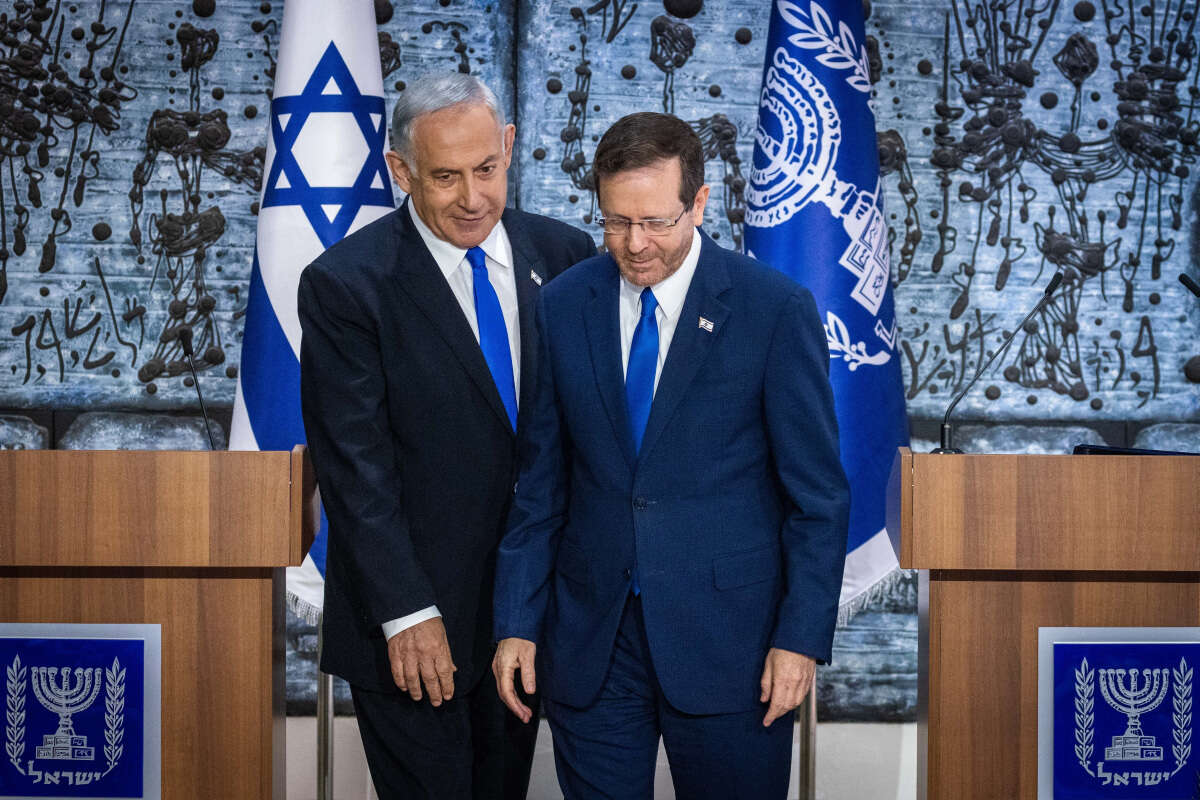
Herzog should have sent Netanyahu to the Attorney General. She is the authority authorized to conduct such negotiations. That would also have shown whether Netanyahu's intentions to focus on healing and unity were serious, or empty words like so many things he has said regarding his trial. For example, that he could be prime minister while conducting a criminal trial at the same time, or that he was determined to conduct his trial to the end to prove his innocence. These are not Netanyahu's first lies, nor his worst. To rely on an old Supreme Court ruling, such statements by Netanyahu were "truths of the moment."
This week, Herzog canceled a meeting with Yair Golan, who said it was clear to him how Herzog's father would have handled such a pardon request (throwing it out entirely). Herzog was offended, but Golan is right. There is no chance that Chaim Herzog would have cooperated with the current madness, which bears no resemblance to the Bus 300 affair in which the elder Herzog granted a pardon to senior Shin Bet officials. There, the involved parties acted (improperly) for the good of the state and gained nothing from it; here, Netanyahu acted for his personal and political benefit, and the State of Israel gained nothing. There, the involved parties accepted responsibility and guilt and resigned; here, Netanyahu refuses to accept responsibility or guilt and demands to continue as if nothing happened.
In a normal world, this request should indeed have been thrown out entirely, because all are equal before the law, first and foremost, the prime minister. But our world is not normal, and the defendant has done everything to blacken the justice system (and then claim the public has no trust in it), exactly as he did regarding the state inquiry commission and other matters. Therefore, if Netanyahu seeks correction, the correction should begin with what he gives and not with what he gets. First, the draft-dodging law should be repealed, and immediate conscription of the ultra-Orthodox should begin. And the laws against the justice system and the media should be repealed. And a state inquiry commission should be established. And overdue responsibility for October 7 should be taken. And he should give an interview: a real interview, with real questions and real answers.


