Israel Hayom is a media organization founded on the belief that the Israeli public deserves better journalism—more balanced, more accurate, and more reliable. Journalism that speaks rather than shouts. Journalism that is trustworthy, objective, and matter-of-fact. A different kind of journalism, offered free of charge. The first print edition was published on July 30, 2007, and in 2010 Israel Hayom became the Israeli newspaper with the highest weekday readership. The newspaper’s publisher is Dr. Miriam Adelson. Its Editor-in-Chief is Omar Lachmanovitch, and its founding editor is Amos Regev. Israel Hayom’s Hebrew and English websites, as well as its Android and iOS applications, provide around-the-clock news coverage, exclusive content, breaking news and updates, analysis and commentary, video, podcasts, and live broadcasts. The digital platforms of Israel Hayom include news and opinion channels covering culture and entertainment, lifestyle, technology, sports, business and consumer affairs, health, military affairs, food, Judaism, tourism, and automobiles. In 2021, a new Hebrew-language website and mobile application were launched to provide users with a fast, up-to-date, secure, and convenient experience. The content of the newspaper’s print edition is also available online through a daily digital edition and can be received via newsletter. “The Israel Hayom Clique,” the publication’s exclusive benefits club, offers website users discounts and special promotions on products and services. Israel Hayom welcomes feedback, criticism, and suggestions for improvement from its readers. You can contact the organization by email at hayom@israelhayom.co.il

Friday Jul 24, 2026
NEWSLETTER
www.israelhayom.com
  • Home
  • News
    • Israel
    • Israel at War
    • Middle East
    • United States
  • Opinions
  • Jewish World
    • Archaeology
    • Antisemitism
  • Lifestyle
    • Food
    • Travel
    • Fashion
    • Culture
  • Magazine
    • Feature
    • Analysis
    • Explainer
  • In Memoriam
www.israelhayom.com
  • Home
  • News
    • Israel
    • Israel at War
    • Middle East
    • United States
  • Opinions
  • Jewish World
    • Archaeology
    • Antisemitism
  • Lifestyle
    • Food
    • Travel
    • Fashion
    • Culture
  • Magazine
    • Feature
    • Analysis
    • Explainer
  • In Memoriam
www.israelhayom.com
Home Commentary

Who really runs Iran?

Iranian President Masoud Pezeshkian apologized on state television to neighboring countries for recent attacks, but missiles and drones continued to strike the Gulf region soon afterward. At the same time, parliament speaker Mohammad Bagher Ghalibaf and other hardline figures publicly rejected the president's statement, showing deep divisions within Iran's leadership and suggesting that real power remains in the hands of the Islamic Revolutionary Guard Corps.

by  Danny Citrinowicz
Published on  03-07-2026 23:05
Last modified: 03-14-2026 23:05
Who really runs Iran?

Iranian President Masoud Pezeshkian. Photo: EPA

Share on FacebookShare on Twitter

Pezeshkian's statement was not a marginal episode. It raises a fundamental question: who is actually in charge of Iran right now? The assumption that the Iranian system was resilient enough to withstand the shock of Supreme Leader Ali Khamenei's assassination, partly because it had long prepared for such a possibility, is now facing serious doubt, especially in light of Israel's continuing strikes on Iranian command and control centers.

Pezeshkian, who can be described as perhaps the weakest president in the history of the Islamic Republic and someone with limited influence in the regime's key power centers, now joins Foreign Minister Abbas Araghchi in suggesting that they are struggling to reach forces on the ground that had already received prior instructions.

Iranian President Masoud Pezeshkian. Photo: Reuters Reuters

In his address to Iran's neighbors on state television, Pezeshkian offered a rather subdued apology for the attacks and called for regional cooperation. "From now on, we will not attack neighboring countries unless they attack us first," he said, referring to attacks launched from their territory. Pezeshkian is one of three members of the temporary leadership council established following Khamenei's assassination, alongside the head of the judiciary and a cleric representing the Assembly of Experts.

Parliament Speaker Mohammad Bagher Ghalibaf, together with other figures from the hardline camp closely aligned with the Revolutionary Guards, responded in unmistakable terms, openly challenging the authority of someone who is theoretically one of the three people tasked with running the country during the interim period until a new supreme leader is selected.

"The defensive policy of the Islamic Republic is fixed and will not change, according to the directives of our martyred imam," the parliament speaker wrote. "As long as American bases exist in the region, countries will not see calm. The source of any attack will be the target of our response."
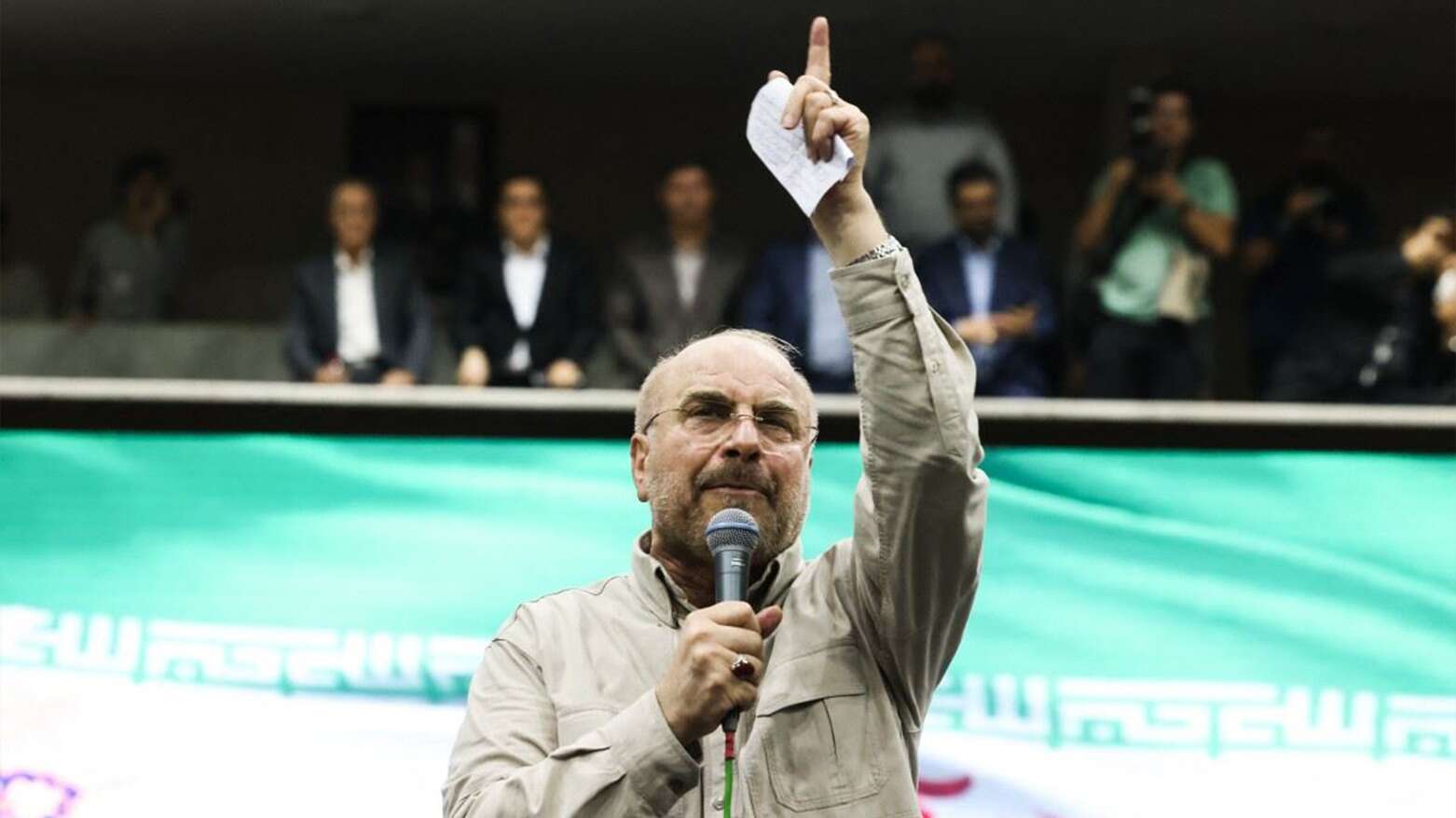
מוחמד באקר קאליבאף. יו"ר הפרלמנט. השפלה לנשיא , .
Parliament Speaker Mohammad Bagher Ghalibaf

The continued attacks point to two possible explanations: either there is a growing disconnect between the political leadership and the security apparatus, or elements within the security establishment are acting independently of the political leadership. What is happening behind the scenes is impossible to see, but when the political leadership says one thing while the opposite occurs on the ground, it signals a mounting challenge within the regime's decision-making system.

Pezeshkian was a weak president even before the war. Khamenei's death may have increased his authority on paper, but in practice the security establishment appears to pay little attention to his statements or directives. He can say whatever he wishes. The reality is that the decisions that matter are made by the security institutions, foremost among them the Islamic Revolutionary Guard Corps.

Every day that Iran delays appointing a new supreme leader deepens the sense of uncertainty within the regime. The system was expected to move relatively quickly after Khamenei's death, but the ongoing hesitation suggests profound internal disagreements over the succession.

One possible outcome is the appointment of Mojtaba Khamenei, the eliminated leader's son. Such a move could raise concerns that the next supreme leader would function largely as a figurehead while the Revolutionary Guards hold the real power.

Mojtaba Khamenei. Photo: From Wikipedia

If that scenario unfolds, it could further complicate Iran's internal power structure and make the situation even more volatile. While Pezeshkian appears to be trying to participate in the decision-making process, or at least signal that he is doing so, the Revolutionary Guards seem to be operating according to their own calculations, with the forces on the ground still guided by instructions that Khamenei issued before his death.

In a sense, the spirit of the supreme leader still governs events. Even the appointment of a successor may not necessarily lead to a departure from the course he set.

Either way, the regime's embarrassing chain of events likely increased pressure to accelerate the decision on Iran's next supreme leader, if only to provide it a sense of certainty.

Tags: IranIran warMasoud PezeshkianRoaring Lion

Related Posts

Israeli ally fumes: 'Reconsider recognition of Armenian genocide'Shalev Man

Jerusalem and Baku owe each other loyalty, not sovereignty

by Shay Gal

The Jewish state does not bargain over truth – and Azerbaijan deserves Israel’s loyalty, not a veto over its memory.

Lindsey was always there when Israel needed himEPA

Lindsey was always there when Israel needed him

by Michael Oren

The Republican senator’s death marks more than the loss of a personal friend: Israel has lost a key ally who...

Will Joseph Aoun bring peace to Lebanon?

Aoun's real test is only beginning

by Shachar Kleiman

The path chosen by Lebanon’s president could transform the country, but it is littered with dangers, from the challenge of...

Menu

Analysis 

Archaeology

Blogpost

Business & Finance

Culture

Exclusive

Explainer

Environment


Features

Health

In Brief

Jewish World

Judea and Samaria

Lifestyle

Cyber & Internet

Sports


Diplomacy 

Iran & The Gulf

Gaza Strip

Politics

Shopping

Terms of use

Privacy Policy

Submissions

Contact Us

About Us

The first issue of Israel Hayom appeared on July 30, 2007. Israel Hayom was founded on the belief that the Israeli public deserves better, more balanced and more accurate journalism. Journalism that speaks, not shouts. Journalism of a different kind. And free of charge.

All rights reserved to Israel Hayom

Hosted by sPD.co.il

  • Home
  • News
    • Israel at War
    • Israel
    • United States
    • Middle East
    • Sports
  • Opinions
  • Jewish World
    • Archaeology
    • Antisemitism
  • Lifestyle
    • Food
    • Travel
    • Fashion
    • Culture
  • Magazine
    • Feature
    • Analysis
    • Explainer
    • Environment & Wildlife
    • Health & Wellness
  • In Memoriam
  • Subscribe to Newsletter
  • Submit your opinion
  • Terms and conditions

All rights reserved to Israel Hayom

Hosted by sPD.co.il

Newsletter

[contact-form-7 id=”508379″ html_id=”isrh_form_Newsletter_en” title=”newsletter_subscribe”]

  • Home
  • News
    • Israel at War
    • Israel
    • United States
    • Middle East
    • Sports
  • Opinions
  • Jewish World
    • Archaeology
    • Antisemitism
  • Lifestyle
    • Food
    • Travel
    • Fashion
    • Culture
  • Magazine
    • Feature
    • Analysis
    • Explainer
    • Environment & Wildlife
    • Health & Wellness
  • In Memoriam
  • Subscribe to Newsletter
  • Submit your opinion
  • Terms and conditions

All rights reserved to Israel Hayom

Hosted by sPD.co.il