

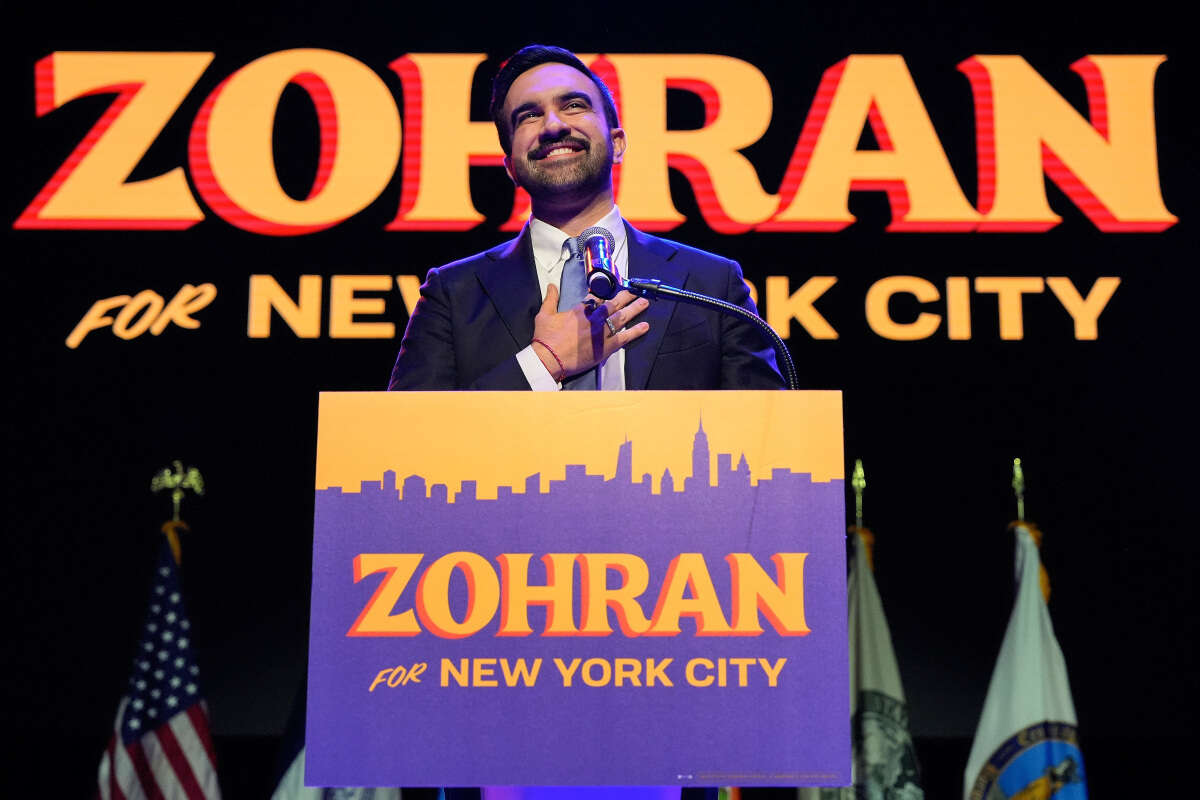
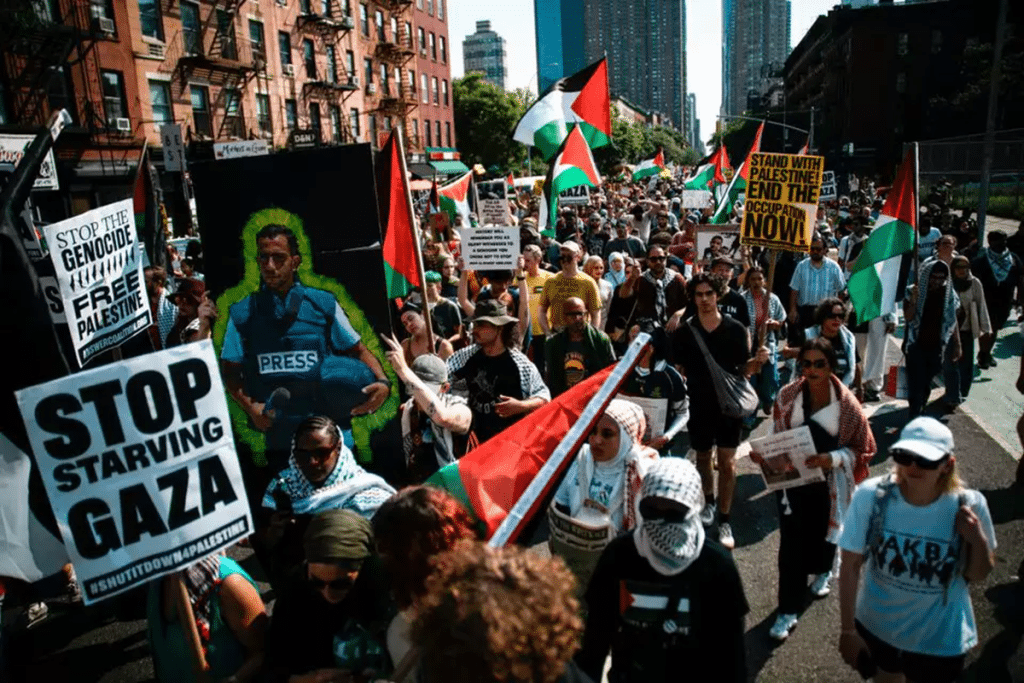
New York City's mayor-elect Zohran Mamdani has not yet taken office, but we've already seen a glimpse of what life can look like for Jewish New Yorkers. Several weeks ago, a pro-Palestinian mob protested outside Park East Synagogue in Manhattan, which was hosting an event by Nefesh B'Nefesh, an organization that supports North American Jews moving to Israel.
Instead of condemning the mob for targeting a modern Orthodox synagogue, Mamdani's spokesperson, Dora Pekec, said, "He believes every New Yorker should be free to enter a house of worship without intimidation," and added, "And that these sacred spaces should not be used to promote activities in violation of international law."
For a long time, I did not want to speak over Jewish New Yorkers who now have to live with a mayor who cannot condemn phrases like "Globalize The Intifada." But I am tired of seeing bad-faith actors tell the worried Jewish community that their concerns are exaggerated, misinformed, or rooted in bad faith. Instead of confronting a record of statements and alliances that alarm many Jews, Mamdani and his defenders have chosen to tokenize Jewish voters and gaslight the community.
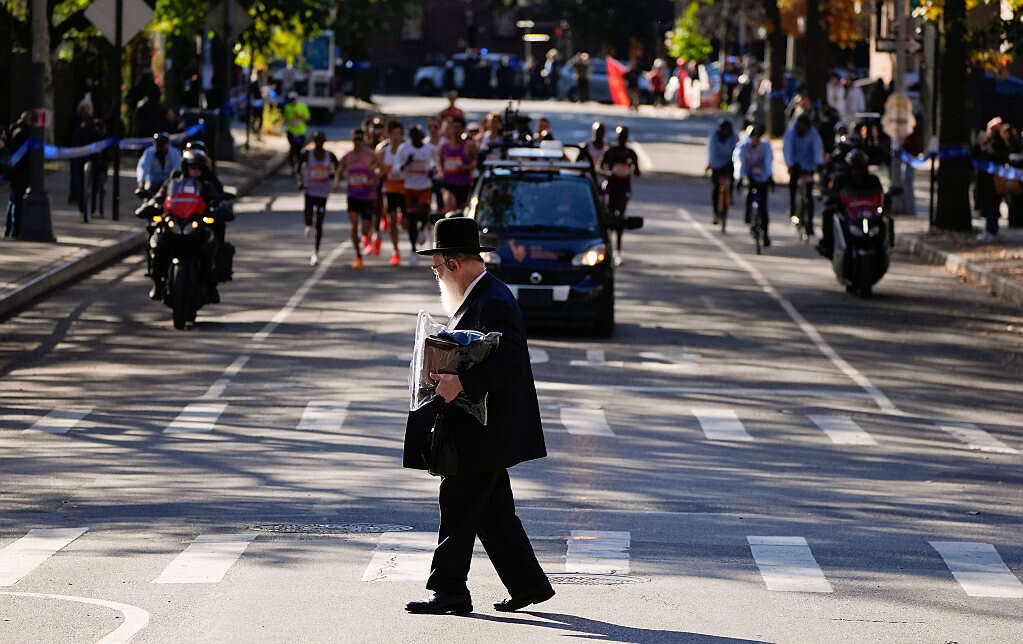
Mamdani's defenders often point to the fact that a significant portion of Jewish New Yorkers voted for him, claiming this proves he cannot be antisemitic and that all allegations are about his stance on Israel. However, no poll accurately measures Jewish support. Most cite a CNN exit poll showing 31 percent support among 710 Jewish respondents, without methodology or margin of error disclosed.
Another poll, conducted by Quinnipiac University, found only 16 percent of Jewish voters supported Mamdani, and 75 percent viewed him unfavorably.
The real problem is not which poll is correct. It is the instrumentalization of Jews. Invoking Jewish voters when convenient and dismissing Jewish fears when inconvenient treats Jews not as a community with legitimate safety concerns, but as a rhetorical shield.
If Mamdani wanted to reassure Jewish New Yorkers, his transition team selections did the opposite. Among the 400 appointees are several with documented histories of anti-Israel extremism or remarks crossing into antisemitism.
Elle Bisgaard-Church, appointed as Chief of Staff, has deep ties to the Democratic Socialists of America, an anti-Israel movement known for supporting the Boycott, Divestment, and Sanctions movement against Israel.
Waleed Shahid, on the Committee on Community Organizing, wrote on October 7, while Israelis were still being murdered, that Hamas' massacre was a "byproduct of Israel's violent policies." Contextualizing Jewish suffering in real time is not neutral; it is a moral failing.
Jenna Hamed, on the Arts and Culture Committee, wrote six days after the massacre that she "reaffirm[s]" her people "for all measures taken toward life and liberation" and that "freeing Palestine" requires the "obliteration of all borders." Given the context, this endorses violence and implies rejection of Israel's right to exist.
Tamika Mallory, on the Community Safety Committee, has refused to condemn Louis Farrakhan, suggested Jews oppress people of color, and resigned from the Women's March in 2019 amid accusations of antisemitism. Elevating her to a role in community safety sends a chilling message about whose safety matters.
These appointments are not incidental. They reflect a worldview that many Jewish New Yorkers already find alarming. Asking them to ignore that worldview because some voted for Mamdani is insulting.
Jewish New Yorkers are not imagining things. They are responding to explicit statements, documented histories, and public choices made by their incoming mayor. Their concerns cannot be dismissed with selective polling or accusations of hysteria.
If Mamdani wants to be a mayor for all New Yorkers, he must begin by acknowledging the legitimacy of Jewish concerns, not minimizing or manipulating them. He must be honest about the implications of his record and the rhetoric of those he elevates. Above all, he must stop allowing Jewish voters to be reduced to a talking point in the service of a political narrative.
Gaslighting is not leadership. Tokenization is not inclusion.
Jewish New Yorkers deserve better than both.


