

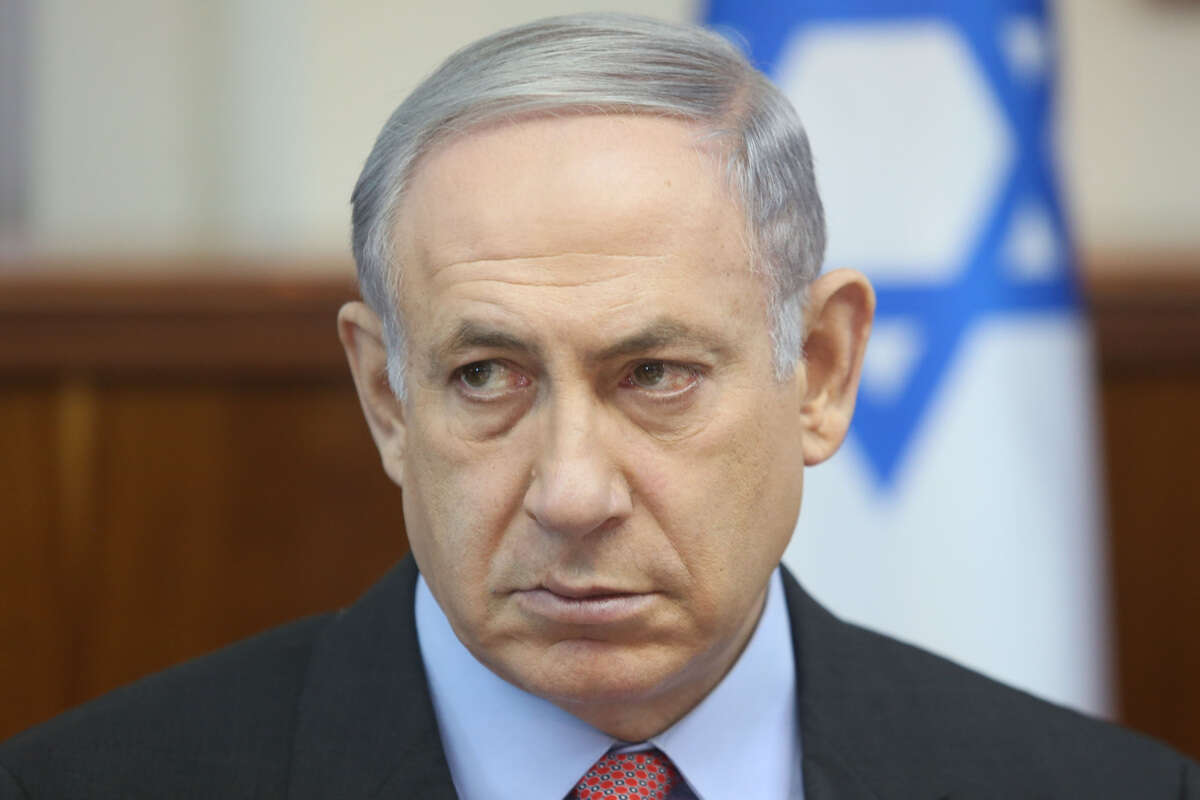
It's worth paying attention to how Prime Minister Benjamin Netanyahu described the October 7 massacre at the Foreign Ministry's ambassadors' conference on Dec. 7. He said, "We were on October 7 in what was essentially an attack, but it cannot be described as such. This isn't a terror attack – it's a security attack, political, economic, from every possible perspective."
Let's begin with a textual analysis. If "we were in an attack," then why it "cannot be described that way"? What is the meaning of this strange sentence?
Netanyahu spoke spontaneously off the cuff, not reading from a script. His words, it seems, provided us with a glimpse into the story he tells himself about the most terrible day in the history of the Zionist enterprise. The prime minister didn't call it a "massacre" or a "catastrophic failure," not a "collapse" or a "breakdown," but rather an "attack." Or in his language – an attack "from every possible perspective," but still just an "attack."
From this terminology, it emerges that deep down, Netanyahu still refuses to acknowledge that during his watch, the foundational Zionist principle of "never again" went up in smoke along with the western Negev. Instead of admitting this, he tells himself that it was essentially just an "attack". This linguistic slip aligns with his previous claim that the Hamas invasion was merely of "terrorists in flip-flops."
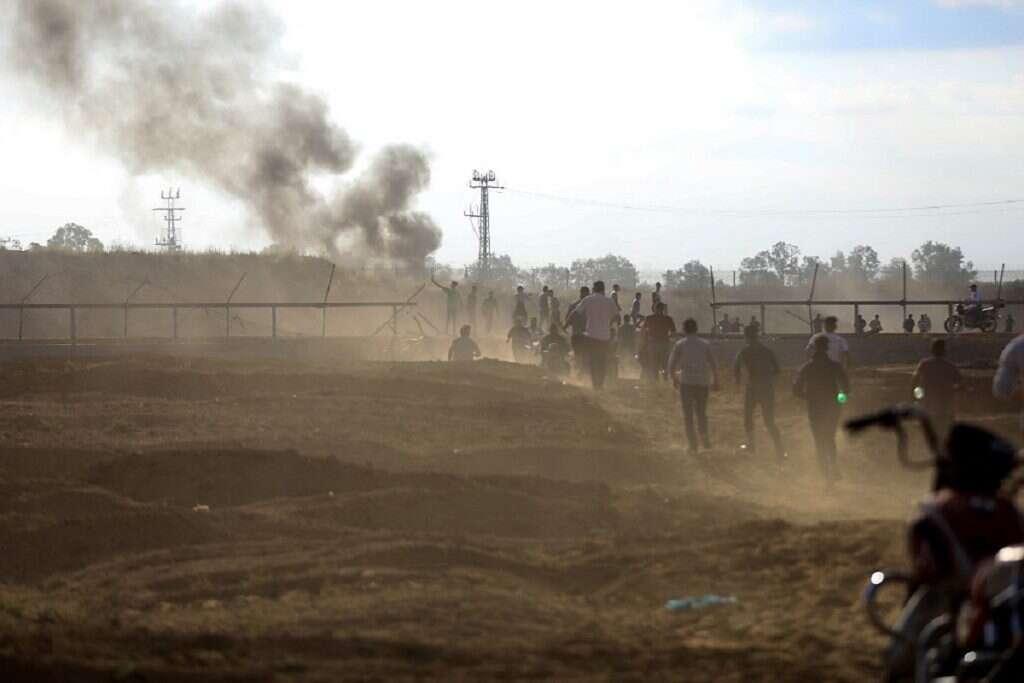
As if there wasn't a strategic trap that Yahya Sinwar set for him, and he fell into it, as if Hamas' military plan wasn't sophisticated, precise, and lethal. As if female soldiers and mothers didn't scream for help for hours in inconceivable horrors. As if the terrorists didn't invade as far as Sderot and Ofakim. As if half the country didn't experience a "one-day Holocaust," as so many say, but rather just an "attack from every possible perspective."
Baseless words
This minimization of the tragedy might not have warranted criticism were it not for the second half of the speech, where Netanyahu claimed we are a "global power." As you'll recall, the prime minister cannot travel to almost any country in the world, except the US. In fact, even in New York he's not entirely safe, given the intentions of the future mayor. And what's worse, we heard the boastful talk about Israel being a "regional power" or "global power" even before October 7, 2023. They were said by Netanyahu – the same Netanyahu who in that same speech explained how Israel essentially almost collapsed.
"After all, there was a plan here to destroy Israel," Netanyahu told the ambassadors. "There was a practical plan to attack us simultaneously. You could say Sinwar jumped the gun. He didn't wait, didn't coordinate the operation that was supposed to bring a simultaneous invasion both from Gaza from the south, and from the north by the Radwan Force. The Nukhba on one side, Radwan on the other, and a tsunami of rockets and ballistic missiles on us."
In other words, the same Netanyahu who says we're a "global power" describes a few sentences later how close we actually were to a coordinated, two-front ground invasion, accompanied by a "tsunami of missiles and rockets." These descriptions don't reconcile with each other. It's impossible for a "global power" to have been one step away from annihilation. And one cannot claim that a state of existential danger is actually just an "attack." All of this simply doesn't add up.
Battle over memory
What explains the descriptions that so extremely contradict each other from the same Netanyahu about the same events in the very same speech? It seems the answer lies in the deep psychological realm. Netanyahu wanted to be remembered as "Israel's guardian." He said this, and there's no doubt this consideration guides him.

However, the massacre left no trace of this conception. No matter what the achievements of the war are – and it's worth mentioning that "absolute victory" even by his account hasn't been achieved – Netanyahu didn't guard Israel. And not just didn't guard it, but led it to an unprecedented disaster that stemmed from his policies. These are facts that cannot be denied.
But he himself is incapable of standing before this terrible truth. Therefore, he didn't take responsibility, as expected of a leader. Therefore, he reduces those horrifying days to an "attack." Therefore, he blames the security establishment for the failure. Therefore, he returns to tell him and us that Israel is a "global power." This is how he first and foremost escapes from himself.
Instead of escaping, the prime minister was expected to learn a lesson. As someone who led the "global power" into Hamas' trap, he must show more caution and less arrogance. Or as the Bible says, "Walk humbly with your God." This would only do good, for him and for us.


