


The first part of an interview with Eli Feldstein, broadcast on Kan 11, has placed the Prime Minister's Office squarely at the center of a growing controversy. Feldstein was interviewed by investigative journalist Omri Assenheim, and it should be noted at the outset that according to Israel Einhorn, another central figure in this tangled affair, Assenheim and Feldstein are friends.
Einhorn demanded that this relationship be disclosed in the response segment, which Assenheim indeed read out in full and did not deny. It is also reasonable to assume that Feldstein chose to give the interview specifically to Assenheim because he trusted him. Still, that personal connection did not prevent Assenheim from posing tough questions, nor did it spare Feldstein from giving answers that were, at times, embarrassing.

On the interview
1. The lengthy conversation with Feldstein shows the enormous pressure Prime Minister Benjamin Netanyahu faced to stop the war prematurely. He insisted on continuing, even after six hostages were murdered by Hamas, and it is important to once again give the prime minister substantial credit for that resolve. That very stance ultimately led to the successful deal that secured the release of all the hostages, except for Ran Gvili, for whom we are all still waiting.
2. The original sin of this affair was the decision to keep Feldstein employed within Netanyahu's circle, despite his failure to pass Shin Bet security screenings. According to Feldstein's testimony, this stemmed from the desire of Netanyahu's aides, specifically Jonatan Urich, to continue using Feldstein's media services. That is how the workaround was devised: paying his salary through a third party.
3. Instead of resorting to such a maneuver, the proper course of action would have been to thank Feldstein for his work and send him home. That is precisely why such security screenings exist. This is what proper governance looks like.
4. Feldstein's statements, along with other evidence, fundamentally contradict the version put forward by Netanyahu's associates, who claim that Feldstein was removed from the prime minister's environment in April 2024 after failing the Shin Bet check. The six hostages were murdered in August 2024. Netanyahu's press conference in which he pledged not to withdraw from the Philadelphi Corridor took place on September 3, 2024. The publication of the so-called "Sinwar documents" in the German newspaper Bild, material that Feldstein passed on to the paper, appeared on September 6. It was intended to shield Netanyahu, and Urich sent Feldstein a message afterward saying, "The boss is pleased." In other words, long after he had been disqualified, Feldstein was still deeply involved, and there is additional evidence to that effect.
Who paid Feldstein?
5. It is hard to believe Feldstein's claim that he was "naive" and that he "made a mistake" by not clarifying for many months who this individual, Gil Birger, was who paid his salary and why. This explanation is even less credible given that Feldstein sat in a three-way, face-to-face meeting with Birger and Jay Footlik, a lobbyist for Qatar. Feldstein is neither stupid nor naive. Either he knew the source of the funds and is lying, or he did not ask because he did not want to know, as Assenheim suggested. What is certain is that anyone who receives a salary knows who is paying them and for what reason, especially someone as sophisticated as Feldstein, and especially when serving as a spokesman connected to the prime minister.
6. It is telling that in Netanyahu's response on Monday night, he said only of Urich that "there is no offense here." In other words, legally, his loyal adviser was cleared. Substantively, however, even Netanyahu appears to understand the problem. Ultimately, one of his closest confidants ventured at least into a gray area by attaching to him a spokesman whose salary was paid by an external actor. That may be legal, but it certainly stinks. And all this is before we even utter the word Qatar.
7. Both Urich, in a post on X, and Feldstein claim they did not know that Feldstein's salary came from the Qatari lobbyist. To the best of my knowledge, as of now there is no positive proof that they had such knowledge. But, and this is a big but, the circumstantial evidence shows that they acted in Qatar's interest.
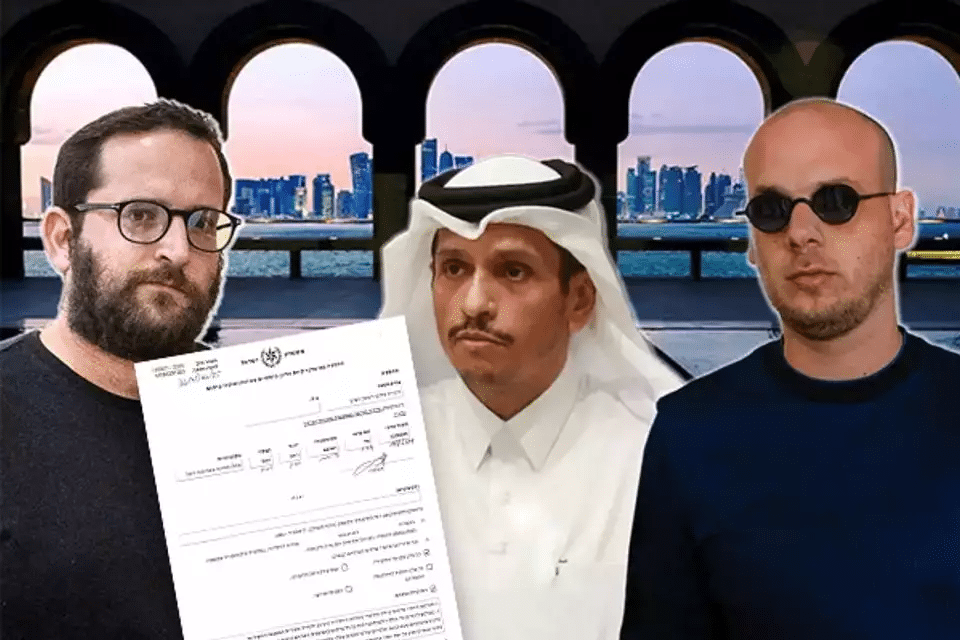
8. As exposed by Avishai Grinzeig in a report on Sunday, Feldstein systematically worked to advance Qatar's interests. This was reflected in the briefings he planted with commentators and reporters, as well as in other actions he took. These moves were carried out in coordination, or at least with updates, involving Israel Einhorn, and in close contact with Jonathan Urich. This is the same Urich who, as noted, devised the distorted arrangement under which Feldstein's salary was paid by an external entity working for Qatar.
9. In other words, Feldstein promoted Qatar while also receiving money from Qatar, all under an arrangement stitched together by his associates, Einhorn and Urich. Their claim is that this happened without their knowing that Qatar was the funding source. That is like saying there is smoke without fire, or a cause without an effect. It is very hard to accept this feigned innocence, especially from such a seasoned group of operators.
10. And of course, all this took place during the most difficult war since Israel's founding, from the very heart of the Prime Minister's Office and the Kirya military complex in Tel Aviv, right under the prime minister's nose. If he knew about the crooked arrangement and or that the money was coming from Qatar, that is appalling. If he did not know, that is no less appalling. In light of these revelations, Netanyahu must at the very least give testimony in this affair.
11. Netanyahu's associates are defending him, as expected. For me, this chain of actions recalled a famous line by Richard Nixon about the Watergate affair: "People whose zeal exceeded their judgment and who may have done wrong in a cause they deeply believed to be right." Nixon, as we know, was ultimately forced to resign over Watergate.


