

The last couple of years have felt like we are living in an alternate reality. Between the October 7 attacks in Israel, a thwarted terror attack at Taylor Swift's concert in Vienna, the assassination of Charlie Kirk at Utah Valley University, and the Bondi Beach massacre in Sydney, Australia, violence and death perpetuated by radical ideologies have begun to feel like a new normal.
Nowhere is this new reality more apparent than at Christmas markets today. Christmas markets are among Europe's most beloved cultural traditions, dating back as far as the 13th century. As a Jewish girl, one of my favorite things to do after Chanukah is visit a Christmas market, either locally here in Israel, where Nazareth, Jerusalem, and Haifa host markets and celebrations, or, if I am really craving the Christmas spirit, to travel to Europe and experience the nostalgia of how I grew up celebrating Christmas in Canada. What were once open, festive spaces for families and tourists now require concrete barricades and armed guards. Christmas markets have shifted from calm, joyful gatherings to prime targets for attacks by radical Islamists, forcing police across Europe to impose extensive counterterrorism measures.
The phrase "First the Saturday people, then the Sunday people" was never just meant to scare people. We are now living through that reality.
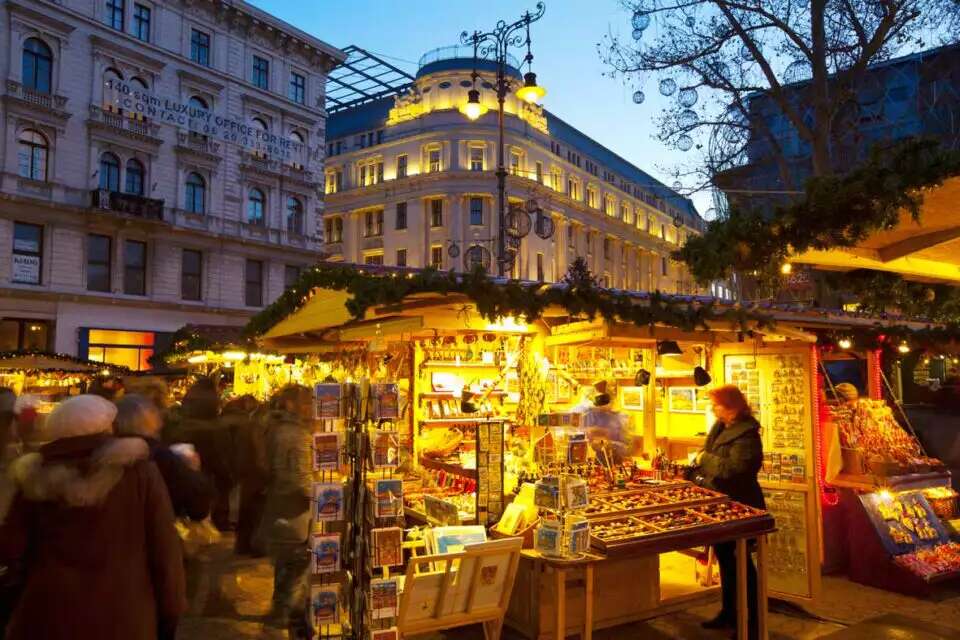
Security services across Europe have repeatedly warned that Christmas markets are high-value targets for Islamist terrorism because of their large crowds, open layouts, and religious symbolism. Just weeks ago, five men were arrested in Germany on suspicion of plotting to ram a vehicle into a Christmas market with the intent of killing or injuring as many people as possible. Three Moroccans, an Egyptian, and a Syrian were detained, and authorities stated they suspected an Islamist motive. Adding another layer of concern, the German newspaper Bild reported that the Egyptian suspect was an imam at a local mosque near the planned attack site.
This threat is not new. Just last year in Germany, a Saudi national who arrived in the country in 2006 and applied for asylum a decade later allegedly carried out a deadly attack on a Christmas market in Magdeburg, killing five people and injuring more than 200 others. The Guardian reported that the suspect had posted warnings on social media suggesting that "something big will happen." However, the first known terrorist plot targeting a Christmas market dates back to 2000, when authorities uncovered plans to attack the Strasbourg market near the cathedral in France. That December, an al-Qaeda–affiliated cell planned to carry out a bombing on New Year's Eve. French and German police foiled the plot after dismantling a Frankfurt-based terrorist network linked to the operation. Fourteen individuals were later convicted, four in Germany and ten in France, including Mohammed Bensakhria, who was identified as the cell's operational leader and widely regarded as a senior al-Qaeda figure in Europe with direct ties to Osama bin Laden.
Following the Arab Spring and the subsequent surge of migration from Muslim-majority countries into Europe, a modest but noticeable increase in such attacks began to emerge. One of the most significant occurred in December 2016, when a heavy truck was deliberately driven into the Christmas market at Berlin's Breitscheidplatz. The attack killed 13 people and injured more than 50 others. The perpetrator, Anis Amri, a 24-year-old Tunisian national whose asylum application had been rejected, hijacked the truck after murdering its driver and then drove it into the crowd. ISIS quickly claimed responsibility, and the attack became one of the deadliest terrorist incidents in Germany in recent history.
Two years later, in December 2018, the Strasbourg Christmas market was once again targeted, and this time the attack succeeded. The attacker, Chekattif Chekatt, armed with a revolver and a knife, assaulted civilians in and around the market, killing five people and wounding 11 others. He was known to police, had been flagged as a suspected extremist, and was connected to ISIS prior to the attack.
While ISIS no longer controls large swaths of territory as it did at its peak between 2014 and 2019, the group continues to maintain cells across Europe and in Western countries, including Australia. There is evidence suggesting that ISIS inspired the attack at the Bondi Beach Chanukah celebration, where two terrorists opened fire and killed at least fifteen Jews. Australian authorities reported that flags and explosive materials linked to the father-and-son attackers indicated ISIS influence. The thwarted terror attack at Taylor Swift's concert in Vienna during her Eras Tour was also carried out by an ISIS sympathizer.
Christians must come to terms with a difficult reality: they too are targets. The belief that terrorism is someone else's problem, confined to Jews, Israelis, or distant conflict zones, has been shattered. Churches, Christmas markets, concerts, and holiday celebrations now sit squarely in the crosshairs of violent Islamist extremism. Faith, visibility, and public joy are precisely what make these spaces attractive to those who seek to terrorize open societies.
Radical Islamist ideology does not distinguish between Jewish or Christian lives, Western or non-Western civilians. Ironically, the group of people who have suffered the most from radical Islam are Muslims themselves. The targets change, but the goal remains the same: fear, submission, and the erosion of free, open civilization.
Jews, Christians, Muslims and all people who value human life must stand together against jihadist ideology wherever it appears.


