


The coordination mechanism announced Tuesday night between Syria, the US, and Israel aims to regulate a delicate triangle of relations. On one side stands an Islamist regime acting with calculated pragmatism to ensure its survival. On the other is the Trump administration, which views Ahmed al-Sharaa (also known as Abu Mohammad al-Julani) as a "strong figure" worth preserving – a leader who will steer Syria in alignment with American interests. And on the third side sits the government in Jerusalem, which, despite its deep suspicions regarding the regime, has no desire for a confrontation with Washington.
The establishment of this body – a virtual cloning of the Lebanese model (which even bears the same name, "The Mechanism") – is being marketed by the Americans as a genuine diplomatic breakthrough. Indeed, it provides a partial answer to a central demand from the Syrian side.
For over a year, the government of Ahmed al-Sharaa has demanded a halt to Israeli strikes. The new mechanism is designed to facilitate immediate coordination on intelligence and military matters to "prevent misunderstandings." While Israel has not committed to ending the strikes, it has agreed to submit itself to US supervision, granting the Syrian authorities a channel to lodge complaints before the Mechanism. The regime of Bashar Assad could have only dreamed of such a privilege.
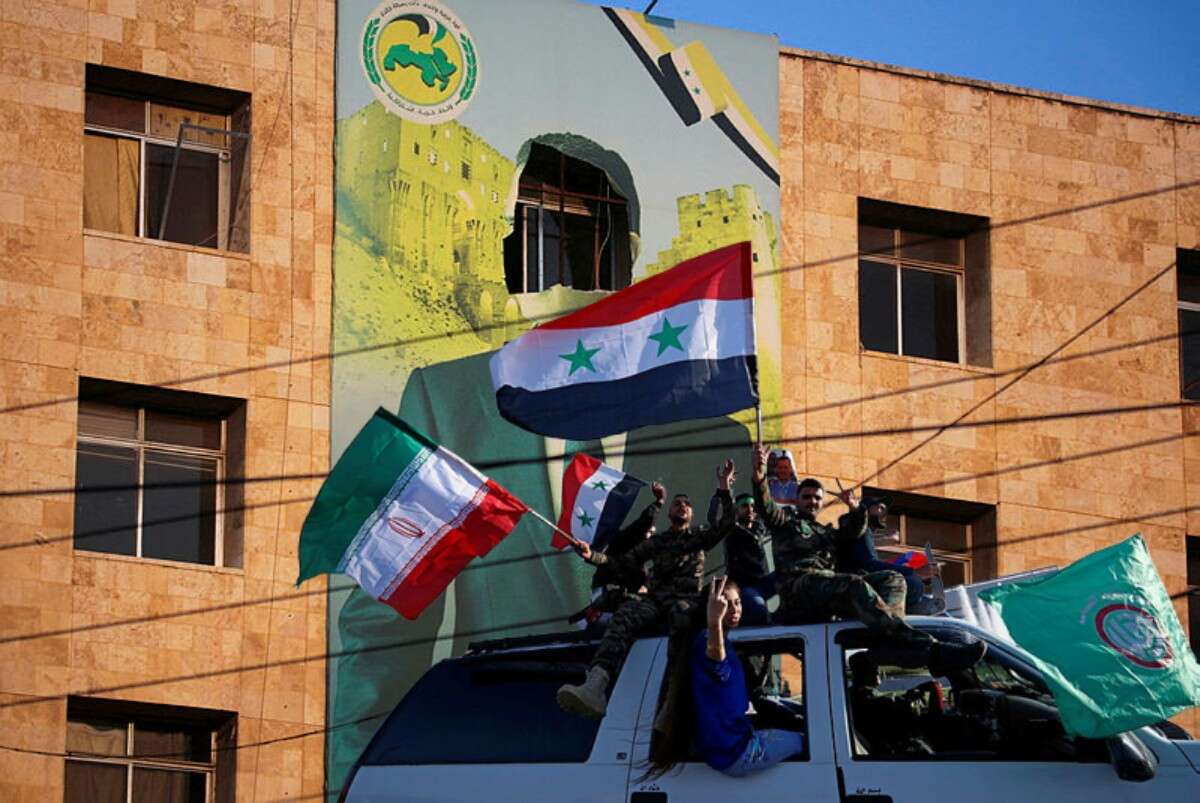
From this point forward, every strike will effectively require an explanatory note to the manager from America. While this will not necessarily prevent operations, it may well limit and reduce them. In truth, the scope of activity has already narrowed. The last high-intensity incident – the IDF encounter with terrorists in Beit Jinn (a village in southern Syria) – took place in late November. In return, Israel received a vague promise of civil-economic discourse laced with the aroma of normalization.
However, the Syrian demand for a rigid timetable for an IDF withdrawal from southern Syria poses a far more complex challenge. Over the past year, Israel has conditioned any pullback on a form of demilitarization in the area. At most, Jerusalem has shown readiness to allow the operation of a policing and security force equipped only with small arms. Israel's commitment to the Druze – coupled with the desire to curb the threat from Jihadist elements within the al-Sharaa government – makes a withdrawal without this condition nearly impossible.
Yet from the perspective of al-Sharaa, such an arrangement handcuffs him, preventing him from acting with full force against the Druze in Sweida (a Druze-majority city in southern Syria). In this southern province, locals already conduct themselves as an independent state, with some Druze adopting the name Mount Bashan (a biblical name for the Golan and Hauran) for their territory. Needless to say, such assertions of autonomy provoke loathing and rage in the corridors of Damascus.

The big question is whether the Americans will accept the "demilitarization condition" or prefer to pressure Israel to fold in exchange for some nebulous promise to protect Druze safety. So far, it must be noted, the Americans do not appear particularly troubled by questions regarding the dubious character of the al-Sharaa regime.
The shocking massacres committed against the Druze and Alawites in 2025 did not sway US Ambassador Tom Barrack. On one occasion, he even put words in the mouths of these minorities, claiming they "prefer a central rule." In reality, their leaders advocate for a federal system – at the very least. The chants at a recent military parade in Damascus – which referred to Israel and the Jews as enemies – were met with a deafening silence. Moreover, according to al-Sharaa, US President Donald Trump has already expressed support for his position during their meeting at the White House in November.
Nevertheless, the Israeli leadership is acutely aware of the inherent instability of the regime in Damascus. Just in recent days, the al-Sharaa government alleged that three of its soldiers were wounded in a drone attack by Kurdish forces in the Aleppo (a major city in northern Syria) province. Subsequent exchanges of fire reportedly left eight dead in the city. The regional aviation authority announced a 24-hour shutdown of all flights at the Aleppo airport due to security circumstances.
Since last week, regime forces have been engaged in a brutal suppression of protesters from the Alawite community, a campaign that includes extensive arrest operations. This effort has been accompanied by a media blitz characterizing the chaos as an attempt by "remnants of the Assad regime" to rear their heads. This narrative persists despite the fact that protesters burned pictures of the ousted tyrant. Similarly in the south, in the Sweida province, the Druze continue to report violations of the "ceasefire" by forces identified with the regime.
Meanwhile, al-Sharaa is trying to project calm and self-confidence. This week he visited a food stall in Damascus to refute rumors of an assassination attempt against him at the palace. The Interior Ministry even issued a furious denial. The Syrian president used the opportunity to flaunt some of the new banknotes launched this week. The Syrian pound has finally shed the cursed image of Assad, with notes now featuring colorful prints of olives, grapes, oranges, and flowers.
The problem is that improving the actual value of the Syrian pound is far more complicated – and it remains stuck in the depths of approximately 12,000 pounds to the dollar. A Syrian journalist once wrote that if one wants to bet on the future of a regime in the Middle East, it is enough to inquire about the state of the local currency.


