The Lebanese government released Wednesday the complete text of the ceasefire agreement with Israel. The agreement contains 13 articles addressing the timing of the ceasefire, Lebanon's commitments to deploy its forces in the country's south and prevent the return of the Hezbollah terror group to the Israeli border, as well as the American-French monitoring mechanism intended to enforce compliance.
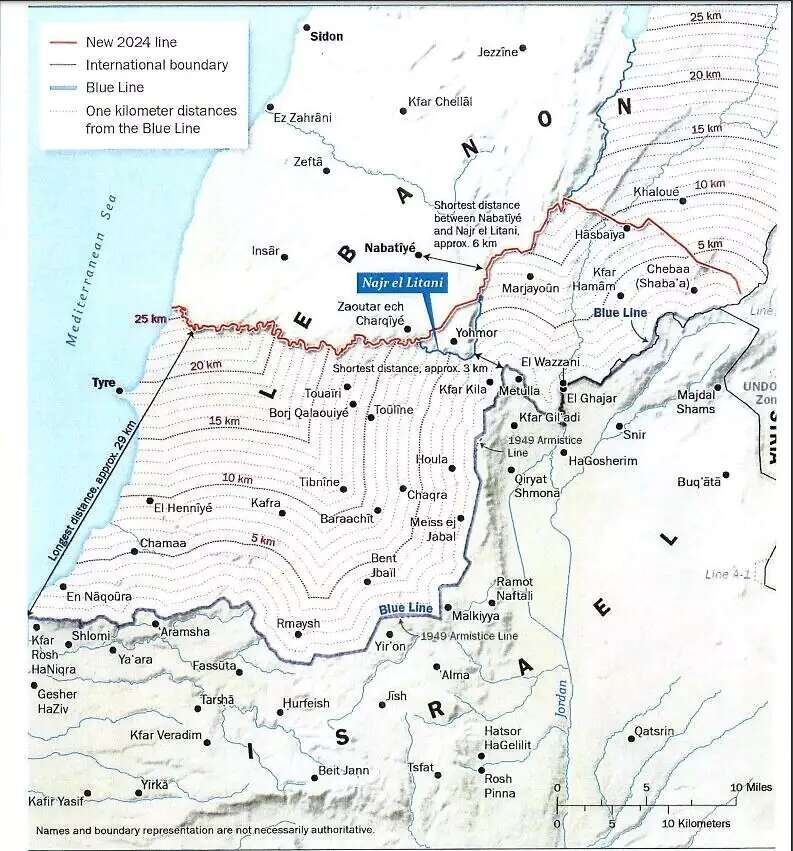
While most of the agreement had been previously published, the appendix reveals new information. The attached map outlines a new demarcation called the "2024 Line," redefining the area where Hezbollah forces are prohibited from operating and where the Lebanese army must dismantle remaining unauthorized facilities. The main change occurs at the Litani River's bend, where the river turns westward approximately 1.9 miles from the border at the Galilee Panhandle. The new line deviates from the river's course to include additional Lebanese territory, preventing Hezbollah from threatening Israeli communities from these areas. Besides its proximity to the Israeli border, this terrain includes strategic high ground (including the historic Beaufort Castle) making it crucial to keep Hezbollah fighters away from these positions.
Another notable aspect of the agreement is America's deep involvement in its supervision. While until now, international military presence in Lebanon has been the domain of UNIFIL and European nations, the US is now assuming several commitments related to the country. Although American troops will not be stationed in Lebanon (a point President Joe Biden emphasized in his speech, reflecting past American casualties in the country), an American general will be deployed to the region. Israel Hayom reported that monitoring and control centers will be established in Beirut and Safed. Additionally, the agreement reiterates Lebanon's commitment to "disarm all armed groups" in the country, though this goal appears far from achievable.
Following discussions with the governments of Lebanon and Israel, the US and France understand that Beirut and Jerusalem seek to sustainably end the current escalation of hostilities along the Blue Line and are prepared to take steps to advance conditions for a permanent and comprehensive solution. These understandings reflect the steps Israel and Lebanon commit to take to fully implement UNSC Resolution 1701, recognizing that this resolution also calls for implementation of previous Security Council resolutions, including "the disarmament of all armed groups in Lebanon" so that authorized weapons would be limited to the Lebanese army (and other official Lebanese security forces only).
For this purpose, the United States and France present the following commitments:
- Israel and Lebanon will implement a ceasefire starting at 04:00 a.m. on Nov. 27, 2024, according to the commitments detailed below.
- The Lebanese government will prevent Hezbollah and any other armed group in Lebanon from conducting operations against Israel. Israel will not conduct offensive military operations against targets in Lebanon, including civilian, military or other targets, by land, air or sea.
- Israel and Lebanon recognize the importance of Resolution 1701 for achieving sustainable peace and security and commit to taking steps for its full implementation.
- These commitments do not prevent Israel or Lebanon from exercising their natural right to self-defense in accordance with international law.
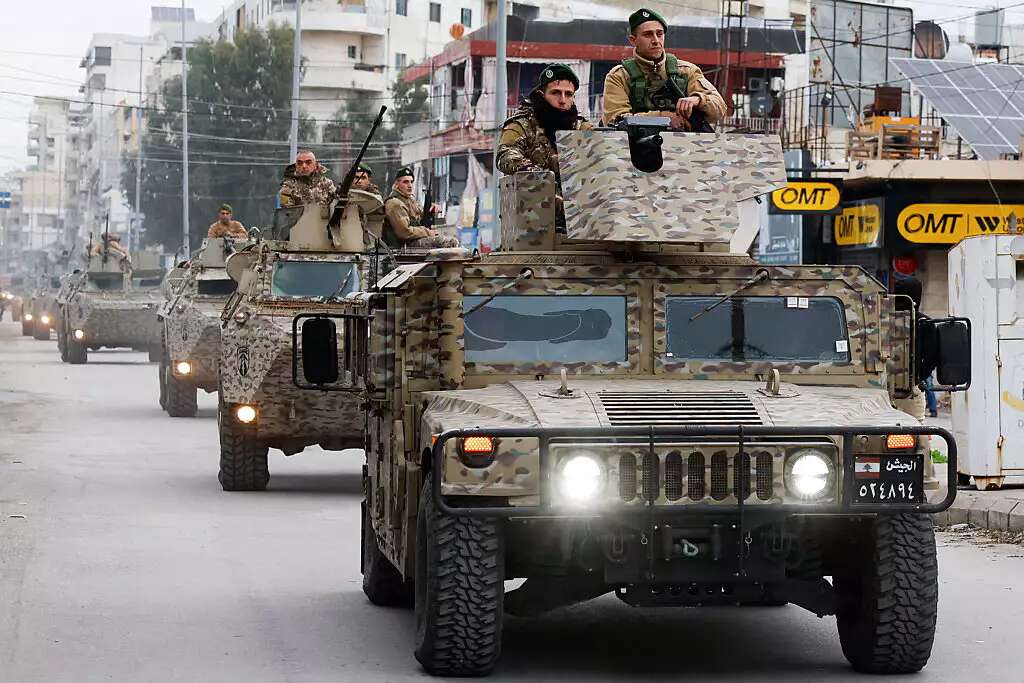
- Without prejudice to UNIFIL's mandate and responsibilities under Resolution 1701, Lebanon's official security and military forces, with their infrastructure and weapons, will be the only armed forces, and their weapons will be the only weapons, in the area south of the Litani River, as shown in the Lebanese army deployment plan attached to this agreement.
- In accordance with Resolution 1701 and previous resolutions, to prevent the rearming of non-state armed organizations in Lebanon, weapons sales and supply to Lebanon will be regulated and controlled by the Lebanese government. Additionally, all weapons manufacturing in Lebanon will be regulated and controlled by the Lebanese government.
- To implement Resolution 1701, upon cessation of hostilities, the Lebanese government will grant all necessary authorities to its security forces and direct them to:
a. Monitor and prevent unauthorized entry of weapons and related materials to and from Lebanon, including at all border crossings.
b. Dismantle unauthorized weapons manufacturing facilities and related materials, and prevent the establishment of such facilities in the future. This section will be implemented in southern Lebanon first.
c. Dismantle all infrastructure, military positions, and seize all weapons that do not comply with the commitments in this agreement. This section will be implemented in southern Lebanon first.
- The US and France intend to work within the Lebanon Military Technical Committee (a multi-national body coordinating support for the Lebanese army, in accordance with UN resolutions) to enable and implement the deployment of 10,000 Lebanese army soldiers in southern Lebanon as soon as possible. Additionally, the US and France intend to work with the international community to support the Lebanese army, increase its deployment capabilities and improve its capabilities.
- Upon cessation of hostilities, Israel and Lebanon will reformulate and improve the trilateral dialogue mechanism. The new mechanism, led by the US, with French participation and under UNIFIL auspices, will monitor and help ensure implementation of these commitments.
a. Israel and Lebanon will cooperate and enable its operation, including ensuring its security.
b. The mechanism will work with the Military Technical Committee to strengthen Lebanese army capabilities and training for monitoring and dismantling unauthorized sites and infrastructure, above and below ground, and seizing unauthorized weapons.
c. Alongside the mechanism's work, UNIFIL forces will continue to operate within their mandate, including supporting mechanism-led operations to improve its effectiveness.
- Without prejudice to their right to directly address the UN Security Council, Israel and Lebanon will report any suspected violation of these commitments to the trilateral mechanism and UNIFIL. The mechanism will develop appropriate procedures for consultation, investigation, information gathering and assistance in implementing commitments.
- Upon cessation of hostilities, Lebanon will deploy its official security and military forces at all borders and regulated and unregulated border crossings – by land, air and sea. Additionally, the Lebanese army will establish checkpoints and control points on all roads and bridges along the area south of the Litani line.
- Upon cessation of hostilities, Israel will gradually withdraw its forces south of the Blue Line, while the Lebanese army will deploy its forces to their positions south of the Litani, as shown in the attached Lebanese army deployment plan. The Lebanese army will begin implementing its commitments, including dismantling unauthorized sites and infrastructure and seizing unauthorized weapons and other materials. The mechanism will coordinate the implementation of this section between the IDF and Lebanese army in a detailed plan, not to exceed 60 days.
- Israel and Lebanon request US assistance, in cooperation with the UN, to aid in indirect negotiations between them to resolve remaining disputes along the Blue Line, in accordance with Resolution 1701.