


Iran.
The bottom line, according to intelligence assessments, is that Iran will not return to what it was. The latest wave of protests, the most severe since the 1979 Islamic Revolution, broke something fundamental and irreversible, certainly in the short term. To cut to the chase, this leaves Iran with three options: go to war even at the price of suicide; agree to a capitulation deal; or slowly wither away.
Some figures, based on authoritative sources rather than media reports: during seven days of protests, between 3,000 and 5,000 people were killed. Most were shot in the streets by members of the Islamic Revolutionary Guard Corps and the Basij, openly and in broad daylight. Some of the gunfire came from within the facilities of the two organizations, out of fear that protesters were close to overrunning them. The protests erupted in hundreds of locations, from major cities to minority regions where support for the regime is weaker. The internet shutdown severely damaged not only the protests but also the Iranian economy. Sectors dependent on online communication, such as shipping, cargo and tourism, were completely disrupted.

The internet issue is dramatic. As of yesterday, it had been down for 400 consecutive hours. The regime wants to partially restore access but fears a flood of videos filmed in recent days, ranging from live fire at protesters and bodies lying in the streets to mass funerals. Such footage could reignite the protests and, worse from the regime's perspective, amplify demands for the promised American intervention.
For now, that intervention is delayed. The Americans are building up forces and issuing threats. They may be waiting for the protests to resume from within. They may be waiting for an operational plan to be completed. Or they may be working on another plan, for example a move that ultimately results in someone else taking power from within, as happened in Venezuela after the capture of President Nicolas Maduro.
A senior official asked this week whether he identified anyone inside Iran who could lead the country instead of the ayatollahs said he did not see a single such figure. Maybe a few individuals. Perhaps from the regular army, which is essentially secular, unlike the Revolutionary Guards. What about Reza Pahlavi, the son of the shah? I asked. He surprised positively in his ability to bring people into the streets, the official replied. People in Iran see him as honest and trustworthy, someone who says what he thinks. He may not be a leader or charismatic, but he speaks the truth, the opposite of the regime. Still, I pressed, is he a leadership option? Hard to say. It does not look that way, but we have learned not to close the door on anything, he concluded.
In Israel, there is now concern primarily about two scenarios. The first is a surprise Iranian attack. All intelligence eyes are focused on that possibility. Detect in time, warn in time, prepare in time. The public senses this through the volume of media reporting, but the reality is far more tense, not because of secret information. On the contrary, the absence of it requires those responsible to sleep with their boots on, so as not to wake up barefoot.
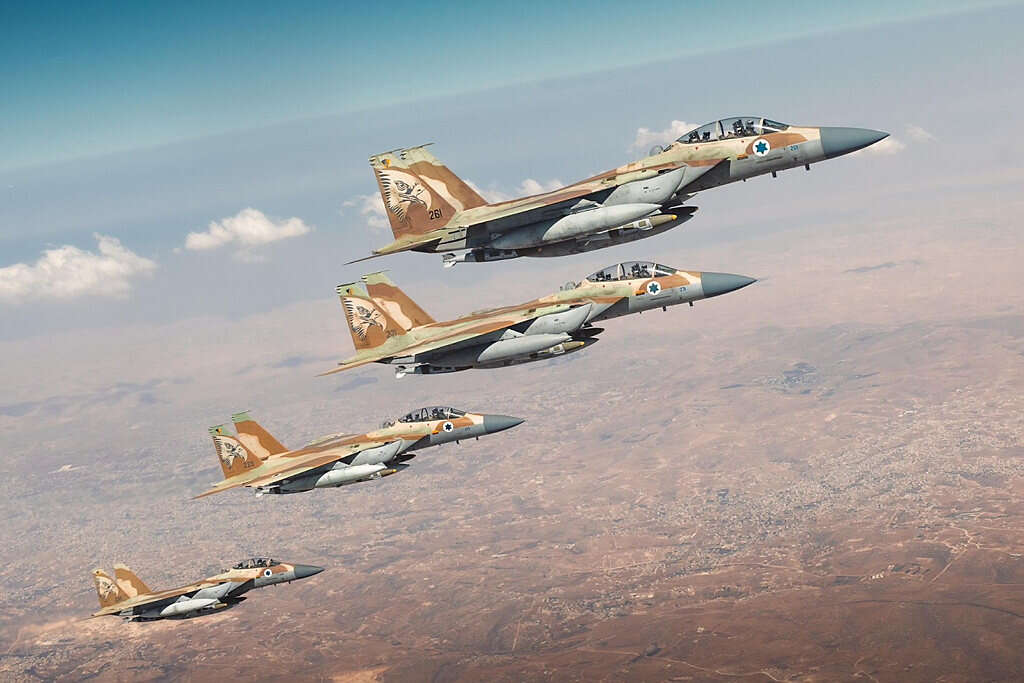
In recent weeks, the Iranians have conducted several drills of their missile and air defense systems. Any one of these exercises could, in real time, have turned into a live launch toward Israel. This led to extreme alertness, which in itself could have resulted in a miscalculation ending in war. So far, that has not happened, but the alert remains.
This readiness is meant to give Israel not only early warning to prepare for a missile attack, but also enough time to decide whether to strike first. The familiar dilemma of who started it, from which the decision to attack before being attacked will be derived, will certainly be influenced by the number of missiles Iran plans to fire at Israel. Five missiles are not the same as 500.
The second scenario worrying Israel is the nuclear issue. As reported earlier this week in Israel Hayom, Iran has resumed infrastructure work at its nuclear facilities. Natanz has indeed been completely destroyed, but Fordow remains active, and the Iranians are working to deepen its immunity zone, as well as that of another site in the north of the country. The regime is still refraining from resuming uranium enrichment, but it has preserved and dispersed the highly enriched uranium it accumulated, and it may try to produce an improvised bomb with it in the coming months.
It seems the relevant timelines are now shorter. As noted, Iran has three options. A capitulation agreement, dubbed in Israel "the dream deal," which would include a complete abandonment of the nuclear program and the missile program, is not on the table from Ali Khamenei's perspective. He may try to deceive with sham negotiations to buy time, although it is unclear what time would buy him. The underlying problems that fueled the current wave of protests, water shortages, crumbling infrastructure, unemployment of 40 to 50 percent, a collapsing currency and sky-high inflation, appear unsolvable as long as sanctions remain in place.
There is also something else in the background: the achievements of Operation Rising Lion. The Iranian public saw that the regime cannot protect it from an external threat, and that the regime itself is not immune. This cracked the barrier of fear. Someone compared it this week to the Chernobyl disaster, which cracked the fear barrier in the Soviet Union after the public realized the regime could not protect it. The comparison is of course not one-to-one, but the principle is clear. It was also proven in Syria, and a decade earlier in Yemen, Libya and Egypt.
So will there be war? For now, it depends mainly on Trump, who is mostly issuing words. The working assumption is yes, because the last thing the US president wants is to look weak, especially as comparisons are already being drawn to Barack Obama, who abandoned the Iranian people during the 2009 Green Movement.

And assuming there is an American strike, will Israel be attacked? For now, that depends mainly on the Iranians, but the working assumption is yes. And if Israel is attacked, will it respond and start a war? The working assumption is yes, because after October 7 Israel does not absorb blows quietly. It responds loudly, so that everyone sees and fears. And if the US strikes and Israel strikes, will the regime fall? No one is willing to commit to that, but it is quite clear where everyone is aiming, largely out of an understanding that this is a rare opportunity that should not be missed.
Gaza.
Trump's remarks about the hostage Ran Gvili, "It looks like we know where he is," were surprising, but not without basis. Recently, several indications have accumulated that may point to where he is buried. Most of this information was also conveyed to Hamas, the terrorist organization, which was asked to act and has been in no hurry to cooperate.
Israel is demanding that the return of Gvili take precedence over any move in Phase Two of the agreement. For now, this is not happening, twice over: first, because Hamas is not acting to locate and return Gvili; and second, because Phase Two of the agreement is moving forward. Admittedly, it is progressing in a different way than might have been assumed, but it is progressing.
In Davos this week, discussion focused on the Board of Peace Trump is establishing, which is to be the most senior of four different entities meant to deal with Gaza and beyond. According to the president's vision, this board, which he will head for the rest of his life, even after he completes his term as president in three years, will arbitrate various international conflicts and in effect replace the UN.
Trump's willingness to undermine every international convention should be viewed with a mix of astonishment and concern. The UN is indeed a rotten and overly politicized organization, far from fulfilling its mission. On the other hand, it provides an important framework that preserves a balance of power and prevents total global anarchy. In Trump's world, based on what Culture and Sports Minister Miki Zohar once dubbed the three Cs, power, honor and cash, old frameworks are for the weak. The strong set the rules themselves and impose them on others. Call it MAGA-mania.
That is what happened in Venezuela. It is what could happen in Greenland. And in Ukraine. And perhaps elsewhere. For now, Israel is on the side Trump favors, but alongside it are actors he favors no less. Qatar, for example. And Turkey. And Russia. Benjamin Netanyahu was criticized for responding positively to the proposal to join them on the Board of Peace, but he was right. Better to sit at the table than to be on the menu.
Qatar and Turkey are bitter rivals who could become cornerstones of the new and dangerous axis taking shape in the region, but it is better to talk to them in an effort to avoid the need to fight them. Israel failed badly by not preparing in time and properly for the day after in Gaza, sentencing itself to a reality that is as far from total victory as east is from west. One can only hope it has learned from this and understood that it must shape its fate with its own hands, rather than leaving it to others.
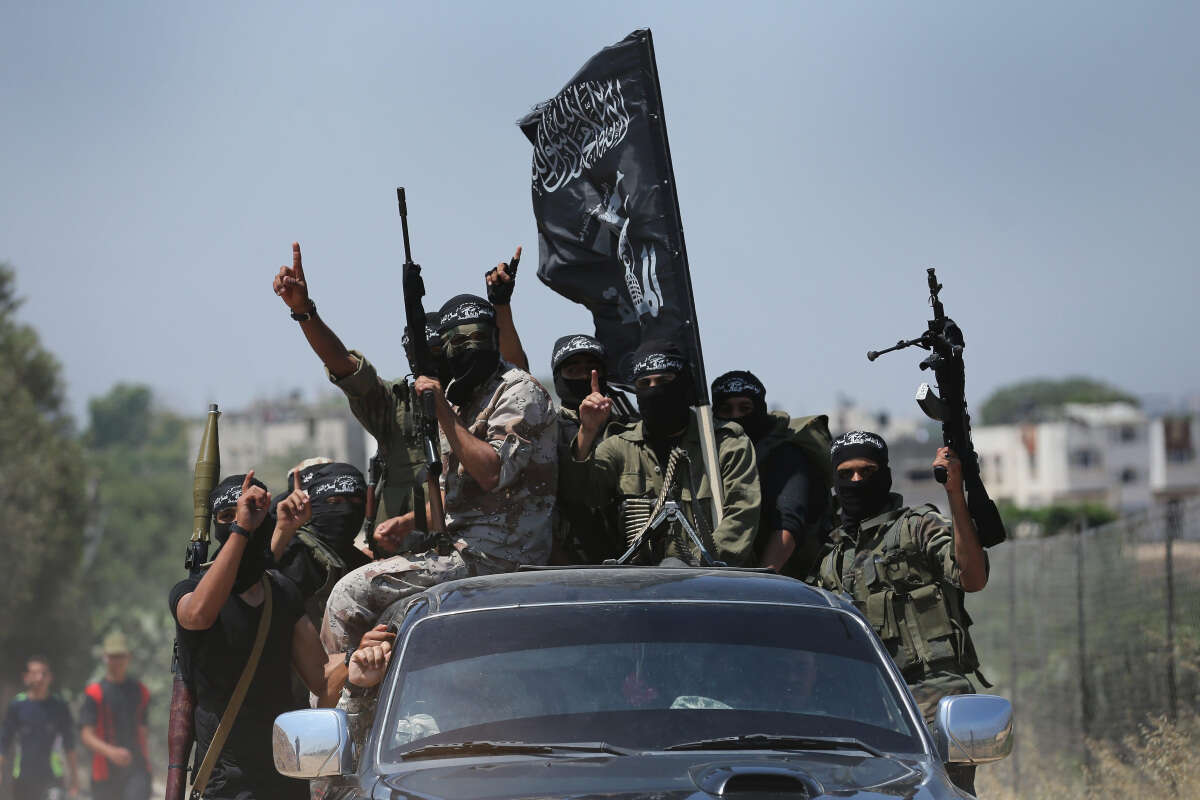
Meanwhile, in Gaza, there is a reality in which Hamas controls the red zone, about 40 percent of the Strip. It is struggling to resume large-scale weapons production, but it is recruiting and training people, tightening its grip on the ground, collecting taxes and running daily life as best it can.
Its current efforts are aimed at blending into the new security mechanism to be established in Gaza, meaning to ostensibly hand over weapons to another body while remaining alive and kicking within the framework. Israel has made it clear to the Americans that it will not go along with this, because it is a sure recipe for a Hezbollah model in Gaza. This may require certain concessions in favor of the Palestinian Authority. They are preferable to Hamas remaining in place, and certainly preferable to a renewal of the war.
Syria.
If there is one especially troubling point in the new world order Trump is leading, it is what has been happening in recent days around the Kurds in Syria. After President Ahmed al-Sharaa announced that an agreement had been reached under which the Kurds would be integrated into Syria's security mechanisms, Kurdish leader Mazloum Abdi said there was no agreement at all. That means the war could resume, along with the bloodbath that al-Sharaa's loyalists carried out against Alawites and, to a lesser extent, Druze, and may now carry out against the Kurds.

For Israelis, this is foreign news. In practice, it is in fact a major Israeli interest for several reasons. First, because the Kurds are allies who hold an especially strategic corridor spanning four countries of particular interest to Israel: Syria, Turkey, Iraq and Iran. History, openly available if you search online, is full of cooperation between Israel and the Kurds. Abandoning them would not only be seen as a knife in the back, it would also, in practical terms, harm Israel's security.
The second reason is that al-Sharaa's growing strength is bad for Israel. He is developing an appetite and ambitions, and with Turkey breathing down his neck, concern is greater than ever. President Recep Tayyip Erdogan wants a presence in Damascus and on Israel's border. Al-Sharaa wants to reclaim the territories Israel seized in the Golan Heights in December 2024, and also to prevent Israel from flying freely in Syrian airspace, an issue that is highly relevant to other arenas as well.

The third reason is that after the Kurds will come the Alawites again, and then the Druze again. Anyone who thinks the regime has shed the murderous elements of Islamic State ideology at its core is invited to follow the hysteria in Washington over the possibility that thousands of prisoners held in prisons established in Kurdish-controlled territory could now be released, thereby squandering years of international security efforts to contain the Islamic State.
The fourth reason is the American position. Washington did not stand in al-Sharaa's way and did not come to the defense of the Kurds, even though they too are declared American assets who enjoy US economic and military support. The fear that Trump will turn his back on the Kurds is not relevant only to them. Today it is them, tomorrow it could be others.


