Israel Hayom is a media organization founded on the belief that the Israeli public deserves better journalism—more balanced, more accurate, and more reliable. Journalism that speaks rather than shouts. Journalism that is trustworthy, objective, and matter-of-fact. A different kind of journalism, offered free of charge. The first print edition was published on July 30, 2007, and in 2010 Israel Hayom became the Israeli newspaper with the highest weekday readership. The newspaper’s publisher is Dr. Miriam Adelson. Its Editor-in-Chief is Omar Lachmanovitch, and its founding editor is Amos Regev. Israel Hayom’s Hebrew and English websites, as well as its Android and iOS applications, provide around-the-clock news coverage, exclusive content, breaking news and updates, analysis and commentary, video, podcasts, and live broadcasts. The digital platforms of Israel Hayom include news and opinion channels covering culture and entertainment, lifestyle, technology, sports, business and consumer affairs, health, military affairs, food, Judaism, tourism, and automobiles. In 2021, a new Hebrew-language website and mobile application were launched to provide users with a fast, up-to-date, secure, and convenient experience. The content of the newspaper’s print edition is also available online through a daily digital edition and can be received via newsletter. “The Israel Hayom Clique,” the publication’s exclusive benefits club, offers website users discounts and special promotions on products and services. Israel Hayom welcomes feedback, criticism, and suggestions for improvement from its readers. You can contact the organization by email at hayom@israelhayom.co.il

Wednesday Jun 24, 2026
NEWSLETTER
www.israelhayom.com
  • Home
  • News
    • Israel
    • Israel at War
    • Middle East
    • United States
  • Opinions
  • Jewish World
    • Archaeology
    • Antisemitism
  • Lifestyle
    • Food
    • Travel
    • Fashion
    • Culture
  • Magazine
    • Feature
    • Analysis
    • Explainer
  • In Memoriam
www.israelhayom.com
  • Home
  • News
    • Israel
    • Israel at War
    • Middle East
    • United States
  • Opinions
  • Jewish World
    • Archaeology
    • Antisemitism
  • Lifestyle
    • Food
    • Travel
    • Fashion
    • Culture
  • Magazine
    • Feature
    • Analysis
    • Explainer
  • In Memoriam
www.israelhayom.com
Home Analysis

The three conditions missing for an uprising in Iran

Amid reports that the Mossad chief presented removing the ayatollahs as an achievable goal, it is worth to remember that uprisings are not sparked from the outside. To mobilize a mass opposition, one must identify an existing crack, then widen it. How is that done, and why has it not yet worked in Iran?

by  Moshe Fuzaylov
Published on  03-27-2026 10:21
Last modified: 03-27-2026 21:54
The three conditions missing for an uprising in Iran

Against this regime, recruiting agents will not be enough | Photo: Gideon Markowicz, EPA

Share on FacebookShare on Twitter

The claim that an uprising in Iran can be "ignited" through external action sounds dramatic, but it is equally misleading. An uprising is not an event that can be manufactured from the outside, certainly not at the push of a button. Anyone familiar with how intelligence organizations operate knows that uprisings are not created but identified, amplified and at times guided.

If reports are accurate that Mossad Director David Barnea presented the overthrow of the regime as an achievable objective in the near or medium term, it is worth examining the foundations of that assessment. In my view, if Barnea indeed assessed the goal as attainable, he was referring to the medium term and beyond. Regimes do not fall because someone outside decides to topple them; they collapse when an internal crack develops, and only then can an external actor, if acting correctly, widen it. The real question, therefore, is not how to "ignite" an uprising , but how to identify the conditions for its maturation and when those conditions are still absent.

To understand this, one must start with the basics. An uprising is not the result of an anonymous crowd suddenly taking to the streets, but of cumulative processes within key groups: students, workers, labor unions, midlevel officials within state institutions, and at times opinion leaders in the cultural or religious arenas. Each of these groups operates within a narrative that explains why the current situation is preferable or at least tolerable.

Everything is in their hands. Protests in Iran. Photo: AP

Igniting an uprising, step by step

The first stage is diagnosis: identifying points of frustration, feelings of humiliation, loss of meaning and the gap between the official narrative and reality. This is a quiet, almost invisible stage, but a critical one. Without a precise understanding of the sources of pain, there is nothing to build on.

The second stage is penetration of human networks, not in the romantic sense of spy films, but through building relationships, channels of influence and familiarity with internal dynamics. This does not necessarily mean recruiting an "agent," but rather developing the ability to influence existing groups from within.

The third stage is cognitive, and this is where the real work begins: not convincing people to take to the streets, but helping them understand they are not alone. An uprising occurs when one person realizes there are 10 others who think the same way, and when those 10 realize there are already 100. At the same time, an alternative narrative is required. Not one imported from outside that sounds foreign, but one rooted in local identity: not "rebellion" but "salvation," not "collapse" but "repair." Without such a narrative, even deep frustration does not translate into action.

Yet even when all these conditions are met, there is no certainty. Above all hovers one factor: fear. Regimes such as Iran's are not merely governing mechanisms but sophisticated systems of surveillance, repression and punishment. Anyone who takes to the streets risks not only themselves but their family as well. In such a reality, even profound anger may remain suppressed.
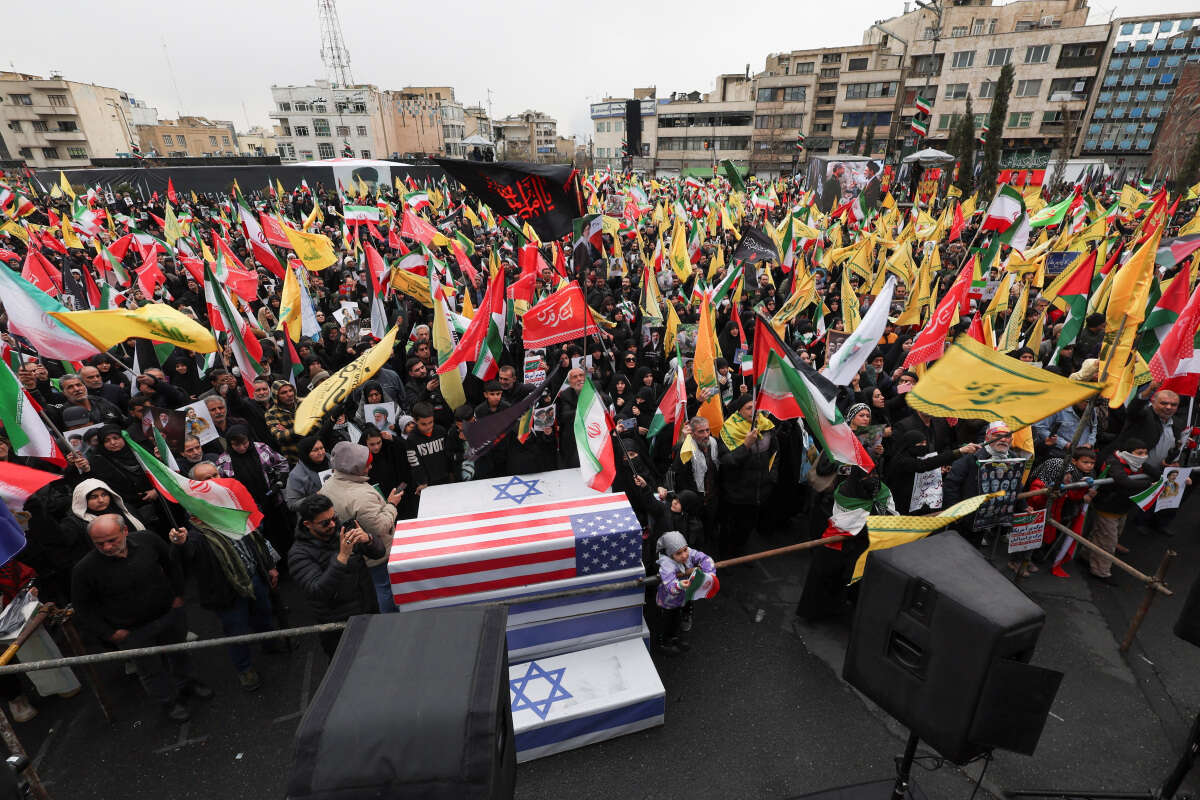
המונים בטהרן נושאים "ארונות מתים" עטופים בדגלי ישראל וארה"ב , רויטרס
Masses in Tehran carry mock coffins draped in Israeli and US flags. Photo: Reuters

Pressure on the West

This begs the question: why is that not happening now? The answer may lie in the gap between destabilizing the system and building an alternative one. Recent military actions, as impressive as they may be, have undermined the regime's sense of immunity, but destabilization alone is not enough. When there is no clear answer to the question of what comes next, fear outweighs frustration.

Moreover, it appears that within key groups, sufficient momentum has yet to form. An uprising is not born on the street alone, but on the intersection between the street and the elite. As long as midlevel ranks, officers, bureaucrats and managers do not signal hesitation or a crack, the public remains isolated. This is an infrastructure that requires years to build, not a momentary move. It is also possible that external pressure itself is working in the opposite direction: instead of dismantling the regime, it strengthens internal cohesion around a shared threat. In the Iranian context, this is a familiar and at times effective mechanism.

In any case, the conclusion is clear: uprisings are not ignited by slogans, and regimes are not toppled by external forces alone. Change occurs when three conditions converge: an internal crack, an alternative narrative and a collective recognition that the risk of taking to the streets is lower than the risk of staying home. Without these, even impressive military moves remain tactical achievements. When they do exist, uprisings needs no ignition, they erupt on their own.


Tags: IranIran ProtestsIran war

Related Posts

The Gulf states have moved on, leaving Israel behind

The Gulf states have moved on, leaving Israel behind

by Yoel Guzansky

The signing of the memorandum of understanding between Washington and Tehran marks the beginning of a new regional order. While...

The Iran deal is an American failure that endangers Israel

The Iran deal is an American failure that endangers Israel

by Danny Zaken

The senior American official distorted the truth in a briefing to reporters: The centrifuges will remain, the enriched uranium will...

How will we know the war is over?

Iran is collapsing, but the US is rushing toward a surrender deal

by Danny Zaken

President Trump threatened an unusual attack and the seizure of Tehran’s fuel terminals, but behind the scenes, a memorandum of...

Menu

Analysis 

Archaeology

Blogpost

Business & Finance

Culture

Exclusive

Explainer

Environment


Features

Health

In Brief

Jewish World

Judea and Samaria

Lifestyle

Cyber & Internet

Sports


Diplomacy 

Iran & The Gulf

Gaza Strip

Politics

Shopping

Terms of use

Privacy Policy

Submissions

Contact Us

About Us

The first issue of Israel Hayom appeared on July 30, 2007. Israel Hayom was founded on the belief that the Israeli public deserves better, more balanced and more accurate journalism. Journalism that speaks, not shouts. Journalism of a different kind. And free of charge.

All rights reserved to Israel Hayom

Hosted by sPD.co.il

  • Home
  • News
    • Israel at War
    • Israel
    • United States
    • Middle East
    • Sports
  • Opinions
  • Jewish World
    • Archaeology
    • Antisemitism
  • Lifestyle
    • Food
    • Travel
    • Fashion
    • Culture
  • Magazine
    • Feature
    • Analysis
    • Explainer
    • Environment & Wildlife
    • Health & Wellness
  • In Memoriam
  • Subscribe to Newsletter
  • Submit your opinion
  • Terms and conditions

All rights reserved to Israel Hayom

Hosted by sPD.co.il

Newsletter

[contact-form-7 id=”508379″ html_id=”isrh_form_Newsletter_en” title=”newsletter_subscribe”]

  • Home
  • News
    • Israel at War
    • Israel
    • United States
    • Middle East
    • Sports
  • Opinions
  • Jewish World
    • Archaeology
    • Antisemitism
  • Lifestyle
    • Food
    • Travel
    • Fashion
    • Culture
  • Magazine
    • Feature
    • Analysis
    • Explainer
    • Environment & Wildlife
    • Health & Wellness
  • In Memoriam
  • Subscribe to Newsletter
  • Submit your opinion
  • Terms and conditions

All rights reserved to Israel Hayom

Hosted by sPD.co.il