Jensen Huang has spent his career setting the pace. For more than three decades, the Nvidia CEO has led the company whose computing chips became among the most valuable assets of the artificial intelligence era. What began as a computer-gaming business grew into a technology empire whose value passed the $5 trillion mark in 2025.
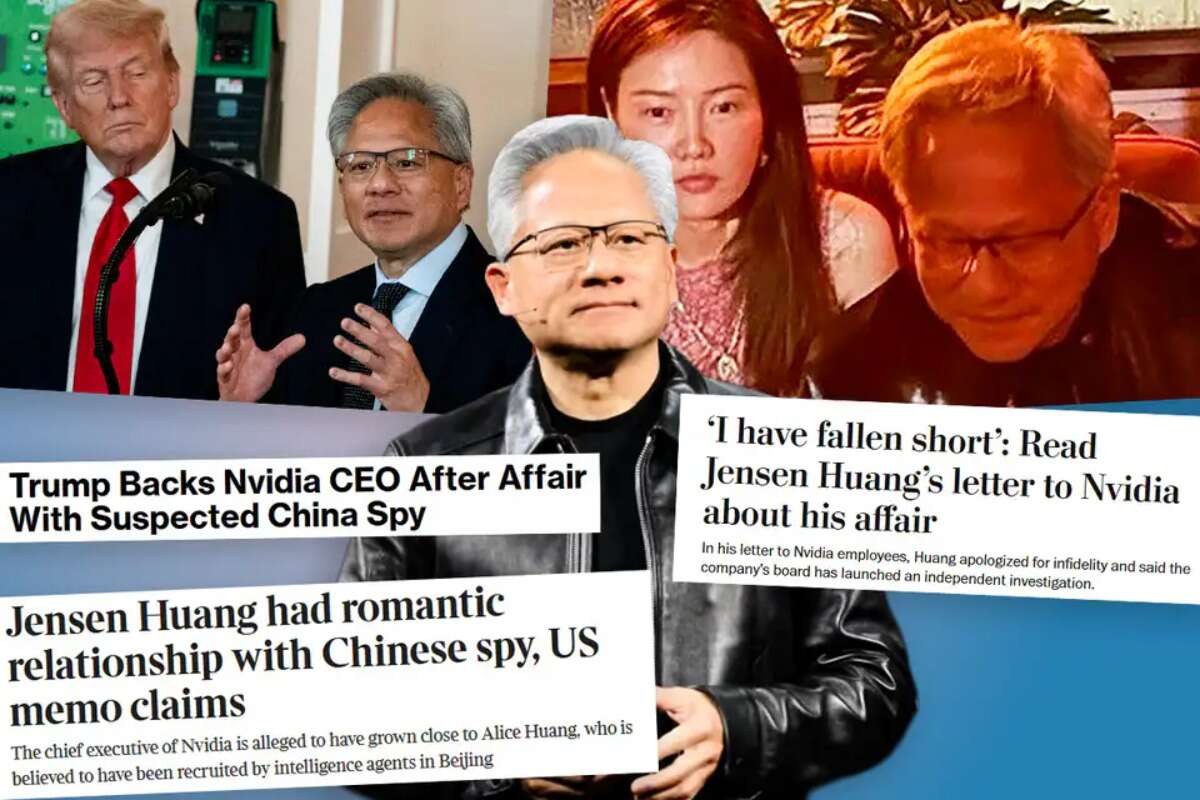
Now, the man behind one of the world's most important companies faces a crisis of a different kind. Nvidia said it would examine reports that Huang was the target of a foreign intelligence effort, against the backdrop of his personal ties with a Chinese businesswoman who is suspected of passing information to Beijing.
Reports in the American media, led by The New York Times, said Huang admitted to the company's board that he had an intimate relationship with a businesswoman who, according to US intelligence officials, gathered information for China. He also admitted he had been unfaithful to his wife. Nvidia responded by announcing a review, though there is no evidence at this stage that company information leaked.
In a letter to Nvidia employees, Huang took "full responsibility" for his actions, acknowledged being unfaithful to his wife and apologized to his family and colleagues. He did not, however, mention the woman's name or her alleged ties to Beijing. Huang wrote, "I love our country and our company. I am committed to protecting Nvidia and supporting America's national security."
The woman is allegedly Alice Huang, a senior executive at Megaspeed, which operates a data center in Singapore and is considered one of Nvidia's biggest customers in Southeast Asia. In October, The New York Times reported that US intelligence officials found the two had developed a warm relationship and that she passed information directly to Beijing.
The timing is especially sensitive. Nvidia is one of the world's leading developers of AI chips, and its products power many of the data centers and computing systems used to train and run advanced models. Its most advanced chips are also at the heart of US export restrictions designed to keep China from the most advanced semiconductor technology.
US President Donald Trump commented on the allegations on Sunday but made clear he had not yet discussed them with Huang. "I know him as an excellent person, but you can never know what is going on," he told reporters. Trump added that Huang is a respected man who has done extraordinary work for the United States. Asked whether he would bring Huang along on his upcoming trip to Asia, Trump replied, "I don't know, but I would definitely take him."
Video: Reuters
From Taiwan to the top of Silicon Valley
To understand how Huang rose to such influence in the tech industry, one has to go back – before Nvidia, before the AI revolution and even before he became one of the world's richest people.
Huang was born in Taiwan and spent his early childhood there and in Thailand. Amid protests in Thailand, his parents decided to send him and his brother to live with relatives in Washington state. The move did not go as the family planned. Believing they were enrolling the boy in a private school, the relatives mistakenly sent him to Oneida Baptist Institute, an institution for troubled boys in rural Kentucky.
The American outlet Bloomberg reported in a profile that Huang found himself in surroundings completely different from what his family expected. Forbes reported that he had to clean the boys' restrooms every day after classes, while his brother worked on a tobacco farm.
He later reunited with his family in Oregon and attended high school in Beaverton. He studied electrical engineering, first at Oregon State University, where he earned a bachelor's degree in 1984, and then at Stanford University, where he completed a master's degree in 1992.
Along the way, he also waited tables at Denny's (a US restaurant chain). He told Forbes the job helped him overcome his shyness. It is a seemingly small detail, but it adds an interesting layer to the story of a man who would become one of the executives most identified with charisma, self-confidence and stage presence.
The chip empire
Huang founded Nvidia in 1993 with co-founders Chris Malachowsky and Curtis Priem, and has served as its president and CEO ever since. The company began by developing graphics processors aimed mainly at computer gaming. In 1999, it introduced its first graphics processing unit (GPU), which later became one of the most important building blocks of the AI industry.
Nvidia also went public in 1999 and gradually became a dominant player in the graphics processor market. Huang holds about 4% of the company's shares.
The turning point came when it emerged that the processing power of the chips, originally built to handle the graphics demands of computer games, could also be used for complex mathematical calculations. In the mid-2000s, Huang began investing heavily in platforms that would allow the technology to be used in AI as well.
In his book "The Thinking Machine," author Stephen Witt describes how Huang pulled Nvidia out of what looked at first like a computer gaming niche and turned it into a company with a central place in the global economy. The book tells an extraordinary business story in which, again and again, the markets struggled to gauge the scale of the opportunities Huang saw in markets that did not yet exist.
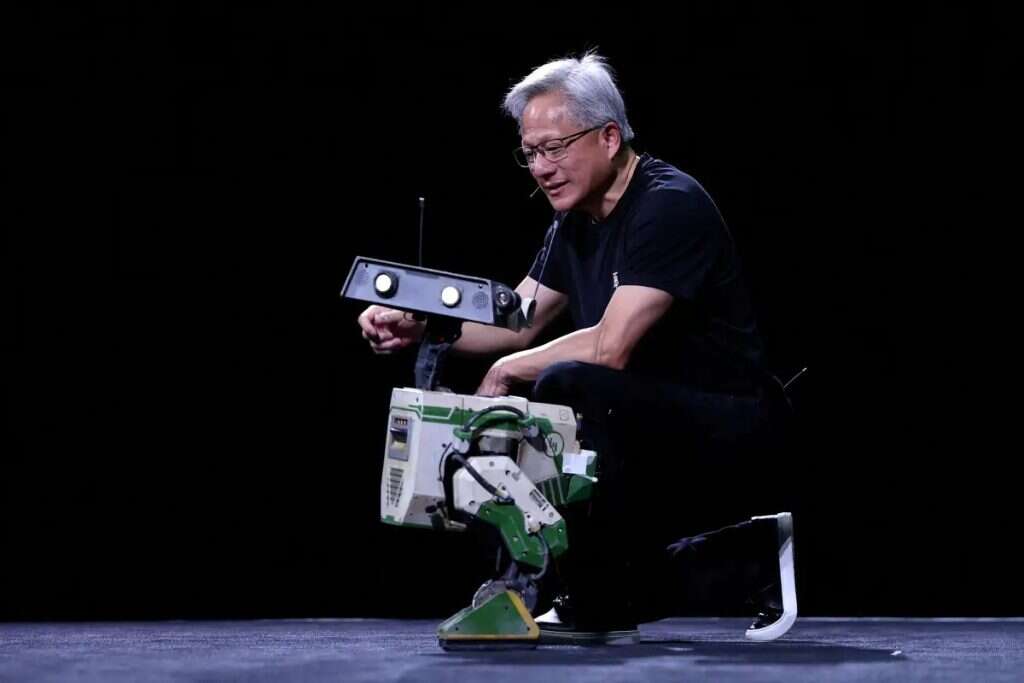
One of the decisive moments came at the ImageNet competition, where Nvidia's graphics processors gave researcher Geoffrey Hinton and his team an edge over rivals in a task of identifying and telling apart images of cats and dogs. Later came the development of the transformer architecture for neural networks by Google engineers – a technology that would become a cornerstone of AI's development.
At the end of 2016, Nvidia delivered its first supercomputer to OpenAI. Six years later, the launch of ChatGPT in 2022 set off the huge surge in the AI industry. Demand for the hardware needed to train and run advanced models sent Nvidia's business and share value soaring.
The company's value passed $3 trillion in 2024 and crossed the $5 trillion mark in 2025. Huang's personal fortune rose accordingly. According to the Bloomberg Billionaires Index, his wealth reached about $195 billion in May 2026.
The demanding boss who struggles to fire people
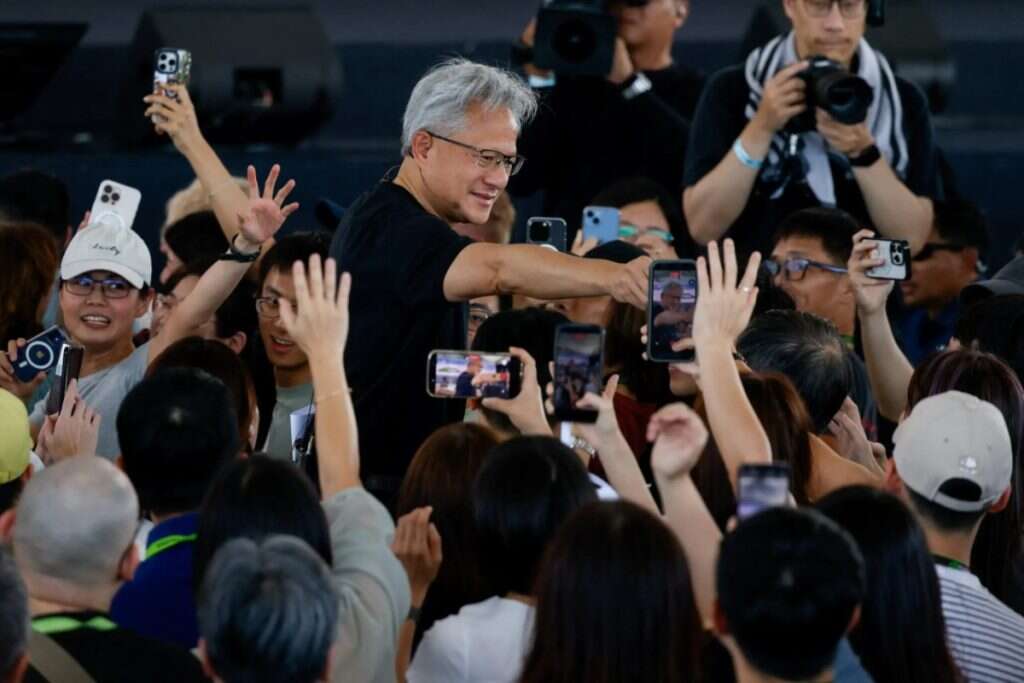
Beyond the business success story, Huang's management persona is more complicated. Witt's book portrays a manager with extraordinary drive and great personal intensity, but also some less flattering traits. The book says Huang tends to scold senior executives in public when he believes they have failed at their task or let the company down.
His obsession with the mission and the business vision, the book says, can push almost every other part of his life aside. Yet behind the outbursts and demanding standards, another side shows – a man who has great difficulty firing employees, even those who were on the receiving end of his outbursts. The book describes strong bonds of loyalty between Huang and his employees and portrays him as fundamentally a good person, despite his demanding character.
This portrait helps explain how Huang runs Nvidia, a company whose success rested in large part on long-term vision and a willingness to invest in technologies that were not yet mature.
Trump's AI whisperer
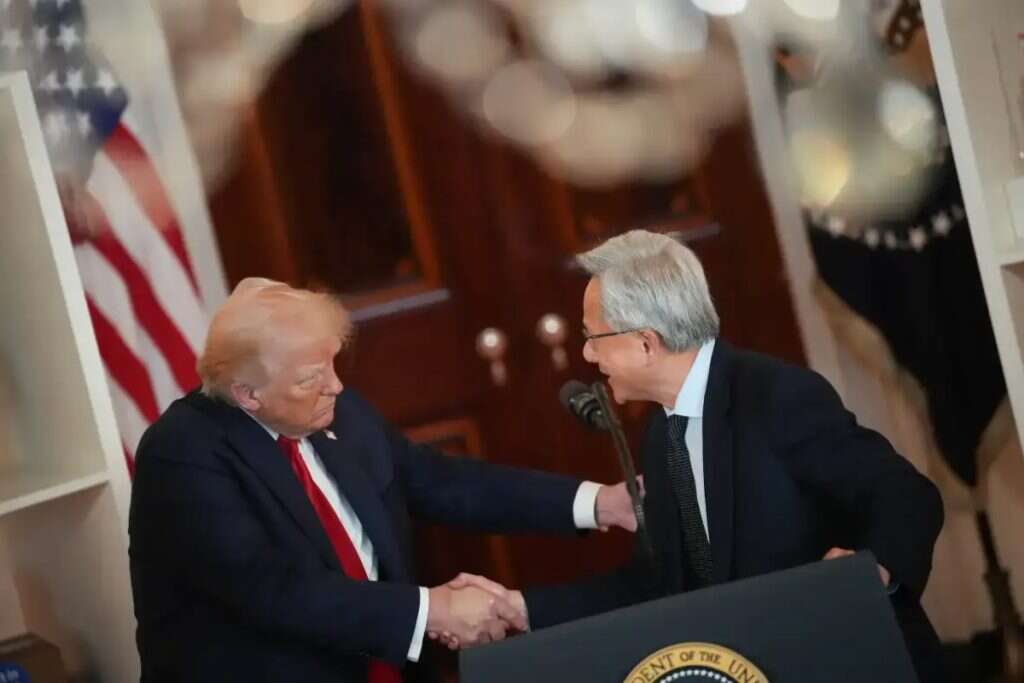
Alongside his business clout, Huang has become in recent years a figure of real political influence in Washington. His ties with Trump have strengthened, and the two are often seen together. During 2025, they appeared in public together at least six times.
In October 2025, Huang told reporters in Washington that he had helped fund the new ballroom in the East Wing of the White House. He said he was glad to take part in the project, which Trump estimated would cost about $300 million. Nvidia did not appear on the White House's public donor list released that week. Amazon, Apple and Google were also among the tech companies that backed the project.
Video: Joe Rogan's podcast
In late 2025, Huang appeared on a podcast hosted by Joe Rogan and flattered Trump, calling him "amazing" and also speaking of his charisma and genius.
But the bond between the two goes beyond public gestures. In an interview with NPR in September, Witt said the Nvidia CEO had become one of Trump's most influential advisers on technology. The two, he said, often speak by phone.
Witt explained that Trump wants a close relationship with Huang because Huang represents extraordinary business success, while Huang seeks to be close to the president because the administration has a direct bearing on Nvidia's future.
Witt also offered an intriguing reading of how the relationship was built. When he interviewed Huang in the past, the Nvidia CEO told him that every problem in the world is, in essence, an engineering problem. Huang believes, Witt said, that one can study the data, change the starting points and reach the desired result. Witt argued that Huang identified the inputs that move Trump as relentless public flattery, while the outcomes he is after are looser limits on selling Nvidia equipment to China and a lack of regulation of the AI field.
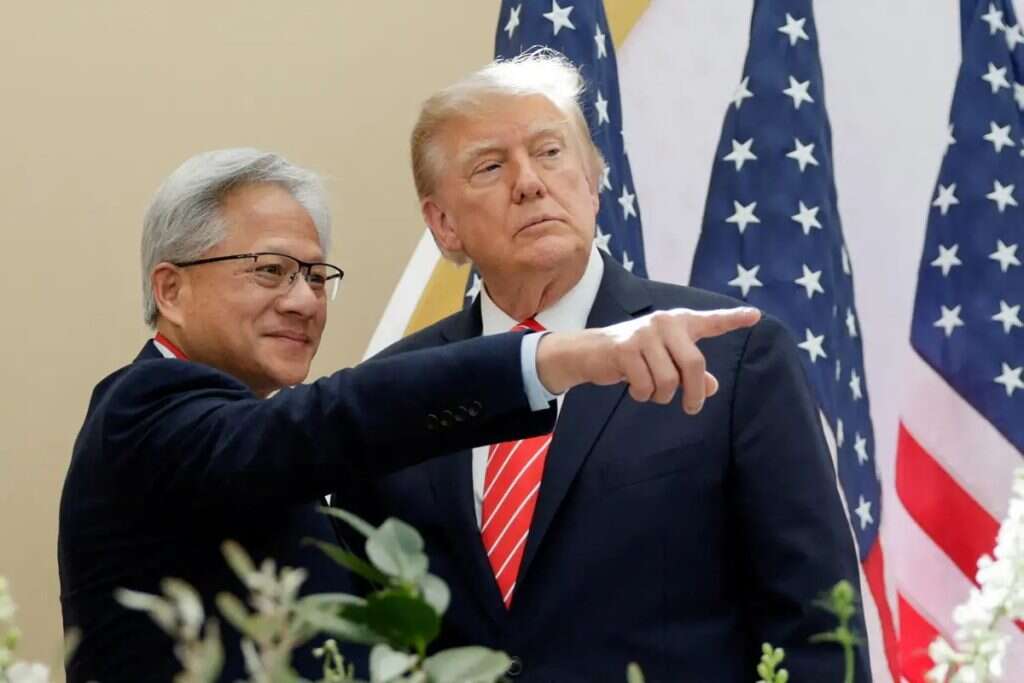
In the interview, Witt also addressed Huang's influence on the administration's China policy. Earlier this year, Trump approved the sale of some of Nvidia's advanced chips to China, after their sale was banned under the Biden administration. Asked whether Huang influenced the decision, Witt answered unequivocally, "Absolutely. That is Jensen's job." In Witt's account, Huang is effectively the only American figure who wants to sell the equipment to China, while large parts of the State Department and the national security establishment oppose it.
The relationship also surfaced in May, when Huang joined Trump's delegation to Beijing. The delegation also included Tesla CEO Elon Musk, Apple CEO Tim Cook, BlackRock CEO Larry Fink and Boeing CEO Kelly Ortberg.
Huang's place on the delegation was not a given. After media reports that he had not been invited, Trump called him and asked him to join, according to a source familiar with the details who spoke with CNBC. Huang flew to Alaska to board Air Force One. The president himself confirmed that Huang was aboard and dismissed reports that he had not been invited.
Asked about the trip, Huang said Trump had asked him to come along. He later described the ceremony ahead of the meetings as an uplifting experience and praised both Chinese President Xi Jinping and Trump for their warm reception.

A personal crisis with global implications
Now, against the backdrop of his closeness to the White House and the influence he has built, Huang has landed in an affair that raises questions reaching far beyond his personal life. Because he leads the company that provides the computing infrastructure on which much of the AI industry depends, any report of possible ties to someone passing information to China becomes a matter of strategic importance.
An analysis published by Bloomberg underscored that much of the AI industry has been built around Nvidia and that the prospect of the company losing its leader is a worrying scenario for investors. Still, Nvidia's board made clear it would look into the reports and has seen no evidence that company information leaked.
Ultimately, Huang's story is that of a man who spotted a technological opportunity before many others, bet on it at enormous scale and built a company that changed the face of the industry. He came to the United States as a child from a family that had immigrated from Asia, passed through an institution for troubled boys, completed engineering studies and became one of the richest and most influential people in the world.
But now, with the company he founded at the heart of the technology race between the United States and China, his personal life and the ties he cultivated outside the boardroom may become a matter of public, business and security significance. The man who used to say every problem is an engineering problem will now have to face an especially complex equation – one that may not be solvable with an advanced chip.