For Palestinians, the return to homes and lands abandoned in 1948 was never merely a theoretical or symbolic demand. It was a practical matter, a foundational element of their thinking and identity. The demand for return, voiced from countless platforms, was not just a symbolic act meant to express loyalty to the Palestinian past and heritage, nor merely a tactical or propaganda move vis-a-vis Israel. It was always accompanied by a stated and written Palestinian expectation that it would one day be carried out in practice, both as an end in itself and as a means of eliminating the Jewish state and turning back the clock.
Even so, for many years, many in the Israeli leadership, followed by much of the Israeli public, assumed that the Palestinian demand for return was little more than lip service, a matter of heritage, folklore and historical memory, with no real practical dimension, or at least no significant one. They believed the Palestinians did not truly mean it.
Many Israelis believed that when the day came, at the "moment of truth" in negotiations, the Palestinians would retreat from the demand. They would understand, so the thinking went, that it was unrealistic to expect Israel to take back hundreds of thousands, even millions, of Arabs to the places where they had lived until 1948, to cities and communities that are now part of the State of Israel.
Only a few in Israel considered the possibility that the Palestinians meant exactly what they were saying, and were actively working to realize return. Even fewer grasped its implications.

'The Jews will not feel it'
But the warning signs were countless. One of the most prominent Palestinian researchers to spread the "gospel of return" was Dr. Salman Abu Sitta, author of The Palestinian Right of Return: Sacred, Legal and Possible. Abu Sitta worked for many years in cooperation with the organization Zochrot and sought "to return all the refugees of Lebanon to the Galilee and all the refugees of the Gaza Strip to Beersheba." "The Jewish areas," he argued, "will not be affected at all, and theoretically, the Jews will not feel their presence." According to him, if all the refugees from Lebanon and the Gaza Strip returned, their number would equal that of the Jews who immigrated to Israel from Russia since 1989.
Abu Sitta, who devoted his life to preserving the memory and identity of the "occupied homeland," enjoyed broad support in Palestinian society, and his articles were published in leading newspapers across the Arab world. Under his plan, 175,000 refugees from Jaffa would be housed in high-rise buildings in Ayalon Park, 45,000 refugees from Safed in the Nahal Amud Nature Reserve, refugees from greater Haifa in Carmel Park, and refugees from Tiberias in towers on the shore of the Sea of Galilee.
Memory of the "Nakba," and return as a practical objective derived from it, are today expressed in many additional ways and dimensions, among Arab citizens of Israel, among Palestinians in Judea, Samaria and Gaza, and in Arab countries, through various organizations, movements and parties. One of these practical dimensions is the restoration of religious sites, churches, mosques or cemeteries, that remained standing within Israel after the War of Independence, unlike the homes in those villages, which were destroyed.
As Dr. Yechiel Shavi noted in his research, the main reason for preserving abandoned religious sites is not fear of desecration. The real aim is "to lead in the future to the return of an Arab population to these places." One example is the activity surrounding the village of al-Ghabisiyya in the western Galilee. After a long legal struggle between the displaced residents of al-Ghabisiyya and their descendants and the state, the mosque that remained there was fenced off and access was barred by order of the Israel Land Authority. Daoud Badr, secretary and coordinator of the Committee for the Defense of the Rights of the Displaced, explained that restoring the holy site to use "will first encourage residents to visit their village and strengthen their identity with the place," and over time "it will also soften ... Jewish opposition to the return of the displaced. At the first stage, it is enough to ask to renovate the sites, without mentioning the right of return."
"About that," he clarified, "we will speak at a later stage, after we renovate ... Just as the state establishes communities for Jews, I want it to allow me to return to my lands."
The displaced residents of the abandoned upper Galilee village of Suhmata, who are working to restore the village cemetery, and the association for preserving the heritage of Tzippori, have similar goals. "Our real aim is to get our lands in Tzippori back," association chairman Amin Taha explained. "Now we are waiting for one thing only: that there will be peace, and then we will return to our lands ... In our view it is only a matter of time until the internally displaced refugees get back their lands, or some of them" (from Hillel Cohen's book Present Absentees). In the same spirit, the chairman of the association for reviving the culture of the village of Maalul, active since 1995, also acknowledged that "if we are allowed to renovate and clean the holy places, we will know how to bring the village back to life."
'This is our land, brothers'
Another glaring red light should have been lit by extensive documentation showing that memory of the "Nakba" and consciousness of return occupy a very prominent, almost obsessive place in the Palestinian education system. This is true in the study of Islam, society, Arabic and history, and even in subjects such as biology and mathematics, where Palestinian students are required to memorize, directly or indirectly, the stories of return embedded in textbooks.
Dr. Arnon Groiss, who has for many years studied attitudes toward the "other" and toward peace in school curricula across the Middle East, also examined attitudes toward Jews, Israel and the conflict in teachers' guides published by the Palestinian Authority Education Ministry. He found that Palestinian textbooks delegitimize the existence of the State of Israel and the very presence of Jews in this land. That is based on the Palestinians' purported "exclusive right" to the Land of Israel and the rejection of any right Jews may have to it. "Palestine," his research found, replaces Israel as the sovereign state in the area, both in texts and on maps.
Another researcher, Dr. Michael Milshtein, who closely traced the development of memory of the "Nakba" in Palestinian thought since 1948, found that "the Nakba goes beyond the definition of a concrete event or a historical point in time. This trauma," he explained, "is perceived as an ongoing existential condition stretching across all the years of the Palestinian people's existence and binding together all generations and sectors around a shared fate. The arms of Nakba memory also reach into the present, and in that way it embraces the Palestinians of 1948 together with their descendants. It is a tangled bond that, according to the Palestinian perception, can only be undone after the 'wheel of history' is turned back, meaning once return is realized, thus creating a clear separation between past and present..."
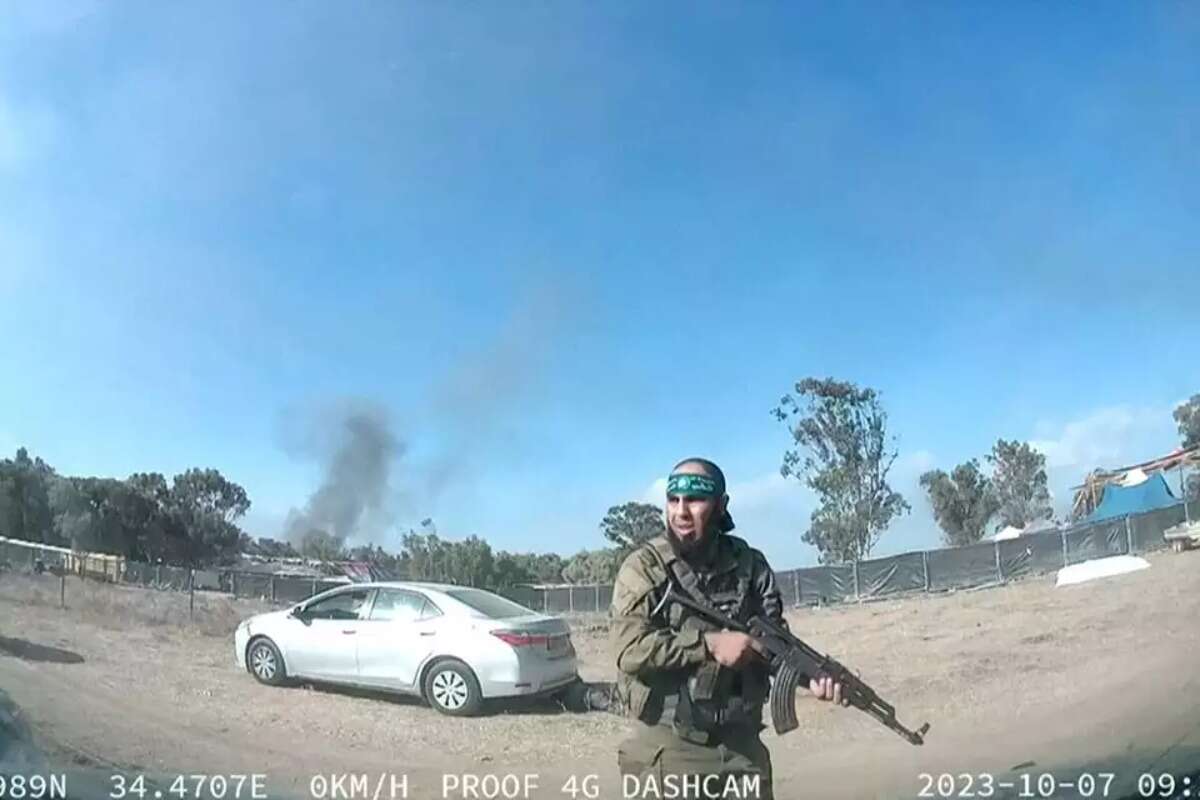
Then came October 7, while only a few paid attention to the central role that the ethos of return played in the horrors of that day. The leaders of Hamas, who ran the operation together with the Islamic Jihad terrorist organization, did indeed call it "Al-Aqsa Flood." But from the preparations that preceded the massacre, and from examining the massacre itself, much of it documented by the terrorists' body cameras, it was clear that one of its main goals was the practical realization of the "right of return."
During the murders, abuse and conquest, some of the terrorists could be heard promising themselves and one another that they would return to Jaffa, Lod, Acre and Jerusalem, to lands, homes and places lost by the Arabs of the Land of Israel during the Jewish people's War of Independence. A return to areas that are now part of sovereign Israel and home to millions of Jews.
A handwritten document seized by the IDF during the war revealed that Hamas' original goal had been to take over 221 communities in southern Israel, including the cities of Netivot, Ofakim and Sderot, and expel the "settlers" from them. Some of the terrorists who took part in the massacre referred by their Arabic names to areas inside Israel that they had invaded, and spoke of returning to lands that had been "stolen" from them. Among the places mentioned were the lands of Najd, on part of which Sderot was built, al-Majdal, now Ashkelon, Hiribya, near Kibbutz Zikim, and Bir Gra, near Kibbutz Nir Oz.
One terrorist, who filmed himself on his head camera while taking part in the assault on Kibbutz Sufa and the nearby military post, was heard shouting excitedly: "This is our land, my brothers, this is our land!" At the same time, the inciting words of a host on Palestinian radio, to which the terrorist and his comrades were listening, could be heard in the background: "Anyone carrying a knife who can reach a community should go. Our good guys in '48 [Arab Israelis], we are waiting for Guardian of the Walls 2."
Chief Insp. Oshri Adri, who interrogated 200 Nukhba terrorists who took part in the massacre, came away with the impression that the invaders intended "to conquer the Land of Israel ... They had prepared for this for years." According to him, "some of them really came to settle on the land of the State of Israel. Some told investigators they had come to Israel because at the mosque they were told there was an opportunity to return and settle in homes here."
Consciousness of return as a religious idea, and consciousness of "fath" (victory and Islamic struggle), as one expression of the Palestinian national idea of return, were interwoven among the planners and perpetrators of the massacre and among the masses of Gazans who came after them to complete the work through looting and further murders.
Packed suitcases
Many terrorists testified to this in interrogation. Muhammad Amjad, for example, told his Shin Bet interrogators how he operated in Sderot in order "to purify the occupied lands and Palestine and Jerusalem of the impurity of the settlers." When asked what he meant by the term "settlers," he replied: "These are the settlers and the undercover agents who came from Western countries, from foreign countries ... from abroad, in order to occupy the land, Palestine."
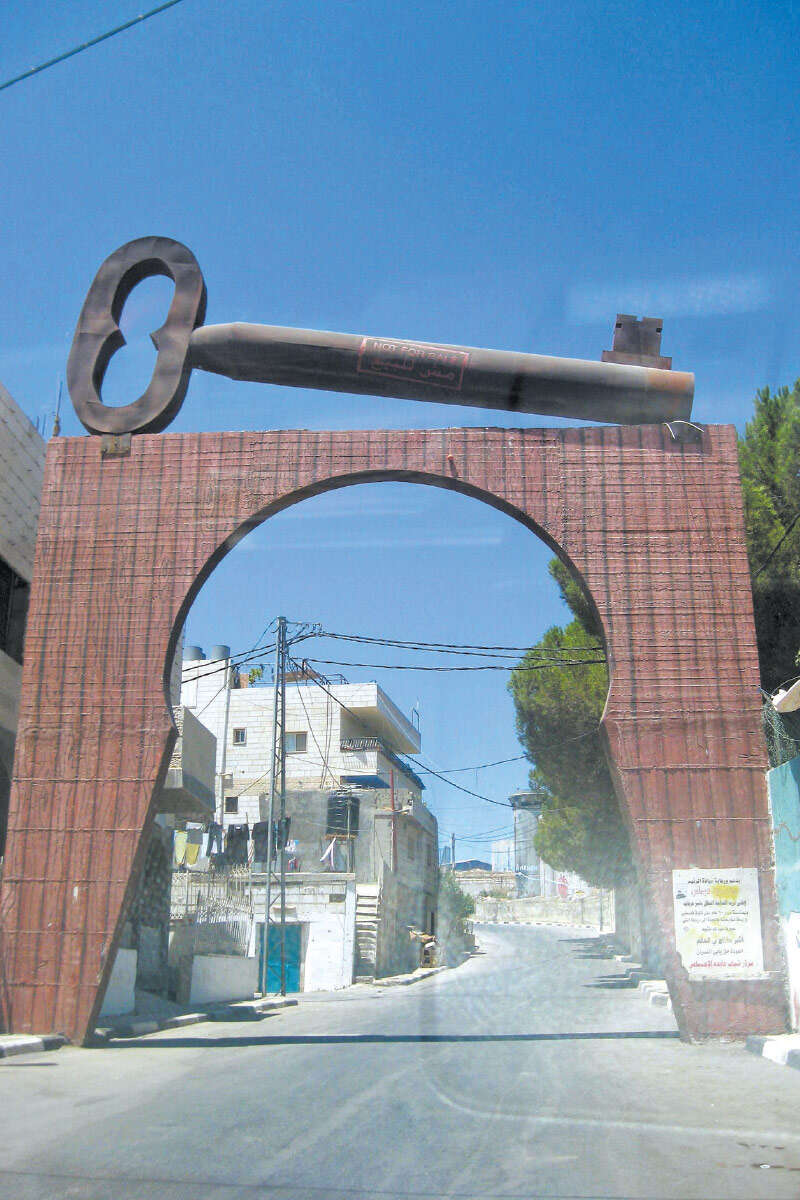
About a week before the October 7 massacre, Mustafa al-Sawwaf, a journalist, columnist and senior Hamas activist, published an article on the Izz ad-Din al-Qassam Brigades website containing even more explicit language about "the Jews' return to their countries of origin," apparently reflecting prior knowledge of what was in store for residents of the Gaza border region: "Prepare to depart from the envelope, but leave your suitcases closed and do not open them, and prepare for the final departure from Palestine, so that rearranging them will not burden you. The departure will happen, and it is closer than you estimate. Your presence on this land, even if prolonged, is ... a temporary presence ... The owners of the lands of Palestine, their sons and grandsons, have been waiting for more than 75 years to return to them, and they will return soon with Allah's help..."
The attack, which took place 10 days later, was meant to be far broader and to form part of a multi-front campaign including the conquest of the Galilee and the Negev, an armed uprising by Palestinians in Judea and Samaria and by Arab Israelis inside the Green Line, and a massive barrage of rockets and missiles to paralyze Israel's air and sea ports and strike infrastructure and strategic targets, especially power stations, the water supply network and communications centers.
The full scope of the planned operation, which was meant to realize in practice the Palestinian demand for return in the communities and territories to be conquered, can be seen in a handwritten Hamas document seized in the Gaza Strip during the IDF ground maneuver launched after the massacre. The invasion is called in the document "Operation Returning Home." It includes breaching the border fence at dozens of points, as indeed happened, expulsion patrols, the expulsion of residents from small towns, and the neutralization of military zones. To achieve these goals, Hamas also planned to rely on ordinary Gaza civilians. "As a precaution," the document states, "a mass popular mobilization must be recruited for the purpose of returning to the villages and reoccupying them symbolically." סעיף 5 of the document, dealing with the "expulsion of the large cities," states that each city would be assigned 400 fighters who would direct expelled residents "to the sea area."
The idea of return is fundamentally a national one shared by Hamas and other branches of the Palestinian national movement, but Hamas turned it into a religious idea and clothed it in Islamic religious characteristics. In many of the videos filmed by Nukhba terrorists during the massacre, they can be heard speaking about the "fath," the Arabic term used for each of Muhammad's and the first caliphs' victories in war. In that spirit, on October 6, Hamas Gaza Brigade commander Izz ad-Din al-Haddad instructed his men to take flags of Arab and Islamic states with them and raise them over the military posts and kibbutzim they captured.
And indeed, both the original Hamas charter and the supposedly revised version from 2017 commit to conquering all of "occupied Palestine as the supreme goal, from the river to the sea" or, in other words, creating a world without Israel. Islamic domination is aimed not only at territory. Its central goal is to impose Muslim religious faith and Sharia law on all human society and, in the local context, to "liberate all of Palestine" and impose Islam upon it in a "roaring flood" (tufan al-hadir), or, as Hamas called the campaign it launched on October 7, 2023, "Al-Aqsa Flood."
Ideas of this kind also appear in Palestine, a work by Ali Khamenei, the man who had been Iran's supreme leader and Hamas' patron. Khamenei, who led Iran for 36 years until he was assassinated in the opening strike of Operation Rising Lion, defined the Palestinian issue as "the most important issue in the Muslim world" and declared that "Israel must disappear."
In that work, published by the Islamic Revolutionary Guard Corps in 2011, Khamenei tried to persuade Israelis to return to the countries from which their grandparents had come. He predicted that after Israel disappeared, a referendum would be held among the "original inhabitants of the land" to determine whether Israelis would continue living in Palestine or be forced to return to their "mother countries." In his view, Israel and the Jews living there have no right to hold the land, not even the smallest part of it, because "any non-Muslim and non-Palestinian rule over Palestine is illegitimate." Khamenei assigned the task of destroying Israel to the Palestinians themselves, not to any state actor, and the way to do that, he argued, is through "martyrdom" and "militant struggle."

A scaled-down model of liberation
Senior Hamas officials wrote to Iran as early as 2021 asking for help in carrying out an attack on Israel far larger than the one that ultimately took place. In the original plan, Hamas intended to bring down skyscrapers in Tel Aviv, the Azrieli towers, the Moshe Aviv Tower and others, in the style of the September 11 attacks. Hamas' Gaza leader, Yahya Sinwar, wrote to Khamenei that he needed additional financial and military support, and pledged that with Iranian backing Hamas would be able to destroy Israel completely within two years. A 36-page presentation from 2022, seized by the IDF at a Hamas post in northern Gaza in November 2023, displays dozens of maps describing the movement of Hamas terrorists against possible Israeli targets under the title "Strategy for Building an Appropriate Plan for the Liberation of Palestine." One of them shows that before October 7 Hamas had also planned attacks in communities in Samaria and along the seam line.
Two and a half years later, four months after the massacre and in the midst of the Swords of Iron war, one of Hamas' senior officials, Basem Naim, explained in an article on the Al Jazeera website that the October 7 massacre had been "a scaled-down model of the final liberation war and the disappearance of the Zionist occupation." According to him, this model "demonstrated to the Palestinian people that the scenario of defeating Israel, liberating Palestine and returning the refugees is possible, and indeed very possible."
The October 7 massacre sparked celebrations and expressions of solidarity not only in the Gaza Strip, but also in areas of the Palestinian Authority in Judea and Samaria. The fact that this was a murder campaign with clear Nazi characteristics, one that included crimes against humanity, did nothing to shake the revelers' joy. Many Palestinians in Judea and Samaria saw the events of October 7 as proof of the reality and feasibility of the dream of return. For several days, not a few Palestinians genuinely believed they were close to "touching happiness." On October 7 they felt for the first time that they were within touching distance of "return" thanks to a Palestinian-initiated act of war, and they gave free rein to that feeling.
Jibril Rajoub, the former head of the Palestinian Authority's Preventive Security Service and one of the potential heirs to President Mahmoud Abbas, said in an interview with an Egyptian television channel that the massacre was "a full defensive war filled with heroism," part of "the war the Palestinian people have been fighting for 75 years." Mohammed Dahlan, the former head of the Palestinian Authority security apparatus in Gaza, who also aspired to succeed Abbas, said Western leaders were coming here to make sure Israelis did not flee to Europe.
Palestinian Prime Minister Mohammad Shtayyeh refused to condemn the massacre and proposed forming a unity government with Hamas. Marwan Barghouti, a senior Fatah figure serving five life sentences for involvement in terrorism and a series of murders during the Second Intifada, called on Palestinian Authority security services to turn their weapons on Israel, act by surprise and recreate the October 7 massacre in Judea and Samaria. "Do not be mere witnesses," Barghouti urged. "Become active soldiers in the decisive battle." Jamal al-Huwail, another Fatah member who belongs to the movement's Revolutionary Council, explained: "We hoped that something similar to what happened in the Gaza border region would happen [in Judea and Samaria], but we thought it was only wishful thinking ... God willing, we will see similar images in the West Bank." Iyad Jarad, secretary of Fatah's Tulkarem branch, stressed that Hamas' actions were "a source of pride, heroism and honor for the Palestinian people." Abbas Zaki, a member of Fatah's Central Committee and a former Palestinian ambassador to Lebanon, declared that "after October 7 there is a Palestinian revival."
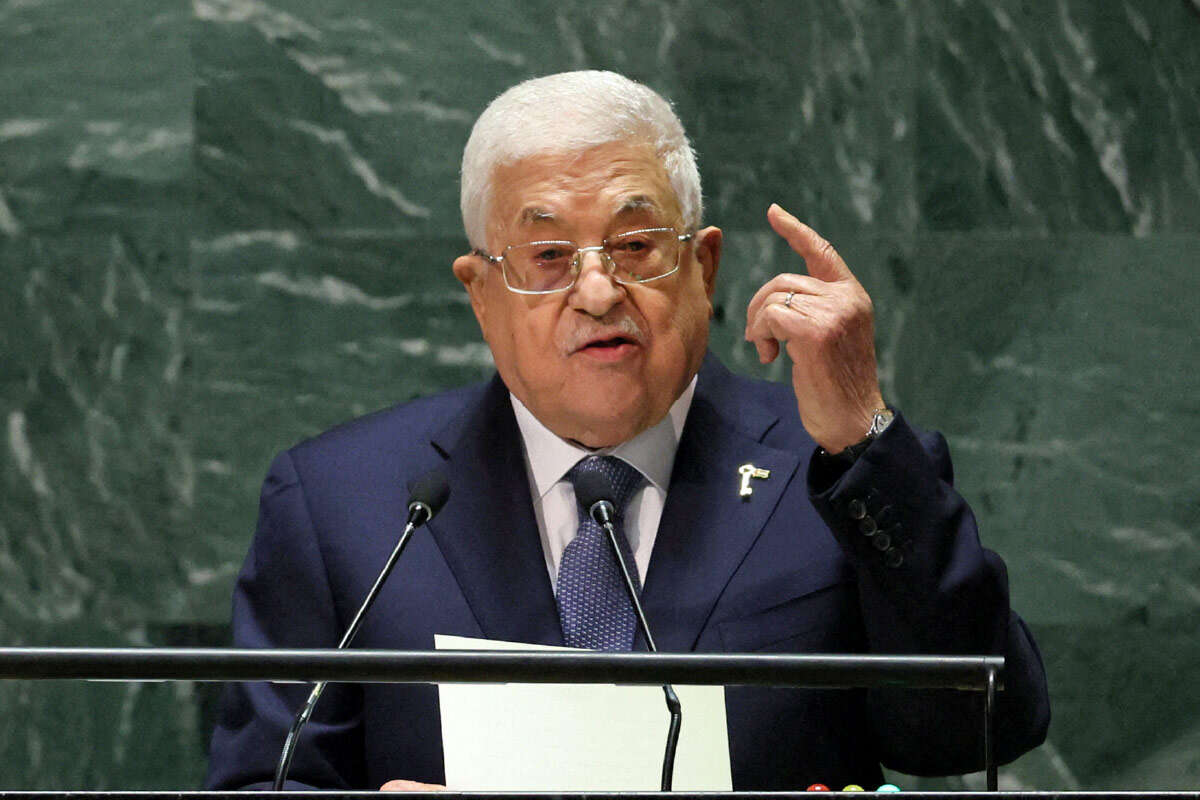
Palestinian Authority President Mahmoud Abbas, who five months before the massacre had used a UN address to call for Palestinian refugees to be returned to their homes, and who also noted that he himself, as a refugee from Safed, wished to return to his city, refrained from any official response to the massacre. He did not praise it, but he did not condemn it either.
Around the world, Palestinian Authority diplomats did not hesitate to openly celebrate the October 7 massacre. Dozens of them, around 30 according to a study published in the Jewish Chronicle, posted messages on social media praising the massacre, comparing Israel to the Nazis, sharing content calling for Israel's eradication and for the return of refugees, and encouraging the murder of Israelis.
The Palestinian street in Judea and Samaria, much like Rajoub, Barghouti and many of its leaders, also reacted to the massacre with sympathy and joy. In Ramallah and Nablus, marches were held in which participants called for weapons to be handed over to Hamas in order to realize the refugees' return, and in many schools, especially those run by UNRWA, there were displays of solidarity with Gaza and with the events of October 7.
Thus, for example, just one week after the attack, on October 15, children at an elementary school in Nablus were seen drawing the paragliders Hamas used to infiltrate Israel and launch its killing spree. At the Ya'bad boys elementary school in the Jenin area, a strike was held "in honor of the pure blood of our martyrs," and at a boys high school in Tulkarem, a video was published showing a student's speech under the title "A day that will be written in the history books of the Arab-Palestinian struggle." At that moment, "return" seemed to many Palestinians to be an attainable dream.
The sources for the information published in the excerpts presented here appear in the body of the book.