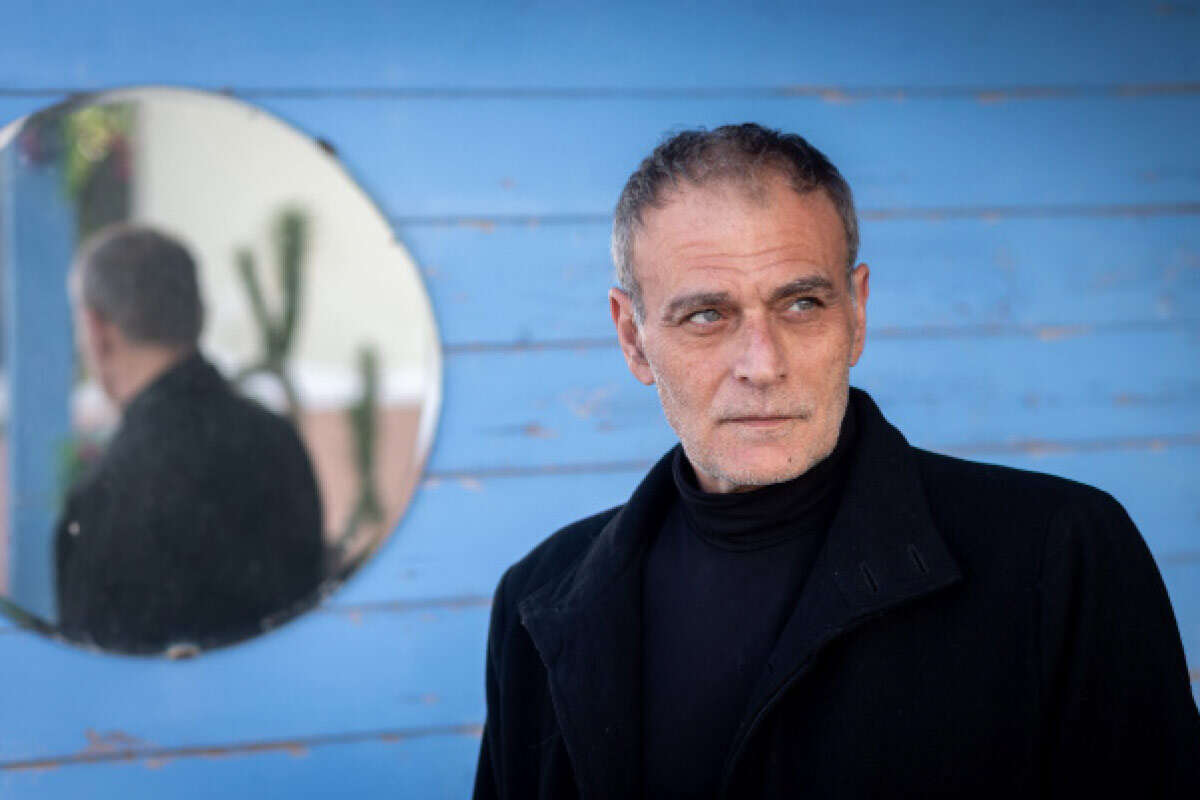
Isri Halpern is a documentary filmmaker with a fire in his belly, a gifted storyteller whose work usually tries to lift the rug of Israeli society, shine a light on the dust that has gathered underneath it and tug viewers by the braid.
At times you can feel the sweat of exaggeration when he sets out to shake up clichés, but he always provokes thought, with or without anger. Watching his films leaves tracks in the mind. That is true whether he is telling the story of the last leopard in the Judean Desert, the trance-party scene of the 1990s, or leading viewers in search of the man who raped him when he was 9 years old, in the 2007 film "Allowed Child."
He began as a fashion photographer, went on to study film in New York, where he won a Student Emmy, and turned himself into a one-man production company in which he is the director, cinematographer, screenwriter, researcher, editor and producer. He says the stories dictate his protagonists, and if they are not exactly camera-friendly, he will solve that himself.
"Fathers' Rights," his 2011 film following a group of men campaigning to change Israel's "Tender Years Presumption" law, opened a front between him and women's organizations. Halpern says that "today, the ideas about shared parenting presented in the film, which back then brought all the world's righteous women down on my head, have become self-evident. Just as in the 1990s, when 'Bombs on the Way to the End of the World' came out, all the mainstream media recoiled from it because it talked about trans people and drugs."
His 2013 Docaviv winner, "Dancer, Pole and Film," also seems to have been ahead of its time. It is a small, charming film in which Halpern follows dancer Neta Lee Levi all the way to the European championship in professional pole dancing. What began in strip clubs and is now a sought-after class in dance schools as if it were tango or the pasodoble.
In 2021 came "The Last Lap Dance," which follows four strippers fighting a decision by the Tel Aviv Municipality and Israel Police to shut down the clubs where they worked after the law banning the consumption of prostitution was applied to them. Some saw the film as a brave examination of women's empowerment and the right to work and personal freedom, but the voices that saw it as ignoring the brutal exploitation of women in the sex industry were louder.
The Tel Aviv Municipality canceled a planned screening at Beit Ariela, invoking a bylaw stating that "content liable to be offensive" would not be shown. After that, a screening in Pardes Hanna-Karkur was canceled, followed by one scheduled for Cafe Shapira, a community cultural center in the neighborhood where Halpern has lived for 20 years. "All the bastions of liberalism were exposed in all their hypocrisy," he shoots back. "Silencing that didn't provoke a single protest from any of the enlightened people."
A short, cheeky youth
In the living room, as if accompanying the storm of words, Hersheleh never stops barking. They have been together almost nine years. Halpern adopted him from some nonprofit organization, convinced he was bringing home a sweet golden retriever, until he realized he had a Canaan dog wolf growing in the house. "They're barking machines," he sums up the only purebred dog whose origins are in the Land of Israel.
The dog owes his diasporic name to the research Halpern began more than 22 years ago and that ripened into the film "Proud Jewish Boy," which, since its release last year, has won awards at festivals in Israel and abroad. Too late for the late Sasha Klein, the producer who accompanied the project from the start.
The script had a long gestation and absorbed many delays before finally reaching fruition with the support of the New Fund for Cinema and Television and Kan 11, broadcast on the eve of Holocaust Remembrance Day.
Michael Faust and David Polonsky created the illustrations woven into the historical documentation, and Israel Bright composed the music for a documentary journey centered on the story of Herschel Grynszpan, the young assassin whom Jews accused of responsibility for Kristallnacht, the pogrom that marked the start of the Holocaust, and on whose narrow shoulders the Germans placed responsibility for the outbreak of World War II.
The film is a dazzling act of embroidery made of research, archival material and personal testimonies from family members and historians. It traces a line of events from the assassination of the German diplomat to a confrontation in the Gestapo interrogation rooms between Joseph Goebbels and Herschel, whom Adolf Eichmann later said he remembered as a short, cheeky youth.
On the chairs in Halpern's home lies a commotion of books, newspaper clippings and yellowing documents, some of the materials that paved his way from the day he became captivated by Grynszpan's story. "Docutorate," he says with a smile, using a word he invented. "A doctoral dissertation compressed into an 87-minute film that forces you to distill and tighten. Like a Japanese haiku."
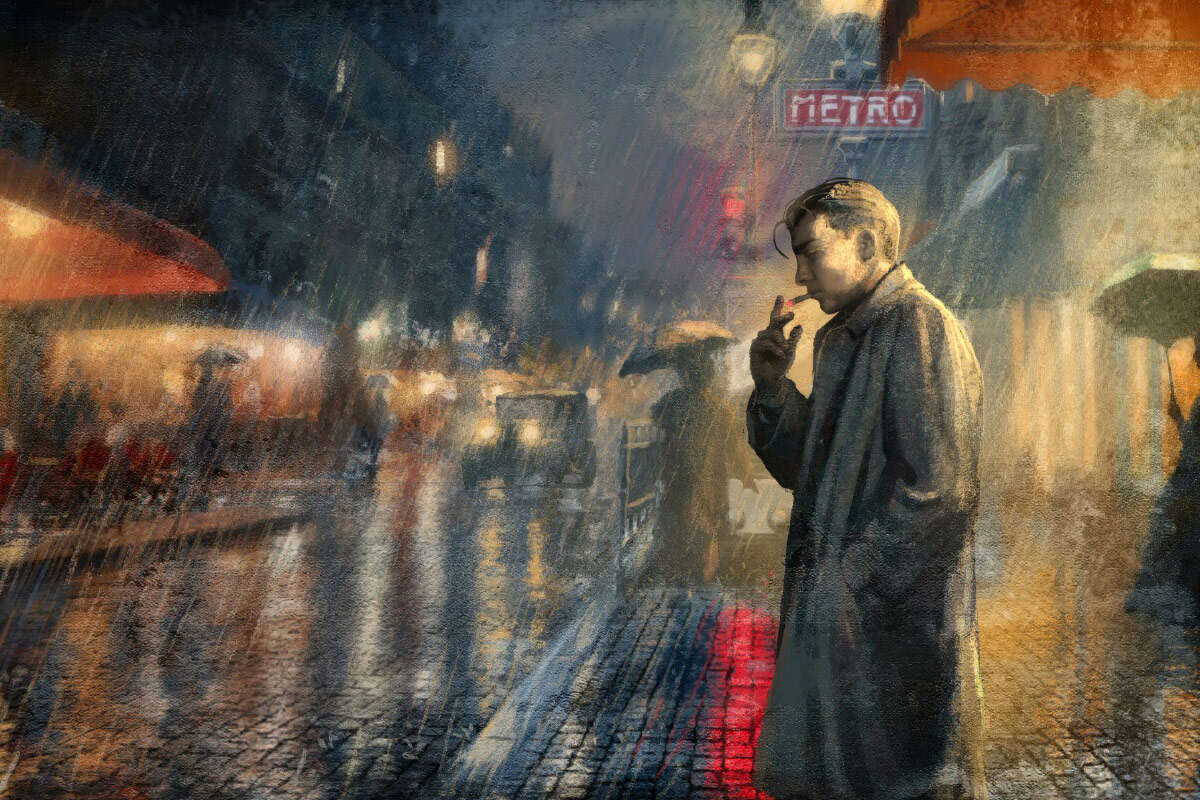
I sat with him for hours, following him through the forests of knowledge he had accumulated, what survived the editing and what remained on the floor. I heard from him about theories that grew from fragments of information and collected testimony, all surrounding what began on Nov. 7, 1938, when 17-year-old Herschel, an undocumented immigrant in Paris, entered a gun shop in Paris and bought a revolver. From there, by Metro, he continued to the German Embassy, persuading the receptionist that he had an important document he needed to deliver personally to the embassy secretary.
Ernst vom Rath, a junior secretary, 29, agreed to the request. The receptionist shut the door behind them and, within a short time, gunshots were heard. The results suggest this was no skilled killer. Of the five shots fired at point-blank range, only two hit vom Rath, who was rushed to a hospital. Grynszpan was arrested without resistance and taken to police headquarters in Paris. On the way there, he told officers he had acted in order to awaken world public opinion to what Germany's Jews were going through. French doctors managed to stabilize vom Rath's condition, but after two days, and a suspicious visit by Hitler's personal physician, who had been sent to the hospital on his behalf, he died.
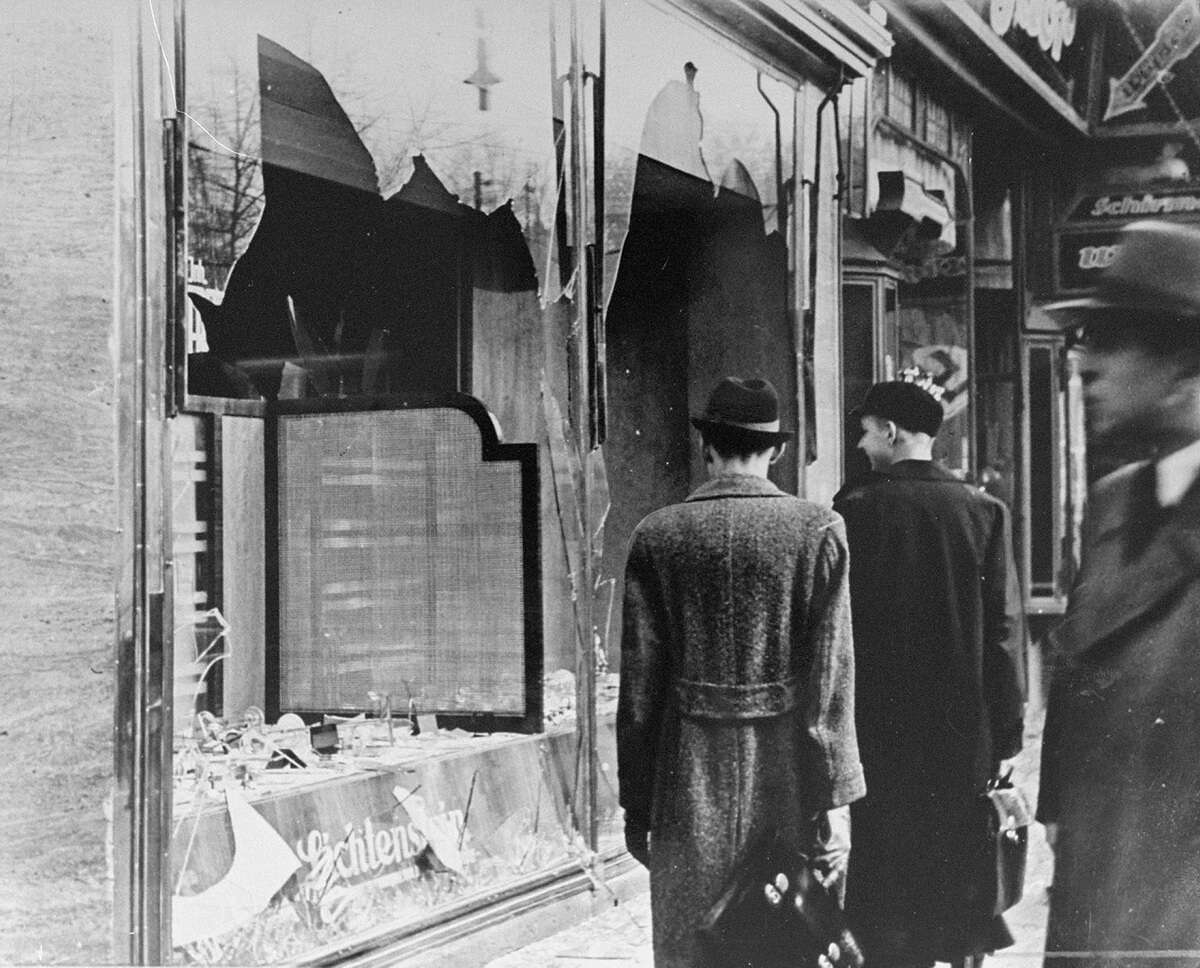
Joseph Goebbels, the Nazi propaganda genius and a gifted speaker, wasted no time calling on the German people to avenge the victim on all Jews. The street answered immediately. More than 1,000 synagogues were burned, hundreds of Jews were murdered or driven to suicide, thousands of businesses were looted and tens of thousands of men were sent to concentration camps. Goebbels, who understood the power of branding, attached the name "Kristallnacht" to the pogrom. Halpern says that at a press briefing Goebbels held after Kristallnacht, he instructed journalists that, in order to preserve their credibility, they should leave a little room for the other side, so that they would not seem "too one-sided."
Two days later, with the honors reserved for royalty, vom Rath, a minor 29-year-old diplomat, was buried after becoming the Nazis' first hero of World War II. An Aryan poster boy, he would become the subject of discussion about his sexual orientation just months later in interrogation rooms in Paris, causing the Nazis many headaches in their choice of icon.
A letter from Mazeh Street
Endless material has been published over the years about what happened behind the closed door at the German Embassy and the motives for the act. Whether the agitated Herschel, stirred by postcards from his family, really sought revenge for the suffering his family was enduring at the time, when all Jews holding Polish citizenship were expelled from Germany to Poland. "I was on the way to the Polish border," his father testified at the Eichmann trial. "They told us to walk. The SS men struck with whips over our heads. Those who lingered were beaten. Blood was splashed along the way, and there they took our bundles from us. They treated us cruelly and savagely. This was the first time we saw German savagery. They urged us to run quickly. I myself was hit and fell into a ditch. My son [Mordechai] pushed me and said: Run, Father, otherwise we will die."
Some other researchers argued that Herschel and his victim had a prior homosexual acquaintance, while others pointed to the possibility that it was the Germans themselves, seeking a pretext to incite the public against the Jews, who stood behind the gun. Either way, after the investigation, the French decided to put Herschel Grynszpan on trial on a murder charge.
The Nazis, who pounced on the incident and worked energetically to bring the boy to a show trial in Germany, sent a Gestapo investigator and a lawyer to represent vom Rath's family. The French authorities, fearful of entangling themselves with the German bully, were in no hurry to begin the trial, which only receded further once World War II broke out.
Herschel sat in detention for two years without trial. In the US, money was raised to finance proper legal representation for the boy, and news spread around the world that the renowned lawyer Moro-Giafferi had taken the case. Mrs. Pomerantz of Mazeh Street in Tel Aviv also read the news in the newspaper and sent a letter saying she knew of a medical examination undergone by the young vom Rath with a Jewish female doctor after he returned from a stay in India, suffering from anal inflammation, from which came a rather dubious diagnosis concerning vom Rath's sexual orientation. Moro-Giafferi, understanding what a gift had fallen into his hands, tried to persuade Herschel to change the line of defense to a crime rooted in a homosexual relationship. But Herschel refused and stuck to the ideological motive.
In May 1940, when Germany invaded France, the Nazis, with pointed determination, located Grynszpan in prison and transferred him to Berlin along with all the trial documents. Herschel was interrogated by the Gestapo with relative care, lest anything happen to him before the trial opened. "There was some point when he got fed up with the Germans dragging their feet about opening the trial," Halpern says with a laugh. "So he declared a hunger strike. Can you imagine? He was probably the only Jew to go on hunger strike under the Nazis. He had no fear of death."
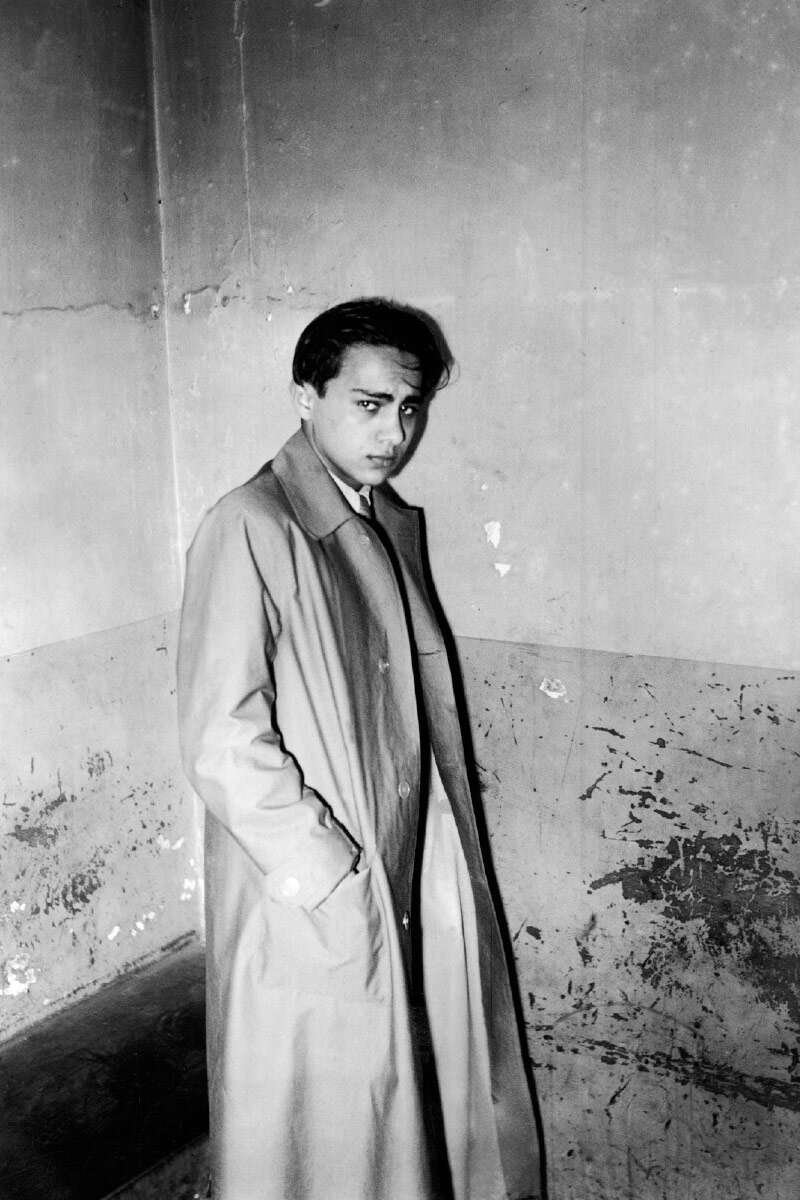
At the end of October 1941, just before the show trial that was supposed to provide the Nazis with an alibi, Grynszpan came up with plans of his own. Dr. Müller-Hess, a psychiatrist in Nazi service who was summoned to examine the prisoner, reconstructed in 1947 Grynszpan's new testimony, according to which he had met vom Rath when the diplomat stopped him on the street and, during their conversation, told the boy, a dark-haired youth with somber dark eyes, that he was a secretary at the German Embassy and could ease the suffering of his family in exchange for sex. Grynszpan said vom Rath did not fulfill his side of the bargain and that, after several sexual encounters between them, he shot him out of frustration and torment. Such testimony threatened the splendor of the narrative the Nazis had cultivated for years, and the opening of the trial was postponed. In fact, it never opened at all.
The Mizrahim of Europe
"Proud Jewish Boy" is a hymn to Halpern's abilities as a creator and producer. Out of four or five still photographs that were at his disposal at the start, he grows a visual richness composed of archive fragments and video footage he shot. Back to back, future and present, he breathes life into all the city streets the boy once walked, and into the gay clubs of Paris in the 1930s, where, after the assassination, people supposedly whispered that this was the punishment for those who meddled with young boys.
According to some testimony, he came to Paris because from there he could reach "Palestine." Lacking a visa, he infiltrated there through Brussels, where he stayed with relatives. He was 15 when he set out from Hanover, to which the family had immigrated in 1910. There, in the Nahla neighborhood on the banks of the Leine River, they opened a tailoring shop and brought eight children into the world. Four died of illness and a fifth was run over. It was a neighborhood where a community of Ostjuden, Jews of the East, lived among prostitutes, drunks and hooligans, and where boys worked in prostitution near the train station.
Halpern, who never needs much encouragement to mark out elites and go after them, gives special attention to the relations between the Ostjuden and German Jews. "This should be taught for matriculation exams," he says, getting up to make us more coffee. "At the end of the 19th century, millions of Jews left Eastern Europe and crossed Germany on the way to sail from Hamburg. Those who reached France received French citizenship, my father's family and your father's family reached America and became Americans. Seventy thousand Jews remained in Germany, but as Polish citizens."
The Jews in Germany, who saw themselves as Germans of the Mosaic faith, 'be a Jew in your home and a German when you go out,' were not crazy about their brethren from the East. "Not their clothing, not their habits of order and cleanliness. They saw them as inferior. They were ashamed of them, they thought they brought them down. The Nazis used them in their propaganda against Jews when they warned Germans that inside every secular Jew walking among them there actually lurked a filthy Jew with sidelocks and a caftan." Or, as one of the interviewees in the series Halpern made based on the film puts it, "They were second-class because they went to synagogue."
Armed with a dazzling research effort, one that grants a storyteller real freedom to move between the historical background and the intimate and personal, Halpern manages to tell the story without succumbing to exclamation points. He brings a mosaic of views, sowing them out of chronological order until the viewer surrenders to the power of narrative and gives up the human urge to know one absolute truth about how events unfolded.
"In the end we won't really know," Isri says, "and the truth is, in my view it doesn't really matter. I discovered an article published in a Polish newspaper that had not been written about before, from which it emerges that after the expulsion to Poland, Herschel's family lived in the home of Polish Christians under an assumed name. In that interview they said there had been a prior relationship between Herschel and his victim, but most historians do not support that version."
Interest in that angle revived in 1953, when German intelligence man and journalist Michael Graf Soltikow recounted the story of the Nazis' great show trial and, among other things, noted Herschel's change of version, in which he adhered to a homosexual relationship. The vom Rath family sued him. He obtained an affidavit from Mrs. Pomerantz in which she recounted the letter she had sent to Herschel's lawyers regarding the deceased's sexual orientation, but on the eve of the trial she withdrew the affidavit and did not appear to testify.
"Soltikow, who had relied on her, came out of that trial branded a charlatan," Halpern says. "Pomerantz doesn't come out looking too good either," I ask to add. "Well, the thing is, in my digging at Yad Vashem I found a letter her son sent them saying the reason his mother did not come to testify and withdrew the affidavit was that she was required at the Eichmann trial, which was taking place at the same time. But as I told you, none of that really matters. To me, the story is everything that happened after Herschel was transferred to Germany.
"The shooting itself was a rash, unnecessary act, after which all the clinging to the ideological narrative reminds me of boys who get photographed for some program and slip into a role. Herschel asks to change his testimony even though it is clear to him he is about to shatter his good name, so long as not one more hair falls from the head of any Jew in his name or because of his guilt. This child sits opposite the top brass of the Gestapo and refuses to turn the other cheek.
"I want to place the period for you for a moment with a story I heard from Ofri Ilany. In 1938, at exactly the same time we are talking about, a Jewish guard killed an Arab guard in a British police training course. It turns out the Arab had tried to make advances toward him. There was a trial and they told the Jewish guard, 'Just say what happened,' and he would not agree because the shame was so great. They executed him.
"I could easily have made a lurid story with erotic touches, but I was not interested in going there. I find in his act a story of heroism. Most Jews did not stand the tests this boy stood."
A history still being written
When I ask what became of Herschel, Halpern says that over the years various stories surfaced about that as well. But most researchers believe Herschel survived prison and lived beyond the war. "There were all sorts of witnesses who swore they had been present at his execution, but each one referred to a different place, so it did not add up."
One account says Herschel returned to Paris, adopted a new identity, started a family and became the father of two children. But Herschel's relatives in Israel and abroad dismissed that possibility, arguing there was no chance he would not have contacted them. Halpern says that during his libel trial, Michael Graf Soltikow asked to summon Herschel to testify on condition that the German authorities guarantee he would not be prosecuted on the charges that were still pending against him, but the court refused. As for the portrait from 1946 that was published in major Israeli newspapers a few years ago and attributed to Herschel, Halpern chose not to include it in the film because "I don't think it's him."
Halpern also left out of the film the story of the Irish gentleman. It happened at the dedication ceremony for the square named after Herschel Grynszpan in Brussels, where the film's closing scene was shot, to the sound of a small dark-haired boy with somber dark eyes singing the Partisan Song in Yiddish.
"A man approached me who sounded Irish and started telling me that at a relatively late age, while studying for ordination, he discovered that his father had been a Jew named Grynszpan. The man said that in 1960 he walked into a room and saw his father reading a newspaper and crying. When he asked him why, his father told him about a man named Eichmann who was standing trial, and said that man should have been hanged 10 times. This Irishman was convinced his father was Herschel Grynszpan, but something in the dates did not work out." In 1958, Zindel Grynszpan asked the German government for compensation over his son's death. On June 1, 1960, a court in Hanover declared Herschel Grynszpan dead. In response, a letter arrived asking how it was possible to declare living people dead.
As we part, when I tell him that his engagement with history flatters his work, he smiles, and in his laughing blue eyes you can see the answer taking shape. "All my films are history, only the kind that is still forming. Happening in the present tense."
"And what does it feel like to make a film without angering anyone?" I ask him with a smile.
"Don't worry," he answers with a smile, "in the end I'll manage to annoy a few Yekkes."