Who won?
Contrary to the lamentations, Israel and the United States did not lose the war to Iran. Who decided that the temporary survival of a regime constitutes a victory?
The Middle East is full of despotic Muslim dictatorships that have never interested the United States, and rightfully so. America is the world's policeman, not its educator. If a leader wishes to destroy the lives of their citizens, the US military will not be sent to protect them. The strongest army in the world and the strongest air force in the region destroyed two hundred billion dollars' worth of Iranian military assets because the country posed an existential threat.
However, Israel did lose, a stinging and worrying loss, in the war being waged within the United States. The American polling tradition provides a very broad perspective. Since the measurement of support for Israel began, there have never been more Americans who view it in an unfavorable light than a favorable one. This happened for the first time this year: 48 percent versus 46 percent.
The percentage of Israel's supporters dropped to a low not seen since 1989, and the percentage of detractors hit an all-time high.
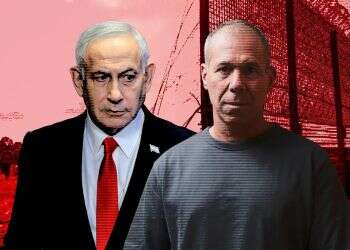
The mitigating circumstances are that Israel's standing always deteriorates during military conflicts. This was true during the Second Intifada of exploding buses, during the First Intifada of knives and stones, and also during the Second Lebanon War. The current deterioration is deeper because the war is longer. There is hope for improvement when the fighting in the region ends, hopefully soon and with a sweeping victory. Israel's standing is also slightly better than that of its leader: Netanyahu. He is currently at minus 23 percent, compared to plus nine percent just two years ago.
But that is not all. According to a CNN poll, the majority of Republicans under the age of fifty now view Israel negatively: minus 16 percent, compared to plus 28 percent just four years ago.
The primary negative development is the rise in support for the Palestinians. 37% of Americans view them favorably, a record high since measurements began in 2000. This indicates a profound shift, not necessarily localized anger toward Israel, but authentic support for its enemies. Netanyahu believes that those in America who have a problem with Israel have a problem with America itself. Meaning, it is not an issue of public diplomacy (Hasbara) but a matter of a progressive worldview.
This is true, but it is not the whole truth. The sirens are sounding from within the Republican Party, particularly from its younger wing, and they are genuine alarms.
A person who recently participated in talks with Hamas returned somewhat confused. He discovered that the terrorist organization, which has been at the center of global attention for the past two years and sparked a regional war with international repercussions, is led by a mediocre, panicked, and inarticulate bunch. All the way home, he wondered whether Sinwar and Deif were of a higher caliber but were eliminated, or if this is merely a collection of local murderers that Israel, through its failures and blindness, turned into a terrifying and sophisticated monster.
The war in Iran seemingly saved Hamas, temporarily. The deadline set for dismantling the organization has passed, six hundred trucks loaded with goods enter Gaza every day and the organization's terrorists still rule the roost in western Gaza.
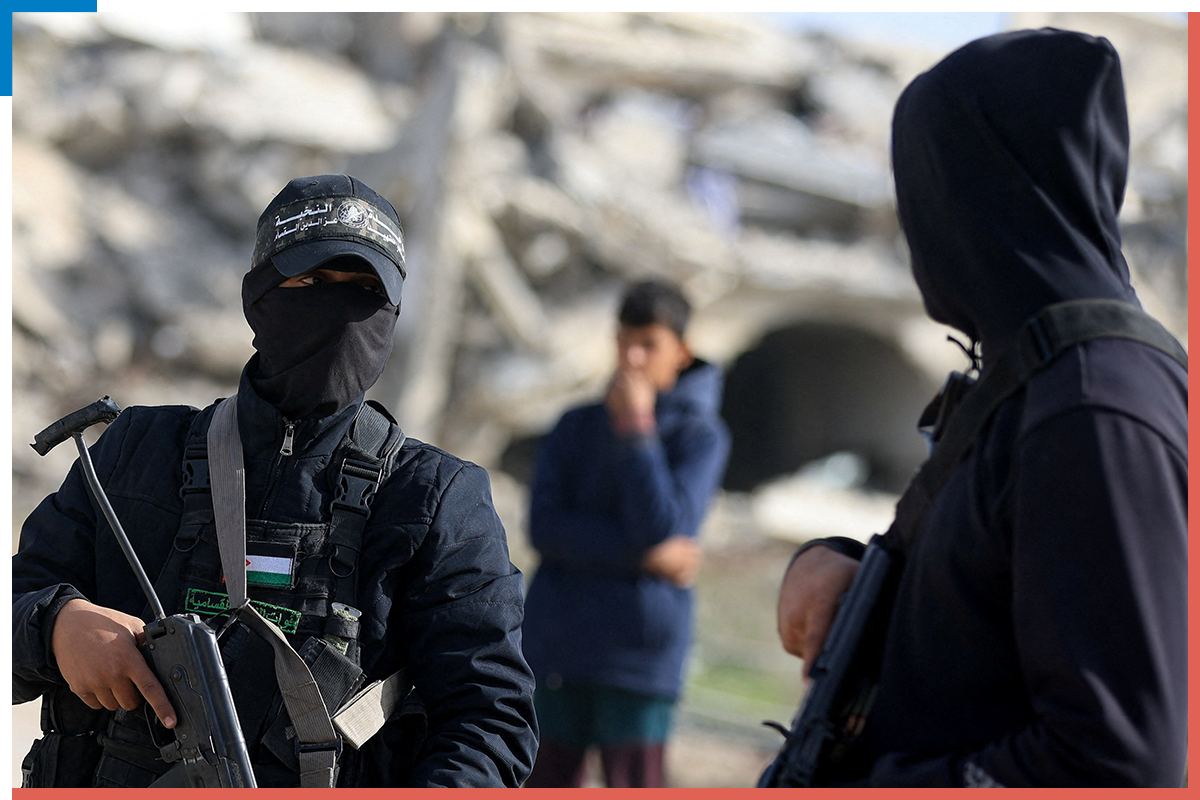
Hamas leaders, however, do not think so. In talks in Cairo, terror is evident on their faces. Qatar has abandoned them to their fate, out of fear of Trump and anger over the backing the organization's leaders gave to Iran while being hosted in Doha's luxury hotels. With Iran, the situation is even worse. Hamas has repeatedly pleaded with Tehran to be included in the ceasefire agreement, but unlike Hezbollah, the Iranians do not even bother to reply with a negative answer.
Hamas complains in the talks that Israel violated the agreement, yet pays no price for it; quite the opposite. The organization is beginning to internalize that no one will let them off the hook regarding demilitarization, and that even the most basic weapons must be handed over rather than kept for self-defense. The negotiators have identified a change in their strategy, aimed at stalling for time. Perhaps somehow the world will take an interest in them again. In the meantime, even the planned flotilla to Gaza is suffering from sparse registration. Greta's attention has drifted elsewhere.
Is there a chance Hamas will collapse under the pressure and hand over the tunnel maps and tens of thousands of Kalashnikovs? Here lies a difference between Israel and the US. In Jerusalem, they do not believe Hamas will offer more than a symbolic handover, which they will also condition on a deep IDF withdrawal. In the United States, they are much more optimistic. They believe that Turkey and Qatar are operating with different interests than Hamas, and without them, the organization will collapse under pressure. The plan is to demilitarize area after area in Gaza, clear the tunnels, hand over the weapons, and bring in a local police force (so far, a quarter of a million locals have registered). Even if Hamas does not hand over its last weapons, Washington believes its men and armaments will be restricted to a very limited area that will be much easier to conquer.
The great achievement of the war is the dismantling of the Axis of Resistance into its separate components. Hezbollah is alone in Lebanon, Hamas is alone in Gaza, the Houthis are alone in Yemen, and most importantly: the Ayatollahs are almost alone in Tehran.
Mergers and acquisitions
The most famous promotion in the marketing world is "Buy 1 Get 1 Free": you buy one product at full price and get the second at no cost. In the opposition's supermarket, this is the promotion that will decide the battle for the leadership of the bloc.
There are about half a million voters, 10 to 12 mandates, who will go with the leader, any leader, to defeat Netanyahu. Whoever creates this lead through an alliance will receive the rest of the bloc's votes without paying for them. Therefore, it is worth merging another party into yours, even at an exorbitant price.
Almost without being noticed, the dynamics within the bloc have changed. Until two months ago, the decisive question was who would get to unite with Eisenkot: Bennett or Lapid? But the former Chief of Staff strengthened significantly and officially announced his run for Prime Minister. Now the question is who will unite with Lapid: Eisenkot or Bennett?

"n recent polls, Yesh Atid is hemorrhaging three-quarters of its strength, shrinking into the smallest party in the bloc. Yet, its remaining six mandates hold the keys to the kingdom. If they throw their weight behind Eisenkot, it crowns him the bloc's leader and siphons crucial mandates away from Bennett. If they back Bennett, they decisively settle the leadership battle, effectively forcing Eisenkot to fall in line. It is no wonder the former prime minister is currently the most courted man in Israeli politics, wielding influence entirely disproportionate to his diminished electoral power. Plus, he brings an enormous tactical bonus to any alliance: the state-funded campaign war chest of a 24-mandate party.
Quite the dowry, except Lapid is in no rush to get married. His bloc partners believe that if he doesn't come to his senses and unite, he will end up like Benny Gantz: below the electoral threshold. Lapid, on the other hand, remembers that in all six previous elections he ran in, he trailed Bennett in the polls but always finished ahead of him on election day. His historical partnership in "Blue and White" drained his desire for alliances, certainly with former Chiefs of Staff. Like a person living alone, he doesn't particularly miss the days when he had to share an apartment with roommates.
For two years, Lapid has gambled that this election will defy history: the bloc will lack a definitive leader, and four distinct parties will cross the finish line with roughly the same low, double-digit mandate haul. If he is right, his strategy to run independently will be totally vindicated. If he is wrong, he is in serious trouble. But he is already deploying his trump card, the money. In the last month alone, Yesh Atid spent 626,000 NIS on Facebook advertising, triple the combined amount of all other parties in the bloc. One of his rival-partners recently confessed that his absolute nightmare scenario is arriving at the elections facing an electorally weak Yesh Atid that is nevertheless bursting with cash. Right now, that rival is living through the pilot episode.