I am jogging by the side of the road, getting into a rhythm of breathing and lost in my own thoughts when suddenly—it happens: the moment we have been training for this past year and a half. A siren cuts through the peaceful air of golden hour on base. I switch from a gentle jog into a crazy sprint back to the ready room.
"Calling all Wildcats, you're on GO! Calling Wildcats, you're on GO!"
I rush into the staging area a bit flustered. In the background, I hear the voice of the operations officer relaying an initial sitrep on the radio: "Wildcats, you're heading to the scene of a shooting and car-ramming attack. Looks like three casualties. Condition unclear. Shots fired at the scene; the incident is not over."
Banda, Cohen, and Katz are already cramming equipment into our getaway cars. Meanwhile, Miller checks that they have loaded all the necessary gear for our first mass casualty event:
"Blood?"
"Check!"
"Tactical vests?"
"Check!"
Daniel and Dr. Itai sprint into the room.
"Miller, it's been two minutes since the alert," nags a voice over the radio. We are in a race against time. In order to take off within fifteen minutes of the siren blaring, we've got exactly 150 seconds to reach the staging area, load all the equipment into the cars, and drive like crazy to the waiting chopper.
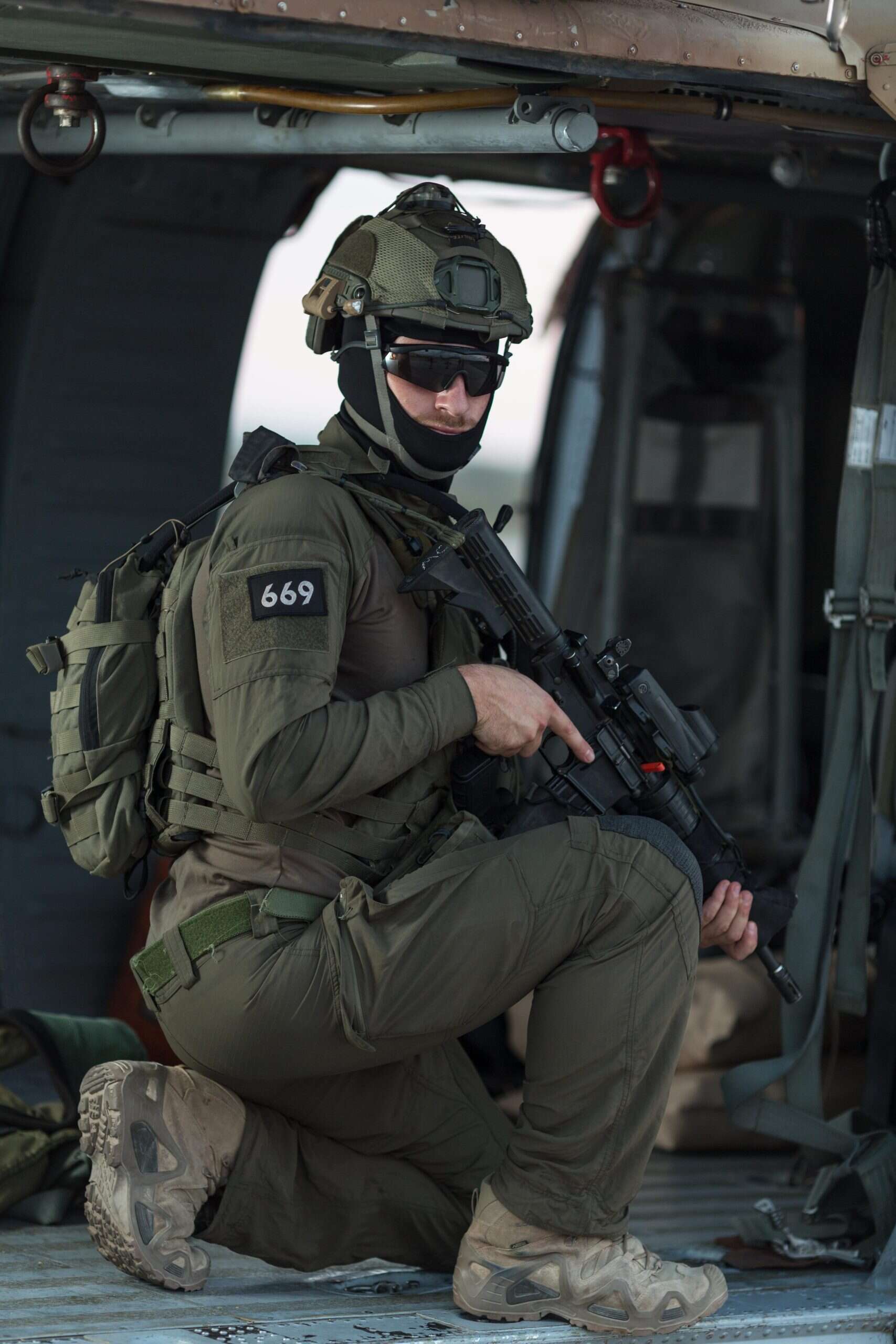
"Everyone, get in the cars!" shouts Miller.
I leap into the vehicle and slam the back door shut. Katz is in the driver's seat and doesn't even wait for us to slam the doors shut before he hits the gas and speeds away through the open metal shutters at the entrance of the staging area.
My heart is beating like wild. This is it, my first real-life rescue mission!
We race across the base like it's some car chase scene from a movie. Everyone here knows that when the siren blares and Unit 669's vehicles race toward the helicopters, it's best to get off the road and give them the right of way.
I quickly finish tying the laces of my boots and sit up straight in the car. I take a deep breath. Guy, chill. Get a grip on yourself, this is exactly what they've trained you for!
"One of the casualties is the terrorist. Six minutes since the alert," the operations officer updates.
On our right is a runway with a fighter jet, ready for takeoff. We speed in front of the jet heading for our helicopter. We don't care what the jet pilot's orders are—whenever there is an alert, we get top priority.
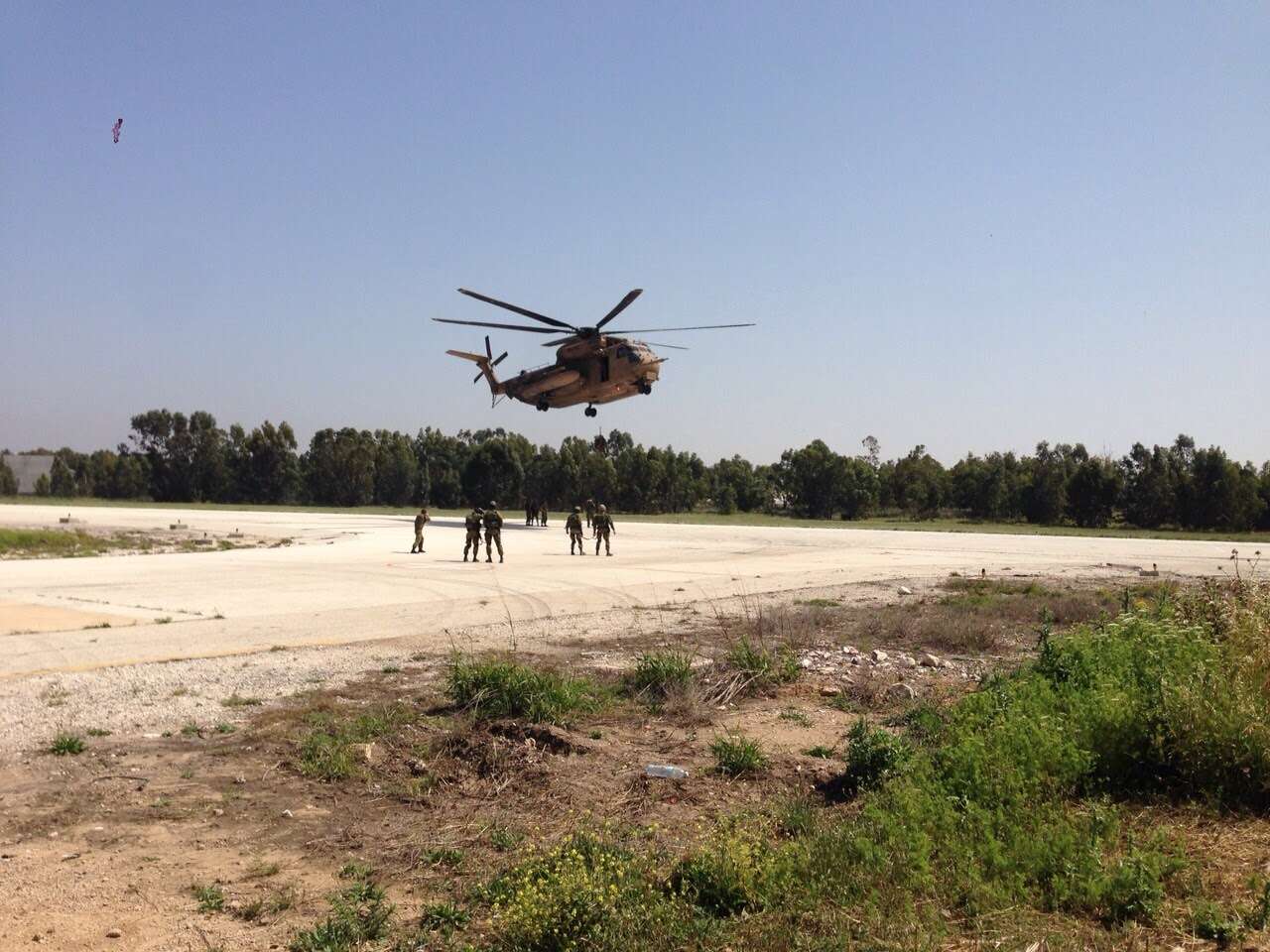
We speed past the control tower and take a sharp turn toward a Sikorsky CH-53 helicopter, its engine already running. Its rotor is spinning like crazy, and I shove a pair of earplugs in to block out the roar. Katz reverses toward the chopper to make it easier to offload the equipment and carry it inside. The second he stops, we spring out of the car, open the trunk, and dart to and from the helicopter, loading it high with the equipment we snatched from the staging area.
Katz signals that everything has been loaded, slams the doors shut, and springs into the cabin of the noisy helicopter. My face, still wet with sweat from my run only eleven minutes ago, gets hit with the acrid smell of jet fuel and an intense blast of heat. My initial rush of adrenaline begins to fade as I come to grips with the fact that we're getting dispatched to rescue three soldiers wounded minutes ago in a terror attack.
I switch on the small tactical radio device in my vest, put on the headphones, and tune into the comms network.
In one set of headphones, I hear the helicopter's internal comms, and in another, the one I'm tuned to, our rescue team's dedicated frequency. Both sets of headphones amplify soft sounds and muffle loud ones, so as soon as I get out of the helicopter and start talking, I'll be able to hear despite the deafening roar. When we were shown the system for the first time, I thought it was some kind of made-up gimmick out of an action movie, but I'll tell you, it really does work.
The mechanic closes the ramp, and the chopper lifts off the helipad. I grab the inside wall of the helicopter while preparing to steady myself, so I won't lose my balance during takeoff. Nobody warns you when this massive beast is about to take off or asks you to sit down and buckle up—everyone inside is too busy. And how embarrassing would that be to fall out of the chopper on my first mission…
"It's a nine-minute flight to the incident. Prepare for three casualties. It looks like one of the soldiers is in critical condition. There's a chance we'll also evacuate the terrorist," I hear the pilot briefing Miller over the radio.
If I had a little more oxygen reaching my brain, I would try to come up with a rational take on this screwed-up situation—we're getting dispatched to rescue soldiers injured in a terror attack, and then suddenly we receive fresh orders to prepare to extract and treat the terrorist who tried to kill them!
Standing at the front of the helicopter near the cockpit, Miller makes sure that we have all heard the report. I reply with a quick nod and set about preparing the helicopter to receive the casualties, taking out IV fluids, arranging the blood transfusions, measuring out dosages, and opening the three stretchers we brought.
We hear over the radio: "T-minus two boys." Like us, time is also flying.
The helicopter takes a sharp lurch down, signaling that we are already above the incident. The pilot heads out for a final sweep to check the situation on the ground and prepares to land.
Suddenly, a voice over the radio: "Miller, I can't land! It's chaos down there. Terrorists are still exchanging fire with our forces—the landing area ain't sterile."
The anxiety in his voice is palpable.
I look out of the window. On both sides of the road cutting across Samaria is a huge crowd of Palestinians. A couple dozen feet west of the road are two Israeli army vehicles—wait, one of them is a military ambulance. The angry mob is hurling Molotov cocktails and rocks at the vehicles, preventing them from evacuating the casualties who are probably bleeding out somewhere below. A few hundred yards away, I can see soldiers crouching behind a low barricade of rocks trying to return fire at the terrorists who are holed up in a nearby building and are sporadically raining bullets on them and the ambulance.
I look at Miller. He looks shell shocked, almost like someone has just slapped him across the face, but he snaps out of it immediately and shouts over the radio: "What do you mean you can't land?!" He fumes at the pilot: "We've got injured men down there! Find a solution!"
The pilot, clearly unsettled, still answers firmly: "I can't count on the small military force at the scene to secure us during the rescue. If the terrorists over there open fire at the helicopter or the mob storms it, we'll be in much deeper trouble!"
Rescue soldiers have got to be naturally aggressive. Right from the start of training, you are taught to storm a target with a knife between your teeth, to do whatever it takes to reach a target, make contact, and overcome anything in your way. Pilots, however, have to keep calm. For moments like this, they're not allowed to give into that same aggression we have so painstakingly cultivated. No matter how badly they want to swoop in to the rescue or release fire and brimstone on a target below, they have an obligation to fly a helicopter safely and responsibly even in the most stressful situations. Pilots will be pilots and rescue soldiers will be rescue soldiers; the yin-and-yang dynamic between aggression and restraint is a winning formula.
The pilot lurches into another flyover above the incident. Meanwhile, Miller has no intention of letting the pilot off the hook.
"I'm taking responsibility to secure the helicopter and our perimeter on the ground! That's on us!"
Radio silence. Literally.
Miller keeps pressuring the pilot. "Every second that goes by, we've got less of a chance for a surprise landing before the angry mob charges at us, and the casualties' condition is only getting worse! We've got to land—NOW!"
The tension is thick in the air. I can practically smell it.
"OK fine, you guys are responsible for securing the helicopter," the pilot caves. "Prepare for landing."
Miller signals for us with hand gestures to gather around him. "Itai, Daniel, Guy, and I will run to the blocked ambulance and take the casualties back here for aerial extraction. Katz, Banda, and Cohen—you'll join up with the forces battling the terrorists and provide cover fire. I need major firepower against that building where the terrorists are hiding. Give 'em hell and cover us! Stop them from shooting at the helicopter. Zucker—you stay back to guard the helicopter and the pilots. If you spot a threat you can't neutralize, fly outa here and leave us behind. Is that clear?"
Everyone nods. Katz cocks the Negev slung around his neck.
"Everything's got to happen superfast. Be aggressive, be accurate. Welcome to your baptism by fire boys."
I cock my gun and check that my hand grenades are easily accessible should I need them. I look out the window as we speed toward the ground and ready myself to jump out as soon as the helicopter lands. With incredible skill, the pilot weaves between two buildings and lands on a narrow strip of sandstone at a spot that obscures our landing site from the rioters below. I feel the abrupt rattle that tells us that the wheels have hit the ground. The ramp opens. Strong daylight floods in.
Everything feels so familiar. The pressure. The adrenaline. The shouting. But now, for the first time, we are landing and outside the helicopter is a real-life terror attack and mass casualty incident. It's our first encounter with genuine rather than engineered chaos, featuring real flesh and blood and bullets.
***
We charge out with Miller and Itai leading the force up front. The four of us run toward the ambulance, which is trapped behind a wall of angry rioters. Meanwhile, Banda, Cohen, and Katz sprint toward a nearby building and crouch behind a stone wall some twenty feet from the building's exterior. "We're in front of the building with the terrorists, laying down massive cover fire for you guys!" I hear Katz roar over the radio, followed by a hail of automatic fire at the doors and windows of the building as the holed-up terrorists keep firing sporadic rounds.
Molotov cocktails and rocks fly our way from the frenzied mob nearby. I block it out—the only thing on my mind right now is to get to the besieged ambulance as fast as possible. Our greatest advantage here is speed and the element of surprise that swooping out of the sky affords.
We reach the light-armored military ambulance. Its sides, painted with a red Star of David, are covered in flames from a hail of Molotov cocktails. Miller thumps on the doors aggressively. One door opens and the paramedics inside peak out.
"Miller, we've been on the ground for two minutes," says the pilot over the radio, not even trying to hide his growing discomfort.
Itai, Daniel, and Miller leap into the ambulance while I shoot into the air in a desperate attempt to keep the mob away from the vehicle. They're barely sixty feet away, hurling rocks and Molotovs at me. The threat to my life is clear and immediate. A Molotov cocktail explodes just a few feet away from my head. I feel the blast of heat as it shatters on a nearby rock and sprays flaming liquid across a radius of a couple feet.
I don't want to have to open fire on a crowd of rioting Palestinian civilians. We are here to rescue the casualties, not to get into a gunfight. But in the end, we might not have a choice.
The pilots, who haven't registered a response from Miller, push for an update: "Miller, tell us what's going on down there!"
"Everyone, listen!" Miller blurts over the radio, coming out of the ambulance door. "There is one casualty left here who wasn't evacuated, the most seriously injured casualty. We're taking him. Katz, you start moving back to the chopper. Zucker, you'll be the last man on the ground and will cover our rear. Get in only after we're back with the last casualty and everyone's on board. Move out!"
Exactly then, I'm hit by a shockwave that feels like someone has punched me simultaneously in the guts and in the face. A split second after, I register an explosion. On the other side of the armored ambulance, a plume of dust shoots into the sky.
"GUY, ARE YOU OK?" screams Miller. Its sounds like his voice is coming from miles away.
"Ya, I'm good," I mumble. I hear a sharp ringing in my ears and feel momentarily stunned. I realize that the light-armored ambulance absorbed the blast from an IED—improvised explosive device—that I guess just got chucked in our direction from the mob. If I'd been standing on the other side, I'd probably be peppered with shrapnel right now.
"Let's get outa here!" shouts Miller.
We whip the stretcher out of the ambulance and start to move. With one hand, I carry the stretcher, and with the other, I hold the medical gear to stop it from rolling off and getting blown away by the forthcoming downwash from helicopter's rotor. We sprint back to the chopper. In the corner of my eye, I can see that the casualty is completely disfigured, bleeding heavily on the stretcher.
We charge up the ramp, into the helicopter. The mechanic counts everyone at the door, checking that the whole team is back. As soon as Zucker's foot hits the ramp, the mechanic gives the signal, and the pilot takes off into the sky.
"Twenty minutes till we reach the hospital!" shouts Miller.

For five years, Guy M., a combat paramedic in Unit 669, kept a diary in which he documented a world of extreme training, special operations, and life-or-death rescues. This is one chapter from his book, "Full Throttle", now available in English.