As the 60-day mark nears since the launch of the US campaign against Iran as part of Operation Epic Fury, political tensions in Washington are mounting over President Donald Trump's authority to continue the war.
At the heart of the dispute is the 1973 War Powers Resolution, under which the president is required to end military action after 60 days unless Congress approves its continuation or grants an additional 30-day extension to allow for the safe withdrawal of forces.
According to current estimates, the 60-day deadline falls between April 29 and May 1, depending on whether the count begins from the start of the strikes or from the administration's formal report to Congress in early March. Either way, late April and early May are shaping up as a legal and political moment of reckoning for both the administration and Congress.
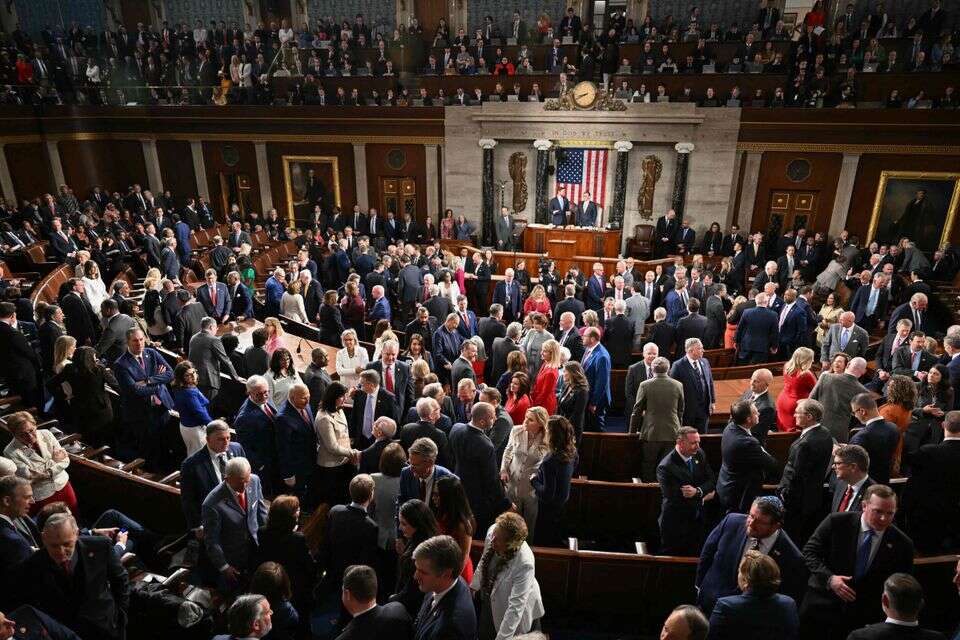
Democrats see the date as a major test and are stepping up pressure on Republicans to support a vote limiting the president's powers. Since the campaign began, several proposals on the issue have been brought to a vote, but all have failed. The latest attempt, the fifth so far, was defeated Wednesday in the Senate by a vote of 51-46. Sen. Richard Blumenthal said that "Congress must take back the authority to declare war," and warned that his Republican colleagues "will be put to the test."
Among Republicans, hesitation is evident. Some lawmakers support continuing to give the president room to maneuver, citing the administration's claims of diplomatic contacts and significant military achievements. Others believe Trump will seek a 30-day extension, a step they say would postpone an immediate decision. There are also those who believe the fighting could end before the deadline.
At the same time, other voices are being heard within the Republican Party itself. Sens. Lisa Murkowski and Susan Collins have signaled that they will not support continuing the fighting beyond the 60-day limit without explicit congressional approval, stressing that "the law must be respected." Meanwhile, the possibility of bringing a formal authorization for the use of force to a vote is being considered, but Senate leaders are in no rush to advance such a move.

For now, Congress is struggling to exercise effective oversight of the campaign. No dedicated public hearings have yet been held on the issue, and members of Congress from both parties are complaining about a lack of information from the administration. Repeated delays and the absence of public testimony are reinforcing a growing sense that lawmakers are avoiding politically sensitive decisions and allowing the White House to wage the war with almost no direct oversight.
As the deadline approaches, Trump has several options: seek congressional approval to continue the fighting, begin a withdrawal, invoke the 30-day extension clause, or adopt an expansive interpretation of his authority as commander in chief and continue the operation without approval, as presidents from both parties have done in the past.