As preparations for Israel's expected October elections intensify, former Prime Minister Naftali Bennett's office announced that Yesh Atid, the centrist opposition party led by former Prime Minister Yair Lapid, and Bennett 2026 will merge into a single unified party under Bennett's leadership.
"Former Prime Minister Naftali Bennett and former Prime Minister Yair Lapid announce the first step in the process of reforming the State of Israel – the joining of Yesh Atid and Bennett 2026 into a unified party under the leadership of former Prime Minister Naftali Bennett," the statement read. "The move brings together the reform bloc, puts an end to internal disputes, and allows all efforts to be invested toward a decisive victory in the upcoming elections and leading Israel to the reform it needs."
It seemed as though nearly the entire political establishment was caught off guard by the merger between Bennett and Lapid. Until recent days, the prevailing assumption had been that a partnership between Gadi Eisenkot (former IDF chief of staff turned opposition politician) and Lapid was the natural fit – ideologically closer, and a significant boost to Eisenkot in the contest to lead the bloc.
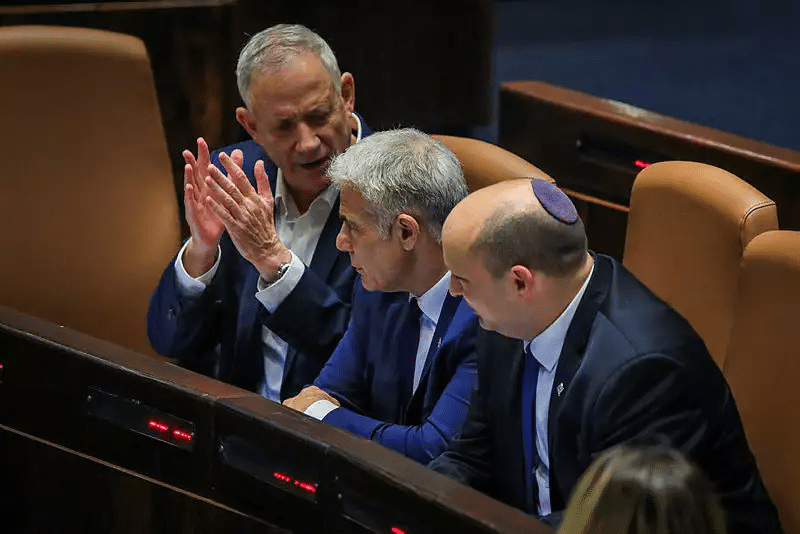
Contacts between the parties had been ongoing for weeks. But in recent days, something appeared to shift: Eisenkot and Lapid failed to reach an agreement – despite both publicly declaring "ongoing talks" – and Bennett stepped in. He wanted to be the one to organize the bloc, partly against the backdrop of past political missteps, and to cement his standing as the bloc's undisputed leader. Intensive negotiations took place over the weekend, culminating Sunday morning in the signing of the agreement: Bennett at the top, Lapid just below him, and Eisenkot invited to take second place on the list.
Their friendship had never really faded, and the bond between them proved stronger than ever: Lapid chose Bennett – his longtime friend – over Eisenkot, who remains in some respects an unresolved political enigma.