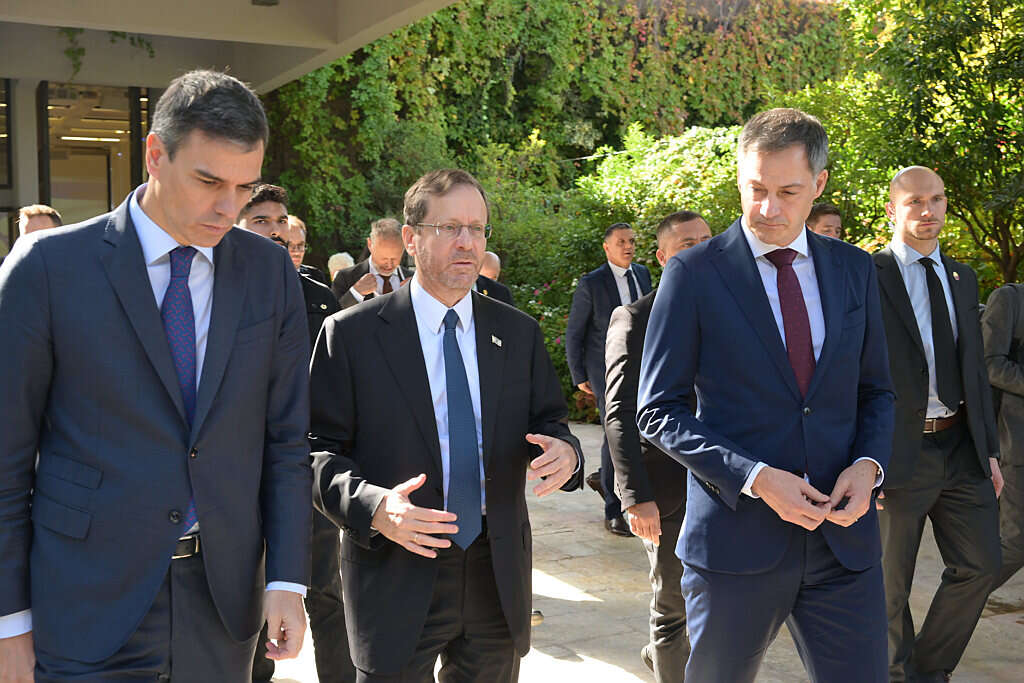
On November 23, 2023, Spanish Prime Minister Pedro Sánchez arrived in Israel. A month and a half after the Simchat Torah massacre, world leaders were still arriving for solidarity visits. Sánchez had not been considered a friend of Israel before, but he had not been defined as a hostile actor either, and against the absolute evil of Hamas, it was easy to stand with Israel. That, at least, was the stated purpose of his visit.
It quickly became clear that the Spanish prime minister had arrived with a calculated and deliberate plan that did not necessarily align with support for Israel. It began two days earlier, when he appointed Sira Rejón as minister of youth and children – a Spanish politician who had spent part of her childhood in the village of Anata in Judea and Samaria, where her Palestinian father and brother still live. Rejón had justified the massacre on that very black Saturday, as shocking videos were spreading across social media, arguing that "Palestine has the right to resist after decades of occupation, apartheid, and exile." She was also one of 21 members of the European Parliament who voted against a resolution condemning Hamas in the wake of the massacre, out of 545 who cast votes.
That same day, Sánchez visited Kibbutz Be'eri and met with Prime Minister Benjamin Netanyahu, President Isaac Herzog, and Palestinian Authority Chairman Mahmoud Abbas. The following day, the first ceasefire between Israel and Hamas began. Sánchez traveled to the Egyptian side of the Rafah crossing and held a joint press conference with Belgian Prime Minister Alexander De Croo. "The indiscriminate killing of civilians, including thousands of boys and girls, is completely unacceptable," he said, demanding an end to the war and accusing Israel of violating international law.
Israel reacted with shock, and the Spanish ambassador was summoned for a reprimand. A week later, Sánchez sharpened his accusations in an interview with Spanish television, saying, "I seriously doubt whether Israel is complying with international humanitarian law." This time, Israel recalled its ambassador from Madrid for consultations and again summoned the Spanish ambassador for a reprimand. From that point, the relationship began to unravel.
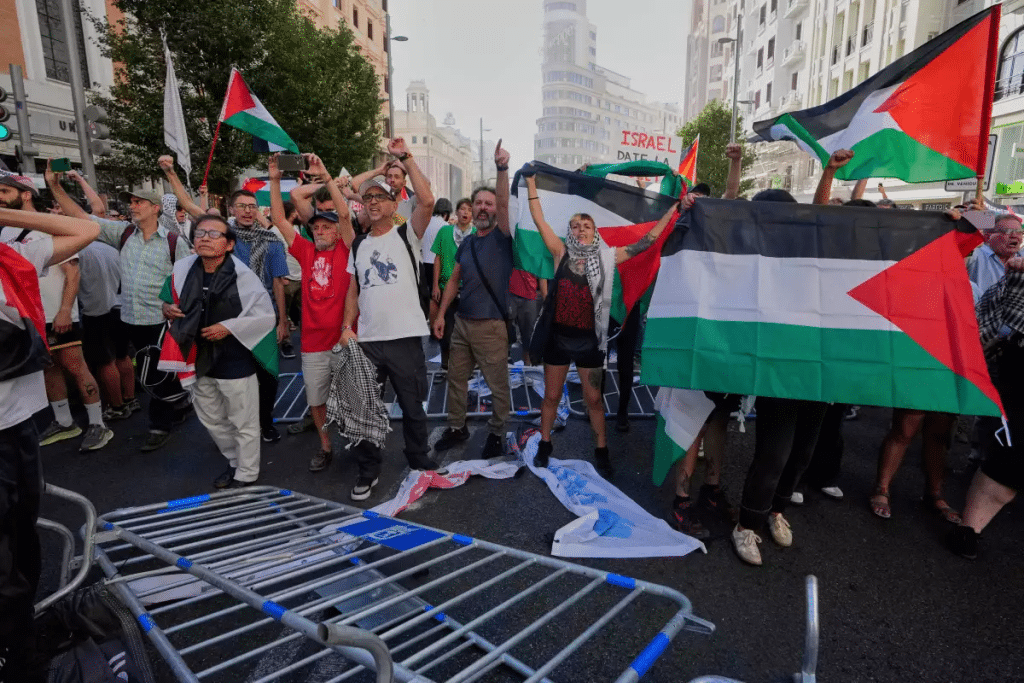
Since those days, Spain has become the loudest opposing voice against Israel in the European Union. In May 2024, it recognized a Palestinian state, alongside Ireland and Norway. It subsequently banned the import of products from Judea and Samaria, imposed an arms embargo, lobbied to have Israel expelled from the Eurovision Song Contest, and when Israel's participation was approved regardless, decided not to broadcast the contest – for the first time since 1961. Spain has worked against Israel in the tribunals at The Hague and supports sanctions against it and the annulment of its Association Agreement with the European Union. On May 14, 2025, around Independence Day and the commemoration of Nakba Day, Sánchez declared from the podium of the Spanish Congress that Israel was a "genocidal state."
A particularly blunt expression of Sánchez's positions came in September 2025, when the Israeli cycling team Israel Premier Tech participated in the Vuelta a España (the annual Spanish cycling race). Following repeated pro-Palestinian protests that disrupted the race, the final stage in Madrid was canceled for the first time in the event's history. Sánchez did not condemn the protesters. Instead, he declared, "We express our admiration for the Spanish people who mobilize for just causes like Palestine." The following day, he called for Israel's exclusion from sports competitions.
Israel did not close its embassy in Madrid but refrained from appointing a permanent ambassador, instead naming Dana Ehrlich chargé d'affaires. More recently, Israel escalated its response and expelled Spanish representatives from the Kiryat Gat Civil-Military Coordination Center (a US-Israeli coordination headquarters in southern Israel), citing "the anti-Israel obsession of Sánchez's Spanish government and serious harm to Israeli and American interests, including during the war against Iran."
Diplomatic relations between the two countries have now reached their lowest point since they were established in January 1986 – a normalization that was, in fact, led at the time by the Social Democratic Party.
"For many years, Spain adopted a pro-Arab and pro-Palestinian line, but there is no doubt that since October 7 and the Iron Swords War, relations have reached a new and unprecedented low," an Israeli diplomatic source told Israel Hayom this week. "By the accepted Western definition – the IHRA – we are dealing with an antisemitic government, since it includes demonization, delegitimization, and double standards toward the Jewish state. Unfortunately, this is only intensifying and is expected to escalate further, since Spain's prime minister is heading into an election year and believes that attacking Israel serves his political interests."
The easiest target
Pedro Sánchez, 54, a Madrid native, is one of Europe's most seasoned, tenacious, and calculating politicians – and, some would say, its most successful. An economist by training and a doctorate holder, he served in the European Union and at the UN before beginning his political career in 2004 on the Madrid city council and later in the Spanish parliament. In 2014, he was unexpectedly elected secretary-general of the Spanish Socialist Workers' Party (PSOE), but after two consecutive defeats against right-wing Prime Minister Mariano Rajoy, he was ousted in an internal party coup in October 2016.
His political comeback began with what he branded as a nine-month journey across Spain in his old Peugeot 407 – a story that later proved to be largely a marketing myth, though it shored up his party base. In May 2017, he returned to lead the party, and in June 2018, he succeeded in toppling Rajoy through a no-confidence vote and was sworn in as prime minister.
In the 2023 elections, he won fewer seats than the right-wing People's Party (PP), yet managed to form a minority government by rallying Catalan separatists with a law granting amnesty to their leaders. This is how his current government was born – one that rests on the far left and on separatist parties from Catalonia and the Basque Country.
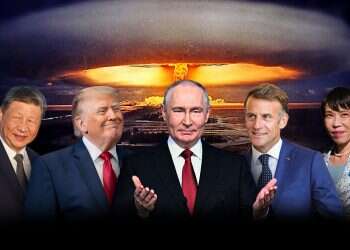
Dr. Eyal Robinson of Ariel University, an expert in international relations, placed the issue in a broader context. "Spain displays an adversarial approach toward American interests within NATO as well. It is the only country that refused to meet the defense-spending target of 5% of GDP and rejected the American request to use Spanish bases in the war against Iran. Trump threatened it with economic measures." Robinson pointed to a contradiction, saying, "Spain takes a hawkish line against Russia and Israel – but toward China, whose support it needs for its distancing from the US, it draws closer, despite human rights violations. This policy is not driven by principles but by political calculations."
Robinson said the impulse stems from domestic politics and Sánchez's personal political survival. "The contradiction is explained by coalition considerations and pressure on the integrity of his government. Some 77% of Spaniards view Trump and his policies negatively, and 76% oppose the war against Iran. Sánchez reads the currents and paints himself as the one standing up to the bully." It was no coincidence that Sánchez chose the slogan "No to war," which brought him into direct confrontation with the US president but also earned him a modest uptick in opinion polls. Spaniards remain scarred by their country's involvement in the Iraq War in 2003 and are broadly opposed to wars, and Sánchez knows this well.
Israel, Dr. Robinson added, is "an easy target."
"Unlike weighty issues such as NATO relations, where confrontation could trigger an economic crisis or damage Spain's standing in Brussels, extreme rhetoric toward Israel carries no domestic political cost," he said. "Canceling arms deals will not cripple the economy, but the political gain from positioning himself as a defender of Spanish interests is effortless."
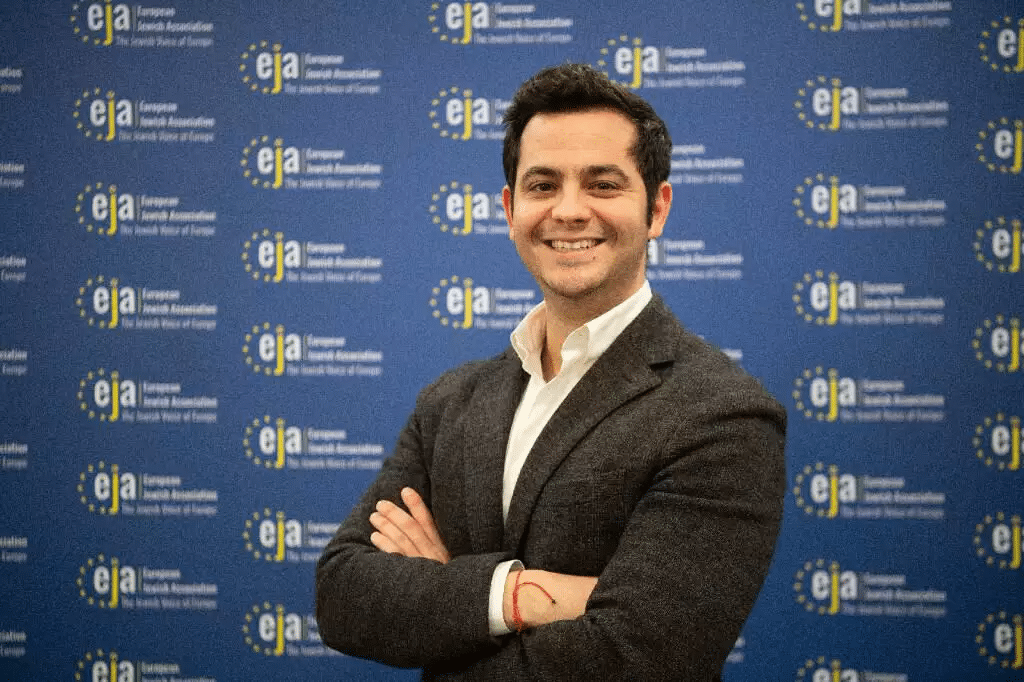
Juan Caldés, director of governmental affairs for the European Jewish Association, who lives in Madrid, agreed with the analysis. "Sánchez is an opportunist. He chose an easy target and understood what unites the left. Before October 7, he was not antisemitic and did not speak much about Israel, but he wants to become the leader of the global socialist left. He traveled to China and embraced the claim that the two countries are on the right side of history – and that is a betrayal. For decades, Spain was a reliable partner of the West, and now, instead of continuing that alliance, we are standing alongside Iran, Venezuela, and China."
Sánchez's ambition to lead the global left is evident beyond Spain's borders. The previous weekend, he hosted an international left-wing summit in Barcelona with Brazilian President Luiz Inácio Lula da Silva, Mexican President Claudia Sheinbaum, and South African President Cyril Ramaphosa. In Europe, Trump's unpopularity allows Sánchez to take diplomatic leadership on several issues ahead of larger countries such as Germany and Italy, presenting himself as the one who was "right from the very first moment" on how to deal with countries like the US and Israel. On immigration too, he is steering Spain against the tide – he is currently leading a regularization drive for approximately half a million undocumented migrants at a time when most of the continent is moving toward tighter restrictions on arrivals.

This week, sensing an opening in the EU's diplomatic pool in Brussels, he began pushing a proposal to cancel the Association Agreement between Israel and the EU, signed in 1995 to ease trade, create a framework for bilateral political dialogue, and promote scientific, technological, and cultural cooperation. This is a strategically significant agreement that gives Israel easy access and broad economic opportunities in Europe. Sánchez is working to undermine it because he believes that economic pressure on Israel will influence its decisions and create a reality that benefits Palestinians and their supporters.
Institutionalized antisemitism
A 2025 survey by polling firm IPSOS, conducted among 4,400 Europeans, found that 24% of Spaniards blame the Jews in their country for responsibility for the war, the highest rate on the continent. On an index measuring the comfort of Jewish life, Spain ranked second-to-last among six major European countries, with only Belgium below it. Surveys conducted over the years show that while most Spanish citizens are not antisemitic, 26%–29% of the country's residents hold antisemitic views and stereotypes, placing Spain near the top of the antisemitism table relative to Western nations.
"In other countries, antisemitism comes from the bottom up – in Spain it comes from the government down to the people," said Juan Caldés.
These pre-existing public attitudes, combined with a hostile government and the wars in Lebanon, Gaza, and Iran, have created a perfect storm. Caldés pointed to Deputy Prime Minister Yolanda Díaz, who posted a video, set against a backdrop of Spanish and EU flags, in which she called out, "From the river to the sea, Palestine will be free." He said, "They use anti-Zionism, but this is unambiguous antisemitism. This is the most anti-Zionist government in Europe."

Elias Levy, editor of the Jewish publication Enfoque Judío (a Spanish-language Jewish magazine) and a resident of Spain, also stressed that Spain is not an antisemitic country. "There are many people in Spain who are sympathetic to Israel, and you cannot describe the country as antisemitic. Sánchez and Foreign Minister José Manuel Albares – who is married to a Lebanese woman and frequently criticizes Israel – have not made anti-Zionist or antisemitic statements, unlike their partners on the far left. But in practice, it is they who, through their actions, are encouraging the wave of antisemitism."
Since Sánchez's statement that Israel is a "genocidal state," Levy recounted, the restraints have come off among politicians, media figures, and public opinion leaders in Spain. "Sánchez said in Congress that on October 7, Israel invaded Gaza. Albares said that Israel must stop the war because it was the one who started it. These are not antisemitic statements, but they take me back to the Middle Ages and to blood libels. The repeated statements and the claims by Spanish politicians about a genocide allegedly being carried out by the Jewish state have contributed to the wave of antisemitism in Spain."
Almudena Negro Konrad, mayor of Torrelodones – a town of 25,000 residents located about 20 minutes from Madrid – opposes the direction of Spain's prime minister and expressed frustration at his attitude toward Israel. "Spain is not Pedro Sánchez," she said, adding that the Eurovision Song Contest is itself an indicator of that. "The gap between the people and the government is clear. Last year, the Spanish public voted for the Israeli song," recalled the mayor, a member of the PP.
"The decision not to broadcast Eurovision stems from the fact that the television executives who oppose Israel know there is a large audience that would vote for Israel. The decision not to broadcast came because of the support Israel receives from the Spanish public, and the people who decided to prevent the entire Spanish public from watching Eurovision did not want Israel to receive that support."
It may sound odd, but in the corridors of the EU in Brussels, support for Israeli contestants is seen as a sign that Israel still has popular backing on the continent. "Last year, the Spanish public gave Israel 12 points at Eurovision. That is another indicator that not everyone hates Israel," Caldés explained.
Negro Konrad said, "The criticism from the current left-wing government is not aimed at the Israeli government – it is aimed at Israel, at Israelis, and at Jews. And that saddens me deeply."
The city of hostility
If Madrid is the center of policy, and significant pro-Israel voices can be found there – including at the municipal level and from the president of the autonomous community, Isabel Díaz Ayuso, considered one of the future candidates for prime minister – then Barcelona has emerged as the center of everyday hostility. A map has recently been circulated in the city documenting Jewish shops and institutions with a call to boycott them, including a Jewish school. The city's mayor called for severing the twin-cities partnership with Tel Aviv, universities have boycotted their Israeli counterparts, the Global Flotilla for Solidarity has sailed from its ports, and Jewish graves in the city's Jewish cemetery have recently been vandalized and desecrated.

Joan Maria Piqué, a representative of the Jewish community in Barcelona, described "a spiral of silence."
"There is almost a consensus among intellectuals, politicians, and media that even if October 7 was terrible, Netanyahu's government is no less bad. In practice, they hold the Jewish community responsible for what the Israeli government does. If you are a Jew who wants to appear in the media, you must condemn Israel. Otherwise, you don't exist."
The most concrete expression came around the most recent Holocaust Remembrance Day. "In recent years, we held the ceremony at the French Institute in Barcelona," Piqué recounted. "Two days before the event, they demanded we move it to Friday at 8:00 p.m. – the middle of Shabbat – a demand that is practically impossible. We moved the ceremony to the synagogue at the last minute. It later turned out that the request was made because Israel had been bombing Lebanon, and this created a security tension that worried the local staff. Events in the Middle East that have nothing to do with the Jewish community damaged our ability to commemorate the Holocaust." Piqué added, "We invited the president of Catalonia and ministers to the ceremony – no one came. But when they are invited to Ramadan and Muslim holidays, they attend. This is not violence – this is silencing."
Spain's difficulties with its Jewish population are particularly acute in the autonomous region of Catalonia. "In Catalonia, Jews are the only religion that has police deployed outside synagogues and institutions. These are the only children who must walk to school under guard – and no one cares," said Piqué. "When there was an attack on Jews at Bondi Beach, almost no one in Catalonia came out to condemn it. But when a statue of Jesus was vandalized – as happened recently in Lebanon – people expected the Jewish community to condemn an IDF soldier."

A chance for change
As of now, Sánchez's prospects of winning the next elections, expected in the summer of 2027, are not strong. The People's Party (PP, center-right) leads in polls with 30%–33%, and the nationalist right-wing party VOX (Spain's far-right nationalist party), which openly supports Israel, is growing to 15%–19%. If the right manages to bridge its differences, a coalition could form that would end the left's rule. On May 17, regional elections are set to be held in Andalusia – a socialist stronghold that shifted right in 2023 – and they will be considered a significant indicator ahead of the national election campaign.
In the meantime, Sánchez's associates have become entangled in corruption scandals that threaten his government. Santos Cerdán, number three in his party and a partner in his political comeback, was forced to resign in June 2025. The prime minister's own wife is suspected of corruption, and his brother is also facing criminal proceedings.
Negro Konrad, who was born to a German mother, issued a warning through a troubling historical comparison. "I have read about what happened in Germany in the 1930s, and it is beginning to happen here, in Spain. The boycotts, the no-go zones for Jews. How can it be that Hamas congratulates the Spanish prime minister, or that the ayatollahs' regime puts his image on the missiles it fires at Israel? Every terrorist in the world praises him. We are allied with the worst regimes, while he justifies his criticism of Israel as concern for human rights."

But Sánchez should not be written off prematurely. "He is a seasoned political fox who has demonstrated remarkable survival skills," Robinson noted. "The anti-Israel rhetoric allows him to craft an image as a prominent European leader without paying any real domestic political price." Levy also sounded a warning. "He was already thrown out of his party and came back stronger than ever. Even when it seemed he had lost the last election, he was the one who managed to form a government. There is still time until the next election, and anything can happen."
A central political asset for Sánchez is the Spanish economy. In 2025, Spain grew by 2.8% – more than double the EU average. The Economist ranked Spain as the top performer among the 37 most developed economies in 2024, and it is also expected to be the fastest-growing EU economy in 2026. Despite this, Spaniards' purchasing power still lags behind that of other EU member states.
As noted, Israel has no current plans to close its embassy in Madrid, in part out of hope that elections will bring change and out of recognition that Israel has a base of friends in the country. But even if Sánchez goes home, the bigger question is whether the sentiment he has created against Israel – the boycotts, the demonization, the legal framing – will go with him, or remain as a poisoned legacy for Spain's next leaders.