
Over the past week, it seemed as if there was hardly anyone in Israel who was not talking about Hezbollah's fiber-optic drones, which have become a tangible, immediate and, regrettably, deadly threat in southern Lebanon. Two soldiers and a civilian were killed by such drones, at least 15 people were wounded, and the IDF has also acknowledged that for now, there are no effective solutions to the problem.
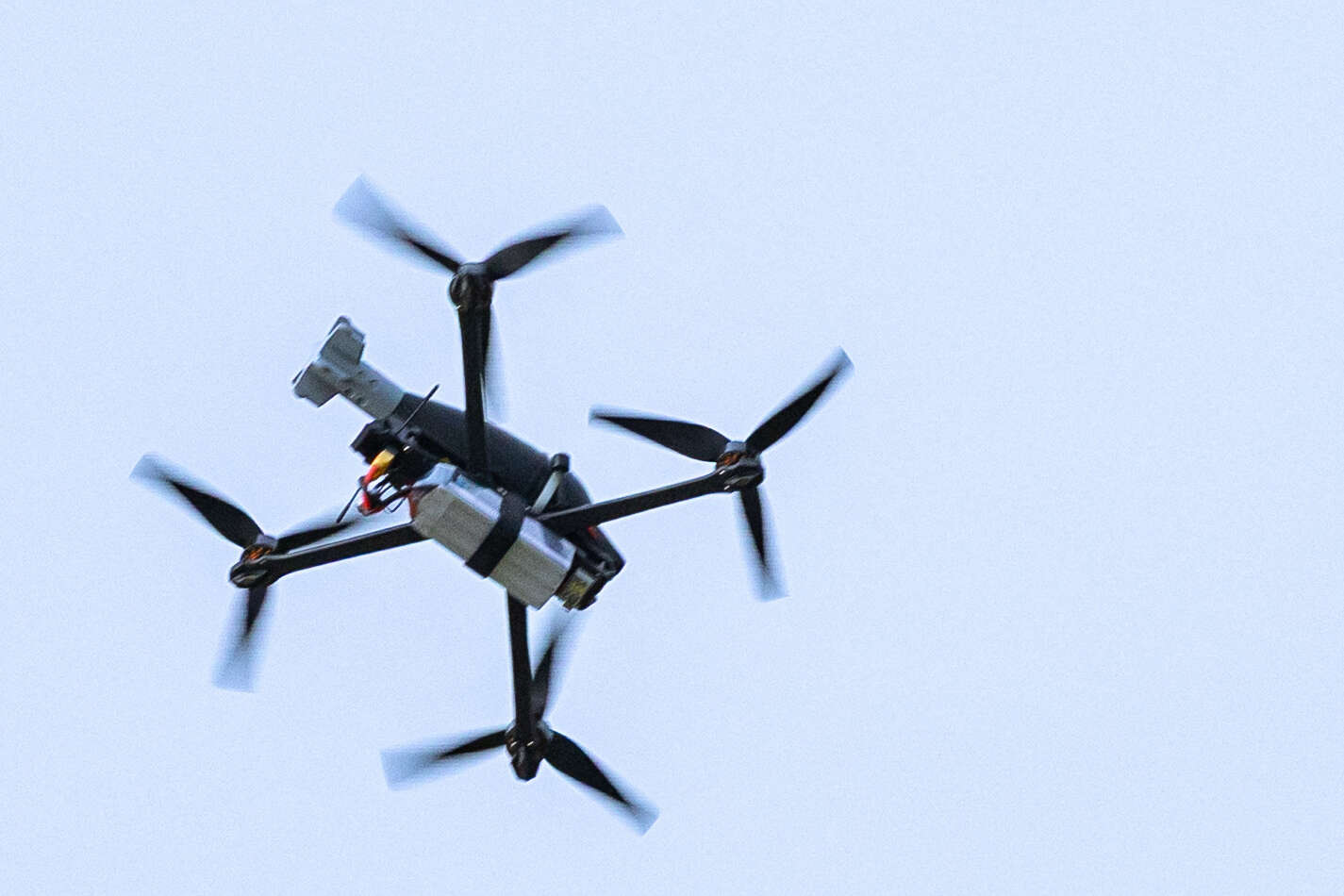
And now for the bad news: An even greater threat already exists. It is far harder, if not impossible, to thwart at the launch stage, and it endangers every one of us and every facility inside the country. This threat is called piloting through the use of the cellular network. With technology that already exists today, it enables UAVs and drones of various sizes to be operated from unlimited distances, with high reliability and relative ease.
This is a leap forward, and perhaps several leaps. To put it in perspective: Two or three years ago, UAV launchers had two options. They could use radio frequencies to steer the aircraft over a range of a few kilometers, or launch it in a manner similar to a rocket: "You enter coordinates and wait for the news to hear whether it hit," as one former senior security official describes it. With the development of the ability to use the cellular network, we entered a completely different world.
"Let's take a UAV like the Shahed-136," a former senior security official who specializes in UAVs told Israel Hayom. "You install a modem with a local SIM card on it, exactly like the one in a phone, and then you use the cellular network of the country you are in, or you move between countries and roaming takes place. You receive service from a fourth- or fifth-generation cellular network, which can provide very high bandwidth in real time. So just as you can hold an international video call on WhatsApp, for example, the UAV operator can receive a very high-quality, real-time image from the camera installed on the drone or UAV. There are no more delays like those caused by satellite use."
But steering such an aircraft from outside the borders into the country is only one scenario for the threat. Another risk, perhaps even greater because of the difficulty in detecting it, is that internet-based piloting is relevant to racing drones that will already be inside the target country when the operator connects to them. "This technique can be used from anywhere, in any place," the senior official said. "The operator can sit in Tehran, and all he needs is for an accomplice in Beersheba, Tel Aviv or anywhere else to 3D-print or buy a drone online and install a modem and SIM card on it. That's it. The operator in Tehran can already steer it on reconnaissance missions.
"Imagine what happens if the Iranians hover for half an hour over the Kirya and document every person in the compound," he said, referring to the IDF headquarters in Tel Aviv. "All that is needed is a 3D printer and a cellular modem. And if the accomplice attaches an explosive charge, it does not even have to be large, because the accuracy will do the job when the operator in Tehran guides the drone with the precision needed to hit a specific window of a home or the opening of a tank."
"Thousands of kilometers away"
If this sounds imaginary, it is not so for anyone following the Russia-Ukraine war.
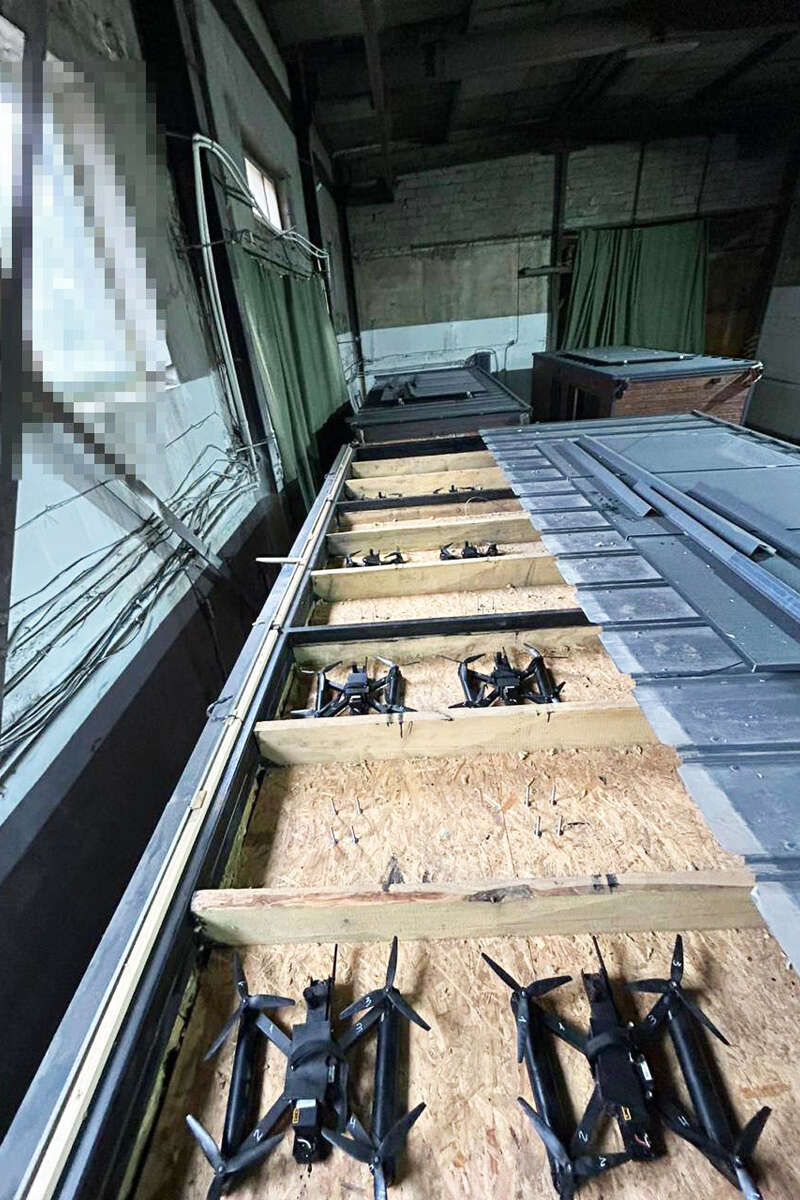
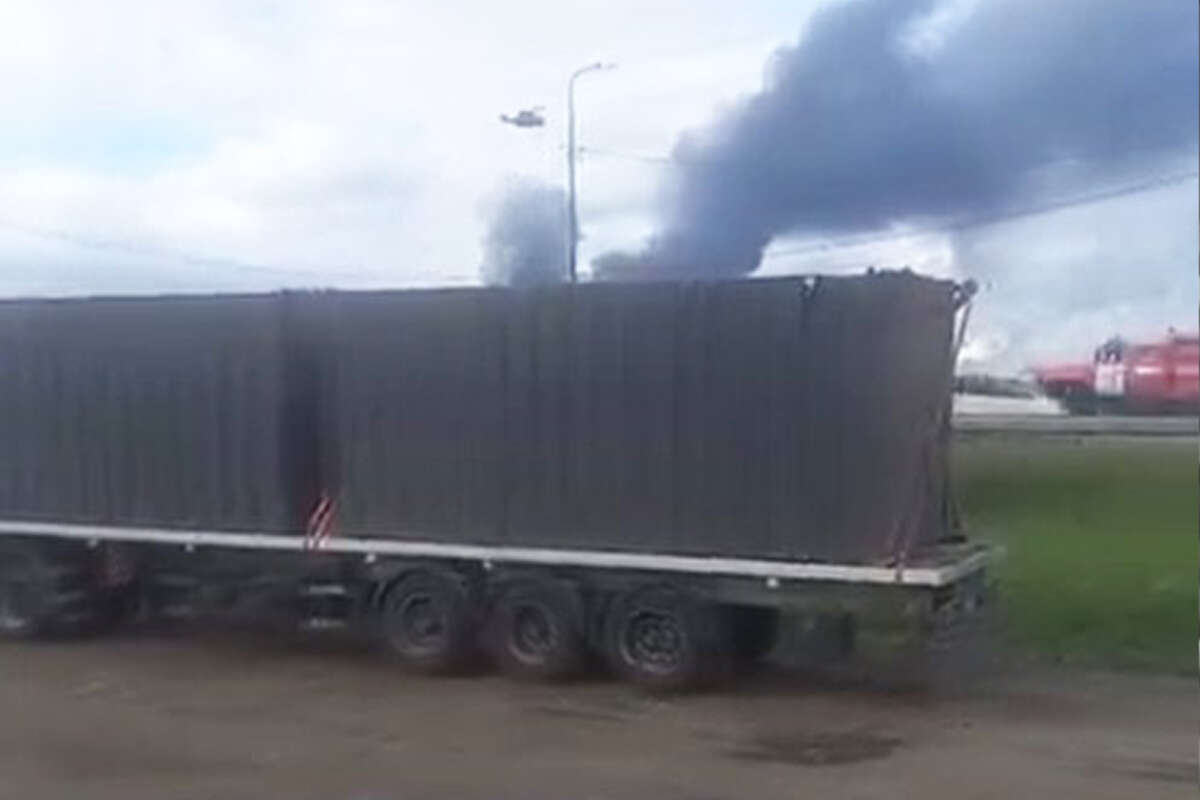
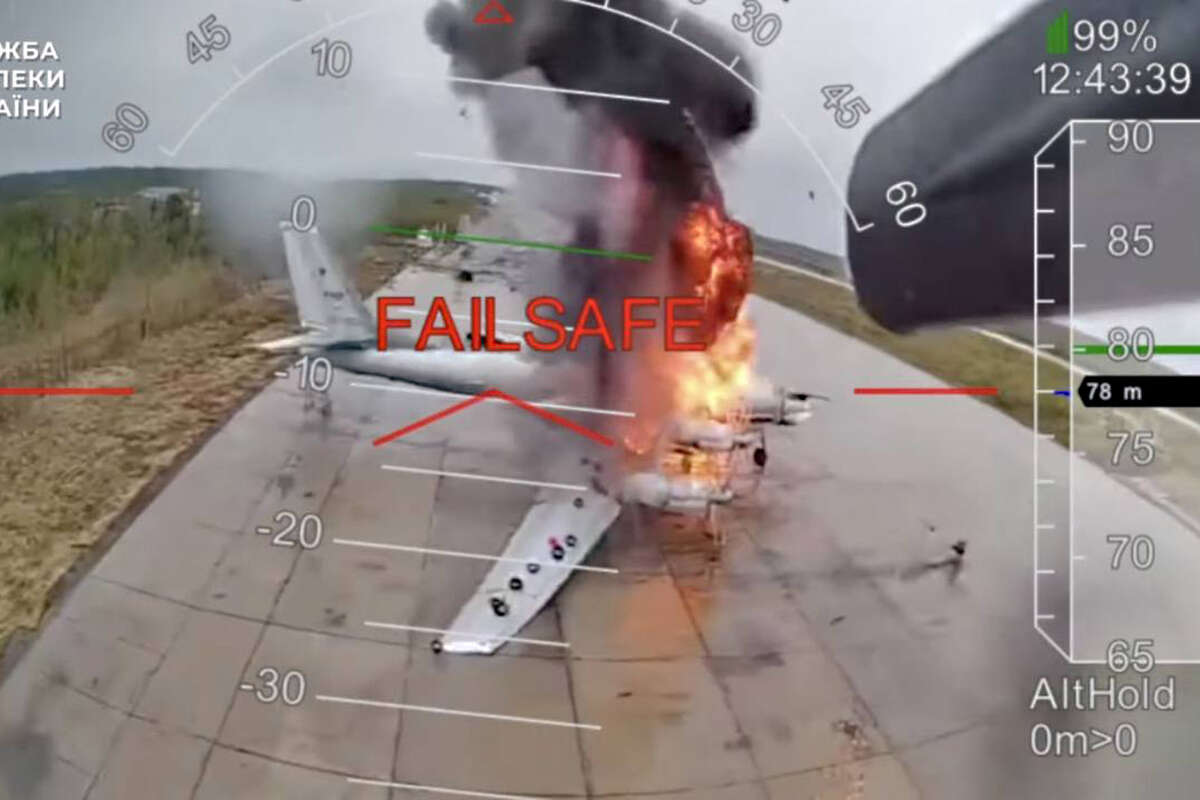
Let us go back to early June last year, to Operation Spiderweb, carried out by Ukraine deep inside Russian territory. Four Russian Air Force bases housing strategic and long-range bombers were attacked simultaneously, at distances of about 700, 900, 2,000 and 4,700 kilometers (435, 560, 1,240 and 2,920 miles) from Ukraine's borders. It was the culmination of an operation Kyiv had planned and executed over 18 months, during which dozens of racing drones were first smuggled into Russia, followed in the second stage by container-like structures with removable roofs under which the drones were hidden.
Truck drivers hired to move the containers drove the structures to locations within a short flight distance of Russian air force bases. At the appointed hour, the container roofs opened and 117 drones took off toward their targets, guided by operators who were then hundreds or thousands of kilometers away from the scenes. The result: According to the most conservative estimate, 10 or 11 strategic bombers were destroyed. Ukrainian President Volodymyr Zelenskyy claimed that 34% of Russia's missile-carrying bombers were destroyed. The damage was estimated at at least $2 billion, but it was far more than economic. Suddenly, it became clear that Russia's endless strategic depth, which had once been its insurance policy, had no meaning in the face of the new technology.
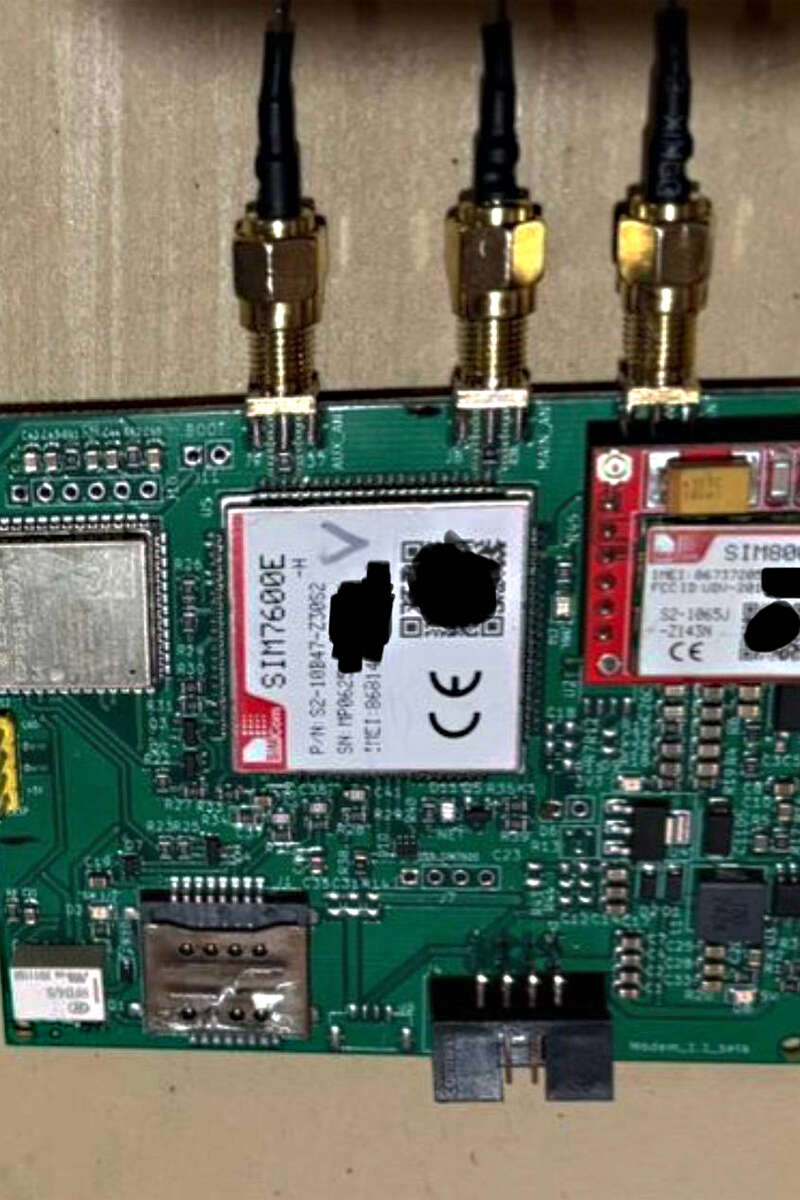
"Given the ability to connect to the pilot through the cellular network, a drone that is a tactical tool becomes a strategic threat," the senior security official said. "In effect, this technology constitutes a paradigm shift. After all, to create a threat inside Israel, there is no need to fly the threat from outside and cross the border, which all the defense systems are looking at and beyond. Here, the potential threat can already be inside the country. You only need to connect to the drone, and it is not even possible to detect who operated it remotely. It is just another subscription on the cellular network, and in Israel there are about 15 million of them. And what can be said of a country like the US, which has hundreds of millions?"
In fact, the Americans were already on alert during Operation Epic Fury because of precisely such a concern. In early March, the FBI warned police in California about the danger of explosive drones being launched from a merchant vessel sailing off the US East Coast. "We received unverified information that as early as February, Iran sought to carry out a surprise attack against the US from an unidentified vessel," said the alert, which was revealed by ABC. "We have no additional information on the timing, method, target or those responsible for the attack."
But if the US was not ultimately attacked, that does not necessarily mean the Russia-Iran axis lacks the capability. Suspicious UAV appearances in about 60 incidents across Europe in the summer and fall of last year attest to that. Authorities in Denmark, Germany and Belgium pointed an accusing finger at Russia, though according to the website dronewatch.eu, a connection to Russia was actually proven in only a minority of cases. But the ability to use cellular networks for attack purposes certainly exists, and has been in use since November 2023, when SIM cards belonging to Ukrainian cellular providers were discovered in Russian UAVs. Moreover, in July last year, SIM cards from Lithuanian and Polish providers were found in Geran-2 UAVs, the Russian version of the Shahed-136. Two months later, this raised questions about whether the Russian UAV incursion into Polish territory had been carefully planned.
"Iran has already used this technology"
Either way, the Russians are making extensive use of internet-based piloting in attacks on Ukrainian cities. Conversely, among the Ukrainians as well, a significant share of their success in attacks on the Russians, whether on the battlefield, in the army's operational rear or in strikes on oil infrastructure hundreds and sometimes thousands of kilometers away, would not have been possible without steering via the cellular network.
Does Iran possess this capability? Lt. Col. (res.) Or Horowitz, today a research fellow at the Jewish People Policy Institute and formerly head of the Hezbollah branch in Military Intelligence, is convinced that it does. "We know Tehran has this technology because there are upgraded Shaheds," he told Israel Hayom. "Moreover, it cannot be ruled out that Iran has already used this technology against the American reconnaissance aircraft in Saudi Arabia. The nature of the hit, with its great precision and limited scope of destruction, suggests as much. Because even a charge the size of a grenade, if it hits a fuel tank, will cause enough damage. That is possible with precise piloting. Now there is also a suspicion that the technology is in Hezbollah's hands as well. It is only a question of time until the next incident."

"If the Russians have this capability, then the Iranians certainly have it too," the former senior security official agreed, "and then leakage to Hezbollah is not complicated at all. Just as we were surprised this past week by fiber optics, I hope that in another week people will not be talking about drones piloted by cellular networks."
As can already be understood, the fiber optic cable, for which the IDF currently has no systemic solutions, sounds relatively minor compared with what drones communicating through the cellular network could do. "The fiber can stretch for several kilometers, although in Ukraine we have also seen fibers dozens of kilometers long," Horowitz said. "From southern Lebanon, a drone on fiber optics cannot reach the Kirya, also because of the terrain, where the fiber can get tangled, and also because the weight of the spool affects the operational range. None of this is relevant to a drone operating on the internet, and it is already a strategic risk that is not occurring on the border, but is aimed at Israel's soft underbelly."\
"Anywhere, in any place"
How can this threat be addressed? At present, there are even fewer solutions than there are for the threat of fiber-connected drones. In Ukraine, the Security Service of Ukraine tries to hunt down Russian agents or accomplices who attempt to transfer SIM cards, meaning that interception takes place long before the drone takes off. In Russia, since last summer, the authorities have begun cutting off mobile internet in many cities, and even then with only modest success. But even this partial solution harms the Russians themselves. Without internet, communication with emergency services is disrupted, and the military also complains repeatedly about the blocks. "In general, you cannot take down the cellular network. Think of all the implications of such a move," Horowitz said. "In free democracies, you cannot turn off the internet."
Now, UAVs guided through a connection to cellular networks can be detected outside the borders and intercepted. A drone, even one flying at low altitude, can also be intercepted if it is seen in time when it comes from outside the borders. "But what do you do with a drone that takes off, let's say, in the heart of Tel Aviv?" the senior official said, sharpening the problem. "There is no radar looking at airspace close to the ground, and even if there were, it would be impossible because of all the buildings. There are no radars inside the country, so right now we are not familiar with solutions."
It cannot be said that this danger is unknown in the world. The European Union is discussing the search for solutions to the issue, and in the US there is a task force, GIATF-401, that is dealing with a response to this threat. The technology arena of Military Intelligence's research division is supposed to be familiar with the threat and should be dealing with it, but both Horowitz and the senior official who agreed to speak with Israel Hayom anonymously believe there is not enough awareness of the scale of the threat.
"The army organizes itself very slowly," Horowitz noted. "We saw the surprise from anti-tank missiles with an 8-kilometer range. We knew about attack tunnels, and then, in Operation Protective Edge, we discovered the limitations. There is no doubt that we were surprised by the scope of the metro in Gaza, even though there was no reason to be surprised. But it is a very human and very military symptom.
"Here we are talking about a dramatic development that can be compared to the beginning of the rocket era about 20 years ago. But this time, these are not rockets. They are tools that can strike with 12-digit precision. This is a great-power capability being acquired by actors that are not great powers. If Israel took pride in being able to thread a missile into the window of a specific apartment, then the new technology equalizes the capabilities. This is proliferation of precision on steroids. It begins in Russia, then moves to Iran, and from there to the Houthis and Hezbollah. This is a level of accuracy that goes far beyond a red line, also because of the incomparably low barrier to acquisition and the great difficulty of detection. It is also an ideal tool for a shadow war against us, because you cannot know who is operating the aircraft remotely. One can take comfort in the fact that no way has been found to put a ton of explosives on a UAV, but the ability to place a charge passes to every one of the actors, including semi-state actors like Hamas or Hezbollah, and even 'classic' terrorists. There is nothing limiting it. All that is needed is desire, motivation and the understanding that it is possible.
"Failure of imagination"
"We saw Spiderweb. We were impressed. Is our system asking why this should not be done to us? I do not want to give ideas to the enemy, but the technology is already out there, and I do want, as a citizen, to be sure the system understands the scale of the strategic threat. It is not emerging. It is already happening. The system must be working on the response now, not in a year or two, after incidents happen, God forbid. We are dealing with this threat at a time when there is a crisis in relations with Ukraine. I think part of the strategic folly is the fact that we did not embrace Ukraine tightly, as it is essentially becoming the world's most important drone power.
"In any case, the worst thing of all is a failure of imagination. We must not fall into the thinking that just because we did not imagine the threat, we will not address it. We must not fall into what we fell into on Oct. 7. Systems tend to miss what the next surprise looks like. Now it is right before our eyes, and I hope we do not close them."
The senior security official recalled that Israel has known about the fiber-optic drone threat for two years, "and unfortunately, we were still surprised," he said. "What is happening with the possibilities inherent in piloting through the cellular network is a paradigm shift, and we are still thinking in terms of a border and a threat that can come only from outside. If Iran or Hezbollah succeeds in bringing us to a situation in which we are forced to bring down the cellular internet, that alone will allow them to chalk up a victory."