What are Irish, Spanish, and Norwegian children learning about Israel and the Jewish people? What happens when a teacher shows a classroom of children photographs of Palestinian children from the Nakba alongside photographs of Holocaust survivors liberated from a death camp? When do textbooks describe Auschwitz as a "camp for prisoners of war"? When does an education system teach that Jews promote violence? When do new curricula present the war in Gaza as "genocide"?
Across Europe, a slow but dangerous shift is underway. A one-sided narrative is seeping into classrooms – sometimes officially, more often as the personal views of teachers shaped by the society around them. The result is a generation that may grow up with a distorted image of Israel, Judaism, and history.
Three countries illustrate the problem with particular sharpness: Ireland, Spain, and Norway. In Ireland, a near-total public consensus against Israel has taken hold, expressed across the entire political spectrum and throughout the media. In Spain, where 82% of the public believes Israel is committing genocide in Gaza, even news outlets that are supposed to be objective use the term in their reporting.
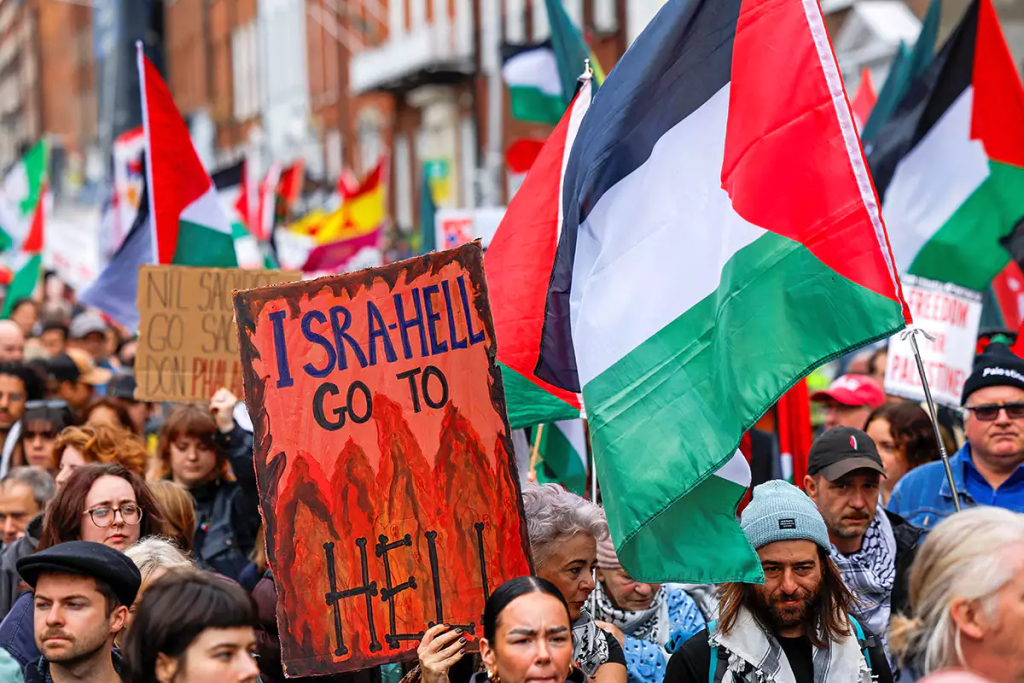
The anti-Israel line taken by the media and by a government that leans on the radical left – reinforced by Prime Minister Pedro Sánchez's own claim that Israel is committing genocide – has created a public atmosphere in which Israel is seen as a malevolent and murderous actor.
Norway presents a similar picture. 88% of members of the country's largest trade union – which includes Norway's largest teachers' association – voted in favor of a boycott of Israel.
Here, too, power lies with a left-wing government that depends on the radical left. The discourse around "the genocide Israel is committing" has been ongoing since early 2024, and most of the media takes a pronounced anti-Israel line.
Ireland: when an error becomes policy
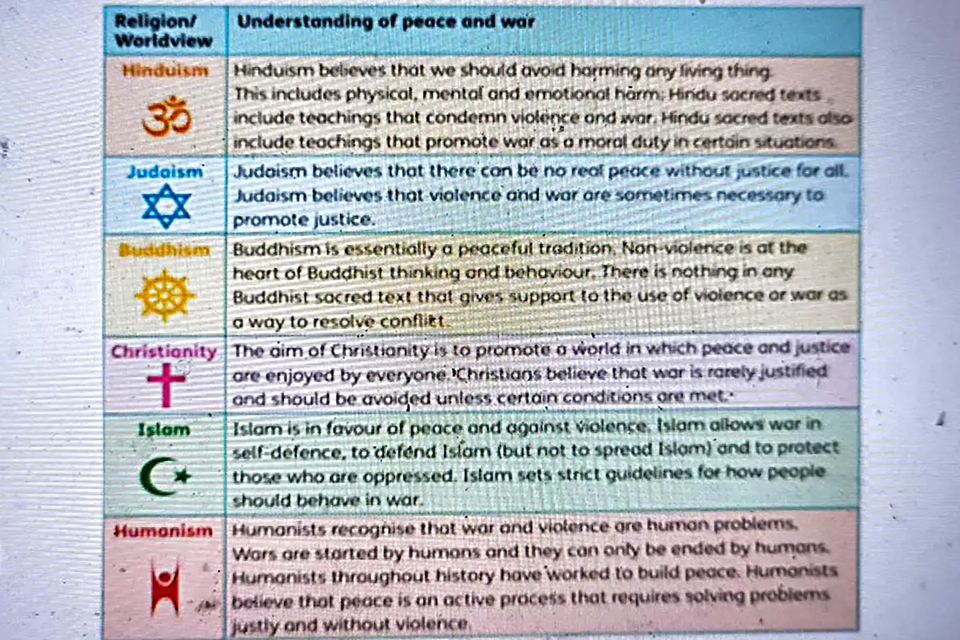
Orly Degani, a board member of the Jewish Community Council of Ireland, has been closely monitoring what is being taught in Irish schools. The picture that emerges from the textbooks, she said, is alarming. "Auschwitz is described in them as a 'prisoner of war camp' rather than an extermination camp. Judaism is presented as a religion that believes the only way to achieve justice is through violence.
"Another book, intended for children aged 4–5, puts forward the narrative that Jews did not like Jesus – classic antisemitism passed down from generation to generation." According to Degani, the problem is not necessarily malicious intent on the part of teachers, but a lack of knowledge and oversight. The Irish education system allows a wide range of bodies to publish textbooks, as long as they cover the subjects set by the government – but there is no meaningful oversight of the content.
"The government decides on the subject areas, and then any educational body that wants to can go and print a textbook. When we explained to the Ministry of Education that this produces problematic content, they said it was not within their control and that it was the publisher's responsibility."
The examples Degani cites are not theoretical. An official examination by the State Examinations Commission listed Palestine as a place where there are "many Jews." "The exam went through checks," Degani said. "It was approved by educational authorities, and it went out to every school. What does a child think when they receive that page?"
The concern that additional anti-Israel and antisemitic content will infiltrate the curriculum is growing, given that Irish teachers' unions have taken an openly anti-Israel stance. One of them, TUI (the Teachers' Union of Ireland), was the first in Europe to declare a boycott of Israel, while another, INTO (the Irish National Teachers' Organization), has called for sanctions against Israel and for schools to become "apartheid-free zones."
Spain: between Catholicism and the radical left
In Spain, too, where the use of the word "genocide" in the Israeli context has become an accepted fact among the majority of the public, teachers' organizations are bringing politics into the classroom. The group "Teachers for Palestine" recently renewed its call to sever ties with Israel and has been working to introduce explicitly anti-Israel content into the education system.
M., a teacher in his 60s at a high school in Catalonia who openly defends Israel in front of his students, argues that the problem in Spain stems from two distinct roots that have merged into a hostile reality: the old Catholic antisemitic legacy and a post-nationalist radical left.
"They love the Jews of the Holocaust with the yellow star, but they hate Zionists. The Holocaust makes it difficult to criticize Jews, so Zionism is the space where you can speak ill of Jews. They won't talk about kibbutzim, about a state surrounded by enemies – they will only paint a bad image."
According to M., Spain is now at a dangerous turning point. Unlike Germany, Poland, or the Netherlands, Spain was not directly involved in the Holocaust, and therefore carries no "moral debt" that restrains open criticism of Jews. This combination – a Catholicism that has not shed its legacy of religious antisemitism, and a radical left searching for a capitalist and colonial enemy – creates fertile ground for hatred.
"When everyone lies together, everyone believes it's the truth," he said. "My students always tell me that another teacher said there is a genocide, and in schools with no Jewish students, no one will check whether it's true. It's a disgrace. Spain is a country with a lot of antisemitism."
Norway: when "genocide" becomes fact
Norway presents a different pattern, but no less troubling: an organized, institutional effort to embed the definition of the Gaza war as "genocide" into school curricula.
On Elpeleg, an Israeli who has lived in Norway for decades and has been tracking the trend, described an organization called RAFTO, which prepares courses on genocide for schools and incorporates the events in Gaza into them.
"In Oslo, they are preparing a course on genocide for schools, and trying to insert Gaza into the lesson plan. In Bergen, they are going to teach teachers about 'the genocide in Gaza.' If Norwegian children aged 12–13 grow up with the absolute certainty that Israel is committing genocide, attacks on the Jewish community will increase."
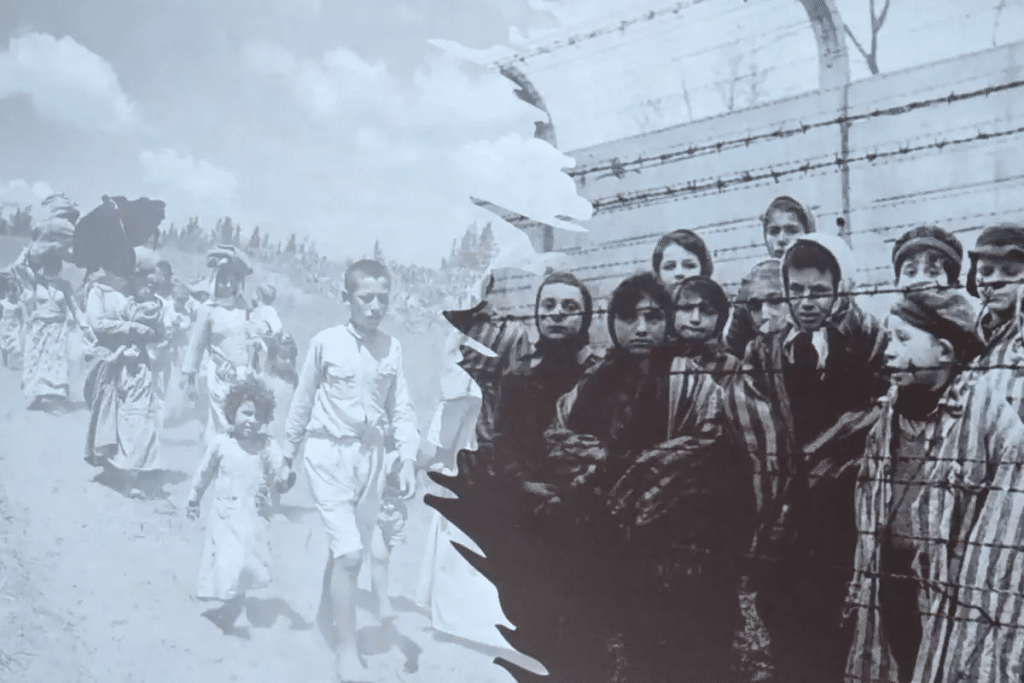
Elpeleg pointed to a painful historical paradox: Norway, where 45% of the country's Jews were murdered in the Holocaust, and many of its citizens collaborated with the Nazis, is now producing an educational narrative that compares Israel to mass murderers. "I spoke with Norwegian teachers, and they really do need to understand what genocide is, because this is a people who collaborated with the Nazis. And it is precisely the Norwegians – many of whom collaborated with the Nazis – who need to understand what happens when you demonize Jews."
Conrad Myrland, CEO of MIFF, who has also been scrutinizing Norwegian school textbooks, shares those concerns. Myrland, who has even written a book on the subject, said that many Norwegian school textbooks contain errors and selective omissions in their portrayal of Israel.
"I have been following school textbooks for years. In the book I published last year, I examined 12 textbooks, and my main argument is that they give a distorted picture of Israel. Not one mentions the expulsion of Jews from Arab countries, and only one mentions Iran as a factor in the Middle East conflict.
"Almost none of the books mention the religious and ideological motivations that lie at the heart of the conflict, nor the Islamic motivation against the Jewish state. Interestingly, the authors of the textbooks – who generally describe immigration in broad terms as something positive – portray Jewish immigration to Israel during the British Mandate period as a negative phenomenon.
"Only five of the 12 books mentioned Hamas, even though some of them were printed after 2007. The entire narrative in Norway is that Israel stole the land from the Palestinians, and that it is bad that the Jews arrived to destroy the peace in the Middle East."
The European pattern: ignorance, ideology, and oversight failures
IMPACT-se examined state school textbooks in eight European countries to understand trends in the depiction of Jews, Judaism, and antisemitism. The organization's CEO, Marcus Sheff, explained: "Some countries – such as Sweden, Hungary and Greece – provide young people with accurate information about Jews, Judaism and Israel. In stark contrast, Irish textbooks display hostility and disinformation."
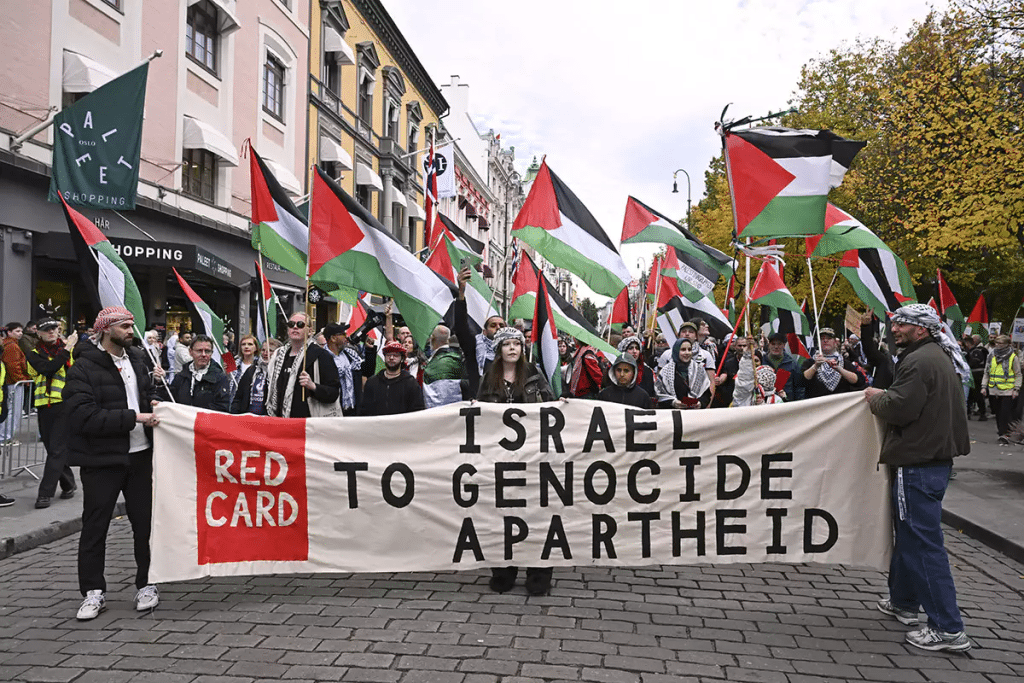
Sheff distinguished between two separate phenomena on the continent: ignorance – where educators simply do not have a thorough command of the material they are teaching – and deliberate bias, where hostile content is consciously inserted. "In some cases, this is ignorance, but in others, there are clearly guiding hands."
The three countries described here differ from one another in culture, history, and the nature of the problem, but one common thread stands out: in all of them, a process is underway in which the Palestinian narrative – and particularly the narrative that has taken hold since October 2023 – is permeating the education system, teachers' unions, and public discourse.
The danger is not confined to the present, as Elpeleg warned. "Children who grow up with the belief that Israel is absolute evil will become adults who act against Israel. We are seeing the educational doctrine of Gaza being adopted across Europe, and from there, the path to harming Jews grows shorter. We have already seen where institutionalized anti-Jewish education in Europe leads."