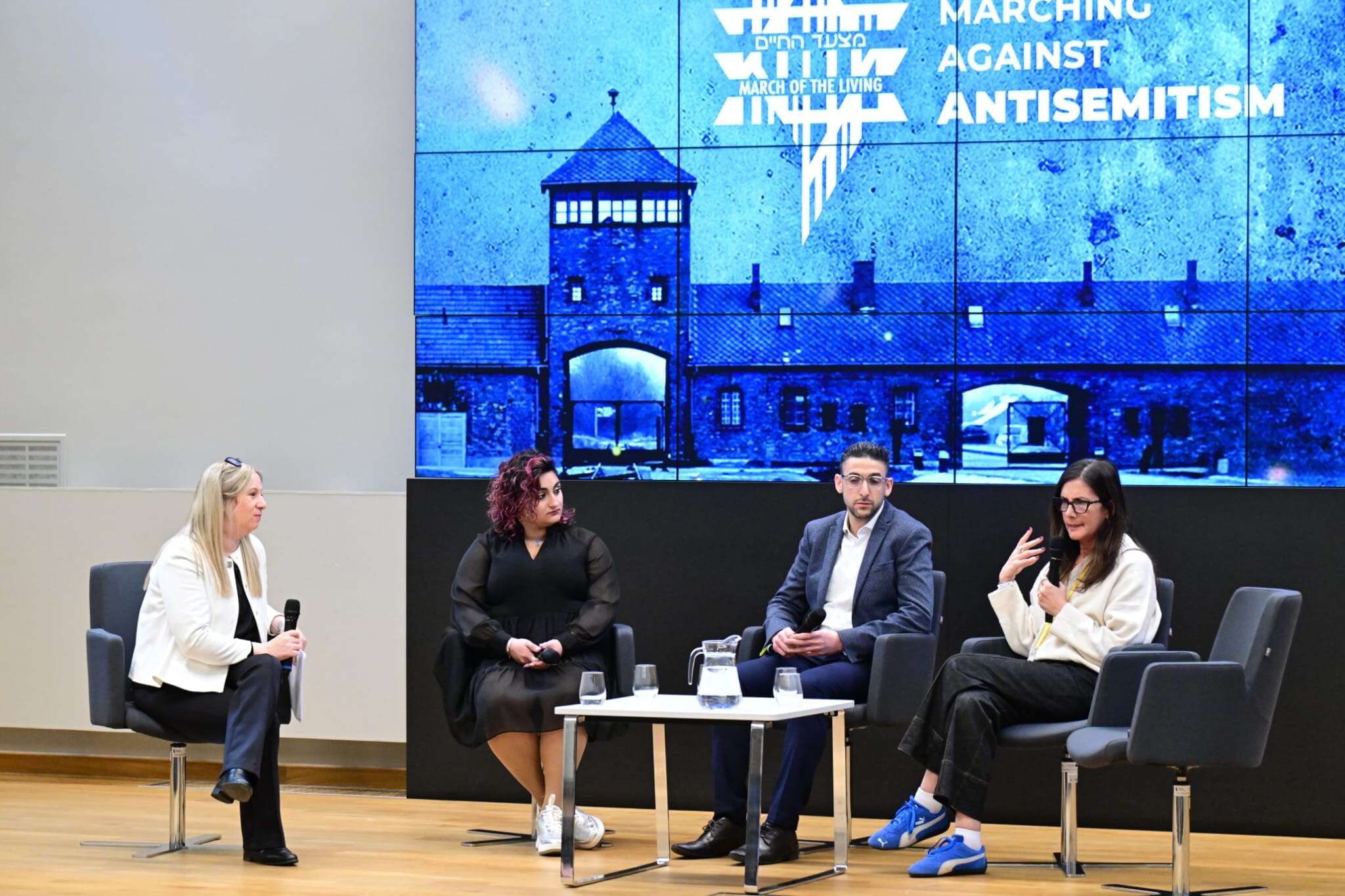
On Holocaust Remembrance Day, a press conference was held Tuesday as part of the March of the Living at Auschwitz-Birkenau, with Holocaust survivors, survivors of terrorist attacks, international delegations and senior figures in the fight against antisemitism warning of an alarming rise in the phenomenon around the world since October 7, 2023.
Revital Yakhin Krakowski, chief executive of March of the Living in Israel, said: "We are standing here in the place where 1.1 million people were systematically murdered. Since October 7, antisemitism has spread everywhere, on a scale we have never known. We know how this ends."
March of the Living President Phyllis Heideman added: "This is a difficult day for the entire Jewish community. The situation today is very different from what it was in the past, but we continue to cling to hope." She thanked law enforcement representatives from around the world who joined the march in order to learn about and confront the growing threat.

"History is warning us. The bell is already ringing"
A delegation of international police officers, which came to learn about antisemitism and deepen cooperation in protecting Jewish communities, was also at the center of the event. Paul Goldenberg, who heads the delegation, stressed that this is a global responsibility.
"I am an American Jew and proud to be a police officer. This is a place where there are no differences. We all protect one another," he said.
"History is warning us. The bell is already ringing. The Holocaust did not begin with mass murder, but with the dehumanization of Jews and the erosion of democratic values. When democracy is shaken and minorities begin to feel unsafe, that is a clear warning sign."
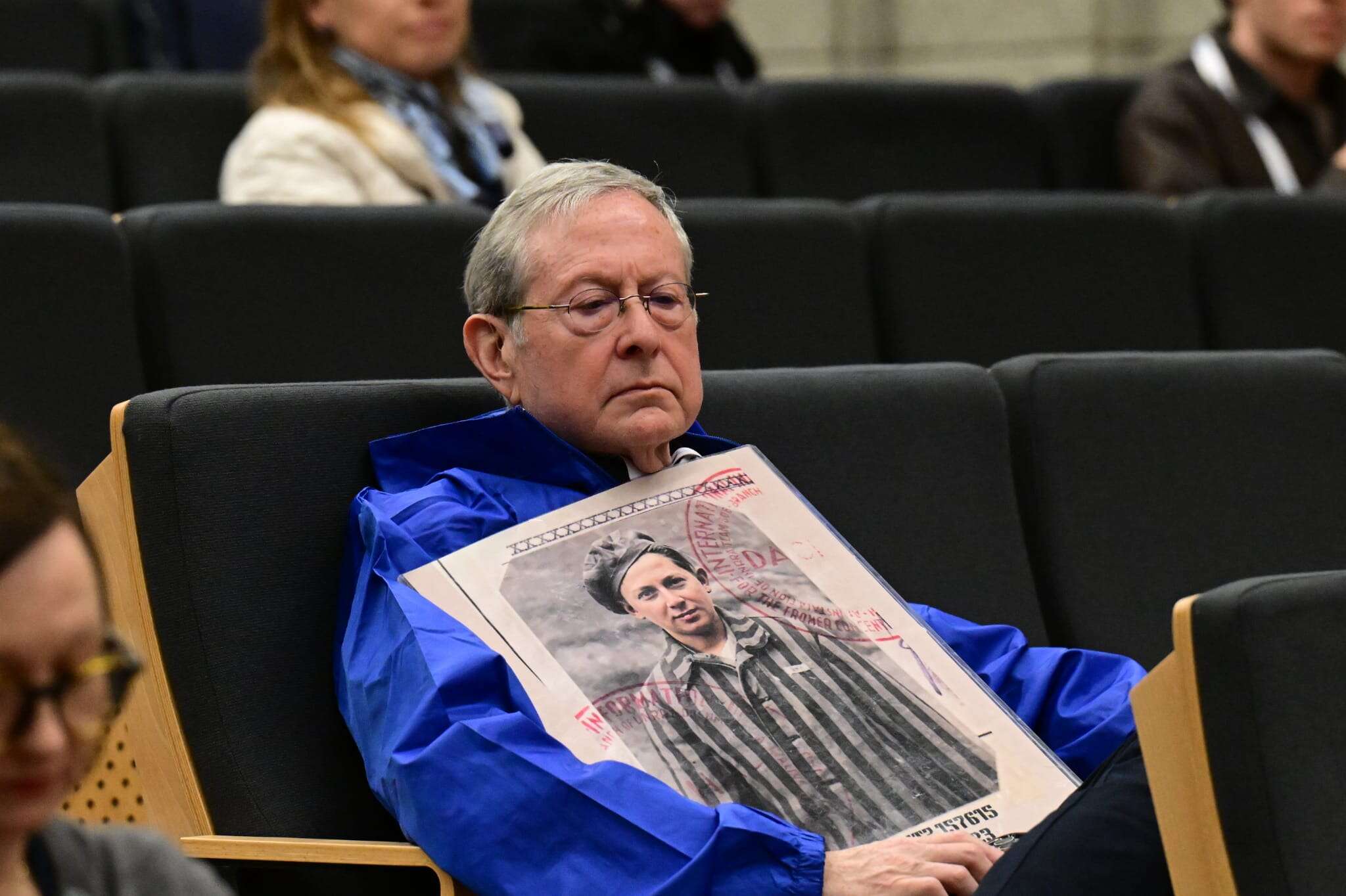
He also said that in recent years, law enforcement agencies have also been dealing with a phenomenon of dehumanization directed at police officers themselves, but made clear: "Reality will not divert us from our mission. We are here to protect our communities, our synagogues and our children, everywhere in the world."
He added: "We cannot promise everything will be perfect, but we are committed to doing everything in our power. 'Never again' is not only memory, it is a responsibility. We will not allow this to happen on our watch, not here and not anywhere."
Survivors of terrorist attacks in recent years also spoke of their growing sense of insecurity. Abby Talmud, who survived the Washington attack, said: "It is difficult to be here, but it reminds me why I fight. Antisemitism has not disappeared. It has simply changed form. Anti-Zionism is antisemitism."
"I thought it was fireworks, until my daughter screamed: Mom, run"
Hannah, who survived the Bondi Beach attack, said: "Today marks four months since it happened. It began like a normal day, on the eve of Hanukkah. We came to say hello to my parents, and then we heard gunfire. I thought it was fireworks, until my daughter screamed, 'Mom, run.' I picked up my child and we ran. She is heavily pregnant and fell on the way. We lost contact with my parents."
She said the two hid behind cars during the shooting, alongside a wounded police officer who urged them to run. "When I went back to look for my parents, I already saw bodies, and I realized my father had been killed. That was the moment our Holocaust began."
Yoni, who survived the Manchester attack, recalled: "I arrived at the synagogue on Yom Kippur to lead the morning prayer. A short time after the service began, we heard a bang. A vehicle tried to break in and then a terrorist tried to enter from the back. Several people grabbed the door to stop him from getting in."
"I ran to the entrance and saw the guards dead. Police arrived quickly and shot the terrorist, but I was also hit and collapsed."
He was taken to the hospital in serious condition. "My lung collapsed and I was wounded in the stomach. Only there did I realize I would need surgery. That is a moment I will never forget."
Nate Leipciger, a 98-year-old Holocaust survivor from Canada, warned about the return of antisemitism: "I have known it since childhood. It may have changed its language, but it has not disappeared. After the Holocaust it became less visible, and today it is erupting again."
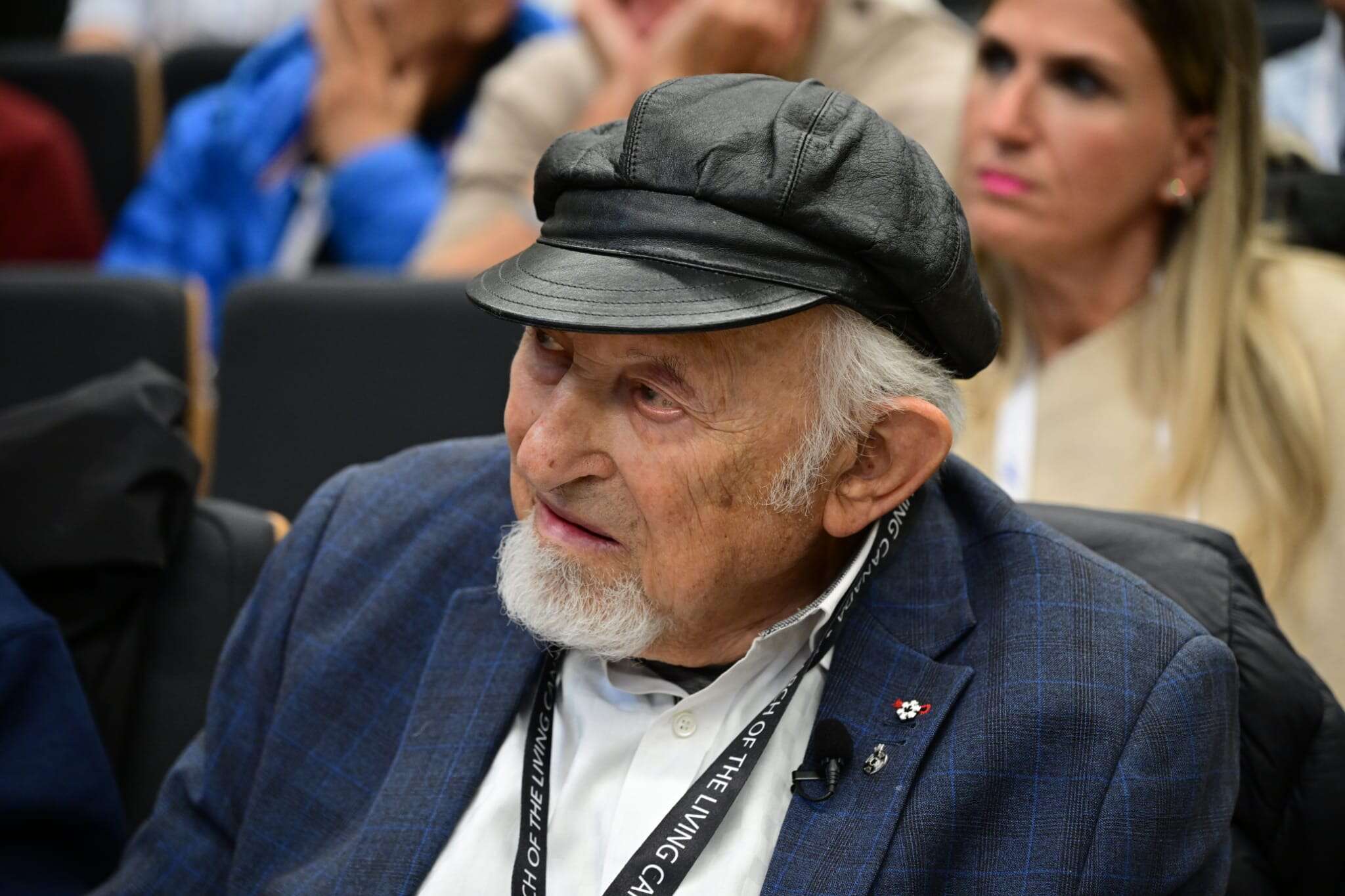
"One of the biggest challenges is propaganda, lies presented as truth. People speak about anti-Zionism, but it is the same antisemitism. We stood alone then, and today as well we see similar patterns."
He added: "Denying Israel's right to exist leads to violence, and propaganda spread without scrutiny reinforces it. This danger does not stop with Jews. It could reach everyone."
"Antisemitism begins with Jews, but ultimately targets the free world"
Sylvan Adams, president in Israel of the World Jewish Congress and a leading figure in the fight against antisemitism, presented troubling data and warned of what he called the "new antisemitism," which he said is organized and financed by countries such as Iran and Qatar.
"Antisemitism begins with the Jews, but ultimately targets the entire free world," he said.

Adams also criticized politicians he said promote hatred, saying: "Zohran Mamdani, New York City's mayor, is promoting hatred toward Jews by supporting statements such as 'globalize the intifada.'" He added: "At the push of a button, Ayatollah Khamenei can achieve what took Hitler years."
According to updated data, nearly half of the world's adult population holds antisemitic views, and in the US alone more than 9,300 incidents were recorded in 2024, an all-time high and a sharp rise compared with the past decade.
The message that emerged from the event was unequivocal: Memory alone is not enough. In the face of rising antisemitism, coordinated international action is needed to prevent history from repeating itself.