The Fracture in Democracies of Liberty
In recent years, the social rift has been deepening in two key democracies of the free world — the American and the Israeli. Unlike many European democracies, both were born not only from a struggle for political liberation but from a deeper conception of liberty: liberty based on the recognition of principles above man, to which he willingly submits.
The source of America's strength — what made it great — was precisely this rare combination: the subordination of human thought to external truth in both the physical and social spheres. In the physical realm — through the adoption of the laws of science; in the humanistic realm — through the understanding that the social order is not arbitrary but rests on binding principles, as articulated in the Declaration of Independence: "the Laws of Nature and of Nature's God."
The State of Israel, too, according to the spirit of its Declaration of Independence, was founded on a similar conception: the integration of rights with responsibility, of liberty with commitment to values above the changing will of man.
Yet today, a profound shift is occurring in both democracies. Alongside the conception of liberty that subordinates man to binding principles, an alternative conception is developing — one that sees man himself as the source of authority for determining values. These two conceptions are not merely different; they clash head-on.
Hence the fracture: no longer a debate over the interpretation of shared values, but a dispute over their very source. It is a transition from argument within an agreed framework to a struggle over the framework itself.
In this sense, a kind of internal "clash of civilizations" is underway within these democracies. It is not violent — but it touches the most fundamental questions of identity, authority, and liberty. If not clarified, it may intensify to the point of losing the ability to maintain a common framework.
Preventing this deterioration depends on the ability of cultural and political leadership to clarify the civilizational gaps at the root of the divide and to return to the essential question: Which liberty do our democracies seek to uphold — liberty grounded in principles above man, or liberty derived from man himself?
Two Images — Two Worldviews
These two images are not merely illustrations — they embody two fundamentally opposed conceptions. To understand the depth of the gap, it is enough to view them side by side:
Image 1: Moses with the Tablets of the Law — sculpture at the U.S. Supreme Court The law above man: The law is not a creation of man — man is subordinate to it.
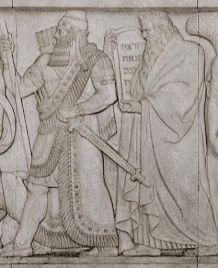
Image 2: The Goddess of Reason (La déesse Raison) — ceremony of the French Revolution, 1793 Man as the source of law: Man elevates his own reason to the status of supreme authority.
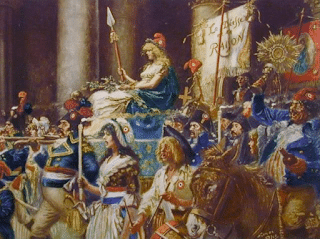
These two images are not merely historical symbols. They represent two different answers to the question: What is the source of law — and is man subordinate to it, or does he create it?
Liberty Through Acceptance of Authority
The Hebrew tradition — from Abraham to Moses — did not seek to liberate man from all authority. On the contrary: it sought to liberate him from subjugation to false sources of authority.
Three liberties stand at its foundation:
- Liberty from political bondage — embodied in the Exodus from Egypt, the transition from slavery to self-rule.
- Liberty from bondage to imagination and subjectivity — embodied in the belief in one truth derived from one Creator, independent of changing human consciousness.
- Liberty from bondage to egoism, drives, and satisfactions — embodied in the foundational value "Love your neighbor as yourself," which demands self-restraint as a condition for balanced social existence.
"Love your neighbor as yourself" is an example of translating the law of symbiosis that creates balance in nature into a moral value meant to create similar balance among human beings.
Liberty, in this sense, is not the absence of restraints — but the ability to subordinate man to a truth that does not depend on him: the objective truth of reality, whose laws were translated into values and commandments designed to balance man — who, unlike other creatures in nature, was created without innate restraints to guide his behavior.
The American Revolution — Continuation of the Path
The American Revolution adopted this conception in civic terms: "Laws of Nature and of Nature's God."
Here too, authority is not a product of human will but the recognition of principles external to it. Liberty arises from submission to them — not from liberation from them.
The French Revolution — The Turning Point
The French Revolution sought to liberate man not only from political rule but from every external source of authority. Authority was transferred to man himself — to his reason. Here a profound change occurs: reason is no longer a tool for discovering truth — it becomes the source of truth.
The erection of the "Goddess of Reason" is not a marginal detail but a deep symbolic expression: when man turns his reason into the supreme source of authority, it is a fundamental return to idolatry. He returns to worshiping the creations of his own spirit — as in the era preceding the monotheistic revolution.
From Modernism to Postmodernism
The process did not stop with the elevation of reason to divine status. While modernism still believed in the power of human reason to shape order, law, and meaning, postmodernism dismantles even that belief.
In our generation we are witnessing a double distancing: not only from external truth but from reason itself. What began as the veneration of reason has become its deconstruction. In place of objective truth or universal reason remain only power games, relative narratives, and language as a tool of control. Reason itself is denounced as "elitist," "colonial," or "oppressive."
Thus the process that began as liberation becomes total disintegration. What was promised as greater freedom has become bondage to emotion, fashion, and power alone. Such a moral and intellectual vacuum, as history teaches, invites authoritarian forces to restore order — often at the price of liberty itself.
The Crucial Difference
The gap between the two revolutions is not in the aspiration for liberty — but in the way it is realized.
One liberated man from political bondage while subordinating him to truth. The other liberated him from political bondage — but also from truth external to him.
In doing so, it returned him to two new forms of bondage: to subjectivity and imagination, and to drives and egoism.
In the physical realm there is no dispute: man does not determine the laws of reality — he is subordinate to them. The question is whether similar principles exist in the social realm — or whether man is their source.
From Separation to Collision
The two conceptions of liberty could coexist as long as an ocean separated them. Today, with no geographic separation, the conception that sees man as the source of authority is infiltrating the other from within — and eroding it.
When both exist in the same society, they can no longer coexist without clashing. This is the true nature of the fracture: not merely disagreement over policy or leaders, but a struggle over the very source of authority.
This gap is also evident in the international arena — most clearly regarding Iran. The Iranian threat has become not only a strategic challenge but a cultural test case: how capable are Western democracies of forming a united course of action when they are divided on the most fundamental question — what is the source of authority by which Iran is defined as an existential threat.
Conclusion
The central challenge facing the leadership of the United States and Israel is not external but internal: to restore the ability to distinguish between truth and will, and between liberty and its abandonment.
The struggle for liberty is not conducted only against external enemies — but first and foremost within the democracies themselves, around the foundational question: what is the source of authority by which values are determined and situations are decided.
A democracy that does not recognize the existence of truth independent of itself will increasingly struggle to define threats, set boundaries, and act with determination when required. Not because it is weak, but because it has lost the anchor by which one can distinguish right from wrong.
That is why the Iranian test is not only a geopolitical confrontation but a test of the democracies' ability to act once again according to principles that do not depend on changing will.
Ultimately, the question with which we began is not theoretical: Which liberty do our democracies seek to uphold? Liberty grounded in truth above man — or liberty derived from man himself.
In the answer to this question lies not only the character of these democracies — but their very ability not merely to survive, but to thrive. As the American experience taught until the beginning of this century, when it tied its fate to liberty above man, it achieved unprecedented power and greatness.
Truth is not determined by majority — but without it, even the majority has nothing left to stand on. The challenge of our generation is to restore humility before truth, while maintaining free and honest discourse — before the fracture deepens beyond repair.