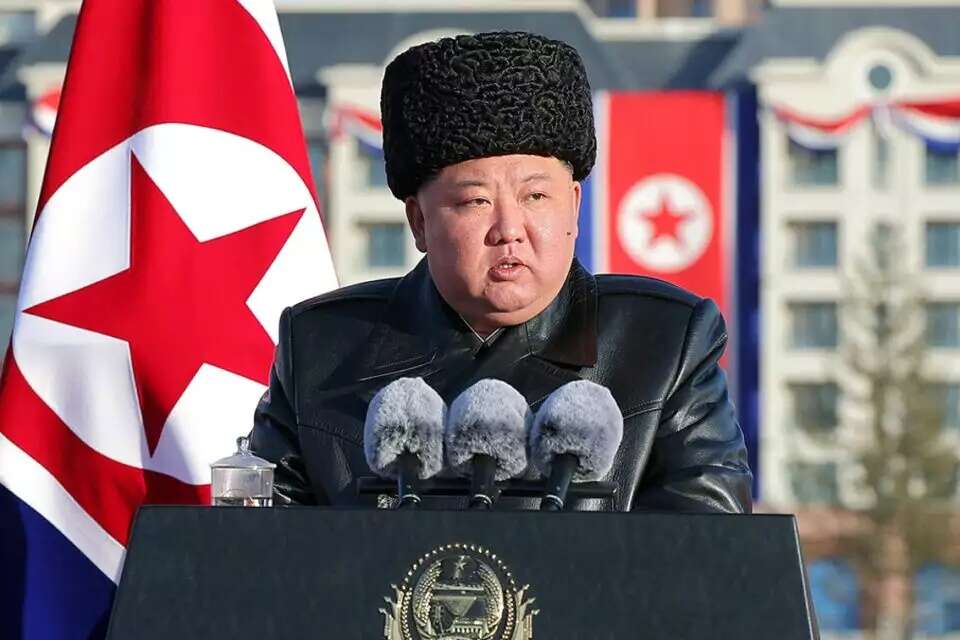
South Korean reports reveal that Kim Jong Un ordered a dramatic update to North Korea's constitution, requiring the military to launch an automatic and immediate nuclear strike in the event that he is killed by "hostile forces." The extreme move was adopted during the latest session of the Supreme People's Assembly in Pyongyang over the weekend, and is intended to ensure that even without the "head of the snake," the country's destruction mechanism will continue to operate at full force.
The constitutional change, revealed by South Korea's National Intelligence Service, came as a direct response to the elimination of Ali Khamenei and senior officials in his regime in Tehran during the Israeli-US war against Iran. The updated Article 3 of North Korea's nuclear policy law now explicitly states that if the command and control system for the nuclear forces faces danger due to an attack, a nuclear strike will be launched without the need for any further order. This is an attempt to create absolute deterrence against "decapitation" operations designed to bring down the regime by directly targeting its leader.
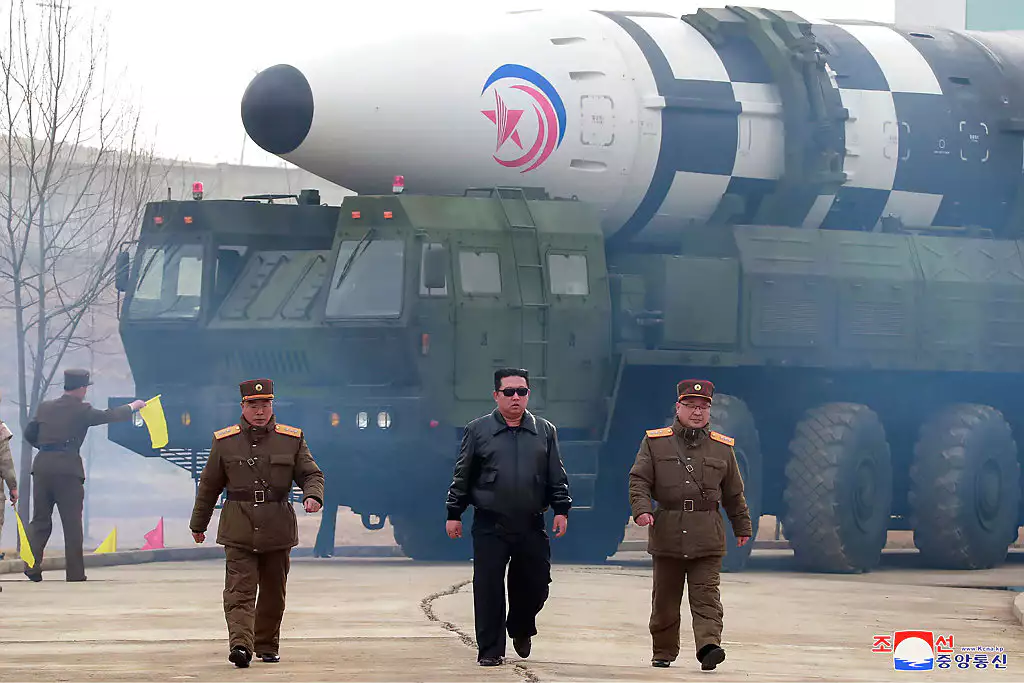
Despite the threatening declaration of intent, intelligence experts assess that carrying out an elimination in Pyongyang is many times more complicated than in Tehran. North Korea remains a hermetically sealed country, with no CCTV networks that can be hacked and no significant presence of foreign elements, making the gathering of human and technological intelligence almost impossible.
Kim himself, known for his extreme anxiety over his personal security, continues to avoid flights and travels mainly by armored trains under heavy security.
State media in the country reported that the dictator visited a munitions factory to inspect a new 155 mm howitzer with a range of about 60 kilometers (37 miles). The new gun is expected to be deployed along the border as early as this year, placing central Seoul and South Korea's most densely populated industrial areas within direct striking range. In doing so, Pyongyang continues to define Seoul as its "main enemy," while removing any mention of possible reunification from official documents.