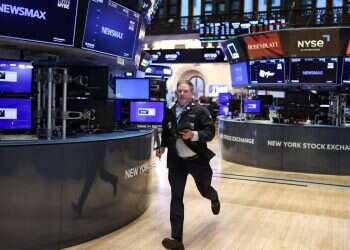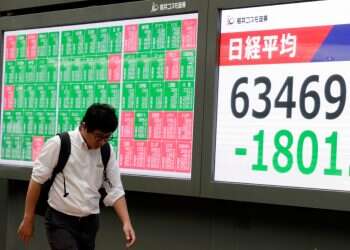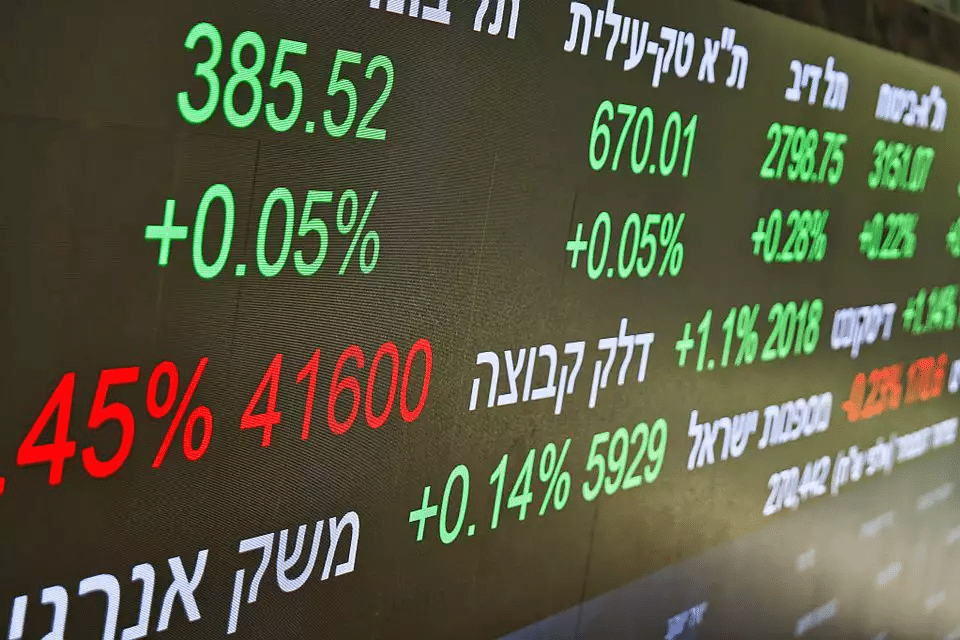
The geopolitical and energy shock caused by the war between the US and Israel against Iran is leading to a rapid repricing of global risk, with investors already reorganizing their capital and exposure across countries, against the backdrop of the International Monetary Fund's warning of a global recession and lasting economic damage.
The latest edition of the Global Investment Risk and Resilience Index by Henley & Partners, the world's largest investment migration advisory firm, and AlphaGeo points to a reshuffling of risk rankings.
The index combines structural resilience with real-time market signals and investor behavior, showing how global risk is being repriced in real time. The analysis provides an up-to-date view of how risk is perceived by investors around the world.
According to the index, Israel has risen three places during this period to rank 32nd, compared with the previous ranking. The figure reflects a relative improvement in perceptions of its resilience, even within a high-risk regional environment, despite its location in a region characterized by elevated geopolitical risk.
At the top of the ranking, traditional safe havens continue to lead: Switzerland is in first place, Denmark in second, Sweden, which rose two places, in third, Singapore in fourth and Norway, which fell two places, in fifth. This reflects a strong Nordic cluster based on decades of institutional discipline and market trust.
Among major economies, China rose six places to 31st, a move that reflects improved market sentiment and marks the most significant rise among the major economies. Canada, which fell four places to 15th, was the biggest loser among G7 countries, signaling that even established safe havens are not immune to fiscal and political volatility.
The US, in 24th place, and the UK, in 19th, remained unchanged, while Germany, in eighth place, Japan, in 26th, and Italy, in 35th, recorded slight gains, reflecting a gradual improvement in market confidence rather than a fundamental change.
"Resilience is a long-term quality; it does not change overnight. Risk, by contrast, certainly does. Markets are repricing it by the hour," said Dr. Parag Khanna, founder and CEO of AlphaGeo.
"The purpose of this edition is not to rewrite the global hierarchy, but to examine it under pressure and ask what the world looks like when real-time market signals are combined with long-term structural resilience. We are witnessing a rapid and uneven reranking of countries," he added.
"What we are seeing is not merely repricing, but fragmentation between countries, regions and even within traditional peer groups," said Daniel Shmeilin, head of Henley & Partners' Israel office. "This is the dynamic defining the current period: not a uniform rise in risk, but a rapid rearrangement of relative resilience. This leads to one conclusion: No single country can provide lasting security or offer all the attributes investors seek: stability, access, opportunity and security. Together, however, they create something stronger: flexibility and room to maneuver."
At the regional level, the picture is uneven. Parts of Asia and the Caribbean show relative improvement, Africa is showing a positive but uneven trend, and the Middle East remains balanced but sensitive, combining resilience with exposure to the war with Iran. Europe is under pressure from energy shocks and geopolitics, while the Americas and Oceania are posting mixed results.
At the same time, countries exposed to conflicts, sanctions or structural weakness are being sharply repriced downward, including Belarus, which fell 57 places to 117th; Bolivia and Ukraine, which fell 28 places each to 134th and 131st respectively, underscoring the impact of severe economic pressure and prolonged conflicts; and Bosnia and Herzegovina, which fell 32 places to 89th.
Several emerging economies recorded sharp increases, led by India and the Philippines, which rose 40 places each, alongside Turkey, which rose 32 places, Mexico, which rose 30 places, and Morocco, which rose 28 places. The trend reflects a reallocation of investor confidence.
Henley & Partners data indicate that the reranking is already being reflected in actual investor behavior, with applications from more than 70 nationalities for more than 40 residence and citizenship programs since the start of 2026.
At the program level, applications in the first quarter of 2026 rose compared with the previous quarter by 61% in Greece, 43% in Italy, 38% in Malta and 200% in Nauru, while Portugal recorded a 37% decline. At the same time, inquiries into investment programs rose by 165% in New Zealand, 44% in Costa Rica and 35% in Turkey, figures that point to investor repositioning rather than uniform growth.
The war with Iran accelerated and deepened these changes, highlighting the continuing complexity of geopolitical risk. The Strait of Hormuz is expected to remain a central flashpoint, and the geopolitical risk premium is not expected to disappear even in the event of an arrangement.
Alongside this, there was a 41% increase in inquiries from clients in the United Arab Emirates and a 26% increase in applications, while demand for golden visas fell by 14%.
The significance for investors is clear: In a world where risk changes rapidly, no single country can provide full protection. More and more investors are turning to the construction of a multi-country portfolio, which allows flexibility, security and control under conditions of prolonged uncertainty.