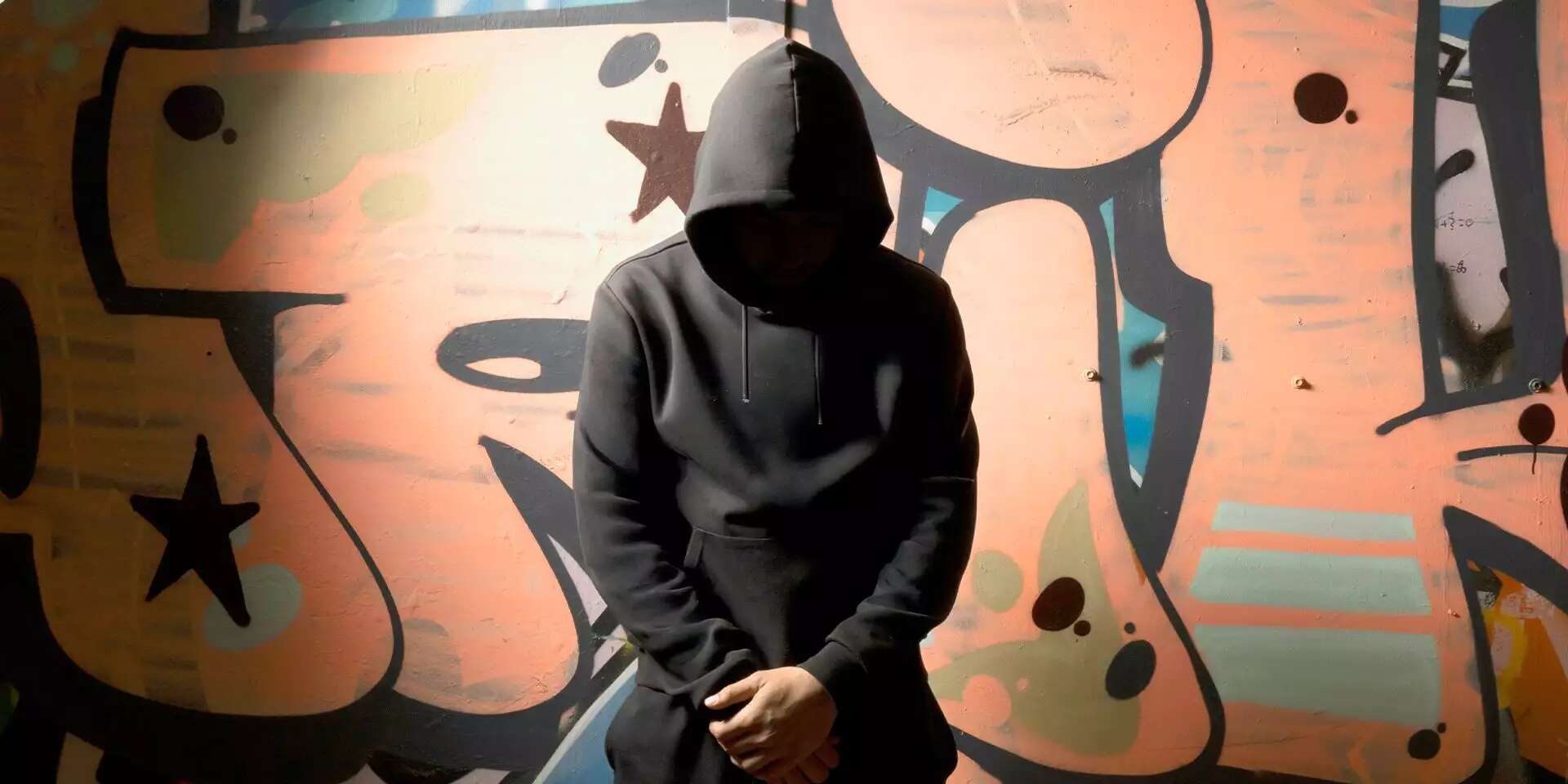
The video published about three weeks ago, showing a 12-year-old girl from the Shapira neighborhood in south Tel Aviv being attacked in an organized lynching by teenagers allegedly affiliated with the SSQ gang, shook even James, a released prisoner who had been part of the notorious group. About two months ago, James completed a long prison sentence for assault and violent offenses, and for now, he is managing to stay away from the world of crime.
"I couldn't believe the neighborhood had reached this point," he said in an exclusive interview, offering a rare glimpse into the gang's mindset and the way it operates. "The attackers of the 12-year-old girl are a younger group. With us, girls are off limits. We don't hurt them, and they are not part of the group. That is a red line. My group is no innocent lamb, but even I was horrified by what I saw. The violence of this generation has become more severe, and they also brag about it in front of everyone. Beating a girl like that is terrible. She isn't a boy."
And beating a boy her age would be OK?
"There is no doubt that people's fuse has become extreme. I see SSQ members younger than me doing ninja moves on another kid just because he didn't give them a cigarette."

What do you think about the 12- and 13-year-olds in SSQ who were charged this week with attempted robbery, aggravated assault and serious injury after stabbing two innocent teenagers from central Tel Aviv?
"They say SSQ, and everyone thinks it is one gang with 100 people. That isn't true. There are several groups. Maybe my gang needs to give them a few slaps and teach them that there is another way, and that they shouldn't follow our path.
"On the other hand, I have been in those kids' shoes, and I know where that violence comes from. We don't have Israeli citizenship, even though we were born here. We speak only Hebrew, but we are not allowed to enlist in the army or pursue higher education. Our parents barely make a living, and the anger is directed at the surroundings. Only crime accepts us and gives us a sense of belonging."
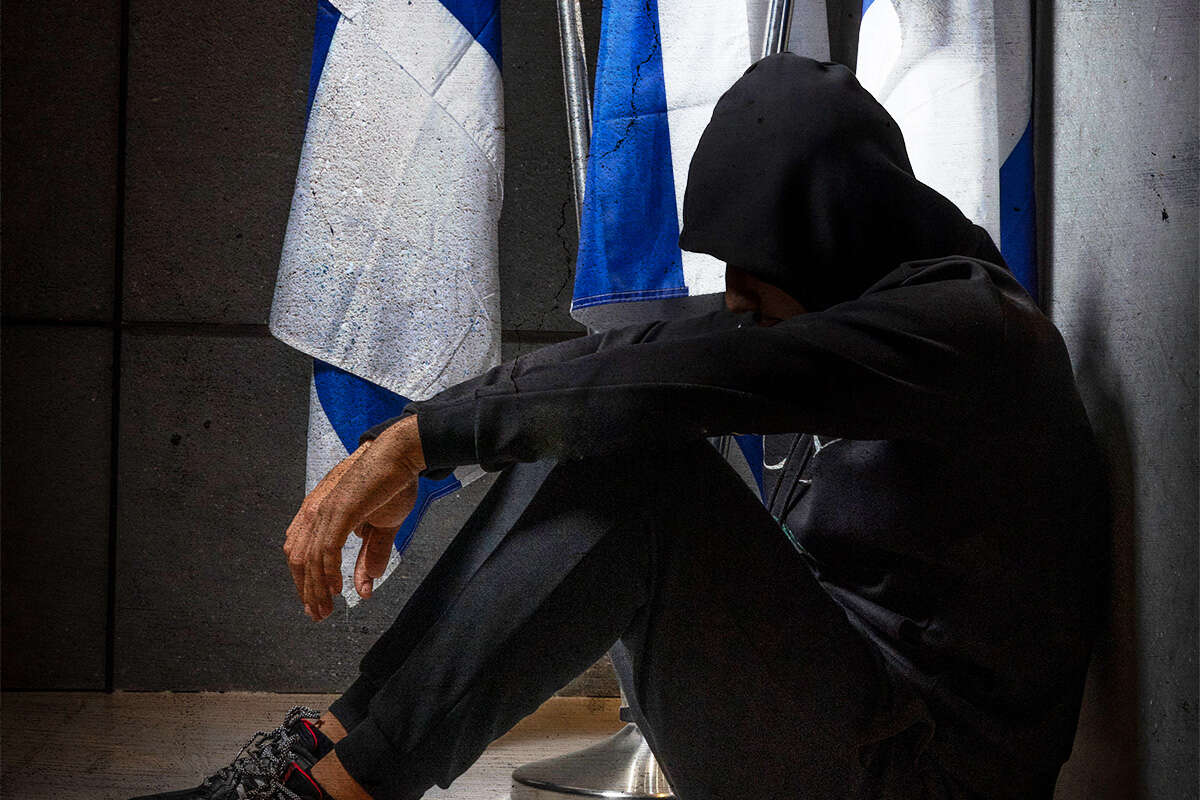
There is no doubt that James, some of whose identifying details have been changed, is torn between worlds. He measures every word and tries to walk a fine line. Sometimes he meets with his friends from SSQ, and the clothes he wears still symbolize the gang's agenda: a black tracksuit and hoodie. On the other hand, he is sticking to an extraordinary rehabilitation program set for him by the Mesila department at Tel Aviv Municipality, which assists refugees and migrant workers with social welfare issues. James is the first prisoner treated by the department, and the only child of migrants in Israel to receive early release after serving two-thirds of his sentence.
After your rehabilitation program ends, what would you like to do?
"I am studying and completing 12 years of schooling, and at the same time I am looking for work so I don't go back to stealing. Almost no one wants to hire a young person who is not an Israeli citizen and cannot receive a pay slip. Sometimes I find something on a day-to-day basis, at a falafel stand or helping distribute food, but I don't know whether I will also have work the next day. From here, I am appealing to the chief of staff and offering him to consider recruiting people like me, especially when there is a shortage of soldiers, and not to be afraid of the label SSQ. I am ready to be on the front line and do everything for the country."
The IDF does not recruit soldiers without Israeli citizenship, so your chances are slim. What is your backup plan?
"I am making every effort not to deteriorate, even though I am being pushed into a corner. I was born here, and as far as I am concerned, Israel is my country."
"We beat people up for no reason in the street"
This week, James appeared for the last time before a youth court judge in central Israel, after completing his prison term and the period following his early release. He stood emotionally beside attorney Maya Alfi Shaked, who represents him on behalf of the Public Defender's Office, and his voice trembled. The situation was unusual. To win early release, he was required to join a program run by the Prisoner Rehabilitation Authority, which is intended only for Israeli citizens. The fact that Alfi Shaked succeeded in placing a minor without citizenship in an alternative program is an impressive achievement.
Throughout the period after his release, James was under nighttime house arrest, attended individual meetings with a social worker from Mesila, and appeared every three weeks for follow-up hearings in court to hear updates submitted by welfare services.
"I told the judge that I would not have been able to make this change without the trust of all these people," he said, moved again. "I looked at my parents, who suffered so much because of me, and at my younger siblings, who look to me as an example. I spoke about the period after my release, about the fact that I did not violate the conditions even once, and about the importance of finishing my studies and finding work. I know that people promise to rehabilitate and don't follow through, but I will. Maya brought a notebook with her, and everyone wrote words summing up my journey, even the judge and the prosecutor. I will hang the certificate I received on the wall in the apartment."
James' parents came from Central Asia and the Far East, and have no legal status in Israel. He was born in the country, and speaks fluent Hebrew. "We wanted children, even though we knew they would have a problem," said his mother, Monica (not her real name). "I wasn't afraid. We said that whatever happens, happens. At worst, we would leave for the Far East. The immigration police caught me once, when James was 6 months old, and thanks to him, they didn't deport me."
James studied at the Bialik-Rogozin school in Tel Aviv, like all the children of migrants, and was considered an outstanding student.
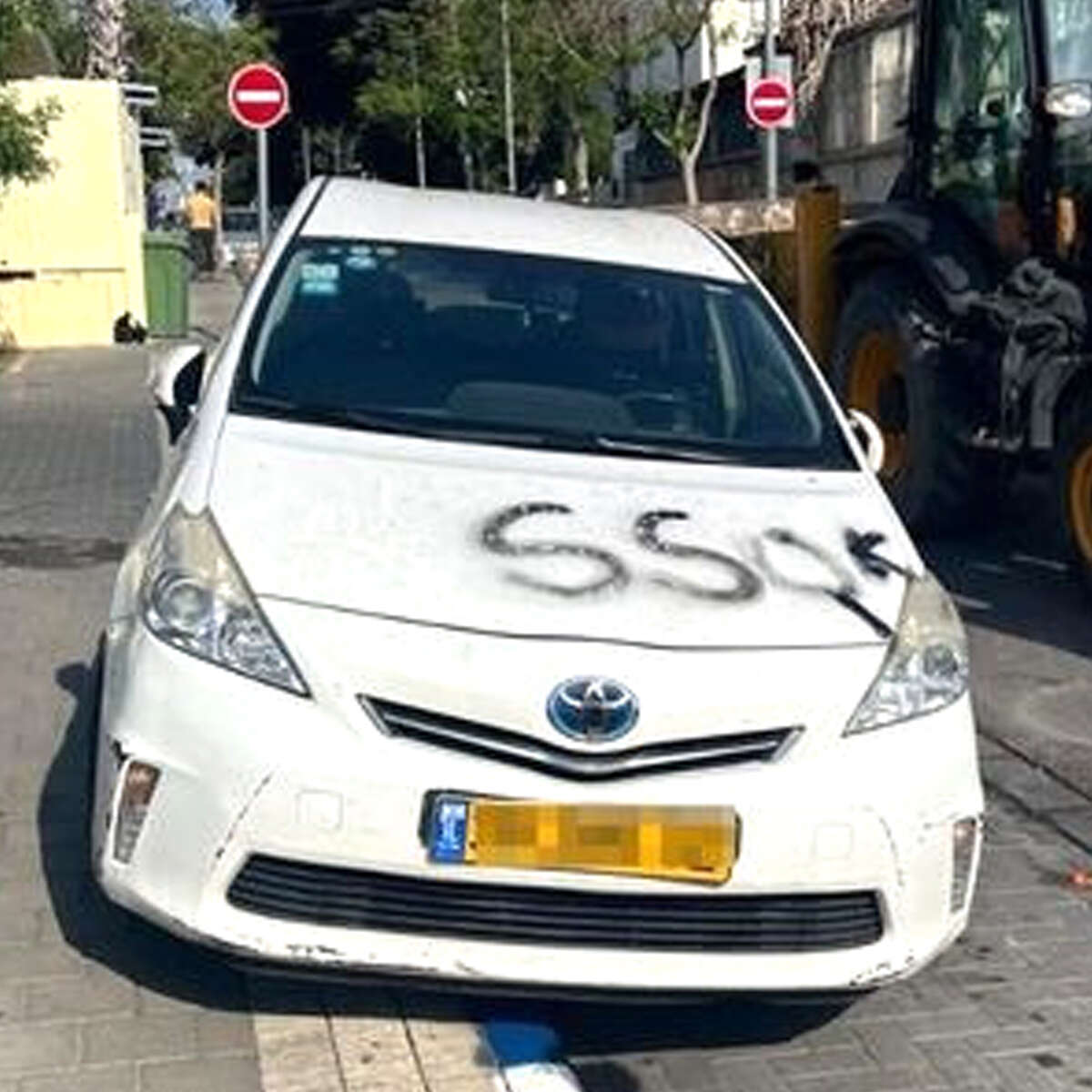
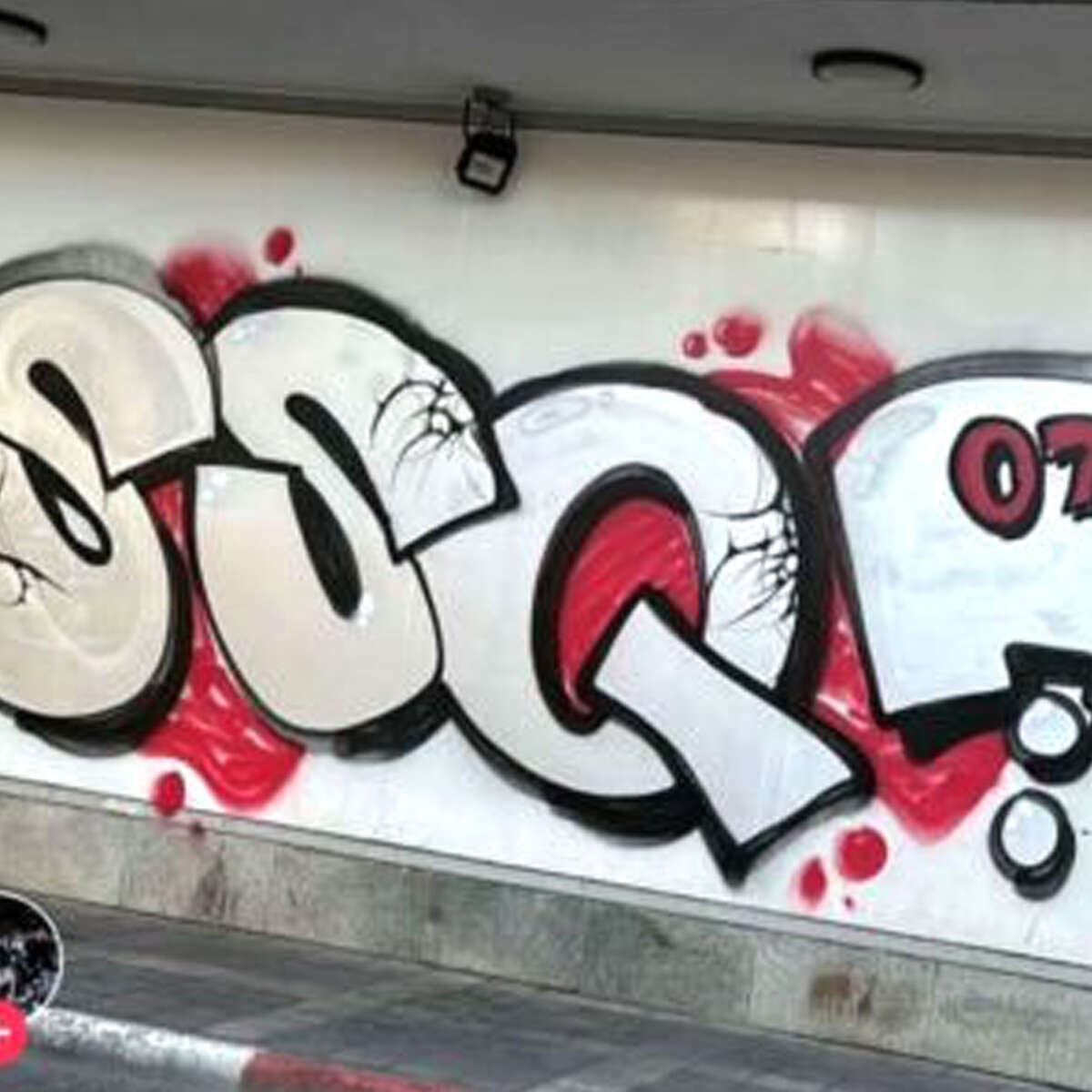
"I always knew I was different," he said with a bitter smile. "In fourth grade, my mother signed me up for a soccer class and paid 2,000 shekels, which for us is a lot of money. I took part in the practices, but I couldn't compete in games because I am not Israeli. That was when I first felt the discrimination. I sat on the bench and was jealous. Because of the frustration, I joined SSQ. At first, we played tag or did parkour. The vandalism was no more than painting graffiti on walls, and it came from boredom. After school, we wandered the streets and didn't do homework because we knew it wouldn't do anything for us. Even as a child, I had internalized that I was invisible to the country where I was born."
How did you deteriorate from parkour, an urban extreme sport, into crime?
"Crime gave me a sense of belonging to something. The older we got, the more we also wanted money, because our parents didn't have any. I started stealing as a kid. At first, it was a candy from the grocery store, then chocolate milk. From there, it moved to clothes. The first time was at a store in Azrieli. I went in to try on Nike pants that cost 400 shekels. I saw that the alarm tag was loose. I took it off, folded the pants into my bag and walked out without being caught. It gave me an appetite. Every day, I stole clothes from a different store. After that, it also developed into shoes and watches."
Didn't your parents notice that you had new clothes and items they hadn't bought you?
"I told them that a friend had given them to me, or that I had found them. My father was suspicious and said that if I wanted something, he would buy it for me, but I couldn't stop. I became addicted to stealing. I wasn't unusual in the neighborhood. A lot of people did it. We knew it was forbidden, but we had no choice. It is hard to understand how a child feels when he knows he is nothing in the eyes of the country where he grew up. That is the way to show that you also have something."
How did the thefts develop into violent incidents?
"We wanted to go to restaurants and parties, and we needed money for tickets. I would pull schemes and help people sneak into events for payment. I did other things I would rather forget.
"The violence started at parties. We fought outside. Fights that came just from nerves. It was enough for someone a little drunk to accidentally touch one of the guys, or look at us with some kind of attitude, and we would immediately jump him. As far as we were concerned, that meant they were looking down on us and disrespecting us. We would beat up teenagers in the street just because they had things and we didn't."
Fingerprints like in the movies
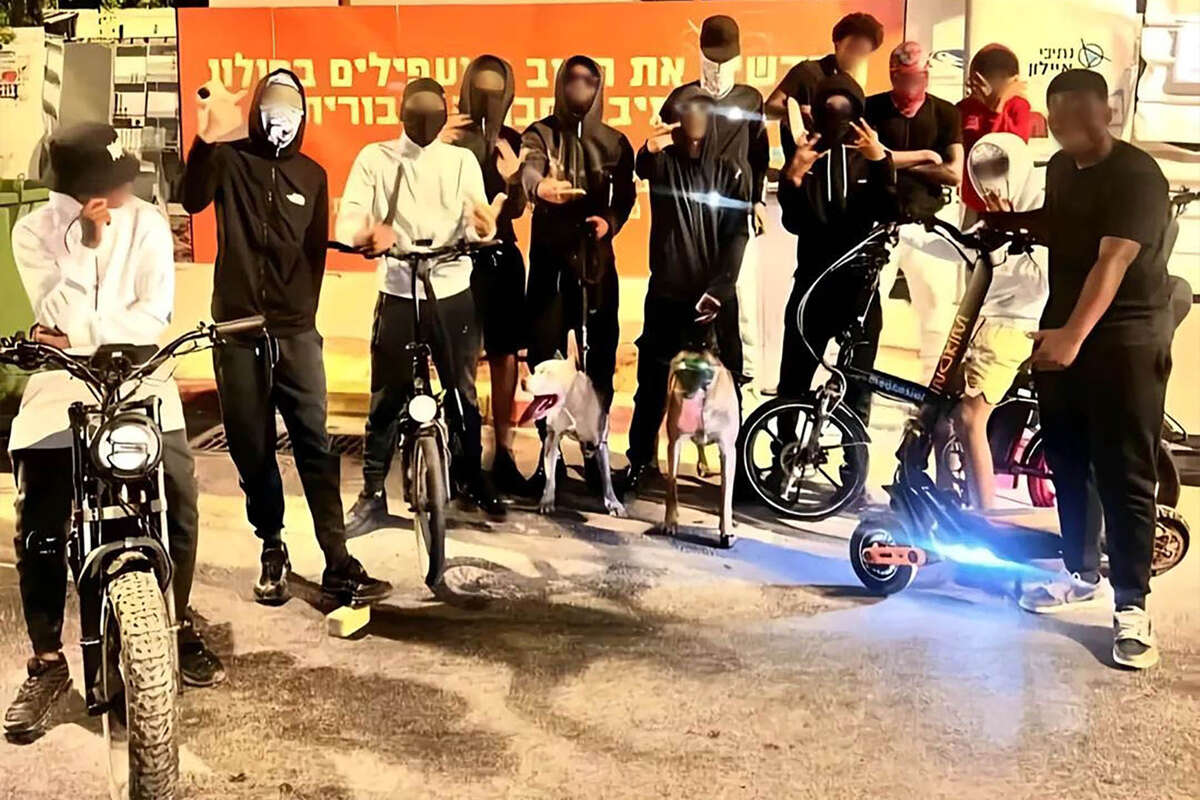
The SSQ gangs, whose name stands for Shapira Squad, are street groups of teenagers and children of migrants, most of them from Eritrea, Sudan and the Philippines. They are considered an unusual phenomenon by Israeli standards, and are influenced by gangsta rap culture, a stream within hip-hop culture that depicts lives of crime, violence, poverty, power struggles and interactions with police. At first, the gangs committed vandalism and were involved in fights and drug deals, but in recent months, they have escalated their activity and spread fear through the streets of central and north Tel Aviv. Their members rob teenagers of iPhones and scooters, and do not hesitate to use knives, clubs and brass knuckles. Unlike in the past, instead of hiding their actions, they document them and upload violent videos to their TikTok pages.
The gangs are divided into groups by age, with the youngest just 12 and the older ones over 18. On the most recent Memorial Day, they carried out a violent robbery at a restaurant, and on Independence Day, they stabbed boys aged 14 and 15. They are easy to identify in the streets: Some grow dreadlocks and hide their faces under hoodies, while others sometimes walk around with a black bandanna on their heads.
Against the backdrop of the increasingly extreme attacks, Tel Aviv District Police launched a large-scale operation that included the deletion of SSQ TikTok accounts. Uniformed and undercover officers have been making their presence felt at entertainment venues and friction points, and the children who attacked the teenagers in central Tel Aviv were arrested and indicted. National Security Minister Itamar Ben-Gvir also entered the picture and requested assistance from the Shin Bet security agency.
James was first arrested when he was 14. "I was riding with a friend on a shared scooter in north Tel Aviv, and someone passed in front of me and looked at me. In south Tel Aviv, people look at you as an equal among equals, but in the center and north, the looks are like I am a gangster."
And you aren't?
"Are you serious? The guy who passed me just came to start a fight with me. He cursed, so I went up to him and asked, 'Do you need something?' He answered, 'Keep riding.' I pushed him and a fight started. A police car passed by, so we ran from there back to the neighborhood. Suddenly, a Yasam riot police officer came on a motorcycle and told us to stop, or he would shoot us. I was sure he was showing off, so I told him, 'Go on, keep riding.' Then I realized he was a police officer. I stopped and he kicked me."
How did the police manage to locate you?
"The boy from north Tel Aviv called them and said we beat him and robbed him, but he lied. The police found us because my friend had a criminal record and they knew him. They put me in the police car, and my friend told me to keep my right to silence."
That is how criminals behave, in effect.
"I stayed silent so I wouldn't incriminate my friends. During the interrogation, I was stressed. I thought about my parents and siblings. When they photographed me and took my fingerprints, I felt like I was in the movies."
James was transferred to detention at Ofek Prison, and after a week he was released to house arrest. A short time later, he violated the conditions imposed on him and went out in the evenings to steal clothes again. "About six months later, I was riding alone on a scooter, and at 6 a.m., I saw a drunk Russian tourist with seven beer bottles next to him. He followed me with his eyes, as if he had some kind of problem with me. No one looks at me like that. In the neighborhood, people don't stare."
The incident developed into a violent brawl between James, the drunk man and another person, at the end of which police were called. "The next day, they called my mother and asked me to come in for questioning. The police promised they would release me right away, and I came in flip-flops. During the interrogation, I realized I had been filmed by security cameras. They filed an indictment against me and arrested me until the end of proceedings at Ofek Prison."
"The doors are closed to me"
James' first months in detention were characterized by many clashes. He fought with the inmates and talked back to the guards. "I was exhausted and angry," he said. "I wanted to show that I was a man, because in prison you are not allowed to show weakness. At night, I couldn't fall asleep because of all the thoughts. More than once, I cried out of frustration. The mattress was disgusting and stank, and the toilet was metal. Unlike other prisoners, I couldn't get visits from my parents because they don't have Israeli identity cards. There, too, I was invisible."
Did the other prisoners know you belonged to SSQ?
"I hid it, because you never know which groups we had fought with, and that would have put me in the spotlight. I discovered that there are classes in prison. The religious Jerusalemites wouldn't come near us and called us 'goyim.' We came to the synagogue on the holidays to respect them, but they kicked us out. There, too, we were worth less. I had no hope. I was sentenced to a long prison term, and I understood that from now on, I was a criminal and this would be my life."
What made you nevertheless want to change?
"A conversation with the prison social worker. She talked about my family and my parents' pain. When she asked about the personal example I was setting for my younger siblings, I broke down. That was the moment I understood that I had been hit hard by reality. I went to an education group and completed part of my studies. I joined the Scouts in prison, and I also took part in individual conversations."
Do you think there was a way your past could have looked different?
"You Israelis don't understand how we live without citizenship. We are nothing. Detached. The state turns a blind eye, and this won't sort itself out. We don't have youth clubs or places of employment that would keep us away from the street. A child in north Tel Aviv has after-school activities, and parents who take him on vacations. Someone needs to take responsibility for the children of migrants. What did you expect would happen to us? Did you really think that with no status and no future, we would sit at home reading books or playing chess?"
When Alfi Shaked and the Public Defender's Office entered the picture, the idea of a parole board began to take shape. James was skeptical. He knew that without a rehabilitation program, which is not provided to the children of migrants, he would serve his sentence in full. Against all odds, he and his defense attorney made history. During the parole board hearings, James demonstrated his abilities. He was charismatic and articulate, spoke honestly, described the difficulties experienced by refugee youth, and promised not to betray the trust placed in him. On the day he was released home, he enrolled in studies at a second-chance institution, and this week he successfully passed one of the exams.
"No door is open to me, but I am not giving up. On behalf of the neighborhood, I apologize to everyone who was harmed by us. I am looking for work, but at the same time I am asking the state and the chief of staff to allow us to enlist. Do you want to hear what I want to write to the chief of staff?"
Of course.
"I was born in Israel, grew up in Israel, studied in Israel, and this is the country I know and no other. Even though I grew up with the feeling that I am not a real citizen here, I still want to contribute. If you recruit me, know that you will gain a disciplined combat soldier who will charge forward. I am ready to integrate into pre-military academies, to be on probation and to attend any course I am required to take. There are many more like me in the group I belong to, and they would be happy to defend the country. That way, you will both gain combat soldiers at a time when there is a manpower shortage, and you will also help bring quiet to the streets and reduce crime."
That sounds moving. How did the idea of enlisting in the IDF come up?
"In prison, I heard a lecture about pre-military academies and became excited. That is the way to feel equal. In the army, there are no differences, and it doesn't matter where you came from. Everyone wears the same uniform, and everyone has one goal. I hope that service in the IDF will also help me in my future fight for citizenship. I promise you that if all the SSQ members are recruited, they will be the most loyal there are and will run in the first line against Hezbollah."
"I immediately changed into jeans"
Although James sometimes meets with his friends from SSQ, he does not roam the streets and avoids returning to crime. "I am really not there," he promised.
Do your friends accept the change you have gone through?
"Honestly, most of them support me. Here, I will let you talk on the phone with one of them, a dominant guy whom everyone respects and listens to."
On the line is A., the son of refugees from Eritrea, slightly older than James. He speaks without an accent, and it is hard to grasp that behind the quiet voice is a young man who in the past committed serious violent offenses and sat in prison. "I think James' decision to rehabilitate is the most correct step," A. explained. "Not everyone in the group supports him, and there are disagreements. The ones who do not want to change are those who think everything is closed to us and that it is a dead end. Most of us would not have deteriorated into crime if we had had one place that gave us a sense of belonging."
James mentions the murder of the late Yamano Zalka at a pizzeria in Petach Tikva on the eve of Independence Day, in a violent incident that shocked the country. "Even the younger generation that is not SSQ is deteriorating to the extreme," he said. "In my view, they are influenced by criminals who are on TikTok and try to imitate them."
Since your release, have you had any run-ins with the police?
"Almost every time I leave the house, the police stop me. Last Thursday, I went with a friend to Rothschild to visit someone who works there, and there were lots of teenagers our age there, the kind who are 'Johnson,' wannabes trying to be arsim. There were police cars there, and the officers immediately stopped us and searched us. They even made me take off my shoes and socks. Their commander checked the terminal and saw that we were SSQ, so they put us in the police car and we sat there for half an hour. When they released us, I ran home and changed into jeans. I understood that the black clothes had given me away."
Alfi Shaked also addressed the repeated police checks. "We are in an absurd situation," she said. "Even when a minor, a former prisoner and former SSQ member has succeeded in changing his ways, he is still exposed to suspicion and a lack of trust from law enforcement officials.
"For the first time, a minor without status who had been a member of a gang received early release and is integrating into a meaningful rehabilitation process. Unfortunately, minors without status in Israel are generally not entitled to a rehabilitative support framework, a fact that significantly increases the risk of returning to the cycle of crime. These young people were born in Israel, aspire to integrate into it and want to contribute to the state. The time has come for the state to formulate an orderly policy for integrating them properly into society."
James said, "I don't know how to convince the police officers that I have been rehabilitated. Getting out of prison after two-thirds of my sentence was the best thing that happened to me. I took full responsibility, I have boundaries, and I received tools to cope. I hope the younger SSQ members also read this article. My message to them is that crime does not pay."