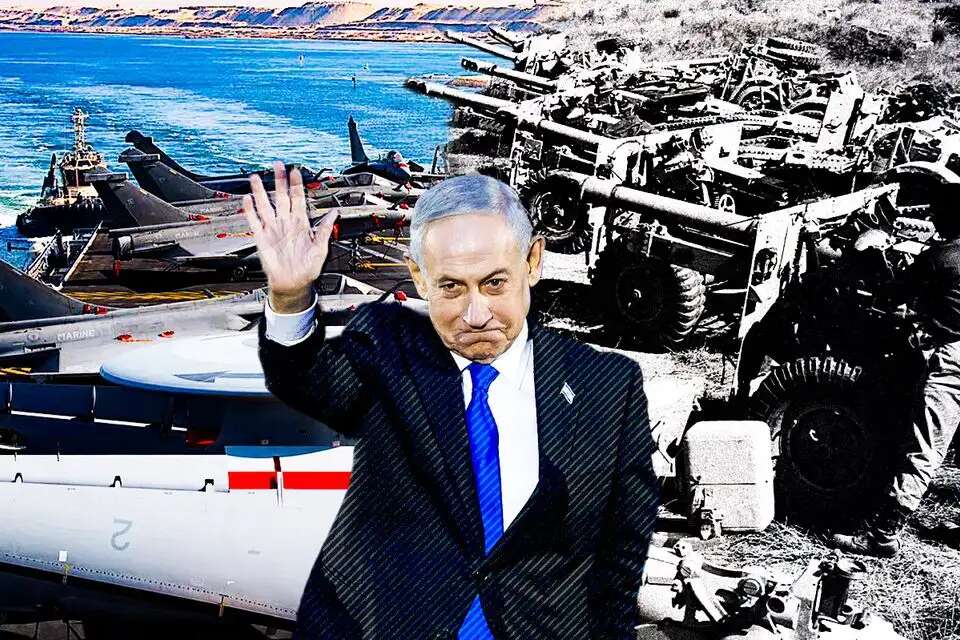
"And after the Six-Day War, didn't all the fronts remain open?" Prime Minister Benjamin Netanyahu asked this week, against the backdrop of the bitter disappointment over the emerging agreement with Iran and the continued fighting in the north. "Would they have said back then that the war failed?"
The more interesting, and largely forgotten, historical example is actually the Sinai Campaign. There are striking similarities between the regional war of 1956 and the regional war of 2026.
Like Operation Roaring Lion, the Sinai Campaign was also the product of collaboration between Israel and a global power—in that case, two: France and Britain. Israel sought to eliminate an existential threat, while the powers aimed to strengthen their grip on the Middle East. In that instance, the casus belli was the nationalization of the Suez Canal by Egypt's ruler, Nasser.
Today, it is dozens of American refueling planes parked in Israel; back then, it was French aircrews training our pilots here. Against Iran, the goal was to avoid a ground operation at all costs, whereas then, the objective was a joint conquest of the Sinai Peninsula. The IDF swept in from the Negev, while the English and French tried to conquer the canal from the west, and, in typical fashion, dragged their feet.
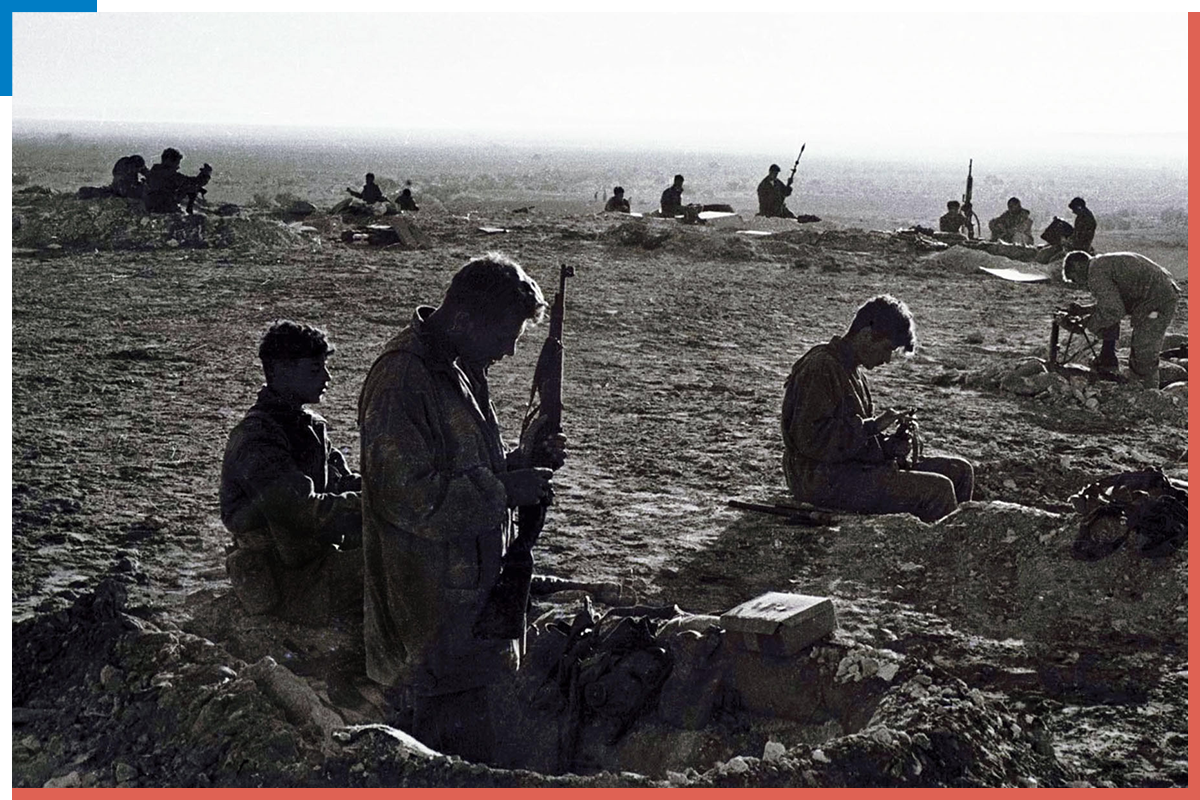
But in both campaigns, an international shipping lane was suddenly blocked by a Muslim dictatorial power, sending energy prices soaring. In response to the invasion, the Egyptians scuttled 47 ships in the canal, blocking it entirely, while Arab states cut off the oil supply to the West. The United States pressured the United Kingdom to withdraw from Egypt, and the Soviet Union, fearing the loss of its regional influence, threatened war if the military forces did not pull back.
What can we learn from that war? Some will say that sometimes you can win every battle and still suffer a strategic defeat. The Egyptians lost thousands of soldiers and the entire Sinai Peninsula, but ultimately gained international recognition of their control over the canal, and Nasser became a hero of the Arab world. The prime ministers of Britain and France were forced to resign in disgrace in the months following the campaign, and Israel evacuated Sinai down to the last centimeter. The partnerships soured and never returned to what they were. The United States forced Israel's hand. A troubling hint of things to come?
An alternative, more realistic interpretation would be that Israel nevertheless secured a crucial strategic achievement. It distanced an existential threat from its borders, hostilities ceased, and one of the quietest decades in the country's history allowed it to thrive and grow. From a global perspective, the powers lost. But in the Middle East, it was actually Israel that emerged stronger. The Iranians today are weaker than they were, more vulnerable, and much poorer. The front is open, indeed. And the public is disappointed. This time, they were promised absolute victory; seventy years ago, the Prime Minister declared the "Third Kingdom of Israel," a moment before he was forced to retreat and back down.
51st state
If Israel were the 51st state of the United States, in the 2024 presidential election it would have been the reddest state in the union, making even Montana look like a Kamala Harris stronghold. Biden's approval ratings crashed as the arms embargo intensified, and Trump? He was always popular in Israel. A poll conducted on the eve of the election revealed that he would have beaten Harris by a margin of 54 percent.
Trump was elected even without the 15 imaginary electoral votes of the Great State of Israel, but since then his standing has significantly deteriorated in the US. And what about Israel? This isn't just intellectual curiosity, but a question with potential implications for the elections. After all, rumor has it that the US president is supposed to visit here in the final stretch before the polls, thereby aiding Netanyahu with a speech of support. Have the advanced negotiations with Iran, and what appears to be a dictate limiting operations against Hezbollah, damaged his popularity, and consequently, Netanyahu's chances of being reelected?
Well, it seems that if Trump were running in the elections here, he would be the most popular politician, by a wide margin. 58% of Israelis hold a favorable view of him, while 35% hold a negative one. While this is a slight drop, it registers mainly in areas where voters didn't plan to vote for Netanyahu anyway: in the Arab sector he loses 73-15%, and on the left 54-38%. In contrast, in the areas where the elections will be decided—the right and center-right—the US president still enjoys massive support of 76% versus 20%.
Does this mean Trump will be enough for Netanyahu to win? Not necessarily. Israeli history is full of American presidents who tried to influence the outcome and failed; most of the time, they were actively working against Netanyahu. Thirty years ago tomorrow, Bill Clinton called the newly elected Prime Minister, Benjamin Netanyahu. "I tried to screw you, but I failed," he told him, and they both burst out laughing. Obama tried to do the same thing, minus the phone call. Trump's efforts to help Orbán avoid defeat also failed in Hungary. The difference is that Hungarians don't adore the president like Israelis do. Will Trump succeed where his Democratic predecessors failed? And how hard will he try? A minor issue to address, once the dust settles.
A lead
Like magic, the moment it became virtually certain that the elections would be moved up, the unfathomable gaps between the polling institutes began to narrow slightly. In the polls that were harshest on the Netanyahu bloc, he climbed to 53–56 seats; in the polls that favored him, he dropped to 60. The common denominator across almost all polls: neither bloc has a majority.
Another conclusion that is becoming sharper is that the story of these elections isn't about shifts between blocs, but rather motivation gaps between the camps. There is no dispute that the voter turnout in the center-left will be roughly 110%. The ultimate question of the upcoming elections is whether coalition supporters will stampede to the ballot boxes, trudge there reluctantly, or stay home. The polls predicting a collapse for Netanyahu are factoring in fatigue and apathy among right-wing voters, while those forecasting his victory predict an awakening and engagement. In short, it's less about statistics and more about psychology.
What is the main factor determining whether right-wing voters will turn out? With all due respect, it has little to do with who will head the opposing camp or what the Likud list will look like, but rather with security. Conventional wisdom suggests the story is Iran, but assuming the regime doesn't fall and there isn't another round before the elections, the real event is actually Lebanon. Until three months ago, this was the arena of absolute, indisputable victory—from the pagers, through the assassination of Nasrallah, to the active ceasefire where Israel struck repeatedly without facing retaliation. Since the beginning of March, however, the North has been bombarded and soldiers are being hunted by drones.

As they say in the Mossad, after an operation there are two options: win or explain. In Lebanon, the explanations are long; some are naturally justified and tied to the relationship with the US and Hezbollah's distress, but the bottom line is that victory is still far off. The dire situation of the northern residents, many of whom are coalition supporters, corrodes like acid the sense of achievement against the Axis of Evil and undermines what was once Netanyahu's calling card when approaching the voter. On the flip side, Hezbollah is left with one remaining threat—fiber-optic drones.
Therefore, the God's-eye view of these elections is the question of how to handle those very drones. Neutralizing this Hezbollah weapon will halt the parade of "cleared for publication" announcements and strip Iran's last proxy of its final tool. Quiet—and not an illusory one—in Lebanon is a necessary condition for the residents of Israel, and consequently, for Netanyahu's chances of survival.
Perhaps this is why Likud continued to fight this week to delay the elections as much as possible, despite the agreement with Iran looming on the horizon. The Ukrainians and Russians have been trying for four years to find a solution to the drone issue, without notable success. Israel will find it faster, but not necessarily fast enough.