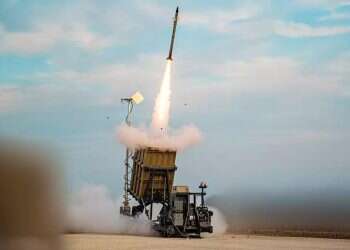
Over the past month, Israel's security establishment tried to find a scenario in which something good might come out of the bad situation in Iran. They thought and thought, scratched their heads, and then said: maybe a Sadat will rise in Iran, abandon missiles and nuclear weapons, offer peace to Israel, and economic cooperation to the US. That is how faint the hope was. One of Trump's close associates said something similar: maybe, he tried to convince his Iranian interlocutors, you will realize that instead of skimming tolls off tankers passing through the Strait of Hormuz, you will make huge money on oil after giving up the nuclear program and having sanctions lifted.
Well, much to everyone's surprise, it turns out there is no Sadat for peace in Iran yet, nor a Roosevelt for economic development. The fanatics won, as usual. They inhaled the reports in the American and Israeli media about their own colossal, historic victory, acted with arrogance, and the rest wrote itself. The sanctions returned before a single barrel of Iranian oil even reached its destination.
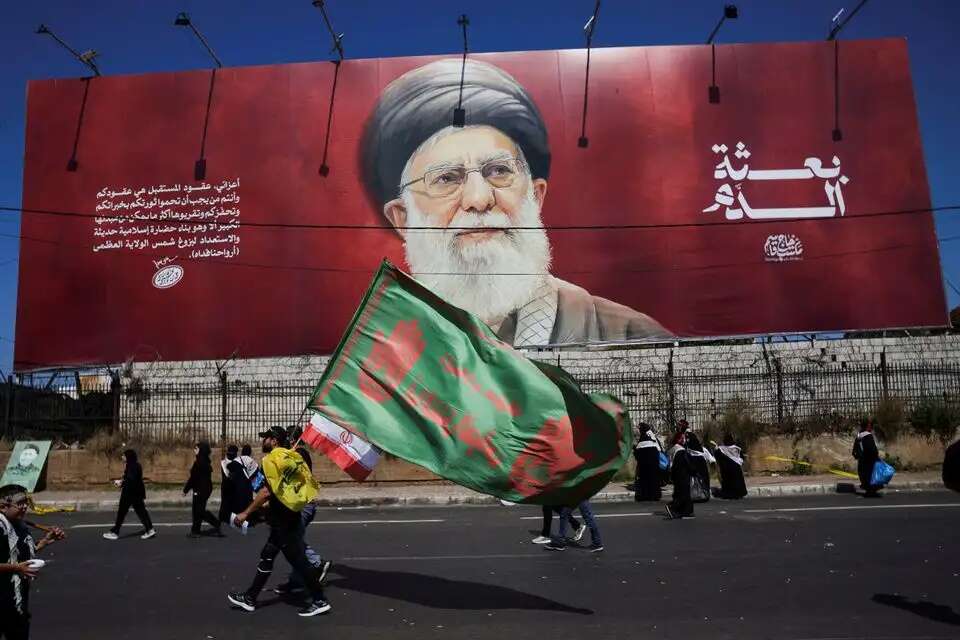
Of course, there is no need to be overly impressed by President Trump's words about "the end of the memorandum of understanding," just as there was no need to take too hard his words about peace with Iran last month. As the dust settles over recent months, the landscape is unambiguous: there will be no agreement that removes the nuclear program, it is highly doubtful that the war will return in full force, and Israel may awkwardly and strangely get its preferred scenario: neither war nor an agreement. Only the continuation of sanctions and the siege in a way that collapses Iran's economy slowly, but surely. Top security officials are convinced that if the US persists, this will lead to the collapse of the regime by the end of 2026, maybe a few months later.
Only it remains doubtful what Trump will do. In the Prime Minister's Office, alarm bells went off this week ahead of the upcoming trip to Washington next week. In normal times, any visit to the White House, especially with this president, is a guaranteed win: command of the news cycle and flattering optics on the one stage Netanyahu owns: diplomacy.
But with this president, at this time, such a trip could also end in humiliation in front of the cameras, similar to what Trump and his Vice President Vance did to Zelensky. The Wing of Zion, Israel's Air Force One, could take off amid the winds of war and land in a Washington that has shifted back to talking about a historic peace and a new regime in Iran.
The door is still open
Airlines like Israir and Arkia have an arrangement where they take care of each other's passengers in the event of unscheduled cancellations. Is there a similar agreement among the parties of the change bloc? Until two months ago, Bennett was busy with placement tests for dozens of candidates—literally so—who besieged his offices, while Eisenkot could barely find candidates for the top ten.
Now, as Yeshar! takes off and closes in on Likud while Beyachad is grounded, the problem has reversed: Bennett has already announced eight candidates when, according to recent polls, that is roughly what his share will be in the joint list with Lapid. Eisenkot, on the other hand, needs to fill at least fifteen more slots.
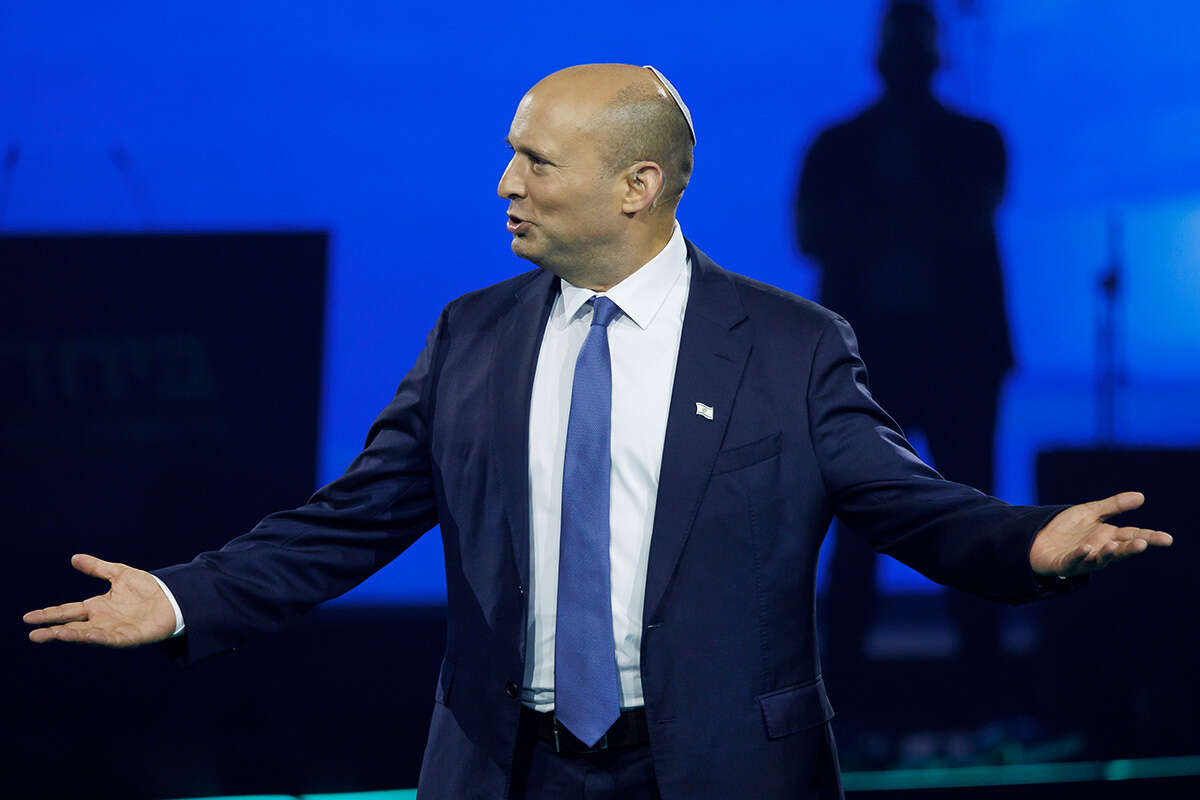
With Eisenkot, there are no placement or loyalty tests, but there is an orderly process for the flood of applicants. First, principled coordination with other parties to verify who is courting which party, in order to prevent future opportunism and mid-term party-hopping. Afterwards, a meeting with one of the senior team members. Finally, a meeting with the party chairman himself. The candidates will be arranged in dozens: two safe seats and one that might turn safe depending on final polling. In each, there will be more or less gender equality, as well as age diversity. Eisenkot can call in plenty of big names, but most of them—like him—are old enough that "fresh face" is no longer in the pitch.
Those who do not make the list can be selected for the "List of Two Hundred." These are the people who are supposed to constitute the professional staff in the next government if the political tide turns: ministry directors-general, heads of public authorities, deputy directors-general, and board chairmen.
Mainly, the frantic pace at which things have been managed until now makes people forget the fact that the elections are still very, very far away. There are still two months until the lists close, no less. During the parallel period in previous elections, the Knesset hadn't even been dissolved yet, and no mergers had taken place. Bennett's early move to unite with Lapid shuffled all the cards and essentially pressed the x2 speed button. Eisenkot, as is well known, does not operate with that kind of temperament. In short, the door is still open, and there is plenty of room.
Never had it better
After countless polls indicating that Netanyahu is going to lose these elections, or at most squeeze out a tie, one would expect despair, gloom, and apathy among Netanyahu's voters, and—in a mirror image—optimism, a fighter's high, and peak motivation among his opponents. But the poll this week shows exactly the opposite. Among coalition voters, 75% believe their camp will win the elections at the end of October, while in the opposition, only 45% believe so.
How can this be? Years of bitter disappointments on one side and pleasant surprises in the real results on the other? Is it even good for Netanyahu that his camp is convinced victory is in the bag? Perhaps optimism is actually complacency and a "we've never had it better" attitude? As recalled, the Prime Minister achieved the greatest of his victories precisely when he convinced his supporters that the situation was dire and defeat was imminent if they didn't run to the ballot boxes.
Or maybe there is something else here, which is not about polls and Netanyahu at all, but about the human psyche. The breakdown shows that as the level of religiosity rises, optimism rises, and vice versa. Netanyahu's camp is comprised of far more religious and Haredi individuals. This is also the reason why in the Arab public, which is more religious, the percentage of those certain that their camp will win is higher than among voters of the Israeli left—and as is well known, there is no feasibility on the horizon for a Tibi-Mansour Abbas government. The Lord provides versus the Messiah isn't coming, the Messiah isn't even calling.
It's the economy, stupid
The Israeli internet was flooded this week with viral speeches from opponents of the Basic Law: Torah Study—shell-shocked veterans, bereaved fathers, children of reservists. Everyone, of course, is right, and it is clear to all that the law will not pass, and if it passes it won't change anything, and if it changes anything it will be struck down. In short: this is a political move that the Haredi parties need for the purpose of mobilizing voters. And what about the electoral damage to the Netanyahu bloc? One can guess that Netanyahu believes what happens in July stays in July. By October there will be other issues, the legislative wave will subside and be forgotten, and he will be left with his insurance policy against going to the opposition—the bloc.
But there is one matter, completely non-political, that is missed in the storm. The Haredi issue poses great challenges of various kinds to the state: the security front with the shortage of soldiers will not be solved in the coming years anyway. One can be angry at the lack of morality, furious at the indifference, and appalled by the chutzpah—Rabbi Yitzhak Yosef spoke this week of "Yavneh and its sages," likening himself to the great sage who rescued Jewish learning from Rome's ruins and casting the State of Israel as the conquering general.
The catch is that drafting thousands of Haredi soldiers into the army will not happen instantly and by force, but through deep, patient work and indirect maneuvering.

The main front threatening the country right now is the economic one. Israel will not exist in a generation if a non-Haredi family continues to pay thousands of shekels more to the state each year than it receives from it, and every Haredi family exactly the opposite. An event that was negligible forty years ago has now become a heavy weight, and in twenty years it will sink the economy to the depths.
The more severe problem is that even when Haredim go out to work, they earn less. A study by the Aaron Institute and Out for Change shows that even when Haredim leave the community or become national-religious, their average salary is 35% lower for men and 12% for women. An old joke says that the last thing left for ex-Haredim is to vote for UTJ and be afraid of dogs. What is less funny is that the massive gaps in math and English remain years later.
The cause is righteous. It is also a dead end. As the poet Yehuda Amichai wrote: "From the place where we are right / flowers will never grow in the spring." Nearly thirty years of being right on this issue delivered the mandates to the politicians and the recruits to no one. What an irony it is that the sanctions required now are exactly the discipline every yeshiva dean already enforces, except now it would be the state holding the stick: no driver's license, no working, no traveling abroad.
Conversely, when the economic aspect was targeted, once and only once during Netanyahu's tenure as Finance Minister, the result was a tremendous success. Cutting budgets for institutions that do not teach the core curriculum is not like provocative arrests. What Bennett, Smotrich, Liberman, Lapid, and others have in common is that over the years they proposed exactly this: do not insist on enlistment, let the Haredim work without restrictions from age twenty-one, and cut benefits. They and their colleagues act irresponsibly when they smash themselves repeatedly against the rock of enlistment, which will not break anytime soon.