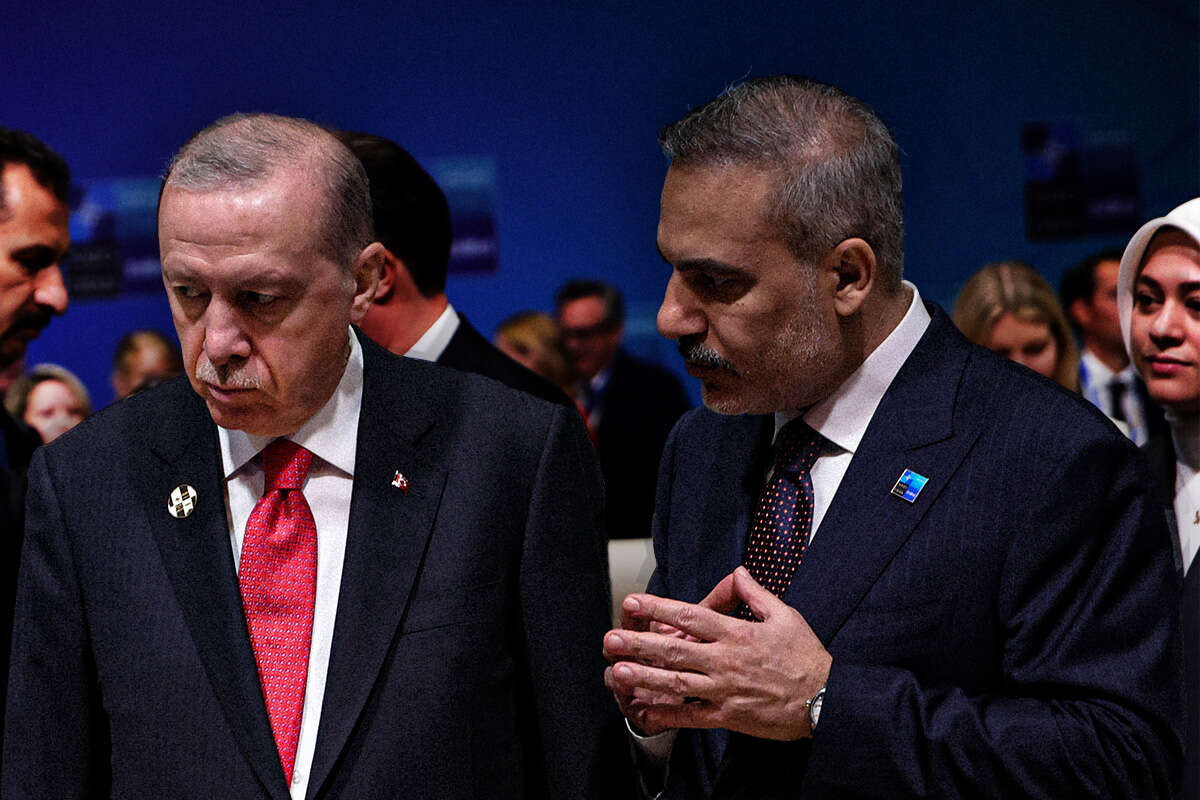
He was the man who was not supposed to be there. Hakan Fidan, the son of a middle-class family, was not destined for greatness in Turkey of the 1980s. His father, born in the Kurdish village of Varto and later the head of a family in Ankara, was merely a low-level clerk.
Those dry facts alone were enough to seal his fate. But the decades passed. Turkey changed beyond recognition. Paths to advancement were reshaped. One elite eclipsed another. And suddenly, that very same gray, unassuming intelligence official is being identified as the heir to Turkey's undisputed leader. He may be the man who leads Ankara into a new era as a regional power, and in an extreme scenario, could steer it toward a historic confrontation with Israel.
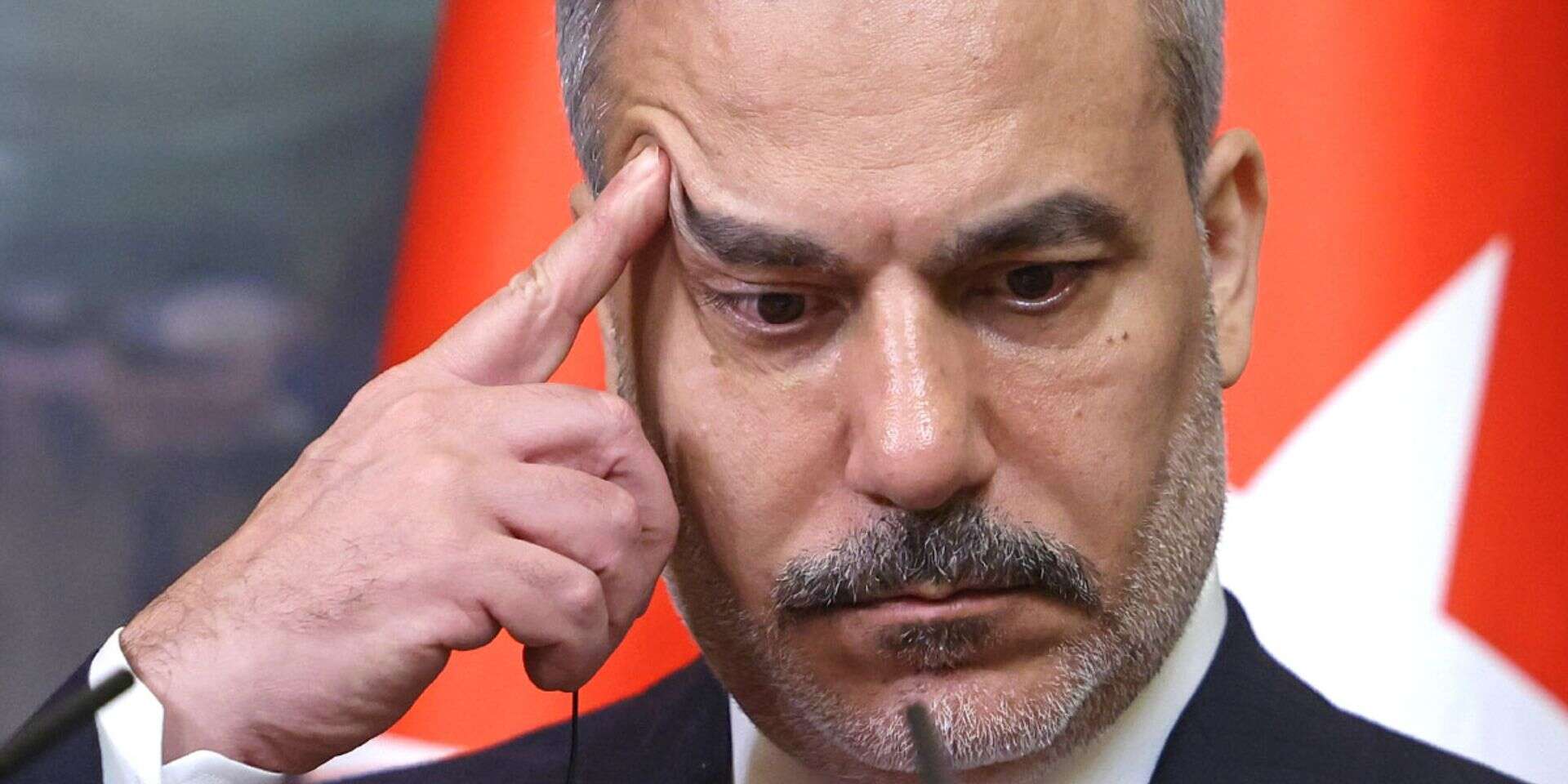
"As of July 2026, Hakan Fidan is one of the most important figures in Turkey's foreign policy and security establishment," Burak Çelik, a Turkish expert on foreign policy and Middle East affairs, told Israel Hayom. "Still, the idea that he will definitely lead Turkey after President Erdogan should be treated as speculation, not as a settled political fact. Fidan has political weight, but he does not enjoy Erdogan's power. Erdogan has a mass electoral base, party control, symbolic leadership and enduring authority in the state. Fidan's power comes mainly from the security bureaucracy, meaning his long tenure as head of Turkey's intelligence services, his experience in foreign policy and his relationship of trust with Erdogan. There is no evidence that Erdogan has officially designated him as his successor. In fact, Erdogan generally avoids, for political reasons, creating a separate and alternative center of authority."
Speaking from Istanbul, Çelik stresses that "Fidan is a powerful figure within the system, but he has not yet emerged as someone with his own political machine. It is true that some assessments indicate Fidan is seen by Justice and Development Party voters (the ruling party, S.K.) as one of the strongest potential names in the post-Erdogan era. For example, the Polish research institute OSW noted in March 2026 that according to polls, many party voters would prefer Fidan as Erdogan's successor. They described him as a popular figure whose standing rises during international crises. However, popularity among the party's voters is not the same as an official selection by Erdogan, or official acceptance by all the party's elites."
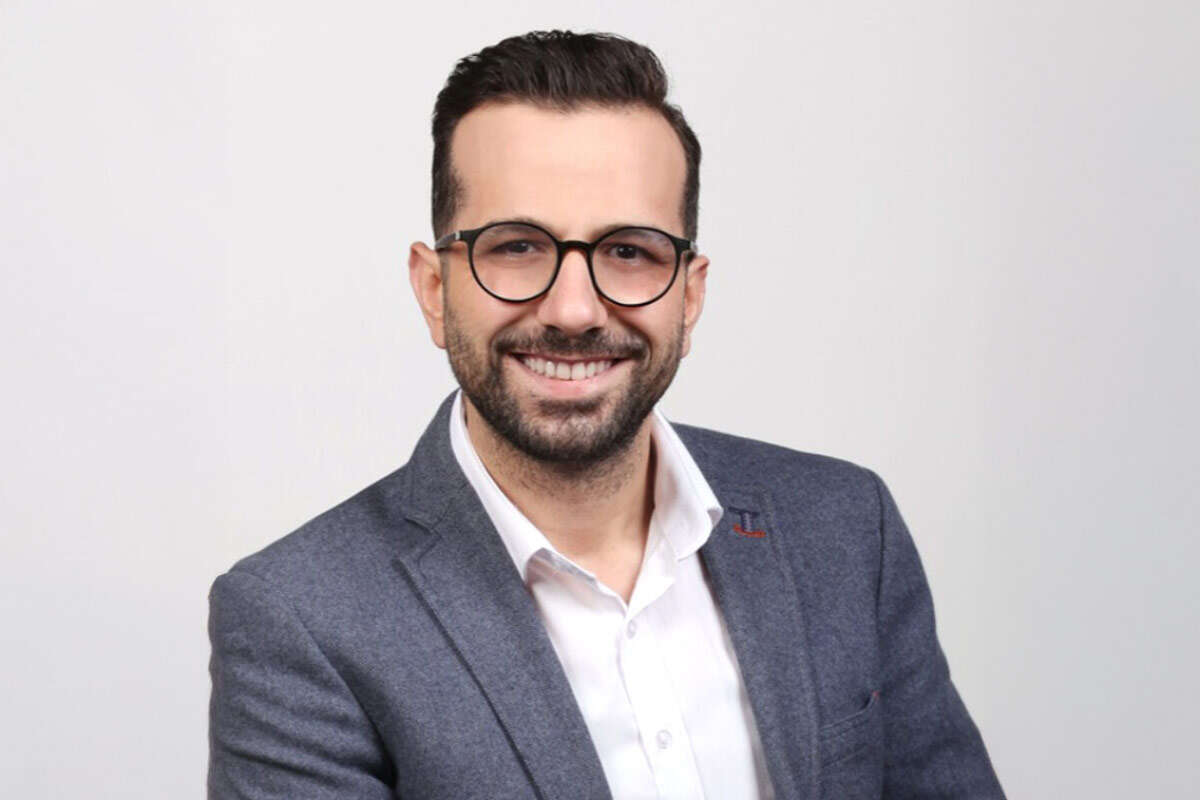
"There are four main possible successors one can talk about," said Dr. Asa Ophir, a Turkey expert from Ariel University's Department of Political Science and Middle Eastern Studies. "Two are from the family and two are from the political leadership. In Erdogan's family circle, we are talking about his son Bilal and his son-in-law Selçuk Bayraktar, who is married to Sümeyye, the youngest daughter. Over the past two years Bilal has been seen at the forefront, but it does not look like there is an orderly succession plan. Besides, Bilal is not the sharpest pencil in the box. In my opinion, he is also not especially liked by the public. The public does not appreciate him. Bayraktar, by contrast, is very popular, and is considered someone who advanced Turkey's standing through the drone industry, which has become a source of national pride.
"At the top of the political echelon are the two senior officials who have worked closely with Erdogan for years, Hakan Fidan and Ibrahim Kalin, who currently heads the MIT intelligence agency. Kalin is a philosophical type and an academic by profession. He studied in the US and knows the West well. He is also intelligent, sharp and quite well liked, but he is not charismatic like Erdogan."
"Fidan has several advantages," the senior researcher added. "Everyone knows Erdogan values him, and he was even one of the witnesses at his son's wedding about a decade ago. He is also the right age, 57, neither too young nor too old. He has accumulated enough mileage. Beyond his closeness to Erdogan, he revolutionized the MIT intelligence agency. During his tenure, the entire balance of power in Turkey changed. Traditionally, although MIT was formally under the Prime Minister's Office, de facto control lay with the top brass of the military. Even before Erdogan, there were politicians who tried to reduce the military's grip on MIT, but only during Fidan's tenure did they manage to make the body truly subordinate to the political echelon. That is how he became a key figure in the regime."
But according to Ophir, Fidan has one glaring disadvantage. "At the end of the day, he is a rather gray figure, and not much was known about him until he was appointed foreign minister. He is quite similar to Putin in style. I did not even know what his wife looked like before he was appointed foreign minister. Only now are there pictures of her online, and you see that she wears a veil. So you understand that this is a traditional or religious person. In short, if there is something that could work against him, it is that he is not a colorful figure like Erdogan, who can stir up the masses."
On the seam line
Fidan's path began at the military academy, where he studied at the language school of the Land Forces. He later joined a rapid response unit of Turkish soldiers attached to NATO in Germany, and completed a bachelor's degree in political science and management through the University of Maryland Global Campus. During his 15 years in the army, he dealt mainly with intelligence-gathering missions and never served even as a junior officer.
It was a period in which the military establishment was the kingmaker of local politics. Unrestrained generals led a government coup and imposed restrictions as they pleased on parties running in elections. From the perspective of the heads of that deep state, the Turkish train had been "put back on the rails." Its citizens were forced to accept the destination set for them: economic liberalization, freedom from religion and closer ties with the West.
"He did not enlist in order to become an officer, and he was not marked for greatness," Ophir told Israel Hayom. "In Turkey, the officer track is an elite path of the upper class, so he was directed toward the noncommissioned officer track. This is a different model from what we know in Israel. Those designated for the officer corps are placed in military schools from a young age, and they become the elite of society. Fidan was not one of them. He came from a middle-class home, and his father was a public servant. After the army he was discharged and went to academia, where he completed a master's degree and a doctorate at Bilkent University in Ankara, dealing with the role of intelligence in diplomacy. At the same time, he served in diplomatic positions at Turkish embassies around the world. The diplomatic system often serves as cover for an intelligence apparatus, so those worlds constantly overlapped for him."
In the early 2000s, Fidan reached a position in the UN weapons monitoring system, but the dramatic turning point came in the courtyards of Bilkent University. It was precisely from the place that seemed farthest from the army that his meteoric rise to the top of the Turkish security establishment began.
"At the university he met Ahmet Davutoglu, a professor of international relations who would later become Erdogan's close adviser and foreign minister," Ophir said. "This is the man who wrote the book that served as the compass of Turkish foreign policy over the past two decades, 'Erdogan's Brain,' which shaped strategic thinking. Erdogan is a giant politician, but he is not a strategist or an academic. Davutoglu was the one who brought Fidan into his inner circle."
That is no small matter. In his years as minister and adviser, Davutoglu dictated an activist foreign policy intended to increase Turkey's influence across the Middle East. One of the key figures who shared in that vision was, of course, Fidan. It was no coincidence that in 2003 he was appointed chairman of TIKA, the Turkish Cooperation and Coordination Agency. This is the agency responsible for the activity of Turkish nonprofit organizations in Jerusalem and Gaza.
"This body also operates on the seam line between diplomatic involvement, aid and intelligence gathering," Ophir explained. "Everything there is coordinated from above, and it may be one of the most important bodies in projecting Turkey's and Erdogan's soft power. They go to all kinds of war zones and serve as Ankara's long arm under the cover of humanitarian aid. In the early 1990s, after the dissolution of the Soviet Union, this body was established to influence the newly formed republics in Central Asia. The goal was to influence the Turkic peoples there and distance them from Russia and Iran. Today, after decades, TIKA is already an organization that operates almost everywhere in the world."
Step by step, Fidan drew closer to Erdogan through his ties with Davutoglu and his role as head of TIKA. In the next stage, he became undersecretary in the office of Erdogan, who was then prime minister. There he became one of his close advisers, paving the way for his dramatic appointment as deputy head of Turkey's intelligence agency, one of the country's most important security organizations and the equivalent of Israel's Mossad.
Within a relatively short time, in May 2010, he was chosen to head the agency and began a long and stormy term. As noted, the agency, which had been one of the arms of the military deep state, gradually submitted to the foreign and security policy of Erdogan and his associates. Internally, power shifted to the political echelon. But in the regional context, Turkey began flirting with actors hostile to Israel and the West.
For example, in those years the German magazine Der Spiegel exposed the relationship between Fidan and Qassem Soleimani, commander of the Quds Force and the man considered the head of the Islamist regime in Iran's shadow army. On the one hand, Turkey followed with concern the deployment of pro-Iranian militias in Iraq and Syria against the backdrop of the civil war and the rise of Islamic State. On the other hand, Ankara forged secret ties with Tehran that helped the latter bypass quite a few economic sanctions imposed by the US administration. As noted, amid that relationship, according to reports, the Turks passed information to the Iranians in 2012 about an Israeli spy network. According to The Washington Post, Fidan was identified as the chief suspect.
That was not the only storm in which his name was involved. In 2015, after years of friction with the military establishment, Fidan decided to resign and enter politics as a member of parliament. "A campaign was waged against him as Erdogan's man," Ophir said. "Information was leaked about peace talks he conducted with the PKK (the Kurdish underground, S.K.), which is considered a terrorist organization. As a result, he was summoned for questioning, as part of an attempt to thwart him. But then Erdogan came to his defense and sent the message: 'If you want to send him to prison, then I will go to prison.' In the end Fidan submitted a letter of resignation, but Erdogan said he did not accept it. There is even a famous statement by Erdogan in which he calls Fidan 'my box of secrets.'"
The bond between the two would survive another fateful test. In 2016, there were reports of an attempted coup by Turkey's security establishment against Erdogan. On the night of July 15, forces from the army tried to seize control of strategic sites in Ankara and Istanbul. Hundreds of people were killed in the clashes. During the suppression efforts, mass arrests were carried out involving tens of thousands of civilians, including soldiers and judges. Erdogan's opponents claimed it was a "false flag" operation intended to justify the fortification of his authoritarian rule and the suppression of civil liberties.
"There is a claim that the day before the coup, Hakan Fidan held a meeting with the chief of staff, and that they allegedly received an intelligence warning," Ophir said. "In other words, they knew there was a coup attempt on the way and let it happen. There are many question marks surrounding the event."
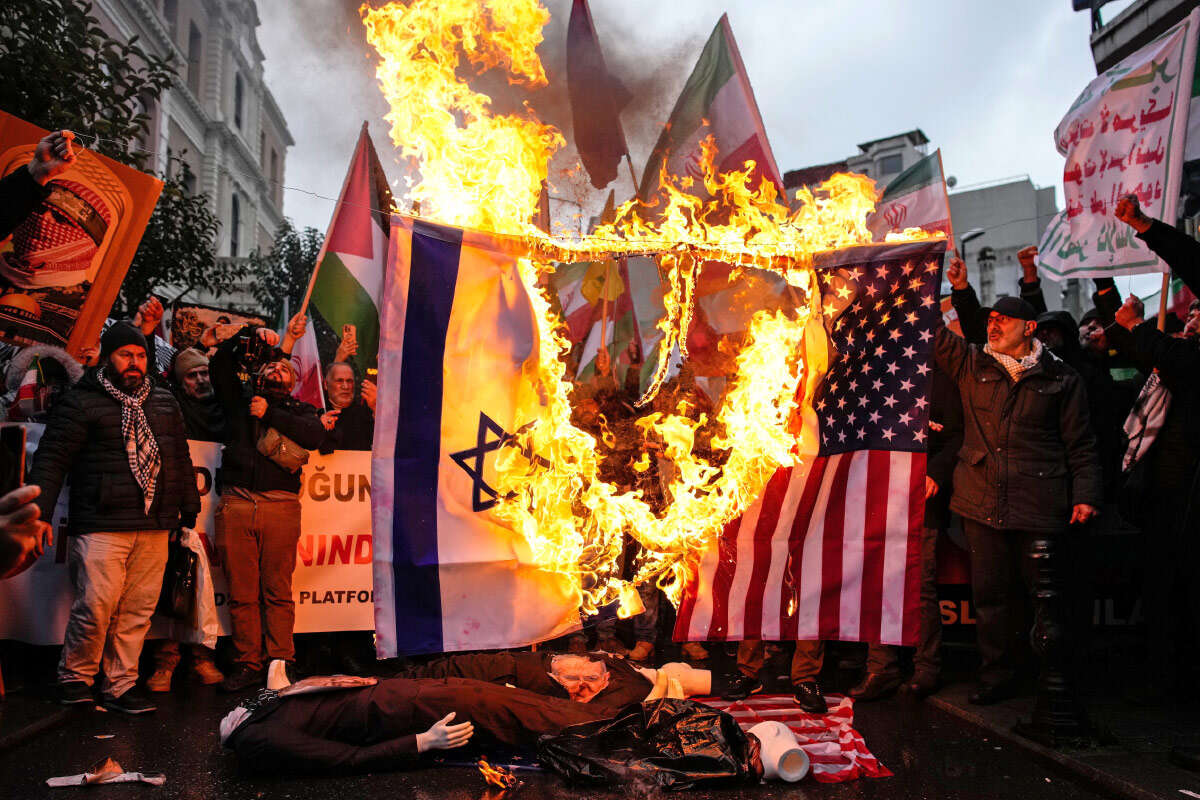
After about 13 years in the powerful post of intelligence agency chief, Fidan was promoted to the front line of political activity. In the summer of 2023, he was appointed foreign minister, just a few months before the Oct. 7 massacre. Since the war in Gaza, relations between Jerusalem and Ankara have reached a historic low. Direct flights were halted, a trade embargo was imposed, and even Israeli ships were barred from docking at Turkish ports. Along the way, it seemed as though Erdogan and Fidan were competing with each other in antisemitic statements.
Only this month, the president in Ankara called the government in Israel "the Zionist slaughter gang." Minister Fidan declared that Israel was "a problem for all of humanity" and was "looking for a new enemy." In response, Foreign Minister Gideon Sa'ar said: "His sickening words are clear incitement to genocide. This is the classic language of the greatest persecutors in history."
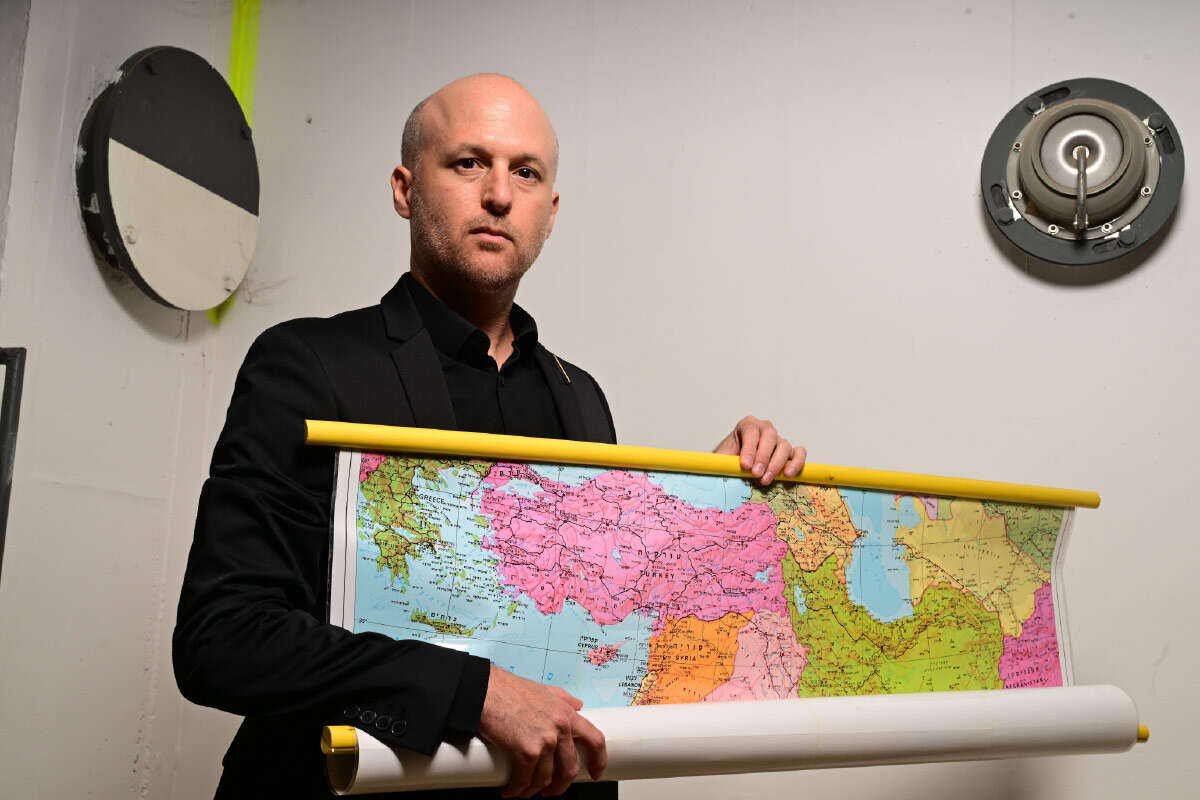
"Unfortunately, these people apparently see Israel as a greater threat than Iran to Turkey's national security," Ophir said. "At the most basic level, they simply do not like this idea of a Jewish state in the heart of the Middle East. It is something that contradicts their belief. How can it be that Jews defeat Muslims? From their point of view, that is not supposed to happen. Add to that the fact that Turkey has been growing stronger in recent years, and that this has happened in parallel with Israel's strengthening. We are essentially two powers that appear to be on a collision course like icebergs."
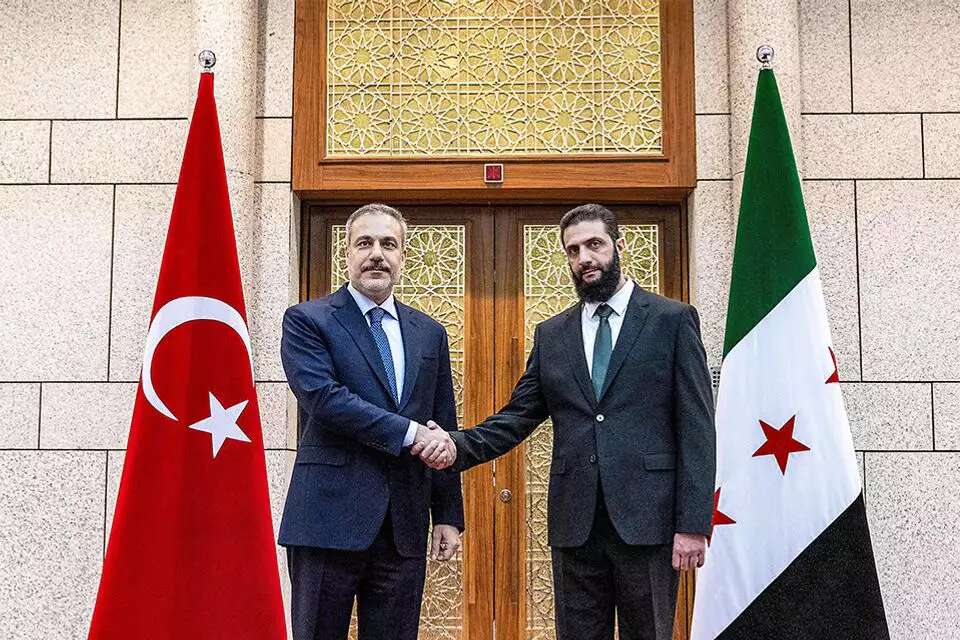
Perhaps one of the most tense fronts in the friction between Israel and Turkey is Syria. In December 2024, Bashar Assad's pro-Iranian regime collapsed, and an Islamist coalition backed by Turkey rose to power. The new president, Ahmed al-Sharaa, formerly a senior al-Qaida figure, is described by the top echelons of Israel's security establishment as Erdogan's disciple. He is seen as someone who receives advice from Ankara on media conduct and on the need to prettify himself in Western eyes.
Syrian sources who spoke with Israel Hayom expressed great concern over Turkish activity in the country. For example, they described how Turkish elements were working to purchase real estate belonging to minorities who preferred to leave the country. The Syrian sources claimed that this was, to a large extent, a return of the Ottoman era, during which the Syrian space was under the control of the sultans in Istanbul.
Fidan is without question Erdogan's right-hand man in Damascus. "He is deeply involved in Syria," Çelik confirmed. "He is not a symbolic player in this file. He is one of the architects of Ankara's policy in Syria. After Assad's fall, Turkey became one of the most influential external players in Damascus. In that sense, Fidan is a central figure in Ankara's communication with Ahmed al-Sharaa. He has visited Damascus more than once, met with al-Sharaa and confirmed Turkey's support for Syria's reconstruction and stabilization processes."
A red flag
Despite being a gray intelligence man, Fidan has already managed to arouse the anger of very senior officials in Jerusalem. In 2010, then-Defense Minister and former Prime Minister Ehud Barak described his appointment as head of MIT as a troubling development. He also voiced deep concern over his attitude toward the ayatollahs' regime.
"Israel has a serious problem with Fidan," Ophir said. "From the security establishment's perspective, he is defined as a red flag. This is a man who during his tenure as head of Turkey's intelligence agency apparently passed information, according to The Washington Post, to the Iranians that burned our sources in Iran. In the previous decade, Israel was about to declare him persona non grata against the backdrop of the Mavi Marmara events, but relations calmed down somewhat. Still, Israel does not trust him. He is defined as a snake in the grass."
However, the Turkish researcher Çelik notes that the senior minister may change his policy in the future. "As for Israel, Fidan's position is especially critical against the backdrop of events in Gaza and Syria. The official line presents Israel's military actions as destabilizing, while Turkey presents itself as defending Palestinian rights, regional stability and the two-state solution.
"At the same time, Fidan's approach is security oriented. Turkey held technical talks with Israel regarding Syria when necessary, but made clear that such talks did not indicate normalization. This suggests that Fidan's approach toward Israel can change according to circumstances, especially if there is a ceasefire in Gaza, a reduction in tensions in Syria and a regional framework supported by the US. However, under current conditions, a warming of relations and a normalization process appear unlikely."
Still, Çelik confirms that from Fidan's perspective, Ankara has become a new power. "He sees Turkey as a regional force that should shape events, not merely react to them. His worldview is first and foremost security-oriented and pragmatic. He does not appear to believe that Turkey can focus only on internal problems, because Ankara's domestic security concerns, including migration, energy, the Kurdish question, policy in Syria and relations with the US, are all connected to the regional environment."
Çelik added that this also applies to Hamas. "Fidan acts according to Ankara's official policy and keeps political channels open with Hamas, while supporting Palestinian political representation, a ceasefire, humanitarian access and Palestinian governance in Gaza. Fidan has also met with members of Hamas' political bureau in Istanbul. At the same time, his recent diplomatic moves regarding Gaza have focused less on slogans and more on issues on the ground, including governance, a police force, international stabilization forces and access to humanitarian aid. There is also the more difficult question of Hamas' weapons. Reuters reported that Fidan argued that Gaza governance and a police force should come before Hamas' disarmament in the ceasefire process."
This point is important, because Turkey is currently a member of Trump's Board of Peace, which is meant to lead his plan for the Gaza Strip. However, due to Israel's insistence, Turkey is not part of the US-led international forces command that is supposed to implement the plan.
"In general, he is a strong, credible figure of strategic importance," Çelik concluded. "He is one of the few senior Turkish officials who can combine intelligence and diplomacy, but he does not have a status equivalent to Erdogan's, and he has not yet proved himself in elections. His future depends on three things: Erdogan's preference, the consensus of the elite in the Justice and Development Party, and whether the Turkish public will accept a security-bureaucratic figure as a national leader."