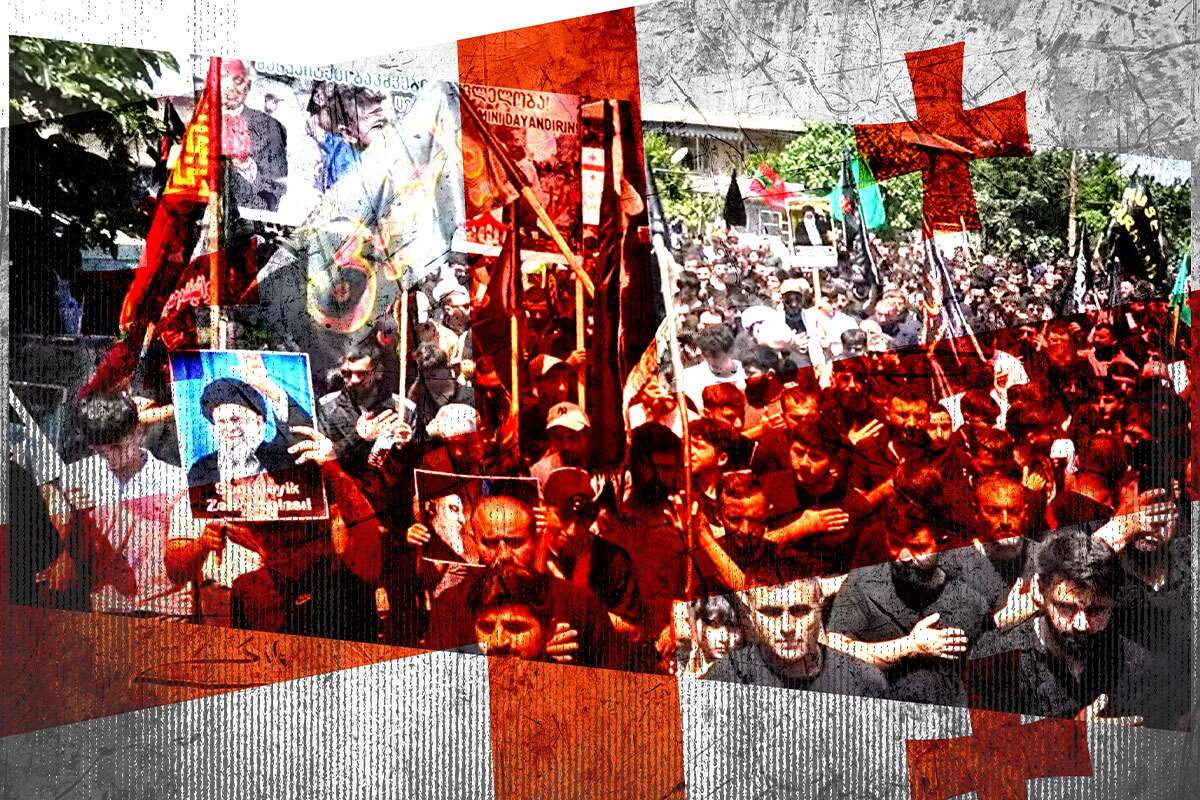
The sights and sounds from a procession held in Marneuli in 2025 – marking Tasu'a (the ninth day of Muharram, the opening of the Shia mourning period) – are not easily forgotten, and not only because of the massive turnout. Above the heads of the marchers, many of them wearing black shirts bearing the portrait of the late Hassan Nasrallah, giant banners were displayed, featuring images of US President Donald Trump and Israeli Prime Minister Benjamin Netanyahu with their hands soaked in blood.
The chants of the marchers were equally unambiguous – in support of the Iranian regime and against the Great Satan and the Little Satan: the US and Israel.
Had the procession taken place in Tehran or in one of the Shia strongholds of Lebanon, no one would have been surprised by the menacing spectacle. But Marneuli – ordinarily a sleepy town of 20,000 residents – is located in Georgia, a Christian country long regarded by Israelis as a friendly destination with no history of antisemitism spanning roughly 2,600 years.
How did Israel-haters and supporters of the ayatollah regime come to Georgia, and was the show of support for the worst enemies of civilization a one-off event? Not by a long shot, according to a detailed and unsettling report prepared by the Hudson Institute, a well-known research institution that was recently published and has generated ripples far beyond the borders of the Caucasian nation. The report's authors – Luke Coffey, a senior fellow at the Hudson Institute and a national security expert, and Giorgi Kandelaki, a former member of the Georgian parliament – do not conceal that the findings surprised even them and shattered Georgia's positive image.
The story of the Tasu'a procession is just one of many examples, Coffey argued, offering another equally stunning one. On February 11 of this year – roughly two weeks before the start of Operation Roaring Lion – the television tower in Georgia's capital, Tbilisi, was lit up in the colors of the Iranian flag. With that generous gesture, the Georgian authorities sought to mark their participation in the celebrations of the 47th anniversary of the Islamic Revolution in Iran.
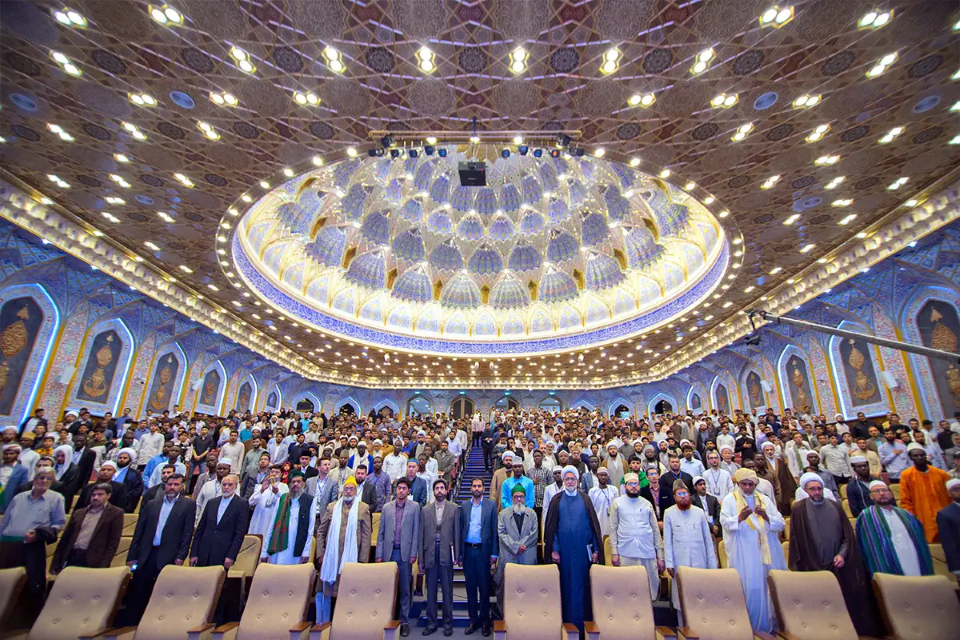
The celebrations were not confined to the tower that looms above the capital and is visible from every direction. Georgia's deputy foreign minister made a point of attending a reception at the Iranian embassy to congratulate the ayatollahs on the anniversary of the Islamic Revolution. The Iranian ambassador conducted himself at the event with strikingly conspicuous self-confidence. In fact, that is how he carries himself in Tbilisi on ordinary days as well – and he appears to feel particularly welcome in the capital that, for decades, cultivated partnerships with the West and with Israel, and is now actively working to repair its relations with the Trump administration.
Between NATO and Tehran
Shortly after the opening strikes of the joint Israeli-American campaign against Iranian regime targets, several hundred Georgian citizens of Azerbaijani origin gathered in front of the Iranian embassy in Tbilisi, holding portraits of Khamenei and declaring their readiness to carry out the orders of the Supreme Leader. The scenes were strongly reminiscent of those witnessed on the streets of Marneuli in the summer of 2025. These are decidedly not the sights one expects to see in a country that has become a popular destination beloved by Israeli tourists.
All of this unfolded in a country that, until recently, aspired to join NATO and was considered a steadfast ally of the United States. The Islamic Republic is located only a few hundred kilometers (roughly 125 to 185 miles) from Georgia, yet the two countries share no common border, and Iran is not among Georgia's principal trade partners. How, then, have the Iranians managed to build a base of support there specifically?
The Hudson Institute report's findings describe a systematic, multilayered influence infrastructure – economic, religious, educational, and operational – built across Georgia through the country's Azerbaijani minority. That minority is by no means small: approximately 330,000 people out of a total Georgian population of roughly 3.7 million. More troubling still, Coffey and Kandelaki contend, the ayatollah regime's agents wove this network thanks to the indifference – and at times active assistance – of the authorities currently governing Georgia.
At the center of the infrastructure stands Al-Mustafa International University, which operates three campuses in Georgia – in Gardabani, Marneuli, and Tbilisi. The US Treasury Department has imposed sanctions on this institution for its role in recruitment and ideological promotion on behalf of the Quds Force (the IRGC's elite external operations arm). According to the Treasury's statement, the Quds Force makes particular use of the university's student exchange programs for ideological indoctrination and the recruitment of foreign students.
The Georgian government has allowed an IRGC recruitment facility, subject to US sanctions, to operate across three separate campuses on its territory – while simultaneously moving to shut down Ilia State University (Georgia's most prestigious public university), an institution with deep ties to the Western academic world.
Among the alumni of Al-Mustafa's global network are individuals whose names are notorious to Israelis – and to many others. Mohsen Rabbani, who is affiliated with the university, organized the terrorist attack on the AMIA Jewish community center in Buenos Aires in 1994, in which 85 people were murdered by Hezbollah. Another figure connected to the network is Sayed Mojtaba Hosseini-Nejad, the man involved in organizing the assassination attempt against the Israeli ambassador in Mexico.
"At Al-Mustafa University's campuses in Georgia, they are currently recruiting Georgian students – primarily from the country's Azerbaijani community – and sending them to continue their studies in Qom," Luke Coffey explained in a conversation with Israel Hayom. "The number of participants sent on pilgrimages has grown from 200 Georgians in 2022 to 1,000 in 2025. The IRGC uses these trips – including to Karbala for the annual Arbaeen ceremony, an environment well-documented as a recruitment ground – for talent-spotting, intelligence gathering, and ideological indoctrination."
Despite the veil of silence that has long covered what takes place during these trips, firsthand accounts have already been made public.
Earlier this year, the Georgian service of Radio Free Europe interviewed a Georgian citizen of Azerbaijani origin now living in Germany. The interviewee confirmed that during one of the pilgrimage trips, an IRGC operative approached him and asked whether he was prepared to die for Khamenei. He also named a cleric who currently serves as Georgia's Shia sheikh and has close ties to the government as the person who referred him to the IRGC operatives.
Regards from Hezbollah
Alongside Al-Mustafa, another organization operates in Georgia that is poisoning the hearts of the Azerbaijani minority – the "World Assembly of Ahl al-Bayt." It is a body established under the direct personal supervision of Ayatollah Khamenei, linked to Hezbollah, whose late leader Hassan Nasrallah sat on its board of directors. The organization operates four madrassas in Georgia, alongside charity foundations and youth organizations.
The guiding hands behind the World Assembly of Ahl al-Bayt, it turns out, have taken a particular interest in Georgia. The organization's president, Ayatollah Ali Ramezani, conducted a five-day visit to Georgia during which he held numerous public meetings, received briefings from Iran-linked organizations, issued directives, and publicly declared that Georgia should become the assembly's regional hub – as part of a ten-year expansion plan with a special emphasis on the younger generation.
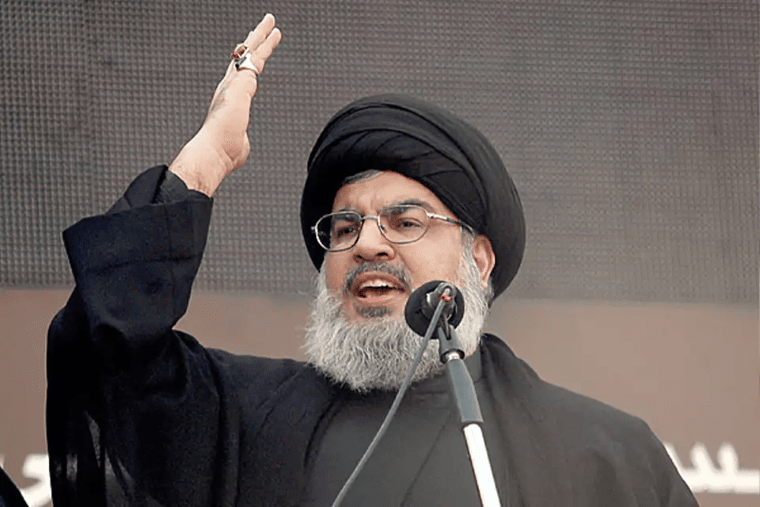
That same Ramezani had previously led the Islamic Center in Hamburg for nine years, before German authorities raided and shuttered it in 2023. Germany's interior minister at the time, Nancy Faeser, described the center as one that had promoted "extreme Islamist totalitarian ideology," spread "aggressive antisemitism," and operated in direct coordination with Hezbollah.
Ramezani escaped arrest in Germany only because he had returned to Iran before the raid. Despite that, he was welcomed in Georgia, held his public meetings, and announced his regional expansion plans without any interference from the authorities.
At a mosque in the Ponichala neighborhood of Tbilisi that is directly linked to the World Assembly of Ahl al-Bayt, a ceremony was held in March in honor of Ayatollah Khamenei, with children in attendance. The cleric who led the ceremony, Rahid Karimov, addressed the children about their duty to act mercilessly against the enemies of Islam.
According to Coffey, the ayatollah regime's emissaries have also built an extensive economic infrastructure inside Georgia. More than 12,800 Iranian businesses are registered in the country. Seventy-two companies registered in Georgia imported oil and fuel products from Iran between 2022 and 2025, including firms linked to donors of the ruling Georgian Dream party – channeling foreign currency back to Tehran at a time when Western sanctions were squeezing it from every direction. Imports from Iran to Georgia hit a record $285 million in 2024 – and those are only the official figures, the report's authors suggest. They argue that beneath the surface, large sums move between Iran and Georgia without any record or oversight.
In a 2020 operation, Georgia's security service uncovered a hawala network. Iran and its affiliated networks frequently use this method to move funds and circumvent international sanctions. Georgian authorities at the time arrested two unidentified Iranian nationals and seized $155,897, 8,730 euros (approximately $9,600), and 66,673 Georgian lari (approximately $24,500). Simultaneously, investigators estimated that the total volume of hawala activity exceeded 12 million Georgian lari (approximately $4.6 million). It is reasonable to assume that the sums being transferred have only grown since then, yet no further seizures have been reported.
The propaganda broadcasts
The Iranian network in Georgia also has a media component. Over the past decade, a pro-Iranian media ecosystem has developed in the country, now working systematically to inject Tehran's narratives into Georgia's Azerbaijani population. These outlets operate mainly through low-cost, high-reach alternative platforms – social media, dedicated news websites, and local culture sites. Tehran uses these platforms to shape public opinion, cultivate and recruit supporters, raise funds, and disseminate propaganda that reinforces Iran's soft power in the South Caucasus.
One of the key outlets in this ecosystem is 24news.ge, which operates as a leading Azerbaijani-language media platform in Georgia. Outwardly, it presents itself as a balanced news outlet covering a wide range of topics, with a presence on social media platforms including YouTube. In practice, it consistently prioritizes narratives aligned with Iran's positions and portrays Tehran-linked figures in a favorable light.
Its content regularly echoes statements from the Iranian government and republishes reports from the Mehr News Agency, which is identified with the Iranian regime.
An early warning signal about what was unfolding in Georgia came when Polad Omarov, a Georgian national, was convicted in a US federal court for his role in an IRGC plot to assassinate Masih Alinejad on American soil. Alinejad subsequently addressed the UN Security Council. She described to representatives of the international community the moment she looked out the window of her Brooklyn home and saw the man who had been sent to kill her standing at her front door. The man carried a Georgian passport. He had been raised and cultivated within the very network that the Hudson Institute report describes in detail.
That is not all. In March 2026, a Georgian citizen of Azerbaijani origin was arrested at Athens airport on suspicion of espionage, after being accused of collecting intelligence on American naval assets at Souda Bay in Crete, allegedly as part of Iranian intelligence activity.
Among other items, his phone contained images of American fighter jets, and he had apparently been under surveillance by Greek security services for several months. The Greeks had arrested another Azerbaijani in June of last year, again in Crete, and on similar suspicions.
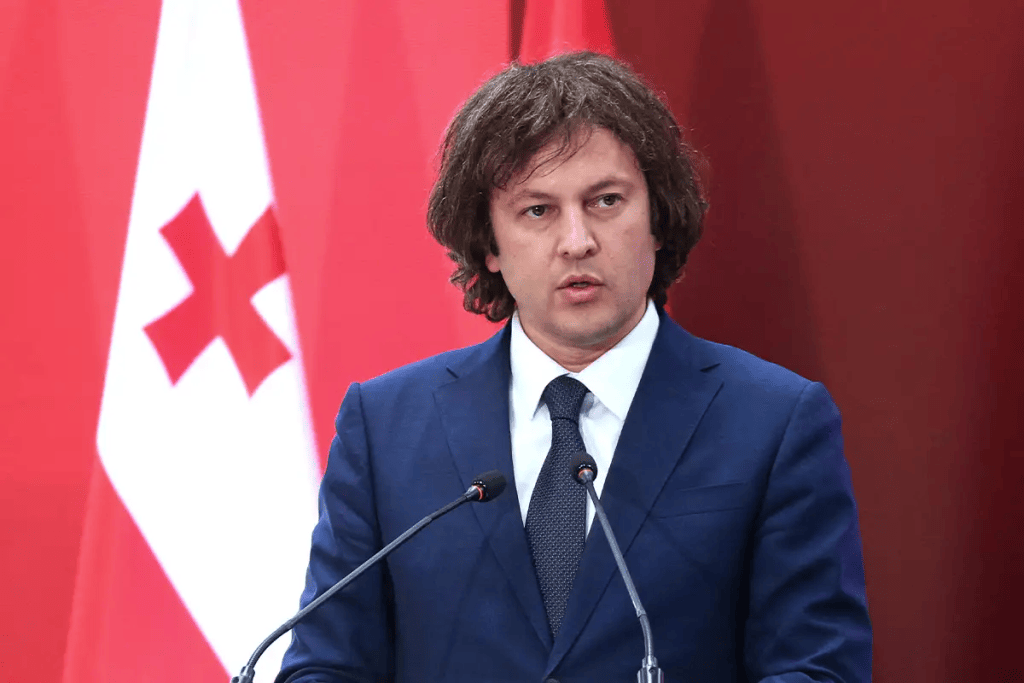
Georgian travel documents rank among the best in the entire post-Soviet space. Georgian nationals arouse less suspicion at border crossings in Western countries – and in Israel – and face fewer visa restrictions than holders of Iranian or Lebanese passports.
Tehran understood this and invested in it deliberately. The assassin dispatched to Brooklyn, and the spy arrested in Crete, illustrate the returns on Iran's investment in radicalizing Georgia's Shia Azerbaijani population – and no one knows how many of the ayatollah regime's operatives, carrying Georgian passports, have been more successful than the two who were caught.
The Azerbaijani front
The implications for Israel are alarming. The IRGC is recruiting and running individuals whose documents provide them with solid operational cover – people whose faces do not appear on watch lists and whose nationality reduces the level of suspicion at border checkpoints. The recruitment pipeline that, over recent years, has been enlisting and radicalizing Georgian citizens is producing exactly that kind of asset.
"People whose minds have been poisoned by extreme Islamist propaganda through IRGC-linked institutions in Georgia – Al-Mustafa campuses, pilgrimages to Qom, and Ahl al-Bayt youth organizations – can reach Tel Aviv, Vienna, Nicosia, or Buenos Aires far more easily than Iranian nationals," Coffey said. "They can surveil Israeli diplomatic facilities, monitor the movements of senior Israeli officials and businesspeople in the region, and serve as couriers, lookouts, or direct operatives. This is especially dangerous," he added, "because the IRGC's appetite for revenge against Israel and the US for the 2025 and 2026 strikes, for the killing of their commanders, and for the dismantling of their proxy networks, has only grown. There is concern that retaliation will come through covert, low-signature channels."
Coffey continued, "A network built around Georgian passport holders is designed precisely to provide those channels. The arrests in New York and Greece should serve as a warning signal to Israeli intelligence and lead it to treat what is happening in Georgia with the full seriousness it deserves. We do not have a clear picture of how many people recruited through this network are already operating in various arenas."
Iran's move to establish a foothold in Georgia fits into its broader strategic geography calculations and is aimed at neutralizing Israeli gains in the region, Coffey stressed.
As is well known, Israel has cultivated stable ties with Azerbaijan – an energy partner, an intelligence partner, and a country that shares Israel's concern over Iranian expansion along its southern border. Now the Iranians are returning the favor, working to outflank Israel's foothold in Azerbaijan.
Beyond that, the Baku-Tbilisi-Ceyhan pipeline, which transports Azerbaijani oil to the Mediterranean, passes through Georgian territory. The Middle Corridor trade route runs through the same region. If Georgia were to become a forward base for IRGC networks, the consequences would be severe. Iranian intelligence would cast its shadow over infrastructure that directly serves Israeli interests.
The sanctions relief danger
In Azerbaijan itself, a Georgian national was arrested on suspicion of involvement in an IRGC-linked plot to murder the local leader of the Jewish community. Azerbaijan's authorities are not fond – to put it mildly – of what is happening in the Azerbaijani-populated areas of neighboring Georgia.
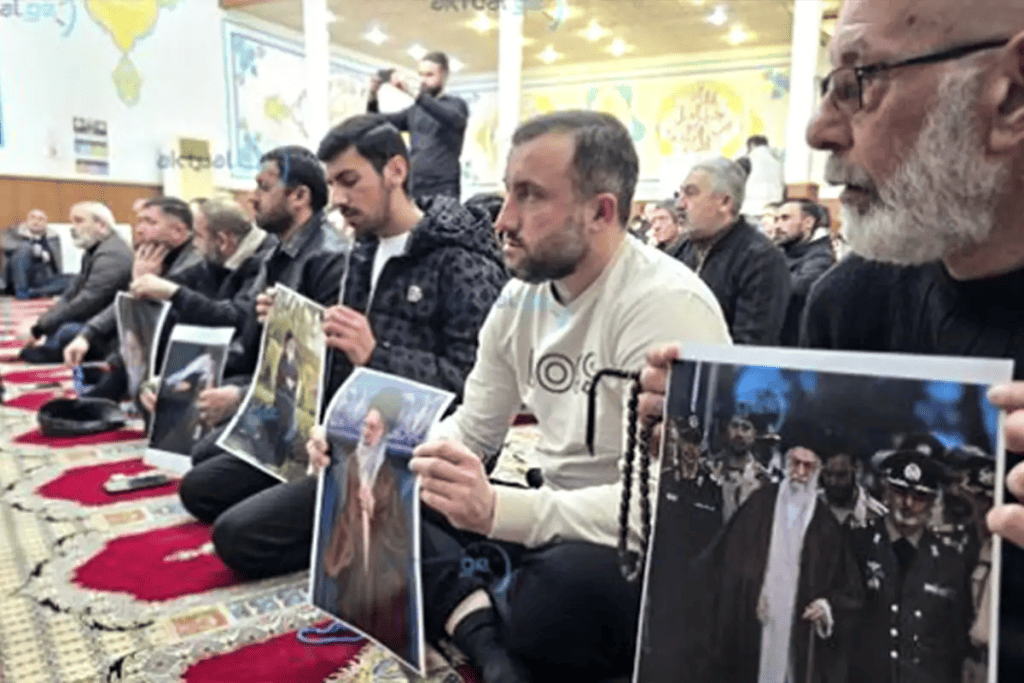
While Azerbaijan gives Islamist extremism no foothold, radicalization runs rampant among the Azerbaijani population in Georgia. By a bitter irony, all of the pro-Iranian organizations and networks described above – operating freely in Georgia – are banned in Azerbaijan.
Q: What could happen to the pro-Iranian network in Georgia if the ayatollah regime and the US administration reach a deal?
Coffey replied, "Since sanctions relief on Iran would be an unavoidable component of any serious agreement, it would hand Tehran additional resources to deepen these networks at precisely the moment when international attention is waning. Iran built this infrastructure as a strategic asset and will preserve it regardless of any agreements on uranium enrichment."
"Make no mistake – what Iran is doing in Georgia has a significant impact on US national security. Iran's involvement in Georgia extends its influence deep into the South Caucasus, a region that has become increasingly important to Europe in terms of access to alternative energy sources and also in terms of the current US administration's strategic priorities. Do you think Iran wants the Middle Corridor route to pass along its border unimpeded? Do you think Russia wants that? The IRGC's presence in Georgia helps normalize and spread anti-American sentiment and creates fertile ground for intelligence recruitment – that is precisely why Al-Mustafa University is there."
Q: What other bodies are part of the Iranian network in Georgia?
Coffey answered, "Four additional Iran-linked foundations operate in the country, all established and registered after 2012. The leaders of these pro-Iranian organizations – including figures from the Imam Ali Charity Foundation – deny receiving funding from Tehran. Nevertheless, they publicly express admiration for Iran's political and religious leaders, including by displaying portraits of Ayatollah Khamenei, and their social media accounts disseminate pro-regime political content. This conduct points to a clear affiliation with the ayatollah regime. The Imam Ali Foundation livestreamed a sermon by Hajji Hajiyev, the imam of the Imam Ali mosque in Marneuli, in the presence of Iran's ambassador to Georgia. In that sermon, Hajiyev condemned 'the unjust attack by the oppressive, occupying, and law-breaking Zionist regime against the Islamic Republic of Iran' and declared solidarity with the resistance front and with Sayed Ali Khamenei."
Q: How did Georgian authorities fail to notice Iranian networks growing right under their noses?
"The Iranian infiltration of Georgia took place in recent years, while the Georgian Dream party has been in power. Party representatives attended a 2015 reception in Tbilisi for a delegation of Iranian parliamentarians and clerics, organized at the initiative of a local branch of another pro-Iranian organization, 'Alul Bayt'. Exactly one decade later, one of those Iranians – a man named Masoud Pezeshkian – became president of Iran. There is no clearer proof of the Iranians' long-term vision and of the fact that they regard their penetration of Georgia as a strategic matter," Coffey said.
Q: What can be done to prevent yet another Iranian proxy from taking root – this time in a friendly country like Georgia?
Coffey said, "Israel learned at great cost what happens when Iranian infrastructure is allowed to develop without interference. Georgia has now reached the point where that lesson is directly relevant to it. Israel needs to work together with its American partners in the intelligence community, in Congress, and in the administration, to ensure that the IRGC's external networks are addressed explicitly within the ongoing dialogue with Georgian Dream. If Georgian Dream's people want to send serious signals to the Trump administration, we need to see visible action by Georgian authorities against these networks – not some symbolic gesture, but their genuine and complete dismantlement, because the existence of pro-Iranian networks serves neither American interests nor Georgia's own interests."
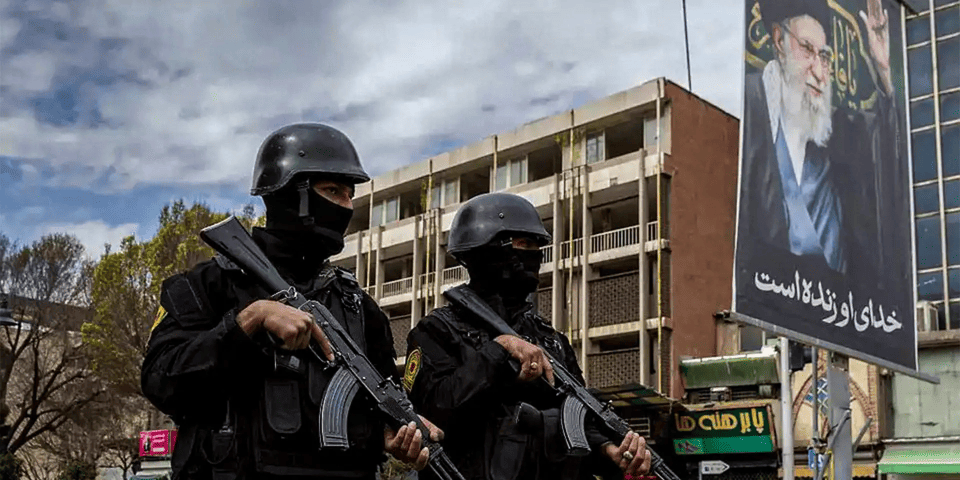
"I am troubled that, for now, the authorities are doing the opposite. Instead of cracking down on Iranian agents, they are angry at our report and its findings and are threatening to investigate and prosecute my co-author, Giorgi Kandelaki. Georgian Dream must understand that President Trump will not tolerate a situation in which the IRGC recruits and operates freely inside a country. Our report should serve as a wake-up call, especially at a time when Iran is a destabilizing force in the region. Georgia's authorities should be alarmed by its findings," Coffey said.