
Tuesday Jun 9, 2026
NEWSLETTER
www.israelhayom.com
  • Home
  • News
    • Israel
    • Israel at War
    • Middle East
    • United States
  • Opinions
  • Jewish World
    • Archaeology
    • Antisemitism
  • Lifestyle
    • Food
    • Travel
    • Fashion
    • Culture
  • Magazine
    • Feature
    • Analysis
    • Explainer
  • In Memoriam
www.israelhayom.com
  • Home
  • News
    • Israel
    • Israel at War
    • Middle East
    • United States
  • Opinions
  • Jewish World
    • Archaeology
    • Antisemitism
  • Lifestyle
    • Food
    • Travel
    • Fashion
    • Culture
  • Magazine
    • Feature
    • Analysis
    • Explainer
  • In Memoriam
www.israelhayom.com
Home Science & Technology Cyber & Internet

Why Google's top spot no longer wins you customers

SEO (Search Engine Optimization), long considered the primary channel enabling businesses to drive traffic and revenue growth, is no longer as relevant as it once was.

by  Aviv Shamni
Published on  06-09-2026 06:30
Last modified: 06-09-2026 14:42
Why Google's top spot no longer wins you customersGetty Images

"AI prioritizes authoritative citations over the sheer volume of backlinks, and favors direct, well-reasoned answers over click-driven headlines" | Illustration: Getty Images

Share on FacebookShare on Twitter

A study conducted by Semrush, which analyzed 80 million user browsing actions and click distributions across websites, found that nearly 90% of the sources cited by AI engines originate from pages ranked 21 and beyond in Google search results. These findings align with research by Ahrefs, which showed that only 12% of the URLs cited by AI tools overlap with Google's top ten results. This underscores the extent to which traditionally SEO-optimized content may remain largely invisible to AI agents.

Further evidence of SEO's declining dominance can be found in user behavior data: visitors arriving via AI Search tend to convert at significantly higher rates than those coming through traditional channels. For instance, Adobe reports that as of January 2026, each AI-driven visit generates, on average, 32% more revenue than a standard visit. During the holiday season, AI traffic surged by 693% compared to the previous year. Additionally, a study by Microsoft across 1,200 websites found that AI agents generate between three and seventeen times more purchases or high-value actions than traditional marketing channels. Among them, Microsoft Copilot led with a 17x increase, followed by Perplexity with 7x, and Gemini with 3 to 4x.

To effectively promote businesses today, one must understand how AI agents operate. AI agents do not search for exact keywords; instead, they translate user queries into complex system prompts, representing hundreds of variations of related questions to identify content that semantically matches the user's deeper intent.
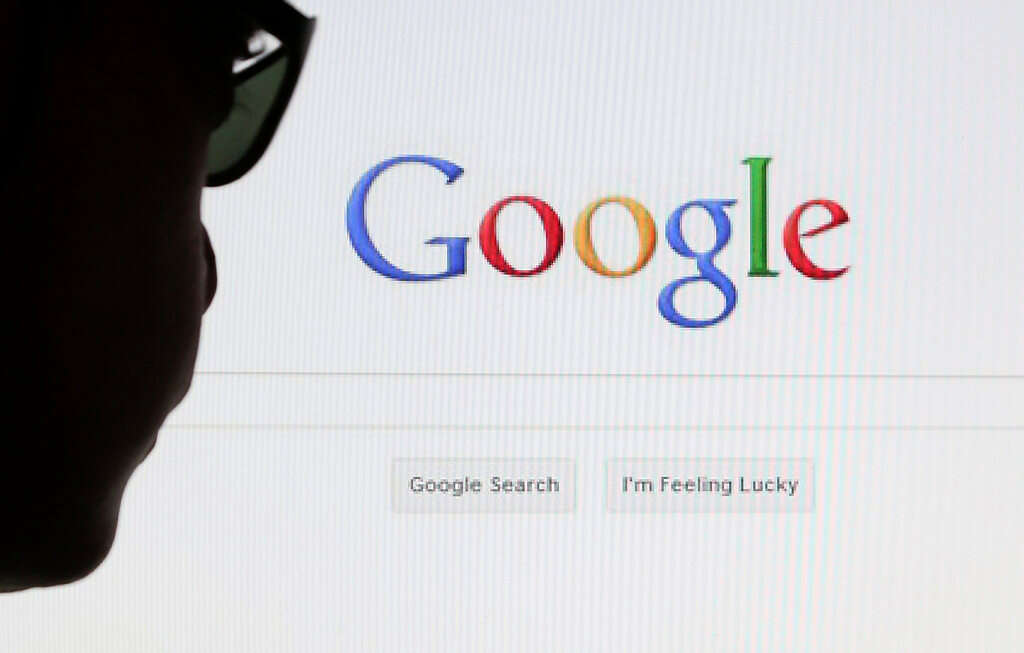
"Ranking #1 on Google no longer delivers the marketing results brands expect" (Photo: REUTERS/Francois Lenoir)

In this paradigm, AI prioritizes authoritative citations over the sheer volume of backlinks and favors direct, well-reasoned answers over click-driven headlines. The implication is clear: keyword optimization alone is no longer sufficient. Brands must evolve into trusted knowledge sources that AI agents can rely on.

To stand out in this new landscape, businesses should adopt a proof-based content architecture aligned with how AI agents scan and reconcile information. This methodology requires a clear structure: opening with a question, providing a concise answer within the first 40-60 words, and supporting each claim with evidence and statistics every 150-200 words. From a technical standpoint, implementing FAQ formats with proper schema markup is essential for those aiming to be cited by platforms such as ChatGPT, Perplexity, Gemini, and other AI agents.

Equally critical is the distribution strategy. AI agents increasingly seek validation in spaces where real users exchange opinions, platforms like Reddit, which, according to a study by Zenith, is cited in 81% of technical queries.

A live example comes from one of our clients, who experienced a 600% increase in visibility within just one week after aligning their content infrastructure with the language and structure preferred by AI agents, transforming from an invisible brand into one actively recommended as the leading answer. The current competitive advantage in this space is temporary. While most companies remain anchored to SEO strategies developed in 2015, a window of new digital real estate has emerged. The brands that quickly adapt to the new rules of AI Search can build a strong brand presence by becoming the answer AI agents cite. The ones that don't, stay invisible.

The digital landscape has changed. Ranking #1 on Google no longer delivers the marketing results brands expect. Brands that learn to optimize their content for AI agents, through semantic structure, intelligent distribution, and technically aligned content frameworks, will gain a decisive edge: not only in higher conversion rates and broader reach, but in the rare opportunity to position their brand at the forefront of AI-generated recommendations.

The writer is the CEO of Limy AI. 
Tags: 06/09AIGoogleMarketingSEO

Related Posts

Threatening messages from Iran sent to thousands of Israelis

Threatening messages from Iran sent to thousands of Israelis

by Shachar Shapiro

Many Israelis received SMS messages in Hebrew containing threatening content. In the messages, Iranian hackers called on Israelis to cooperate...

IDF female soldier becomes a symbol of Hezbollah's humiliation

IDF female soldier becomes a symbol of Hezbollah's humiliation

by Neta Bar

A Lebanese news site published photos of Capt. G., an IDF combat soldier operating deep inside Lebanese territory, and users...

Challah on Passover: Georgia Democrat's ad blunder goes viralSocial media

Challah on Passover: Georgia Democrat's ad blunder goes viral

by Dean Brandstetter

A Jewish-community newspaper ad meant to win over voters backfired badly when it showed bread during the holiday that forbids...

Menu

Analysis 

Archaeology

Blogpost

Business & Finance

Culture

Exclusive

Explainer

Environment


Features

Health

In Brief

Jewish World

Judea and Samaria

Lifestyle

Cyber & Internet

Sports


Diplomacy 

Iran & The Gulf

Gaza Strip

Politics

Shopping

Terms of use

Privacy Policy

Submissions

Contact Us

About Us

The first issue of Israel Hayom appeared on July 30, 2007. Israel Hayom was founded on the belief that the Israeli public deserves better, more balanced and more accurate journalism. Journalism that speaks, not shouts. Journalism of a different kind. And free of charge.

All rights reserved to Israel Hayom

Hosted by sPD.co.il

  • Home
  • News
    • Israel at War
    • Israel
    • United States
    • Middle East
    • Sports
  • Opinions
  • Jewish World
    • Archaeology
    • Antisemitism
  • Lifestyle
    • Food
    • Travel
    • Fashion
    • Culture
  • Magazine
    • Feature
    • Analysis
    • Explainer
    • Environment & Wildlife
    • Health & Wellness
  • In Memoriam
  • Subscribe to Newsletter
  • Submit your opinion
  • Terms and conditions

All rights reserved to Israel Hayom

Hosted by sPD.co.il

Newsletter

[contact-form-7 id=”508379″ html_id=”isrh_form_Newsletter_en” title=”newsletter_subscribe”]

  • Home
  • News
    • Israel at War
    • Israel
    • United States
    • Middle East
    • Sports
  • Opinions
  • Jewish World
    • Archaeology
    • Antisemitism
  • Lifestyle
    • Food
    • Travel
    • Fashion
    • Culture
  • Magazine
    • Feature
    • Analysis
    • Explainer
    • Environment & Wildlife
    • Health & Wellness
  • In Memoriam
  • Subscribe to Newsletter
  • Submit your opinion
  • Terms and conditions

All rights reserved to Israel Hayom

Hosted by sPD.co.il