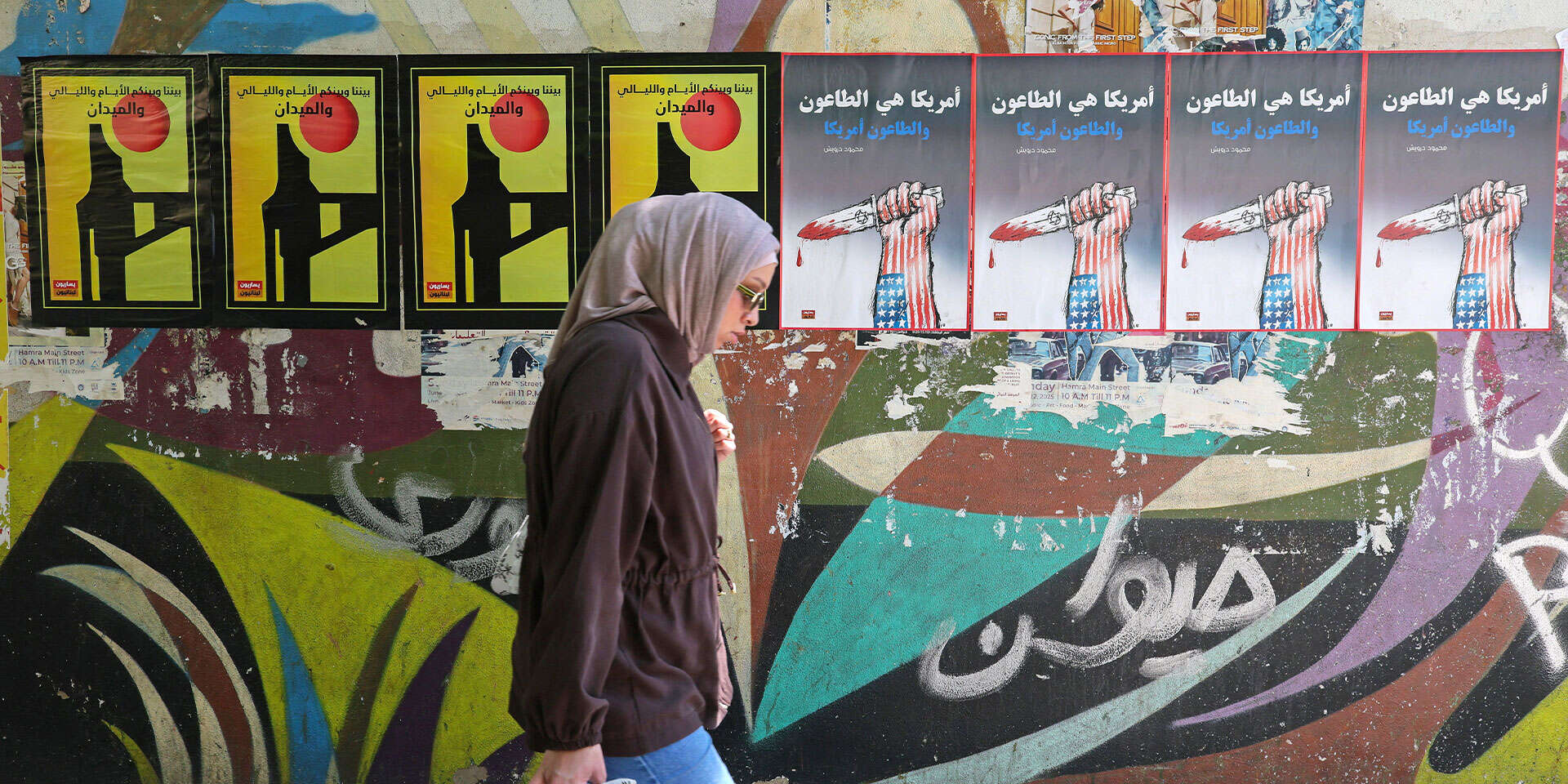
About a month ago, a Shiite woman from one of the villages in southern Lebanon spoke with a Lebanese online media outlet.
"We left (home) not because of the airstrikes," the woman said in an excerpt from the interview published on the Israeli Telegram channel "Melech Hashchuna." "We left because they put fighters (from Hezbollah) in our house. They came and fired a rifle at the house and said we were collaborators with Israel, and that they would bring someone to throw us out of the house with beatings. We told them they were not allowed to sit in our neighborhood, that we were here, and that the building was full and people were living in it. And what do you think happened?"
What happened was that the woman's pleas did not help. Her family was forcibly evicted from the home, which became a Hezbollah position.
This is certainly not the first time Hezbollah fighters have forcibly removed Shiite residents from their homes in Lebanon, but it is probably one of the few times those residents have dared to complain out loud. The breaking of the fear barrier and the courage to speak out against Hezbollah, Israeli researchers who follow Lebanon say, are the most painful blow to the terrorist organization, more than any terrorist eliminated or building bombed in Dahiyeh.
"Hezbollah's image as Lebanon's protector collapsed long ago," said Dr. Yossi Mansharof, a researcher at the Misgav Institute and a lecturer at the School of Political Science at the University of Haifa, who drew my attention to the interview with the Lebanese woman. "But now its image as the protector of the Shiites is also beginning to crumble. Hezbollah is at a low point in terms of its legitimacy, both inside the country and within the Shiite community. This phenomenon bothers Hezbollah so much that it openly declares it is willing to go to civil war to change its weakening status in Lebanon. Unfortunately, Lebanon's historical memory means the government and the public will do everything to avoid that. After all, Hezbollah is still the most armed and powerful body in the country."
The cracks between Hezbollah and its power base, Lebanon's Shiite community, are still narrow, but they are undoubtedly widening. This week, researchers Orna Mizrahi and Moran Levanoni of the Institute for National Security Studies published an article titled "The Price of War in Lebanon: Cracks in Shiite Support for Hezbollah." In the article, they list five signs of the erosion of internal support for Hezbollah, the organization that turned the backward and persecuted Shiite minority into the power broker in the Land of the Cedars.
Alongside statements against Hezbollah on social media, which have recently become routine, the researchers also point to the expansion of Shiite opposition movements, open opposition by Shiite tribal leaders in the Beqaa Valley to a war in Iran's service, and the small turnout at Hezbollah demonstrations. In the same breath, however, the researchers stress that in polls conducted in Lebanon, about 90% of Shiites still oppose disarming the organization. "Lebanon," said co-author Orna Mizrahi, a senior researcher at INSS and head of the institute's Lebanon program, "has always been a complex country."
Lifeline
The picture is indeed complex. In recent weeks, the Israeli media has naturally, and to a large extent rightly, focused on Hezbollah's successes in the north, the communities under fire along the border, and, of course, the IDF soldiers who have fallen, most of them as a result of the organization's explosive drones. Less has been said about Hezbollah's dire situation, not only in terms of its eroding standing inside Lebanon, but also because of its difficulty contending with the IDF's ground maneuver, which has expanded over the past two weeks. "IDF soldiers are now setting foot in places we have not been in since the 1980s," as Mansharof put it.
Another expression of the pressure Hezbollah is under came on Tuesday this week, when the organization issued a statement of support for Iran, which came to its aid and launched missiles at Israel following IDF strikes in Beirut. "The Iranian attacks are proof of Iran's commitment to defending Lebanon," the media statement said. "Israel continued to commit crimes against Lebanon with full US backing, and therefore the Iranian response is justified." According to Mansharof, "Hezbollah is breathing a sigh of relief following the Iranian intervention," an intervention that, as of this writing, has prevented continued Israeli strikes on its rear in Beirut. Security officials made sure to stress to the political echelon that if Hezbollah was once considered "Iran's shield," today the hierarchy has been reversed, and Iran has become Hezbollah's shield.

And despite all this, there are no signs that Hezbollah is about to give up. "Hezbollah is not going anywhere," said Tal Beeri, head of research at the Alma Research and Education Center, gloomily. "It is here to stay. Israel needs to know how to deal with Hezbollah in Lebanon in the future as well. The trick, in the end, is to keep it small. Our assessment at the institute is that precisely in a situation in which Iran is weakened, Hezbollah will deepen its grip on Lebanon. The resistance narrative will grow stronger, ideological entrenchment will grow stronger, radicalization will grow stronger."
As we said: The picture in Lebanon has always been complex. Still, a dive into what has been happening in the country in recent weeks attempts to sketch the processes that could lead to the collapse of the largest and most powerful terrorist organization in the world. This is what Hezbollah's war of survival looks like.
"Hezbollah 2.0"
On Nov. 27, 2024, the ceasefire between Israel and Hezbollah went into effect. The deal was reached through US mediation after the terrorist organization suffered a devastating blow in the form of the assassination of its mythological leader Hassan Nasrallah two months earlier. Nasrallah's death, the psychological achievement of the pager attack, the thwarting of the military leadership, the ground maneuver in Lebanese territory, and the massive airstrikes that, according to the IDF, eliminated about 80% of its firing capability, all caused Hezbollah to agree to hold its fire for the first time since Oct. 8, 2023. Following the agreement, the IDF withdrew to several points near the border, but continued to maintain freedom of action in Lebanon and kept striking any terrorist it said posed a threat. Hezbollah swallowed the humiliation. The terrorist organization did not fire even a single rocket at Israel, even when Israel launched a frontal attack against its Iranian patron in Operation Rising Lion. But Israeli intelligence continued to monitor Hezbollah's efforts to recover.
Hezbollah's thunderous silence deeply eroded its standing within the Shiite axis led by Iran. "Under Nasrallah, Hezbollah was the largest and most important organization in the axis," Mizrahi said. "Nasrallah influenced the Iranians and determined many things. After November 2024, the picture changed."

The ceasefire created problems for Hezbollah not only vis-a-vis Israel and Iran, but also on the domestic front. In February 2025, a new government was sworn in in Lebanon, after the parliament had managed a month earlier to elect Gen. Joseph Aoun as president, ending a two-year political vacuum. Following the formation of the new government, Hezbollah not only lost its power at the top, but also became a political red flag. "Before Oct. 7, Hezbollah was the mover and shaker inside the Lebanese government, a period in which Nasrallah led processes inside the country. Today it does not even have a blocking bloc in the government," Mizrahi said. "In addition, the question now on the Lebanese agenda is how to disarm Hezbollah. That is what the new government has placed on its banner."
Hezbollah's being pushed into a corner gave it an interest in breaking the ceasefire. On Feb. 28, 2026, with the launch of Operation Lion's Roar and the assassination of Iran's supreme leader Khamenei, the excuse also arrived. Three days later, on March 2, Hezbollah joined the campaign and resumed fire at Israel. Its actions did not prevent the continuation of the Israeli-American attack in Iran, but they certainly repositioned it as a factor that must be taken into account.
"Hezbollah first of all proved operational survivability, recovery capacity and operational flexibility," Mizrahi said. "I call it Hezbollah 2.0." Hezbollah did indeed prove that it had used the prolonged silence forced on it effectively from its perspective. In its new-old format, the terrorist organization has returned to operating as a guerrilla force, rather than as a "terror army," a term coined by former IDF Chief of Staff Aviv Kochavi. The terrorist organization's fighters did not prevent the advance of IDF forces in southern Lebanon and rarely engaged in face-to-face battles with IDF soldiers, but they did manage to sting them and cause casualties.
Over the past month, the main weapon Hezbollah terrorists have been using is explosive drones operated via fiber optics. "For years, Nasrallah spoke about the surprises he was preparing for Israel, and now Hezbollah really is surprising Israel with the drones," Mizrahi said. "On the other hand, Hezbollah has boasted until now that it has succeeded in stopping the IDF at the Litani line. But over the past week, after the capture of Beaufort and the crossing of the Litani, Hezbollah can no longer say that. It is a huge failure from its perspective."
Along the entire front
Indeed, over the past two weeks, the IDF has expanded the ground maneuver in Lebanon beyond the yellow line, the "security zone" it seized during Lion's Roar, and also crossed the Litani River at several points, not without difficulties.
Except in unusual cases, the IDF tends not to report on its progress in southern Lebanon. Hezbollah, however, which publishes about 30 statements every day claiming responsibility for military operations it has carried out in the area, helps make it possible to understand where Israeli forces are located. Satellite images, which show where buildings have recently been destroyed in southern Lebanon, a clear sign of an Israeli presence, also help form the picture.
Based on this data, four active fronts can be identified in which the IDF is advancing beyond the yellow line. The central front focuses on the Nabatiyeh plateau. The IDF recently broke out from the yellow line when it crossed the Litani near the village of Zawtar, then turned east toward the village of Yohmor at the foot of Beaufort Castle. Last week, the IDF had already captured the fortress, which served as a Hezbollah fighting and command compound, and from there moved on to bomb the village of Tebnine, which sits at the foot of the Ali Taher ridge. Capturing this ridge would enable the IDF to control, through fire and observation, the area north of Beaufort, and especially the city of Nabatiyeh, the second-largest city in southern Lebanon after Sidon. So far, there has been no evidence of this in Lebanese or Israeli media, but according to a source familiar with the details, the IDF has almost completed its takeover of the Ali Taher ridge.

The second front is in the area of the village of Randourieh, near Wadi Saluki, infamous from the Second Lebanon War in 2006. In this area, the IDF has recently moved, still south of the Litani, perhaps in order to establish a bridgehead that would allow heavy forces to cross the river northward. The information about IDF activity in the sector comes from fresh Hezbollah reports, which boast, among other things, of explosive devices detonated against IDF forces in the village of Randourieh and describe Israeli movement in the area.
A third front in which the IDF is operating is farther south, around the villages of Beit Yahoun and Hadatha, located in the central sector, slightly north of Bint Jbeil. These villages are closer to the border with Israel, and the IDF is trying to take control of them after many battles took place in the area against drone operators, battles in which the commander of the 401st Brigade, Col. Meir Biderman, was among those wounded.
The fourth front, and perhaps the most interesting, is in the western sector, where the IDF has made limited progress along the coastal road. The city of Tyre, the third-largest city in southern Lebanon, is in this area. Some of the city's residents, which according to assessments has become a refuge for hundreds of Hezbollah terrorists who fled nearby villages, have already received evacuation notices from the IDF Arabic-language spokesman.
In all other places already captured, the IDF is static and focuses on destroying infrastructure. These operations do Hezbollah no favors, as it not only struggles to hold territory but also begins to lose more and more assets. If until now the IDF had asked the residents of southern Lebanon to evacuate north of the Litani, recent notices speak of evacuating north of the more inland Zahrani River.
Elimination and recovery
Field commanders who have recently encountered Hezbollah report that its combat standard has declined significantly. The terrorist organization that once spoke in terms of destroying Israel and conquering the Galilee is now making do with harassing and pestering the maneuvering forces. Nevertheless, Hezbollah is still fighting. The fact that IDF soldiers are being hit almost daily attests to the presence of terrorists in the area.
As noted, the fighting is not taking place face to face, as in the past, but apparently through lookouts located near the line of contact who direct drones and mortars at IDF forces. "The IDF is definitely succeeding in pushing Hezbollah back, and if the forces reach a village and capture it, Hezbollah withdraws," said a person closely monitoring events in Lebanon. "But that does not stop the organization from continuing to fire at the soldiers. Hezbollah is still carrying out dozens of operations every day against IDF soldiers."
Hezbollah, having no choice and contrary to its custom, has been forced to admit that it is struggling to block the IDF. A clear example came after the capture of Beaufort. For a long time, Hezbollah denied the IDF's presence in the area and issued few statements about operations it had carried out in the sector. Only after the IDF published pictures of its soldiers at Beaufort did Hezbollah stop trying to hide the matter. "From Hezbollah's perspective, they lost a symbolic asset, and the Lebanese gave them hell for it," said the same person. "For Hezbollah, Beaufort is no less of a symbol than it is for the IDF."
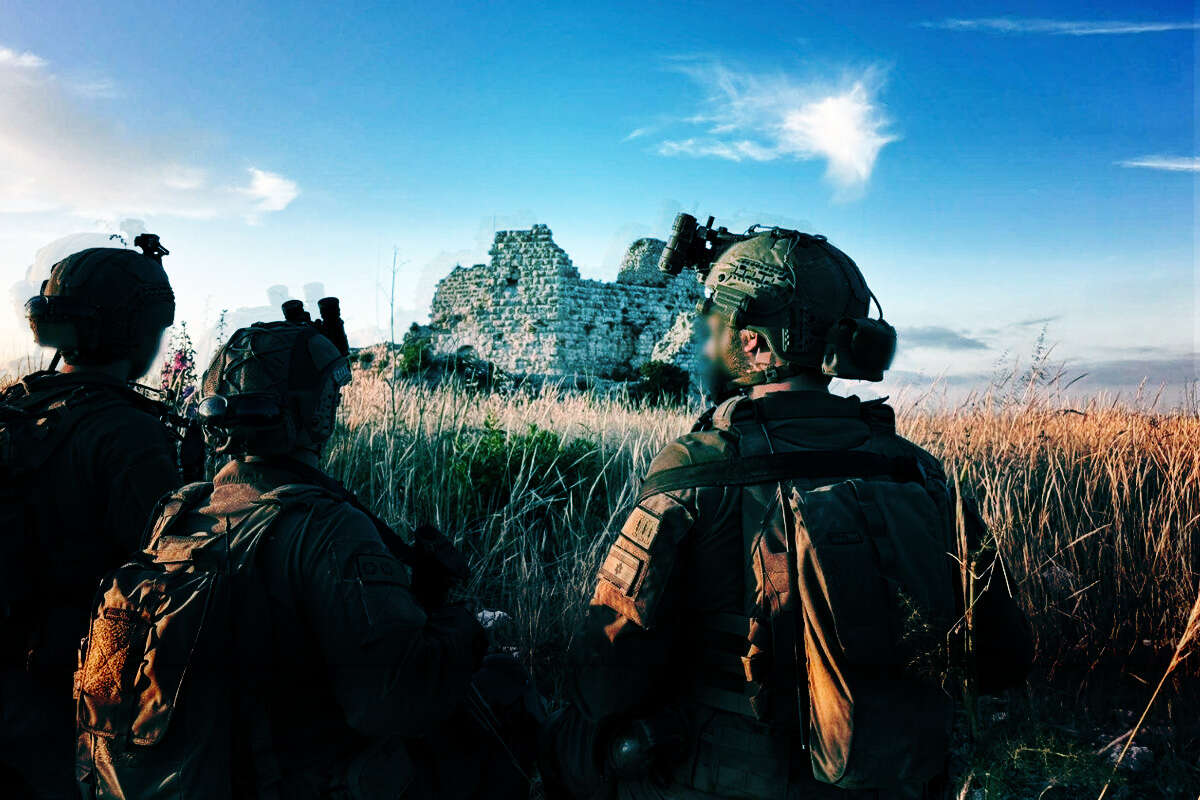
Even after the capture of Beaufort, Hezbollah continued to fight. According to data from the Alma Center, over the past week Hezbollah carried out 198 attacks, 168 of them aimed at IDF soldiers in southern Lebanon and 30 at Israeli territory. About half the attacks were carried out using drones, and about half using rockets and missiles. According to the data, Hezbollah has recently been relying more and more on rockets rather than drones, which may indicate its desire to increase the volume of fire. That same week, incidentally, the IDF carried out 436 strikes, almost all of them beyond the yellow line and about half of them north of the Litani. A single strike carried out in Beirut dragged Israel into the direct confrontation with Iran.
There is no reason to think these exchanges of blows will stop soon. According to open-source data, even after the IDF said it had eliminated about 80% of Hezbollah's high-trajectory firing capability, the terrorist organization still has 15,000 to 30,000 missiles and rockets, along with 1,000 to 2,000 suicide UAVs, and that is before even discussing the drones, the weaponry to which the organization is devoting most of its force-building resources. The IDF, meanwhile, alongside the search for technological solutions to protect the forces, is also hunting Hezbollah's "subject-matter experts" in the field of drones.
According to various estimates, Hezbollah has also suffered about 8,000 dead and thousands more wounded since Oct. 7, out of a force estimated at 50,000 to 80,000 regular and reserve operatives. In other words, according to the most cautious estimate, the terrorist organization has lost about 10% of its manpower, an enormous number by any measure. At the same time, the terrorist organization has lost hundreds of its most skilled fighters, such as members of the Radwan Force, as well as its most brilliant military minds, such as Fuad Shukr and Ibrahim Aqil. According to experts who follow Hezbollah, this is reflected in damage to the quality of Hezbollah fighters and to the organization's command-and-control capabilities.
But as usual, the picture is complex. Hezbollah's efforts to recruit fighters are bearing fruit, and for illustration, the Radwan Force recovered very quickly and returned to a scale of about 5,000 terrorists. To fill the ranks, Hezbollah has lowered the age of its recruits, among other things after establishing military training camps that operate within youth movements. As evidence, dozens of Hezbollah's dead in recent weeks have been children and teenagers.
"Hezbollah is withdrawing from the areas the IDF takes over, and there are fewer incidents in which IDF troops meet Hezbollah fighters face to face," Mansharof said. "In Israel we are not aware of this, because the IDF imposes a blackout, but in the Lebanese media we see that the IDF is reaching villages that are Hezbollah strongholds. What Hezbollah wants to do now, under the conditions that have been created, is preserve its heavy assets in Beirut and the Beqaa, and return to what it did to Israel until the 2000s in southern Lebanon: attrition. To cause Israeli fatalities, ideally every day, so that the Israeli home front starts asking, 'What are we doing there?'"
A Sunni-Christian alliance
The military aspect, as noted, is only part of the picture. While Hezbollah shifts to a war of attrition against Israel, it is also waging a passionate internal war inside Lebanon. "In this respect, Hezbollah's biggest failure is the talks between Israel and the Lebanese government in Washington," said Mizrahi of INSS. "Michel Aoun, Lebanon's current president, broke the axiom that you do not talk to the great Satan or the little Satan. From Hezbollah's perspective, this negotiation creates many challenges in the Lebanese political system and brings it to a very severe legitimacy crisis among the Lebanese public. That is exactly why we are beginning to see cracks among the Shiites as well."
In 10 days, the fifth round of negotiations in Washington will begin. In the last round, the Lebanese ambassador, Nidaa Hamadeh Mouawad, already agreed to acknowledge openly that Hezbollah is a hostile actor that must be removed from Lebanon. Alongside the diplomatic negotiations, talks are also being held in Washington between Israeli and Lebanese military officials. The IDF delegation is headed by Brig. Gen. Amichai Levin, commander of the Strategic Division in the Planning Directorate.

President Aoun is not rushing into Israel's arms, and still refuses to meet Netanyahu, which for most Lebanese is taboo. Still, in a resonant interview he gave last week to CNN, Aoun said that "Israel and Hezbollah must understand that they are mired in a futile war. Neither side will achieve its goals through war. Today there is a real opportunity to end the state of hostility between Israel and Lebanon: peace." Israeli defense officials argue that the weakening of Hezbollah by the IDF makes it easier for Aoun to speak this way, and that the Lebanese government must be bolder in its struggle against the organization.
The Christian Aoun is not the only politician preaching against Hezbollah. In recent months, prominent Sunni leader Fouad Makhzoumi has joined him. Now both the Christians and the Sunnis, who together constitute a majority in Lebanon, are pushing Hezbollah into a corner. If Hezbollah's current leader, Naim Qassem, previously claimed that the Lebanese government had no mandate from the people to hold talks with Israel, that argument is now running into difficulties. "Even if not much comes out of the negotiations, the very fact that the Sunnis and Christians are openly lining up for talks with Israel under US auspices, and saying the words 'peace agreement,' is a significant move," said a person closely following Lebanese politics.
"We are currently in a struggle over Lebanon's future identity," added Beeri of the Alma Center. "The problem is that as long as we do not remove the state of Hezbollah from the state of Lebanon, there is no purpose to the negotiations. As long as Hezbollah preserves its military power, and as long as it has political status, the chances of achieving results in the negotiations are slim."
Follow the money
Which brings us back to Hezbollah's power base. Even if its military power has been eroded and its political standing is collapsing, this is still an organization that manages the lives of millions of Shiites in Lebanon. This, as Beeri puts it, is Hezbollah's state within a state, based on a network of education, welfare, health and other systems that provide for the daily needs of the Shiite public. "Hezbollah's civilian mechanisms are still standing and operating," Beeri explained. "The systems function, and therefore if there are occasional statements by Shiites against Hezbollah, there is not really any wave beginning to form from the Shiite base. Hezbollah's infrastructure, which sustains its base, is operating as usual."
Aoun understands this very well. In the same interview he gave to CNN, the Lebanese president said that "the way to deal with Hezbollah is only 10% kinetic. The main effort must be political, social and economic. That is 90% of the work in dismantling Hezbollah."
According to Beeri, that is exactly what scares Hezbollah most. "It is not me saying this, but Naim Qassem, in a speech he gave on May 24," Beeri said. "Qassem threatened that if the Lebanese government acted to harm his civilian infrastructure, Hezbollah's base would take to the streets. In other words, de facto there would be a civil war. But in the same breath, Qassem also exposed Hezbollah's greatest weak point."
Therefore, Beeri said, the Israeli effort should now focus on Hezbollah's civilian infrastructure, and not only on conquering more territory in southern Lebanon. "Unfortunately, we are still very far from dismantling Hezbollah's civilian mechanisms," he said. "Despite all the destruction in southern Lebanon, the uprooting of residents, the very severe economic damage and also the military defeats Hezbollah has suffered, this is not translating into a crisis of support for the organization among the Shiite public. On the contrary, there is ideological entrenchment and radicalization in statements."
Lebanon's government, he said, may be good at talking, but less so at acting. "One of the main centers for dealing with displaced people from southern Lebanon is the sports center in Beirut," Beeri gave as an example. "The government, which is responsible for the sports center, issued a tender to handle the displaced people at the sports center. And who won the tender? Hezbollah's charity association. So how exactly is the Lebanese government fighting Hezbollah's civilian mechanisms?"
In Israel, officials admit that closing Hezbollah's civilian institutions is not on the table in the Washington discussions, because this is an internal Lebanese matter. Efforts against these bodies, said a source familiar with the details, are reflected, for example, in the bombing of Hezbollah gas stations and bank branches. It cannot be ruled out that Israel also led several influence operations intended to further undermine Hezbollah's legitimacy.
"But Israel, Lebanon and the US are still not operating outside the security lens," said Mansharof of the Misgav Institute. "We have indeed seen American sanctions against Hezbollah institutions, but as long as action is not taken against the organization's da'wah system, it will continue to rule with a heavy hand over the Shiite community that is bound to it. Welfare, religion, media, education and so on bind the community to Hezbollah, and therefore it still feels that it is in a positive strategic balance. This is a system Iran has built since 1982, and despite that there are those tempted to think Hezbollah can be dismantled without dealing with it. The State of Lebanon does not dare act against the da'wah system, and therefore Hezbollah still does not fear for its survival. It is merely keeping its head down until the storm passes."