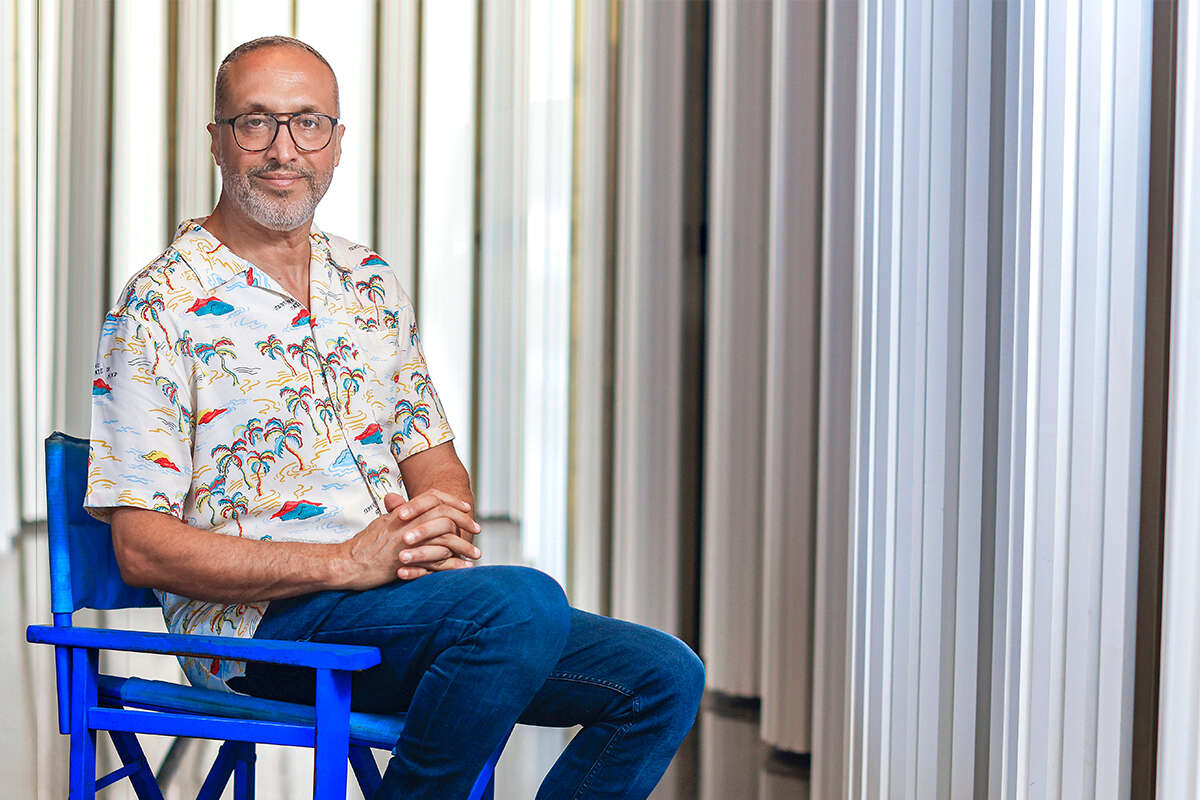
Effi Banay is an expert on social media in Iran, a lecturer and researcher of street culture in the Islamic Republic, focusing on protest movements and Generation Z.
Effi, as an Iran researcher, you are exposed through social media to a fascinating picture of the Iranian people, one that is not seen on traditional channels. Before we talk about the Iranian mood in this dramatic week, tell us a little about your Iranian roots.
"My parents immigrated to Israel from Iran in 1968. What was special about that wave of aliyah was that the entire neighborhood came together from Isfahan. My parents settled in south Tel Aviv, in the Kfar Shalem neighborhood. I was born in Israel, but until the age of 5 I did not know Hebrew, because everyone around me spoke Persian: the neighbors, the friends, the people at synagogue. I only learned Hebrew in kindergarten.
"My parents made sure to pass on the Iranian bug to me, and you can see it in the second and third generations, which are characterized by longing for a place they have never been. I miss a place I have never been to. In recent years, against the backdrop of everything happening with Iran, I have been researching it through social media."
And you are also wanted by the Revolutionary Guards.
"My name was published last December in the newspaper Kayhan, which is affiliated with Khamenei. It said I was corrupting Iranian youth into rebellion through the use of social media."
That sounds stressful.
"At first I was stressed, but then I realized I had no reason to be afraid."
And what about the Iranian people? Can they also breathe easy?
"The Iranian people are absolutely not breathing easy. They do not say it explicitly on social media, but they express what they want through subtle nuances. For example, they hang Israeli and US flags on bridges, and paste the names of Trump and Netanyahu onto street signs.
"It is amazing to see their sympathy for Israel and the US, because this is a country that for almost 50 years has instilled in its citizens the importance of destroying both countries. The Iranians have gone from haters to admirers. There is, of course, special admiration for Israel. When they see Israel flourishing, they understand how much they were lied to."
How have the recent rounds of fighting affected them, and how have they affected the connection with Israel?
"For years, the regime tried to sever the connection to the ancient royal dynasties and historical symbols. During Operation Rising Lion, the regime caused the people to unite around the flag, around Iran's great symbols, because they understood that the people were yearning for that.
"During the war, they filmed our attacks while screaming with joy and shouting thank you. I did not see a single video in which people cursed Israel, and these are people whose homes were destroyed. The strongest video circulating online now shows a man sleeping, hearing bombings, then getting up to close the window and going back to sleep. In other words, they know Israel will not bomb them. They trust it.
"There are also people with their faces hidden saying: In Israel, people have a shelter, a safe room, an app and sirens that protect them. The state invested in missiles to defend its citizens. We do not have any of those things, and they do not even tell us there is an attack. They understand the gap between a state that cares for its citizens and a state that does not. That gap became sharper after Oct. 7, when they saw our response to Hamas."
What is the sentiment toward Israel's enemies?
"The Iranians are proud of their heritage. If you tell an Iranian he is an Arab, you have insulted him. They hate the Palestinians, the Lebanese, the Syrians and the Houthis because the regime transferred money to them at the citizens' expense. There is an entire people on our side, and not on the side of the Palestinians, for example."
The money taken from them is a burning issue for Iranians. What does life in Iran look like today?
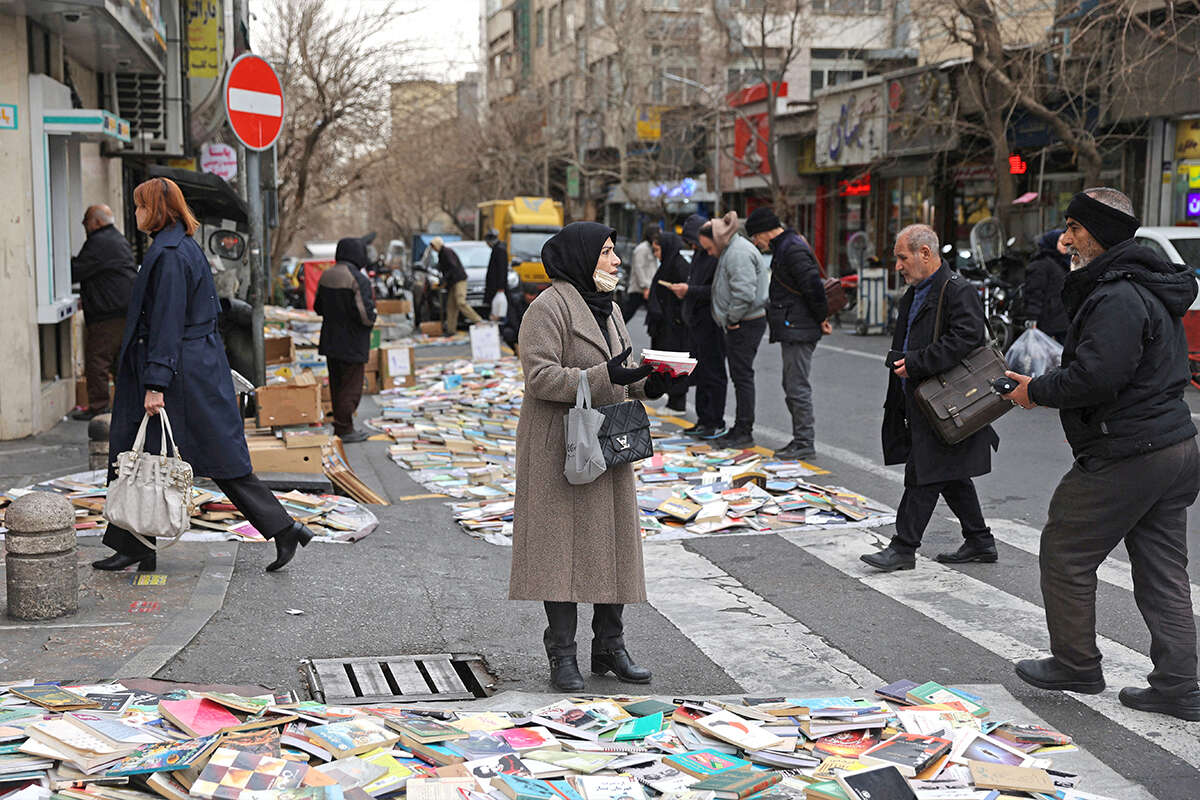
"They are a technological people, like us, with a great deal of vitality. After midnight, the streets are full of activity, similar to Tel Aviv. The traditional food scene is developed, partly because sanctions do not allow for Western food. At the same time, the cost of living bothers them, and because they cannot afford to buy an apartment or a car, since prices are sky-high, the latest iPhone model has become the central and almost only status symbol for Iranians."

You mentioned their connection to food, but these days food has become a difficult commodity to obtain.
"Basic food is indeed very complicated to obtain, and that creates difficulty in cooking traditional dishes. Iranians love hosting, and holidays are a major celebration for them. On Nowruz, the Persian New Year, for example, people upload thousands of holiday videos, but in the past two years I have seen almost none. People were simply ashamed."
What is especially hard to obtain?
"The price of saffron has soared. Meat has become a luxury and is the hardest thing to get. Prices at butcher shops are absurd. If the average monthly salary is $200, a kilo of meat can cost $50 to $70, sometimes more than a quarter of the monthly salary. Cooking oil can reach 10% of a salary.
"Because Iranians love meat, and most of their recipes include meat, they are forced to make do with bones to give the soup a little flavor. The current trend on social media is to say: I used to buy bones for the dog, now I buy them for myself. For them, it is a real humiliation."
The sentence being said on social media is a kind of ta'arof, the Iranian way of saying things elegantly, so as not to risk criticism of the regime.
"Correct. It is an indirect way of expressing criticism. The Persian language is poetic, metaphorical and pictorial, so structurally it is geared toward conveying messages indirectly. You can complain about the cost of living, but you are not allowed to blame the regime for it. This week I saw a skit in which a woman buys meat and asks for chicken feet. Another man comes in beside her and asks for chicken feet for his dog, but the seller replies that the feet have already been sold to the lady.
"Another example that illustrates their opposition to the regime: When the US killed Qasem Soleimani in 2020, people on social media joked that he had turned into a meatball. To this day, anyone who is killed becomes a 'meatball.' After the killing of 20 generals, social media declared Meatball Day, and after another assassination, the regime arrested a famous chef who published a meatball recipe."
Grandma, social media star
The regime's eye never stops watching. How does the public develop mental resilience in the face of a regime that is constantly watching it?
"The first thing they did during the protests was break the street cameras. On the one hand, they are careful with their words, and on the other, after Operation Rising Lion, more people began cursing Khamenei with their faces visible. This also happened following his sermon before the war, in which he declared: There will be no war, and we will not negotiate with anyone. A week later, the attack happened, and then the fear in Iran broke, because we broke his word. Until then, he was considered a prophet and God's emissary on earth."
There seems to be a hidden, subterranean energy that erupts in every round, in every incident against the regime. That energy connects to a deep cultural concept called zaher and baten, the visible and the hidden, the gap between behavior outside and behavior at home. How have Instagram and TikTok, for example, changed that dynamic? Has the internet become the place where the hidden comes out?
"Instagram and TikTok brought cameras into the home and created a revolution: People film videos inside the home, which in Iran is a private and intimate place. Instagram took the family out of the confinement of the home and made private life visible. That is Westernization. There are many TikTokers and influencers who have turned their mothers and grandmothers into social media stars."
Westernization is also reflected in greater openness on subjects that were once taboo, such as LGBT people.
"If a man wants to undergo gender reassignment surgery and become a woman, there is a religious ruling by Khomeini from the 1980s that permits it. Not only is it allowed, they will also fund the surgery for him."
What is the logic?
"Khomeini preferred that a man become a woman and sleep with a man, rather than a man sleep with a man. In Iran, there are many transgender people who upload videos. There are young men who look feminine, film themselves putting on makeup and change their appearance to that of a woman. They are not afraid to upload it, because they understand that the moment the regime touches social media stars, it could inflame the public's instincts, which could once again lead them into the streets. Today in Iran, homosexuality is hardly hidden, unless you are caught having sexual relations with a man. For that, there is still the death penalty."
It sounds as though Iranians are living in the present, corresponding with the West, but there is also evidence that they are conducting a fertile dialogue with the past.
"There were indeed those who forgot the shah, but in 2020 a trend began among the younger generation, which rediscovered him and understood that after everything, despite the corruption and megalomania, he loved Iran and built Iran. These young people ask their parents: How did you replace our representative shah with ayatollahs in dresses who are destroying the country? And the parents answer: Maybe we made a mistake when we overthrew him. Recently there has been a trend of parents apologizing to their children for overthrowing the shah. Today, at demonstrations, citizens shout the shah's name."
And at the same time, they believe Mojtaba is dead.
"There are citizens who believe the regime is hiding it, and this connects to Khomeini, who said it was permissible to lie in order to survive. According to all the photos from the bombing area in the latest round, the compound collapsed. Iranians claim Mojtaba went out to breathe air during the bombing and was thus saved. That sounds strange. The number of attempts to create AI videos of him is astronomical. Beyond that, inside Iran there are four people who claim they saw him, and that does not include President Masoud Pezeshkian. When they tried to assassinate Khamenei in the 1980s, an hour later the media were invited to the hospital to photograph him."
They say he was injured in the face, and that is why they do not want to photograph him.
"So why doesn't he send a recorded message? It has reached an absurd level, where an Iranian communicator who conducts seances online claims that Mojtaba is dead, because he answers her."
"Public anger will grow"
In a scenario in which the regime falls and the internet opens without censorship, what will be the first thing to happen to Iranian society online? Will we see an explosion of liberalism?
"We will see an insane explosion of liberalism. They want to drink, go out, experience life. Their best friends will be the Israelis, because only we stood by them during this difficult period, and to that we should add the shared culture around King Cyrus. The cooperation between us could be tremendous: knowledge, electricity, agriculture."
At the end of April, you said it would not take them several months to take to the streets, but less. Do you still think so?
"This regime will not last much longer. Money is beginning to reach Iran. They are talking about $300 billion. I estimate that almost none of it will reach the people, but rather the regime's interests and those close to it. When the people saw there was no money and there were sanctions, they showed understanding and stayed quiet. But when the people see there is money being directed to the regime, public anger will rise. Add to that further revelations about the scale of the killings during the protests, and you get an effective protest."
What will be different this time? In previous protests, the regime did not fall and even survived severe blows, including the killing of the supreme leader.
"The difference is in the pocket. The Revolutionary Guards are the cushioned sector in the country: high salaries, supermarket discounts, special housing, student scholarships, including university admission without exams. They are pampered so they will not topple the regime. The Basij, a semi-military volunteer militia, is subordinate to the Revolutionary Guards, but does not enjoy the same conditions. When they understand that they are buckling under the cost of living, and that it is not worth defending the regime, that will be the first brick. The second brick will be the masses. When 20 million people go out to demonstrate, and perhaps even 50 million, no soldier will help."
They understand that the agreement is not the final step.
"The agreement is a 60-day ceasefire during which negotiations will take place. I think the negotiations will collapse in on themselves, because they are incapable of compromising. This is a group of fanatics, extreme messianics. Right now, Trump has climbed down from the tree, but once something sets him off, things will change quickly. This is not a peace agreement in the style of Anwar Sadat and Menachem Begin. This is a reduction of pressure alongside negotiations, and no one has promised that the negotiations will succeed. It is important to say that among the Iranian people there is also a sense of betrayal. They feel betrayed by the West. There is concern that an agreement will only leave the situation as it is, and there is also anger at the West that after everything that happened, nothing changed."