Morgan Ortagus is one of the most prominent figures in American foreign policy in recent years. She has stood at the center of some of the most consequential developments in the Middle East – from efforts to advance the Abraham Accords during the first Trump administration, to her more recent role as deputy to the president's Middle East envoy in the second Trump administration, where she was directly involved in managing the Lebanon arena and the initial contacts between Israel and Lebanon following the November 2024 ceasefire. Ortagus concluded her role earlier this year, after more than a year in the Trump administration.
In an exclusive interview with Hayom magazine, she describes the behind-the-scenes of sensitive negotiations, the challenges of trying to rein in Hezbollah, and the prospects for a future agreement between the two countries. But before her diplomatic career, Ortagus emphasizes that one of the central elements of her life – and perhaps the one that shapes her entire worldview – is her Jewish identity, built over an extraordinary personal journey that began in the heart of the Middle East.
Ortagus was not born into the Jewish world. "I grew up in an evangelical Christian family," she says. "My parents were very supportive of the State of Israel and the Jewish people." That connection, she explains, predated any personal choice. "It was instilled in me from a young age. I felt lucky to have Zionist parents, and they were very supportive of me."
Ortagus began her conversion process in Washington, D.C., but it followed her into her service as a public affairs officer with USAID in the Middle East. "I was on temporary duty in Baghdad in 2007. My first real Shabbat and Hanukkah were in Saddam Hussein's palace. I'm sure that made him roll over in his grave.
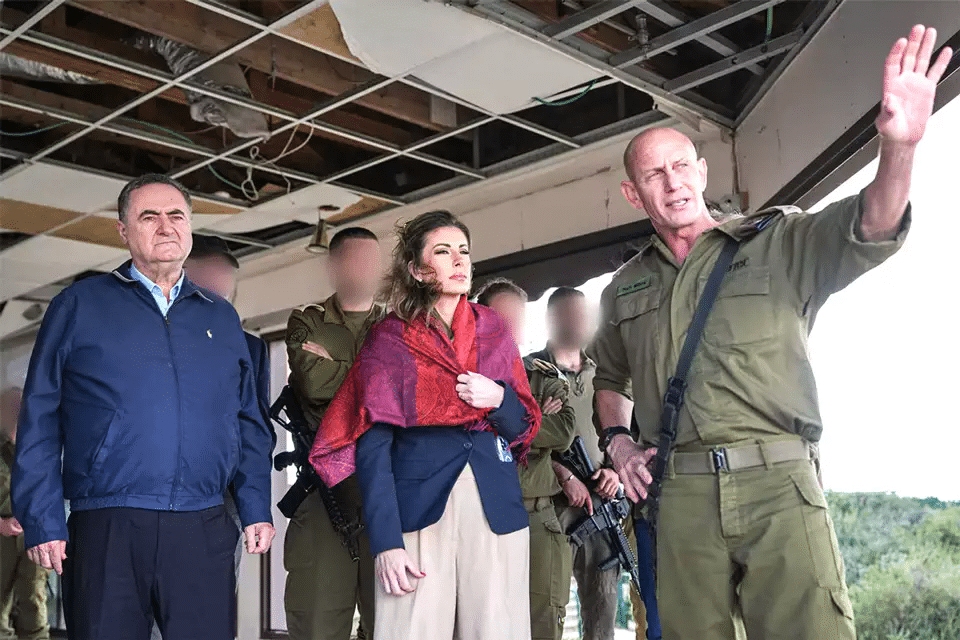
"Eventually, I ended up in Saudi Arabia, serving as a Treasury attaché, and I would make Skype calls with my rabbi. Every Friday we had a lesson. That required, of course, trying to observe Shabbat within the constraints of Riyadh. There were quite a few Jewish diplomats at the US Embassy and other embassies, but I remember that my best friend to this day – an Iraqi-American Muslim woman – was the one who helped me prepare the food for the Shabbat meal."
Ortagus describes a conversation in which she was challenged about her choice to convert. "I remember that my rabbi at the time said to me during our lessons, 'Morgan, you know, this is an unconventional way to go through conversion. I wish you were in Washington and could go to synagogue and observe the mitzvot in a normal way.'
"I said to her, 'What you're talking about – a situation where I can freely walk into a synagogue, where I'm free to convert, and where I'm part of a safe and normal community – that does not square with the history of the Jewish people. What I'm experiencing – a situation where I have to hide the fact that I'm converting, to do it quietly – that is the authentic Jewish experience.' She said, 'You know what? You're right.'"
A symbol of faith
Ortagus describes the process she went through as she moved between Jewish denominations. "I came back to the US, went through the beit din [rabbinical court] and the mikveh [ritual immersion bath]. Then, two days after the 2020 election, my daughter was born. We moved to Nashville, Tennessee, and began attending the Orthodox synagogue there, which is part of a wonderful community. At that point, we weren't yet observing at an Orthodox level, but I started thinking about my daughter and her future as a Jewish woman. Then, especially after October 7, it became very important to me that we become more religious and traditional in our Judaism."
"So I'm not a perfect Jew," she says with humility, "but I try as much as possible to raise her in an Orthodox way. And since October 7, I try to wear a Jewish symbol every day – whether it's a ring or a Magen David necklace. I really wanted my daughter to see that we are not yet another generation of Jews with trembling knees. That we are proud of who we are, that we stand our ground and our identity. We will never be ashamed, and we will certainly never hide who we are."
Ortagus recounts how this set off a media storm during her tenure as deputy Middle East envoy. "When I shook the hand of President Joseph Aoun in Lebanon, I forgot that the ring was on. One of my friends texted me and said, 'I loved the photo with the ring.' When I finally had a reception, I had no idea what the hell she was talking about. I had no idea the internet had exploded that day.
"There were people who told me I shouldn't wear a Magen David because it looks like I'm taking sides. And I said, 'This is not a symbol of the State of Israel, it's a symbol of my faith.' And just as you would never tell a Christian American not to wear a cross, you cannot tell me to do that as a Jewish woman. And I said, 'Not only should you stop telling me to stop wearing a symbol of my faith, but every time someone tells me that, I'm going to find an even bigger necklace to wear,'" she says.
"I am deeply proud of my faith. I am very proud to be an American. The greatest honor of my life is to put on the uniform of our military, but I feel the same way about my faith. Just as no one can ever make me stop wearing the uniform of our country, no one will ever stop me from wearing the Magen David." She adds, "I am going to teach my daughter to stand up for what she believes in and to be proud of her faith. And I truly wish that Jews around the world – the Jewish people – that we all feel this way."
Ortagus reflects on her time at the State Department under the first Trump administration, serving as Secretary of State Mike Pompeo's spokeswoman and helping advance the Abraham Accords.
"It was a tiny team that really understood what was happening. You could count on two hands who knew what was going on. A wonderful group of people who trusted each other, and it never leaked – no one knew."
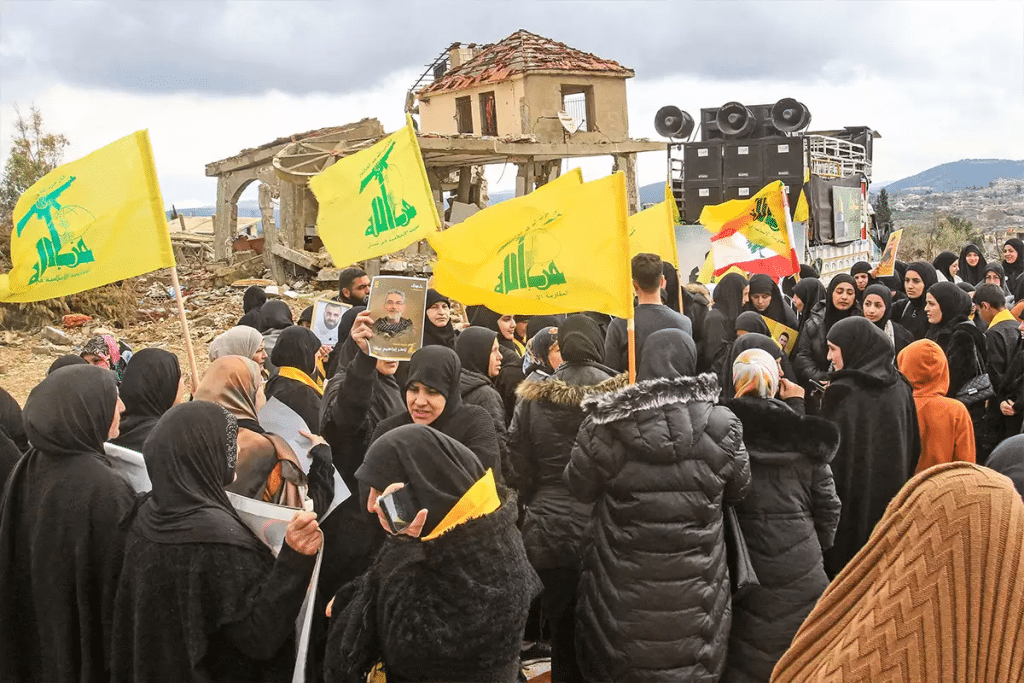
Ortagus elaborates. "First, Jared Kushner brought me in to help him launch the peace plan, and then that small team became the Abraham Accords. I remember when Avi Berkowitz pulled me aside and said, 'I think we're going to close this with the UAE and Bahrain.' And I said, 'No way!' So we started talking about it, planning and working together."
"The hope was, of course, that this would be the president's signature diplomatic achievement – so that Trump would win," Ortagus says, referring to the 2020 election, which Joe Biden ultimately won. "And then you hope to get back there again and expand the Abraham Accords. That's something I obviously wanted to do with Lebanon, but everything depends on timing."
Ortagus is clear that the ability to reach those agreements depended on isolating Iran. "We didn't get there by magic. It happened because of four years of policy that put the Islamic Republic of Iran in a box – maximum pressure, the elimination of Qasem Soleimani. Every decisive action was taken that led the UAE, Bahrain, Morocco, and Sudan at the time to understand that we were putting their enemy in a box. That's why I think it was so important that the president returned to the maximum pressure campaign within two weeks of starting his second term."
Between Beirut and Jerusalem
In 2024, Trump was re-elected, and Ortagus was appointed deputy to the president's Middle East envoy under Steve Witkoff. Asked to describe her role, which included the Lebanon portfolio and representation at the US mission to the UN, and which effectively began during the transition between the Biden and Trump administrations, she turns to the first challenge she faced in the Lebanon arena.
"When I worked with Steve, we did everything together. Lebanon was one of the things I worked on. In the first weekend after the administration took office in January, there was a deadline – under the November 2024 ceasefire agreement reached by the Biden administration and Amos Hochstein – for the withdrawal of all Israeli forces from southern Lebanon."
"Amos had flagged this to me during the transition. And I thought, 'Damn, we're going to have to deal with this.' Israel doesn't feel ready – they need a few more weeks or months to do it. I hadn't yet met President Aoun, I barely knew Ron Dermer, and I didn't even have an office yet. We didn't even know where the bathrooms were," she says with a laugh.
"We negotiated an extension of that clause in the ceasefire to give the IDF a little more time to complete a phased withdrawal from southern Lebanon. In the end, Israel withdrew from 99% of the territory, except for the five points."
Ortagus describes the dynamic with the Lebanese side. "They were pushing to reach a point where the IDF would exit southern Lebanon as quickly as possible, and so they agreed to the ceasefire extension. President Aoun was very new – he was sworn in a week before Trump. Nawaf Salam hadn't even formed a government yet. So everyone was genuinely new, and they needed some kind of win."
In the period between the announcement of the November 2024 ceasefire and the escalation against Hezbollah in March 2026, Israel managed to preserve room to maneuver that allowed for targeted strikes against Hezbollah despite the ceasefire. I asked Ortagus whether the Trump administration had given a green light to those strikes.
"Yes, but that was part of the Biden administration's agreement, under the basic understanding that Israel would have the ability to neutralize threats to its homeland for the residents of its north. A lot of people focus on the Israeli strikes, but it's important to remember that Lebanon also had a commitment – as it promised twenty years ago at the end of the 2006 war [the Second Lebanon War] – and that is to disarm Hezbollah."

Later, Ortagus chose to deepen her involvement in the Lebanon portfolio. "I spoke with Secretary of State Marco Rubio and decided to focus narrowly on Hezbollah's disarmament and on the mechanism that sat in Naqoura, in an effort to get the armies to work together."
She reflects on how those early conversations contributed to the direct talks now taking place between Israeli and Lebanese ambassadors in Washington. "I think the dialogue we're seeing today comes from things we kept very quiet – months of grueling work, sitting in a small room, traveling to Lebanon frequently, with the Israeli military and the Lebanese Armed Forces in the same room, face to face, talking to each other. What we achieved through the mechanism wasn't something big or bold – it was deliberately kept out of the media. It was the quiet, grinding work of connecting two countries, of diplomacy."
The Lebanese failure
While American and Israeli officials now describe the meetings between the two countries' ambassadors as the first direct Israeli-Lebanese talks in decades, the earlier round of discussions that Ortagus led – involving both civilian and military figures – was in fact the first direct contact of its kind.
"Even before we brought the civilians into the room, we had the armies doing it – trying to work together, trying to build trust. And I think that if we ever truly reach, when this war ends, a genuine disarmament of Hezbollah, we'll need to return to that same painstaking, detail-driven, and at times monotonous work we did through the mechanism – to bring the two countries closer, so there is an element of trust that makes it possible to disarm Hezbollah together."
Ortagus describes how the strikes against Iran serve the dialogue between the countries. "Hezbollah receives its funding, training, and equipment primarily from Iran. That is clearly the head of the snake, and I think President Trump has dealt a serious blow to Iran's ability to support Hezbollah."
She details what the Lebanese government is also required to do at the civilian level. "There are so many things that need to happen socially, where the Lebanese government is genuinely failing, and a lot of it comes down to very basic things – like the fact that the Lebanese government needs to provide essential services to Shiites in the south. I've used this example a million times, but I'm a mother with a young daughter, and if my counterpart in southern Lebanon is a Shia woman, and Hezbollah is providing her with education, infrastructure, and healthcare – not the Lebanese government – then who is she going to trust? People need faith and confidence that their government can meet their needs."
I ask Ortagus, based on her familiarity with Lebanese leadership – including President Aoun and Prime Minister Salam – whether there is genuine will and effort to disarm Hezbollah.
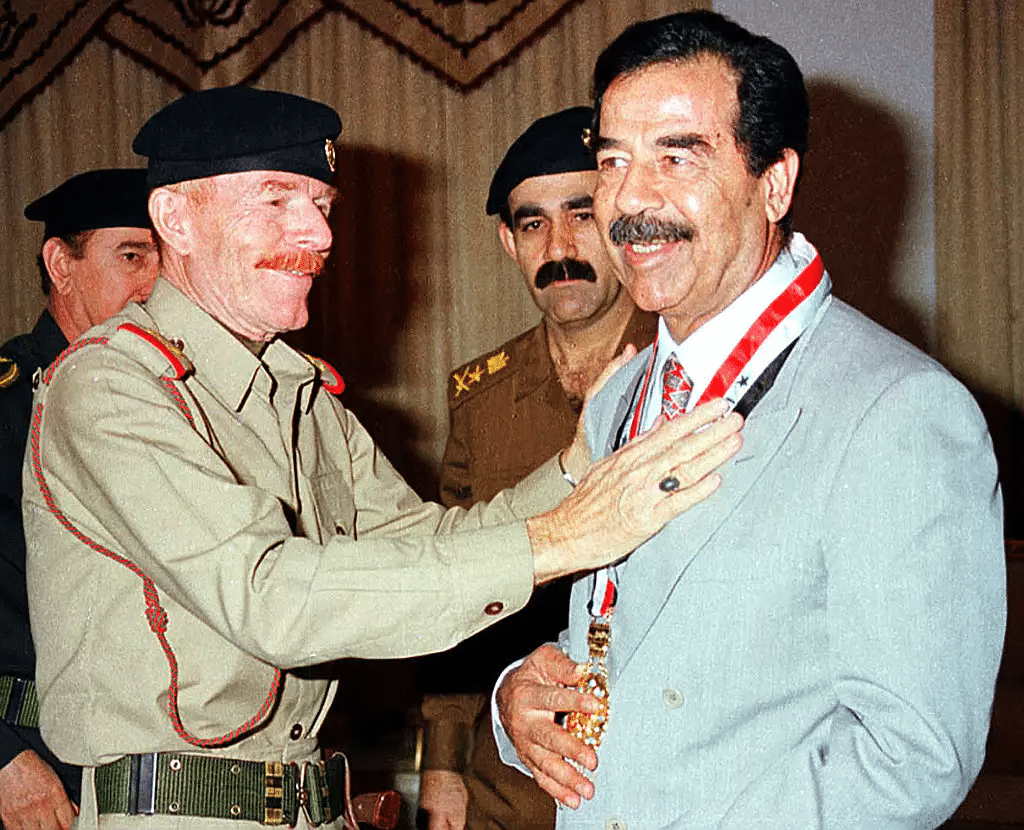
"I think the Lebanese representatives are taking a cautious approach, and I don't necessarily blame them. In some ways, I even understand why they're doing it. They were there when President Obama signed the nuclear deal with Iran, and they were the ones who paid the price when Iran received billions of dollars in sanctions relief – and a large portion of that money went to Hezbollah. In practice, it is the IRGC that controls Hezbollah, and through that effectively controls large parts of Lebanon."
She adds, "It takes a great deal of courage, and I think there is certainly a will among many of Lebanon's leaders to break free from Iran's influence and from the shackles Hezbollah has imposed on the country. I think they would be glad to be rid of it. I think they have a weak government institutionally and a weak military, and they need support.
Ortagus describes the economic dynamic that defined Lebanon from the 2006 war through October 7. "Lebanon promised the US and the world that it would disarm Hezbollah, and it always managed to do just enough to stay above the minimum threshold that wouldn't anger us. On the other hand, our funding, along with that of the rest of the international community, was just enough to keep them afloat. So it was a kind of chicken-and-egg game."
Facing that dynamic are clear American expectations. "I also understand where members of Congress are coming from when they demand that all our partners and allies – not just Lebanon – be accountable to the American taxpayer. If you're a country receiving US military funding, our Congress, and especially this president, will expect you to take certain actions to justify it."
Ortagus describes what she expected of Israel during the contacts she managed, despite the challenges. "I really pushed Israel and the IDF to work with Lebanon. I said we need to help them if and when they're ready for it. The problem is that Lebanon has a system riddled with systemic corruption, and that touches the military too. But the positive aspect of the military is that it's an institution that enjoys significant trust among the Lebanese public. So there's something to work with there."
Diplomacy under fire
The Lebanese side is still hesitant about a head-of-state meeting, but that doesn't trouble Ortagus. "When the time is right, that meeting will happen. Aoun is the president, and he has taken very bold steps to lead this negotiation, but Prime Minister Salam matters too – the government answers to him."
She elaborates. "Lebanon has a system where any agreement reached won't just require a vote by Nawaf Salam's cabinet – there's also the parliament, which is of course led by Speaker Nabih Berri and the Shiite bloc, and they will have a say as well."
Asked whether a peace deal with Lebanon is realistically achievable before the end of the current administration, Ortagus takes a measured view. "I certainly hope so. I think it will take time – it won't happen overnight." But she adds, "It was very smart of Rubio to host the ambassadors, and for the American side to take ownership of the process."
"It's important to acknowledge my dear friend Michel Issa, who has done exceptional work and advanced the negotiations to the next stage. He managed to bring the issue to President Trump's attention, and that is what led to the situation we're seeing today on the path to peace between Lebanon and Israel."
She understands that a peace agreement between Israel and Lebanon would be an unprecedented achievement. "Peace with Lebanon is in many ways one of the most important relationships, one of the most important places for Israel to reach peace – it's the neighborhood. I remember that one of the IDF commanders who came to one of our meetings through the mechanism lived just 15 minutes from where we were sitting. And so it is a tragedy when two neighbors cannot meet, talk, and exchange ideas between their people."
Ortagus identifies who she believes stands to gain the most from peace between the two countries. "I think Lebanese Shiites are excellent businesspeople. I always enjoyed meeting and talking with them. I have no doubt that the biggest winners from peace between Lebanon and Israel will be the country's Shiite citizens. Who is most affected when Hezbollah drags Israel into war? The Shiites. They will gain the most – not only because you won't see them uprooted from their communities again and again, dealing with destruction and loss of life, but because within a very short time, the strongest business ties that will form between Israel and Lebanon will likely be with Lebanese Shiites."
Finally, she draws the line connecting the Iranian front to Lebanon and the region as a whole. "I hope and pray that the president's efforts to confront Iran and put it back in a box will succeed, because ultimately every success we achieve in the region will flow from what he has done with Iran and how he finishes the job. Success or failure depends on his decisions and actions on Iran, which have been the toughest of any president in the last 47 years. The 47th president of the United States is being called upon, after 47 years, to finally stand up to this vile regime."