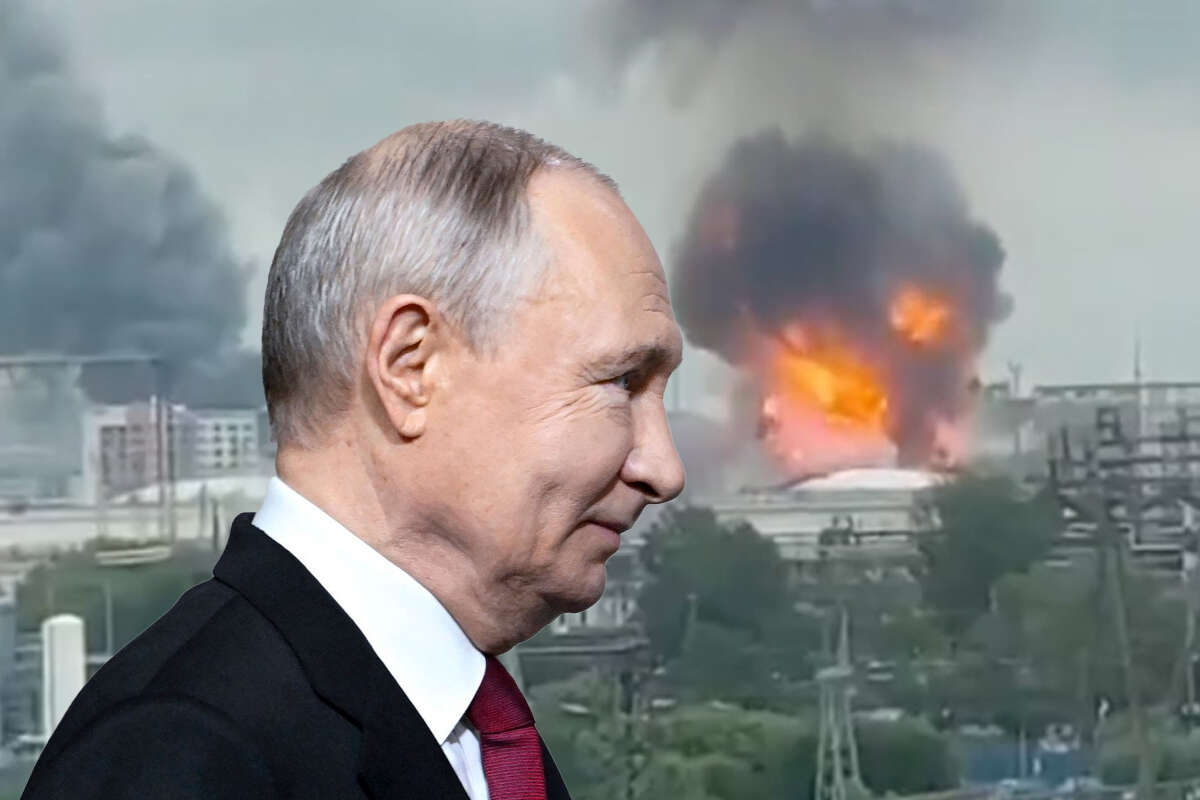
Ukraine attacked a refinery on the outskirts of Moscow on Thursday, in what was one of the largest strikes on the Russian capital since Putin's army invaded Ukraine in February 2022, according to the Russian news agency. Moscow Mayor Sergei Sobyanin said around 190 drones were intercepted near the capital, while Russia's Defense Ministry reported the interception of more than 500 drones across the country overnight.
Flames and plumes of black smoke rose above the refinery in the Kapotnya district in southeastern Moscow, while a sharp, unpleasant smell lingered in the air throughout the morning, according to reports by major news agencies. This was the second time this week that Ukraine attacked the refinery, after Tuesday's strike led to its temporary shutdown.
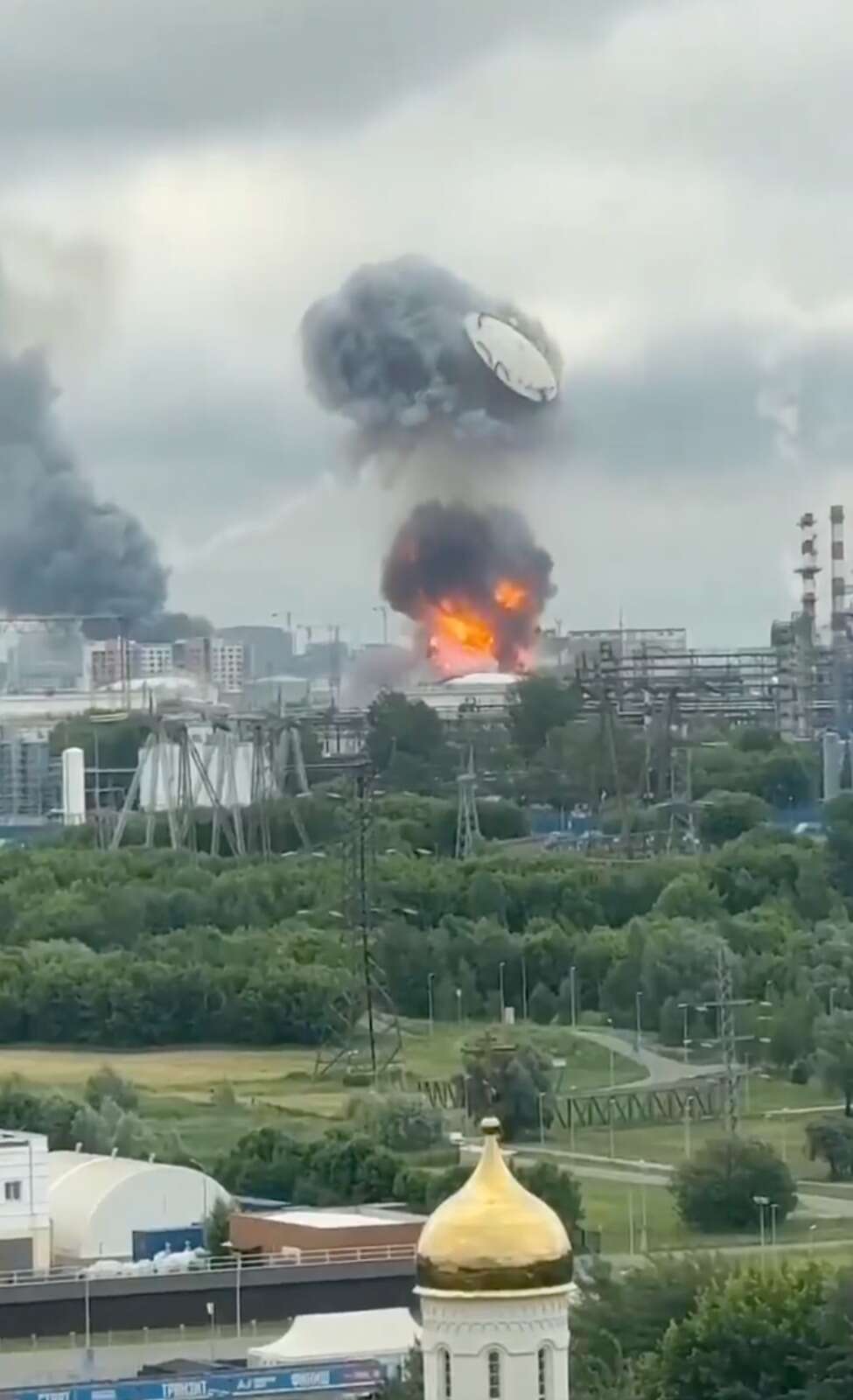
Dramatic videos circulated Thursday morning showed Ukrainian cruise missiles and drones striking the refinery, with columns of black smoke rising above the southern skyline of the Russian capital. One video showed the roof of a fuel storage tank being blown into the air by the impact. Another showed a Ukrainian drone being intercepted before falling onto a warehouse and setting it ablaze. Across the Russian capital, drones could be seen making their way toward their targets as Russian civilians looked on in astonishment at the scale of the attacks.
— Defense of Ukraine (@DefenceU) June 18, 2026
Ukrainian media reported that the weapons used in the attack included locally made Flamingo cruise missiles. Ukrainian President Volodymyr Zelenskyy praised the attack on social media, calling it "a completely justified response" to Russian strikes on Ukraine. "It is time for this war to end, and Russia must take the necessary steps in diplomacy," he added. Zelenskyy has called the strikes "Kyiv's long-range sanctions."
"If Ukraine burns, your Moscow will burn too," Zelenskyy told journalists. "We do not want this war and never wanted it, but if Putin does not want to end it, we will not sit quietly. We said we would reach them, despite Moscow's three rings of air defenses." Zelenskyy called for increased international pressure on Moscow: "Sanctions, the shadow fleet, energy, banking, weapons, everything possible, so that the Russian people begin to feel that one man is fighting, Putin, and they are paying the price for it."
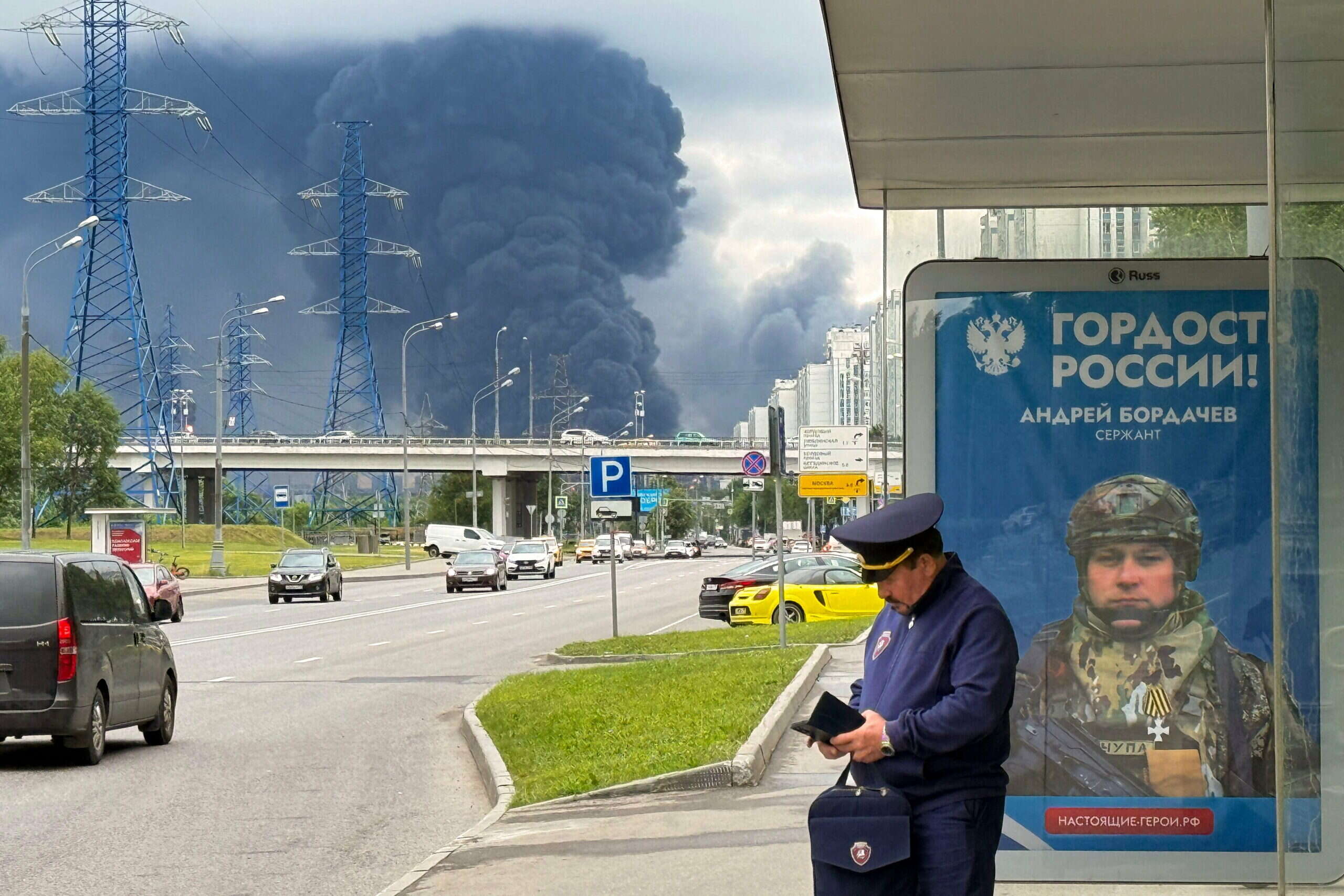
Moscow Region Governor Andrei Vorobyov reported additional strikes in cities on the outskirts of the capital, where an apartment building, a shopping center and a private home were hit. One woman was lightly injured. Following the attack, operations at Moscow's four airports were suspended for several hours, and hundreds of flights were delayed. At Sheremetyevo Airport, Moscow's busiest, passengers were evacuated to "safe places," and some passengers were even removed from planes standing on the runway.
This was the second time this week that Ukraine attacked the Kapotnya refinery, which produces about 70% of the Russian capital's fuel consumption. The previous strike, on Tuesday, led to a temporary shutdown of the facility. Earlier this month, Kyiv also attacked St. Petersburg while Putin was hosting an international economic forum there. Since then, videos have circulated showing interception systems being installed by helicopter on the roofs of Moscow skyscrapers.
In May, according to Bloomberg, Ukraine broke its wartime record with 16 separate attacks on Russian refineries in one month, with 10 facilities hit in the first half of the month and six of them forced to halt operations.
Crimea under siege
Thursday morning's attack is part of Ukraine's campaign of attrition against Russia's oil industry, aimed at cutting off the oxygen supply of the Russian war machine and forcing Moscow toward a diplomatic solution. Reuters reported Wednesday that Russia, the world's third-largest oil producer, is expected to import gasoline by sea, an unusual move for a country that is usually among the world's major exporters, according to four sources in the oil industry.
The attack comes on top of a fuel crisis that has already been hitting Russia for weeks. In Moscow and St. Petersburg, major gas station chains have limited the amount of fuel allocated to each customer.
In the Crimean Peninsula, seized from Ukraine and annexed by Russia in 2014, the worst fuel crisis since then is developing. Residents are limited to just 20 liters of gasoline a week through prepaid coupons, lines stretch for hours, and the authorities have set up an emergency hotline for tourists stranded on the peninsula. The crisis is a direct result of the Ukrainian strike campaign that is cutting off the peninsula: long-range drones that disable refineries deep inside Russia, and medium-range drones that hit fuel trucks and bridges carrying fuel to Crimea, including to Russian military bases there.
In the hours after the attack, Putin was photographed with Southeast Asian leaders at an ASEAN summit in Kazan, about 700 kilometers (435 miles) from Moscow, and did not mention it at all in his opening speech, part of his ongoing effort to project stability. On the sidelines of the summit, his foreign policy adviser, Yuri Ushakov, rejected Western assessments that the balance of power on the front was shifting in Ukraine's favor. "The Europeans insist that the war continue, based on the completely false assumption that the situation on the battlefield is turning in favor of the Ukrainians," he told Russian media.