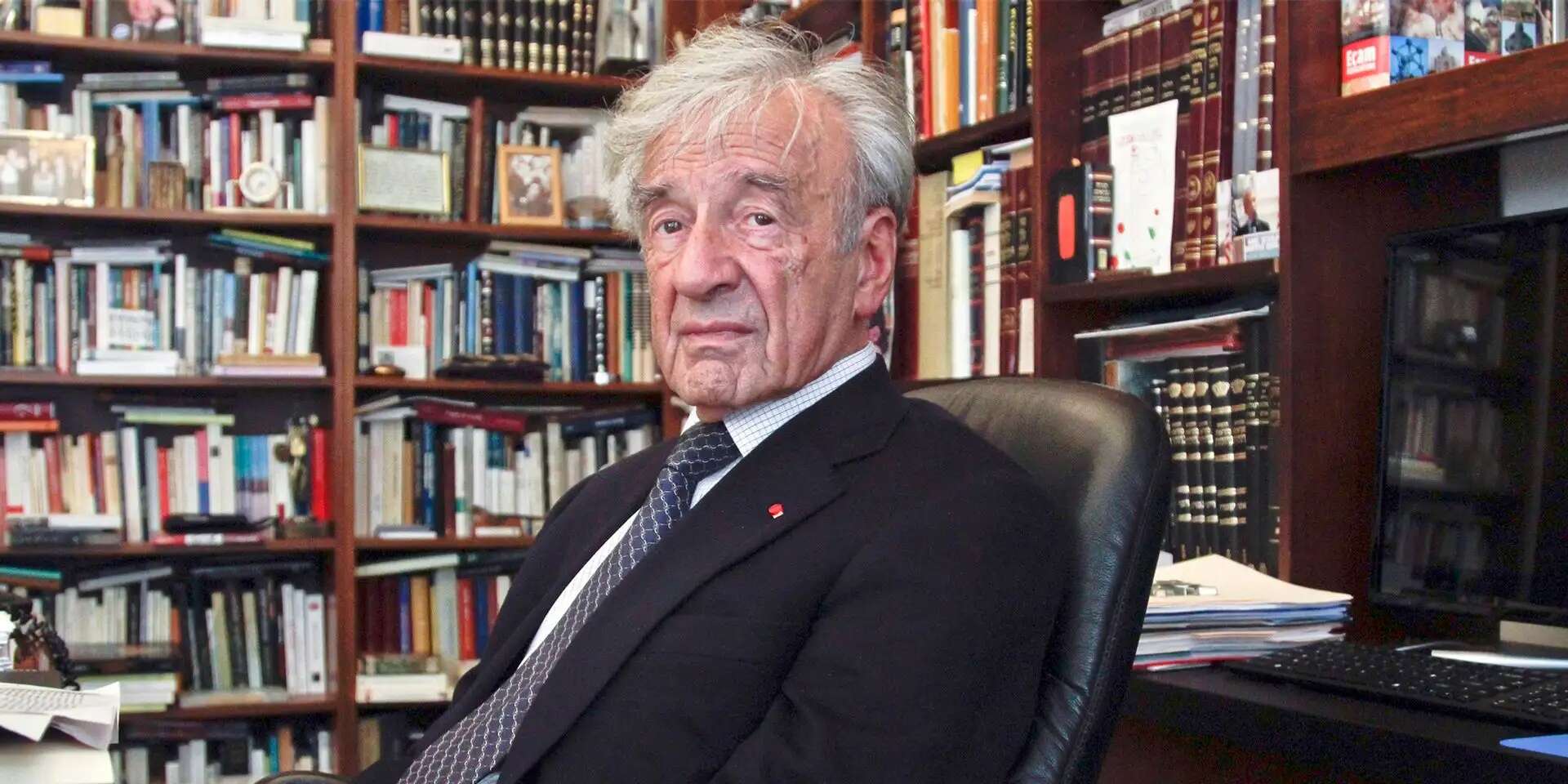
"I have not lost faith in God. I have moments of anger and protest." Elie Wiesel returned to this sentence, in various forms, many times after the Holocaust. Almost every time he was asked how he continued to believe in God during and after the Holocaust, he would answer: I am a believing Jew, but my faith is "a wounded faith." In his autobiography, "All Rivers Run to the Sea," he devoted a special chapter, brief but separate, to the subject of his personal faith during the Holocaust and in the years that followed.
This is what he wrote: "Nothing can justify Auschwitz. Even if God himself were to offer me a justification, I believe I would reject it. Treblinka erases all justifications and all answers.
"When God allowed all this to happen, he said something to humanity, and we do not know what it was. That he suffers? He could have, he had to, end his own suffering by stopping the deaths of the innocent who died sanctifying his name. I do not know why he did not do so, and I think I never will."
Wiesel grappled with these difficult questions throughout the 70 years of his life after the Holocaust. In none of the 57 books he wrote is there an answer to the questions of faith that arose within him. There are tentative steps, searches, doubts, but no answer. In doing so, he justified what his mother had taught him, when each day upon his return from school she would ask him: What good question did you ask the teacher today? It is not the answer that matters most, but the question. The struggle with the eternal question accompanied him in every step he took in life, leading him to a great deal of writing in many forms, all of it a search for an answer that never comes.
I placed on the writing desk three highly original and unique works Wiesel wrote in the 1970s. For the Israeli reader, this is a first acquaintance, a first encounter, with each of the three. In each one, Wiesel dealt with the eternal question that preoccupied him for 70 years.
For the Israeli public, this is a first and highly distinctive taste of Wiesel's works, 10 years after his death this month. The three works, in the order in which they were written, are "Ani Maamin" ("I Believe," 1973), "The Madness of God" (1974) and "The Tale of a Niggun" (1978). There is a direct link among the three works, which reflect Wiesel's intellectual confrontation with Jewish faith after the Holocaust. "There were those among us to whom the Holocaust appeared as a new Mount Sinai, a Mount Sinai of darkness, who knows what hidden message it reveals ... This school of thought, to which I belong, attributes to the Holocaust a mystical dimension beyond the power of language and imagination."
All the practice of the religious way of life he had known in his parents' home in Sighet, Romania, was shaken in the death camps. After his liberation from Buchenwald in April 1945 and his move to an orphanage in France, he began a new chapter in life. In one of our conversations, and there were hundreds, he told me: "Anyone who entered a death camp, even for only five minutes, and saw what he saw, emerged as another person, a different person, a person forced to begin a new life, without yet knowing what it would be." He was a philosopher, and therefore refrained from describing only the past. He looked at the new reality and thought and reflected on the question of what Judaism would be like after the revelation at the new Mount Sinai. "I rebel against God's ways," Wiesel said, "but I simply cannot divorce myself from him. I had a crisis of faith, a very severe crisis, of course. For me, the questions remained open. If I were to say that I believe in God's justice and holiness, then the problems would be solved and everything would be all right. But I say that everything is not all right."
Elie Wiesel often told me about his ties with the Lubavitcher Rebbe. I found some of the letters they exchanged, read them, and wanted to hear more about what the Rebbe told him regarding the questions that preoccupied him. "You already know," he told me, "that I was friendly with the Lubavitcher Rebbe, and after all you found and read some of his letters. I asked him," Wiesel recounted, "how one can believe after what happened. He said to me, 'How can one not believe?' I said to him, 'If you have now given me an answer, I do not accept it. But if you have given me another question, I do accept it.' There is no explanation. If God himself were to appear in a dream or a vision and give me an answer, I would say that I do not accept it. You now ask where God was during the Holocaust? I have no answer to that. I have no answer."
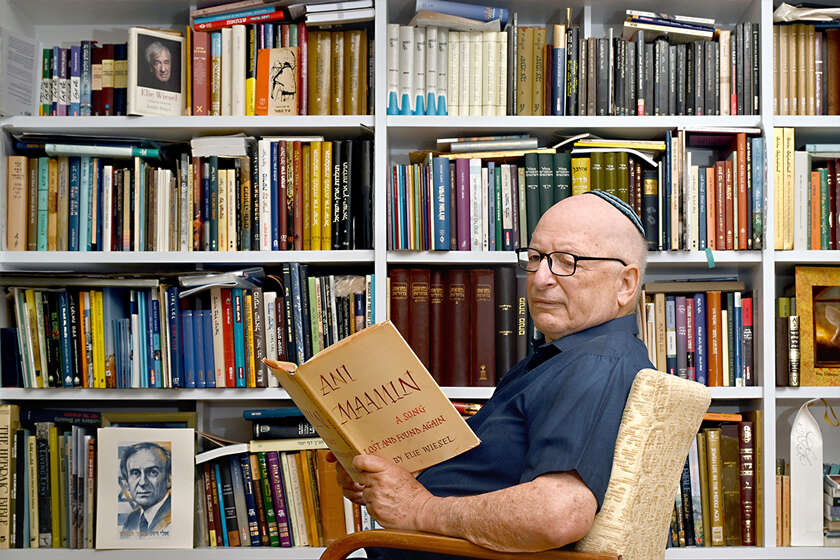
"Ani Maamin"
For eight years I had the privilege of working with Elie Wiesel: eight years of a daily phone conversation from New York to Boston at the start of each workday, eight years of strict adherence to a long monthly meeting, seven hours in his New York office, eight years in which I asked Wiesel hundreds of questions that arose from hundreds of thousands of documents in the archive.
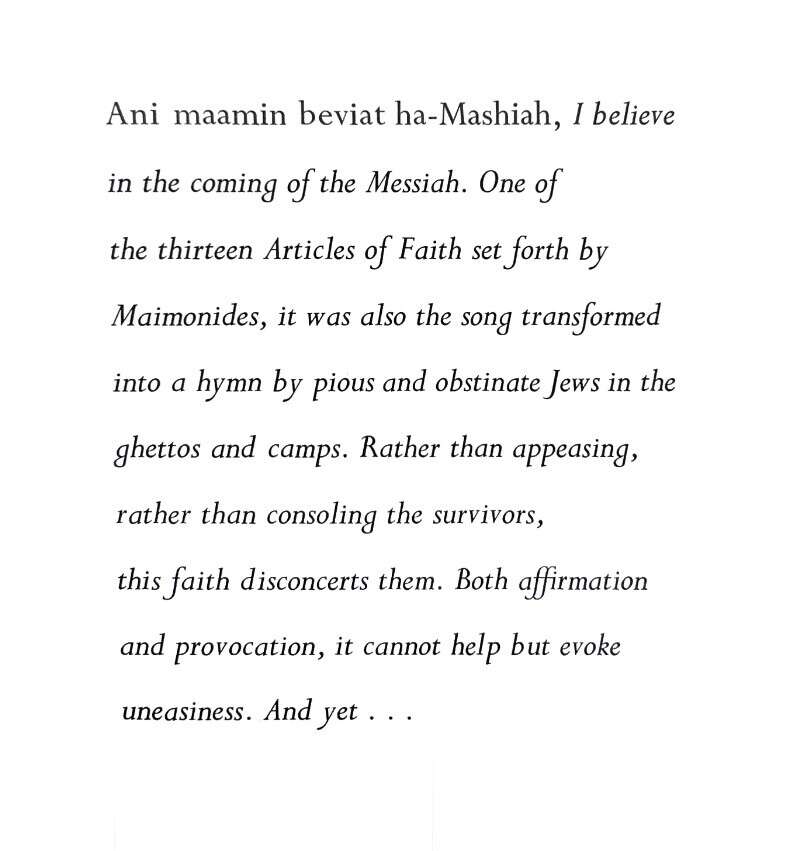
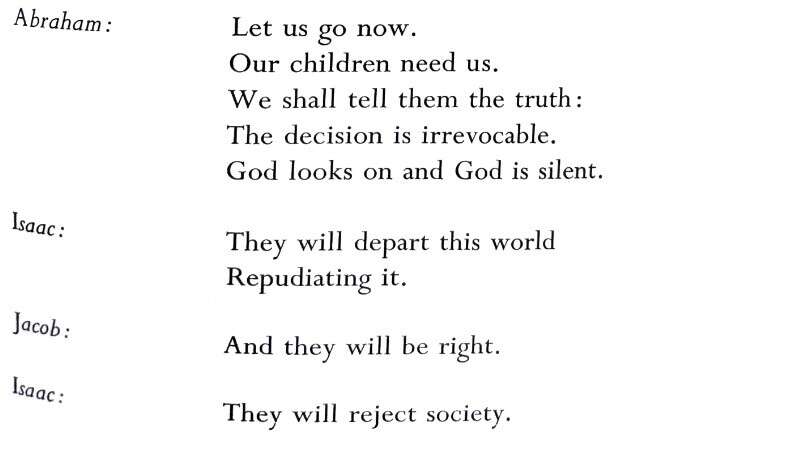
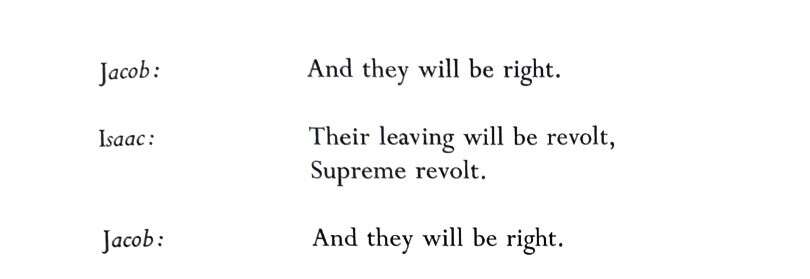
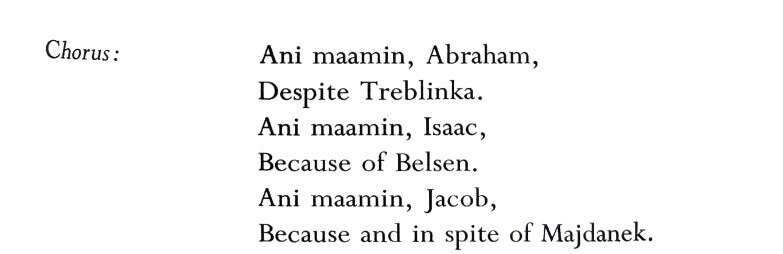
The Hebrew manuscript of the cantata "I Believe" was discovered entirely by chance. One day, I found in the archive a letter in Hebrew sent from Kol Israel in Tel Aviv, where I had worked for decades. The letter was signed by Ephraim Stan, and its subject was the translation of "I Believe" into Hebrew. From the documents, I knew the cantata had been set to music by the renowned French Jewish composer Darius Milhaud, and that the conductor at the New York concert had been Lukas Foss, also Jewish. The three Jewish creators had witnessed the Holocaust of European Jewry with their own eyes. But where was the Hebrew version, surely adapted for an Israeli audience? With the help of Tamar Harel, the legendary secretary-producer of the drama department in Tel Aviv, we managed to locate a crumpled copy of the cantata, translated by the wonderful translator Ada Brodsky. Like many of Wiesel's works, this cantata was written against the background of the Holocaust, following a story he had been told that Jews in Treblinka went to their deaths singing "Ani Maamin." Wiesel found it difficult to believe the shocking story, and he enlisted Abraham, Isaac and Jacob, the patriarchs of the nation, to ask the God of Israel how he could allow the terrible annihilation, where he was in his people's most difficult hours, and why he did not intervene for the sake of his people's future, for the sake of the children whose blood was spilled like water.
Three actors, playing the three patriarchs, along with a narrator, choir and orchestra, took part in the performance of the cantata, which was broadcast in Hebrew on Kol Israel on Holocaust Remembrance Day as part of the program "The Curtain Rises." I was not surprised. The radio director and head of the drama department, Ephraim Stan, was himself a Holocaust survivor from the city of Zolochiv in eastern Galicia.
From the text of the cantata, I chose to present the opening passage and the section in which the patriarchs debate the 1.5 million children murdered by the Nazis. The extermination of young children, who were the future of the people of Israel, occupied Wiesel until his final day.
The Madness of God
Elie Wiesel was deeply versed in the Jewish bookshelf. His books on figures from the Bible, the Talmud and Hasidism testify to the breadth and depth of his knowledge. The fact that for 17 years he was the sole "hevruta," or study partner, of Prof. Saul Lieberman, of blessed memory, the great scholar of Talmud, attests to the value of his books, whose first readers were the Lubavitcher Rebbe, of blessed memory, and Prof. Lieberman, of blessed memory. In his autobiography, he wrote, "Abraham and Moses, Jeremiah and Rabbi Levi Yitzhak of Berditchev taught us that it is permitted to summon God to a Torah court, provided it is done in the name of faith in God." He made good use of that permission and brought the true story of three rabbis who summoned the God of Israel to a Torah court. In his book "The Gates of the Forest" (translated into Hebrew by Yaakov Hasson), he describes the event he witnessed in the Buna-Monowitz camp, Auschwitz III:
"I will tell you a story. It is short and simple. In a concentration camp, one evening after work, a rabbi gathers three of his friends, renowned Torah scholars, and seats them as a special court. Standing upright, his forehead raised, he says these words to the judges: I wish to put the Holy One, blessed be He, on trial for murder, because he is murdering both his people and his Torah, which he gave them at Mount Sinai. I have evidence that cannot be refuted. Judge as you would judge, without fear, without favoritism, without sorrow. Whatever you might have lost was taken from you long ago.
"The trial was conducted according to law: witnesses testified for the prosecution and witnesses testified for the defense, the prosecutor and defense attorney made their arguments, and the judges deliberated. The verdict, in the opinion of all the rabbis, was: guilty.
"But still, this was not the end. Wait for the conclusion. Know that in the end, he had the upper hand. Know that the next day, the accused took revenge and turned the verdict back upon the judges and prosecutors: They were mowed down during the first roll call. I therefore tell you: If there is no meaning to their death, it is an insult; if there is meaning to it, the insult is greater."
In this case, there is not necessarily a trial in the accepted sense, but rather an existential and theological confrontation with God. In the introduction to his play "The Trial of God," Wiesel writes that the play was born from the memory of an event that took place in Auschwitz. There, according to his testimony, he saw three rabbis who decided to put God on trial for allowing the slaughter and terrible murder of his people. One particularly interesting detail is that after the verdict was issued, finding the God of Israel guilty, the participants rose and recited the evening prayer.
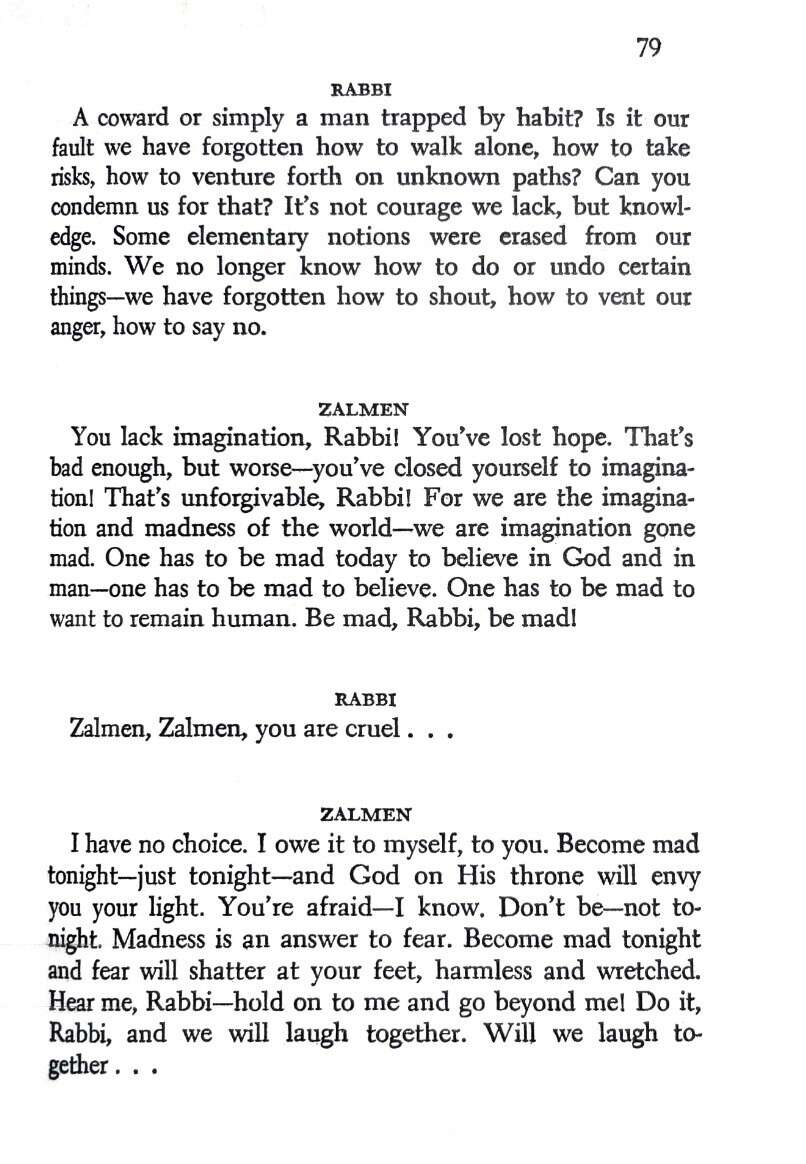
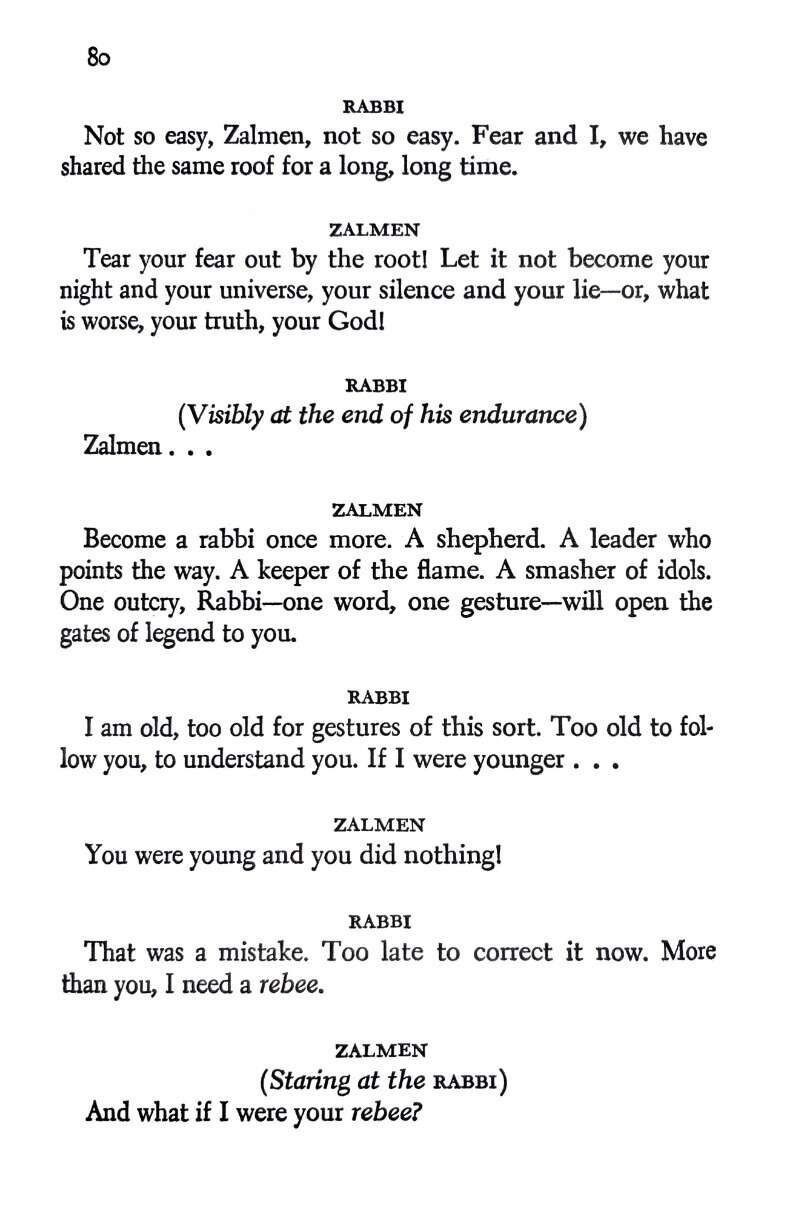
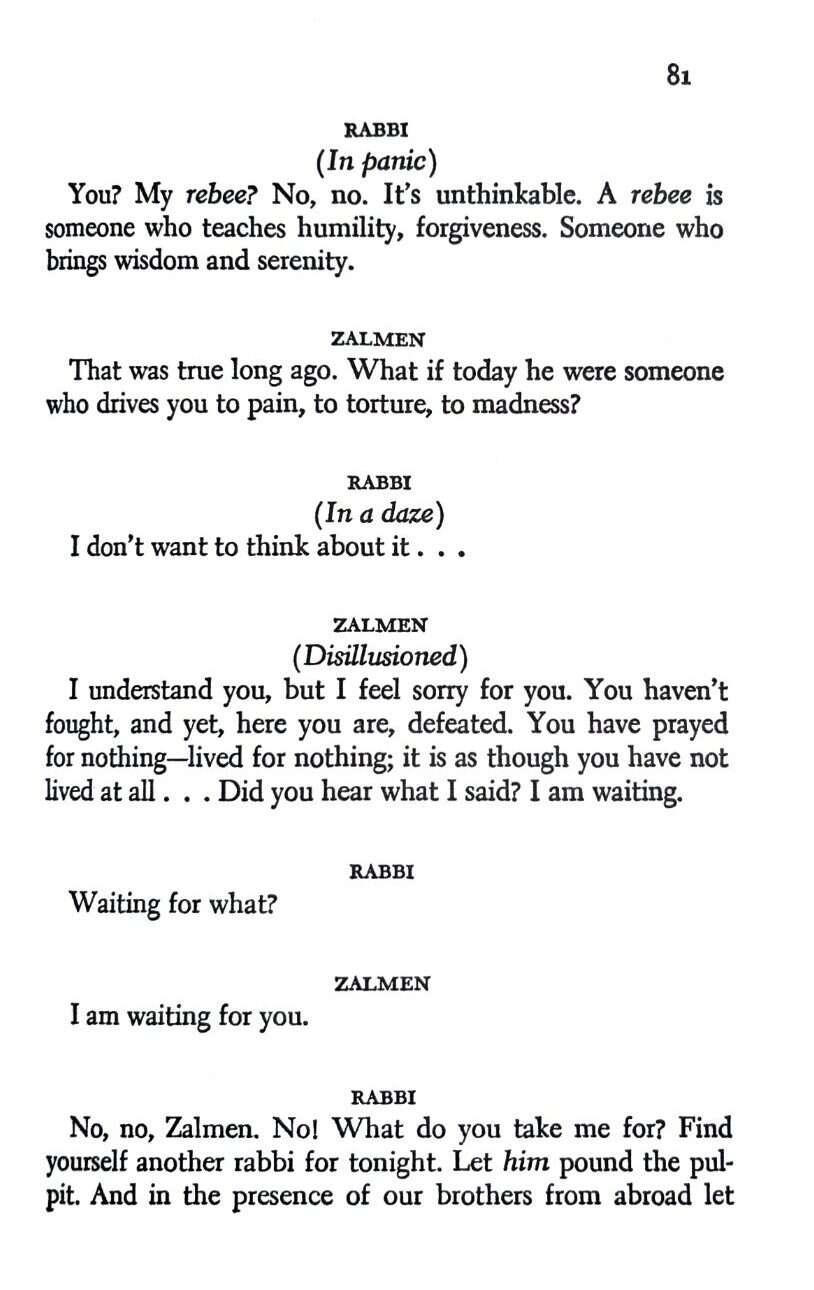
We remain with the thoughts and debates surrounding God and his actions. The play "The Madness of God" was translated into Hebrew by Rina Shani and lay hidden in honor among dozens of other plays in the files of Kol Israel's drama department. No one touched the pages of the play from the time it was aired on the program "The Curtain Rises" until the moment I became interested in it, found it in the files and redeemed it. Had I not taken it, it would have been thrown away, like its neighbors, dozens of plays that came before and after it, along with the many folders that were tossed into the garbage bin that stood near the entrance gate to the Kol Israel studios in the Kirya, Tel Aviv.
The play returns the reader to Wiesel's book "The Jews of Silence," published in 1966, which for the first time publicly raised the question of the future of the 3 million Jews who lived in the former Soviet Union. Wiesel, who had witnessed the physical murder of 6 million Jews by the Nazis and their collaborators, understood that if the Communist regime continued its efforts to erase religion and assimilate the Jews, then within a few short years the Jewish people would lose another 3 million of its sons and daughters.
Wiesel, who came to Moscow as an emissary of the Israeli government's Liaison Bureau during the holiday month of 1965 among Jewish communities in Moscow, Leningrad (St. Petersburg), Kyiv and Tbilisi, began his visit with the Kol Nidre prayer at Moscow's Central Synagogue. The Soviet intention was to gradually erase Jewish memory, the Hebrew language, tradition and the connection to the past.
Zalman, the central character, is a Jewish poet with a Hasidic soul, who believes in the power of the word and the power of the spirit. He represents Jewish historical memory, while facing him stands the machinery of the Communist regime, which seeks to turn citizens into numbers and erase their uniqueness. The original title of the book, which was never published in Hebrew, is "Zalman, or the Madness of God," and it represents the figure of the Jew who preserves memory and believes that memory has moral and religious value. The confrontation between Zalman and the rabbi (Rabbi Levin, who is not mentioned by name) concerns the question of whether Jewish life can be revived and renewed. In the US, the play was staged in Washington at the Kennedy Center for the Performing Arts and was a great success.
The tale of a niggun
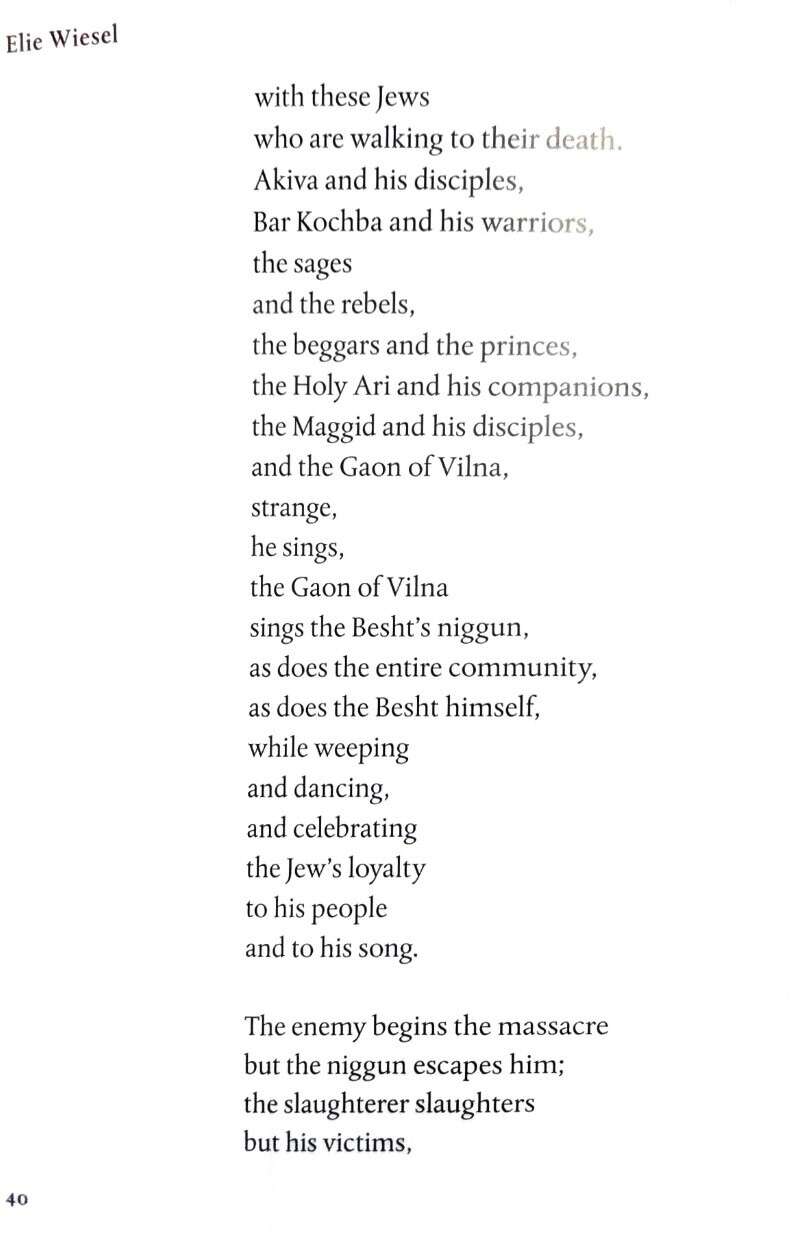
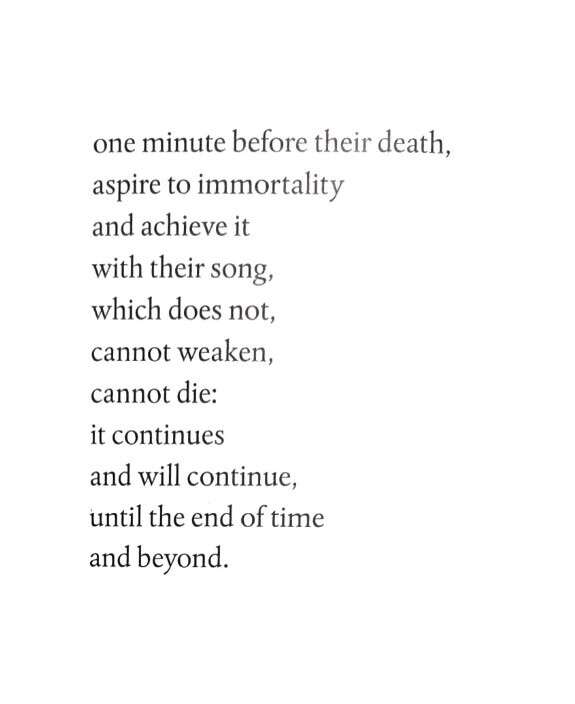
One day, I found in the Wiesel Archive a printed copy of a poem in English, "The Tale of a Niggun," which Wiesel wrote and which was printed in 1978 in a book honoring his friend Rabbi Prof. Wolfe Kelman. Like many books written in honor of distinguished figures, this book all but disappeared, and with it the special poem was also consigned to obscurity. I believe that in Israel fewer than a minyan, fewer than 10 people, knew about it. For more than 30 years, the beautiful poem waited until a Jerusalem publisher, the late Michael Pomeranz, decided to publish it in English in a modest volume, thereby giving Prof. Daniel Reiser, who teaches Jewish thought at Herzog College, the impetus to undertake the translation of the poem into Hebrew and write a full explanation of the struggle of faith described in it.
"The Tale of a Niggun" is a fascinating work that connects well with the other two hidden works. Although it was translated four years ago, the poem remains unknown to this day in English or Hebrew, and only a handful of people study or teach it. For Wiesel, the niggun is not merely music. It is memory, it is faith, it is the soul of the Jewish people. The virtue of the niggun is that it gives expression to what we struggle to say, and therefore it becomes the bearer of the memory of Jewish faith and identity. Thus, it emerges that the niggun cannot be erased, and it carries memory from generation to generation.
In his introduction to the Hebrew translation, Prof. Daniel Reiser wrote: "'The Tale of a Niggun' begins with a cruel and tragic incident. The Nazis, or 'the enemy' in Wiesel's language, demand that the leaders of the Jewish community in 'a ghetto / somewhere in the East / during the reign of night' hand over 10 Jews on the date of the holiday of Purim. The enemy does not hide his purpose: death by hanging. This is as an act of revenge for the hanging of Haman's 10 sons by the Jews in Shushan, the capital of Persia, some 2,400 years earlier: 'Tomorrow is Purim / and the enemy / who plans to avenge the 10 sons of Haman / will hang 10 of our own.'
"The poem's prologue contains several components. First, it is not the enemy who chooses the victims, but rather he imposes this terrible task on the heads of the community, namely the Judenrat. Second, this act is presented as revenge by the Nazis, when in practice it is undoubtedly abuse of the Jews and certainly also a desecration of Judaism. Third, the leaders of the community are unwilling to make a decision and choose 10 Jews. Instead, they turn to the 'rabbi of the ghetto' to give his word, decide and issue a halachic ruling for them. The rabbi, shaken by the question to the depths of his soul, trembles all over, asks to be left alone with his books for an entire night, and promises to give the community leaders an answer by morning light. To our astonishment and sorrow, all three elements that appear in the prologue are not the product of Elie Wiesel's imagination, but are founded on the bitter and tragic pillars of historical truth."
Three keys
Elie Wiesel, who died 10 years ago this month, left us a broad and rich literary and philosophical legacy. Three "hidden" works are like three keys to understanding the intellectual struggles that preoccupied the Jewish people in the second half of the 20th century and in the 21st century.
Dr. Yoel Rappel is a senior researcher at the Institute for Holocaust Research at Bar-Ilan University and the founder and director of the Elie Wiesel Archive at Boston University.