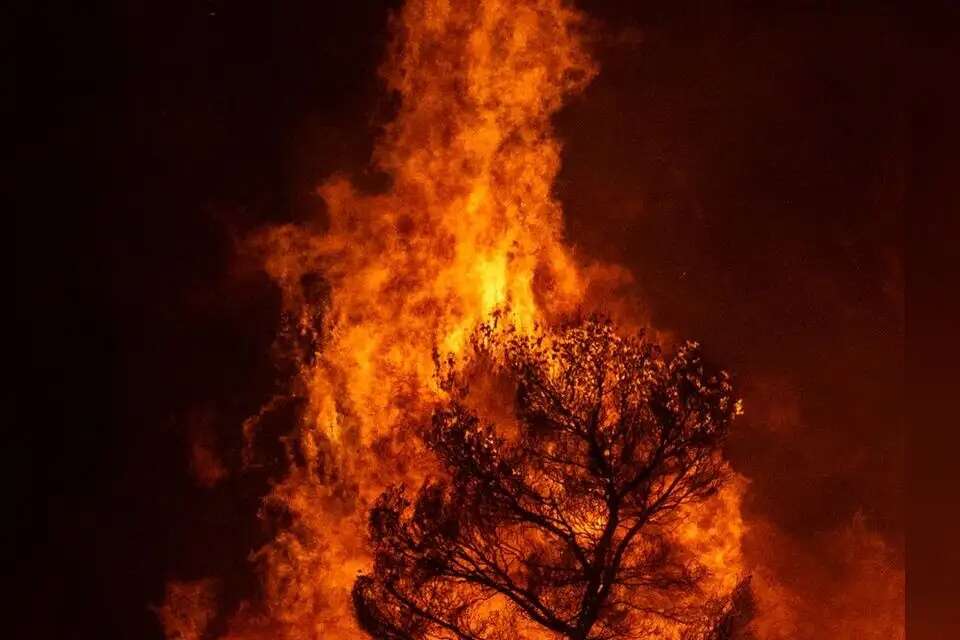
The first respite of the day comes around noon. The temperature levels off at about 35 degrees Celsius (95 degrees Fahrenheit), while the acrid smell of ash, embers and burned wood hangs in the air, refusing to dissipate.
Around 200 people crowd around tables set up in a shrinking patch of shade beside the sports center in the village of Le Porge, west of Bordeaux: firefighters, soldiers, police officers, gendarmes, local government officials and first-aid teams.
The village was evacuated about 14 hours after the fire broke out six kilometers (3.7 miles) away last week. It became known in France as a "megafire." By the time it was brought under control, it had consumed about 420 square kilometers (162 square miles), most of it forest, and forced some 200,000 people from their homes.
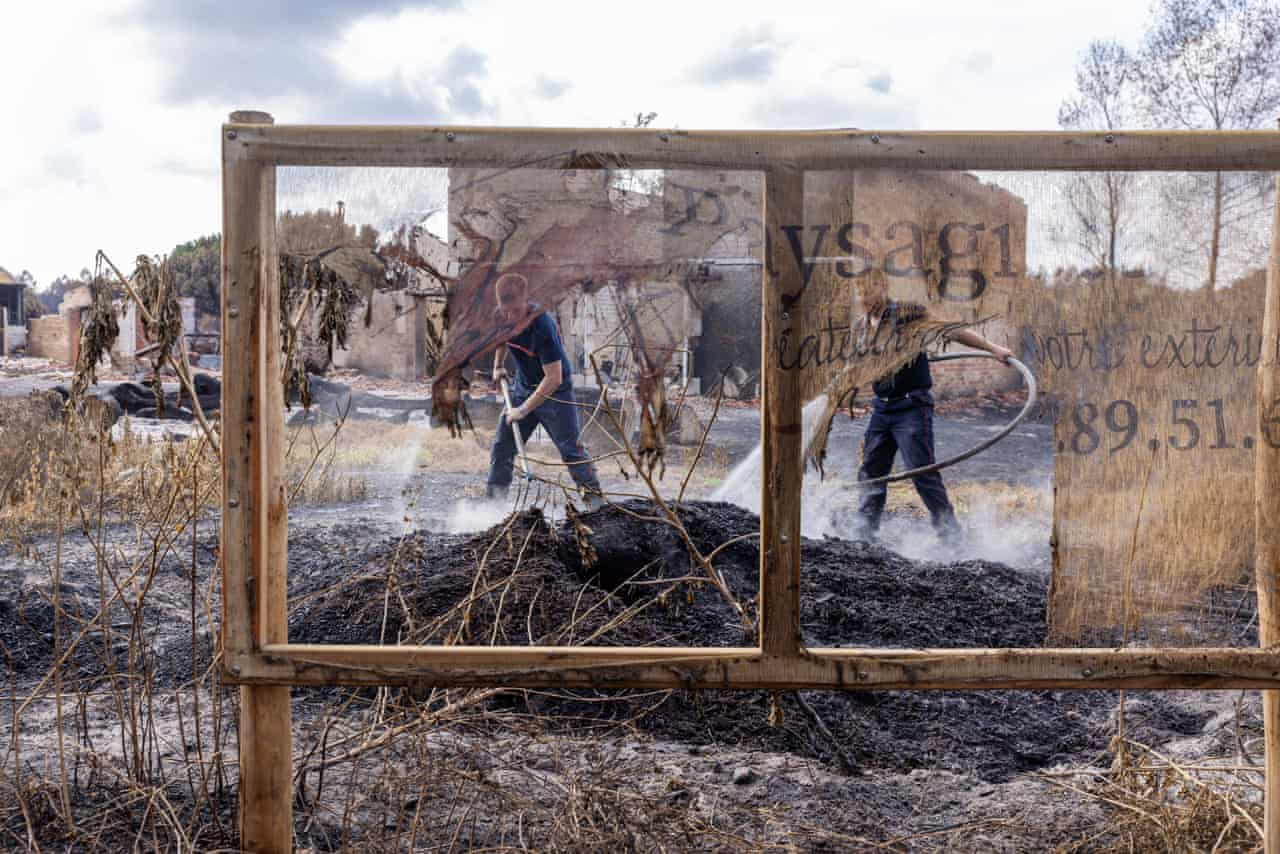
New fires are breaking out every day, and emergency crews, together with hundreds of volunteers, are being pushed beyond the limits of their endurance. "We have passed a turning point, but we are extremely tired," a senior fire officer in Le Porge said. "We stared into an abyss."
Rémy Bossion, 46, already knows what awaits him and his neighbors. His home was damaged in the fire, and he now spends his days cutting 200-meter-wide (656-foot-wide) firebreaks through what remains of the forest, creating a barrier intended to slow the next blaze. "Right now, we are all running on adrenaline," he said. "But the crisis will pass, and then it will become really difficult. That is when we will cry."
Le Porge is not alone. Over the weekend, fires burned across France on a smaller scale, but with the same sense of helplessness.
In the Var region, actor George Clooney and his wife, Amal Clooney, were forced to evacuate their home as the flames approached. Fires also continued to threaten the famous Fontainebleau forest near Paris, as well as Corsica and the Dijon region.
In Britain, 120 firefighters battled a blaze in Suffolk for three days. Spain recorded an unprecedented number of fires for this time of year. In Greece, two firefighters were killed on Crete and a third died while battling a separate fire on the mainland. Thousands of tourists were evacuated from vacation resorts.
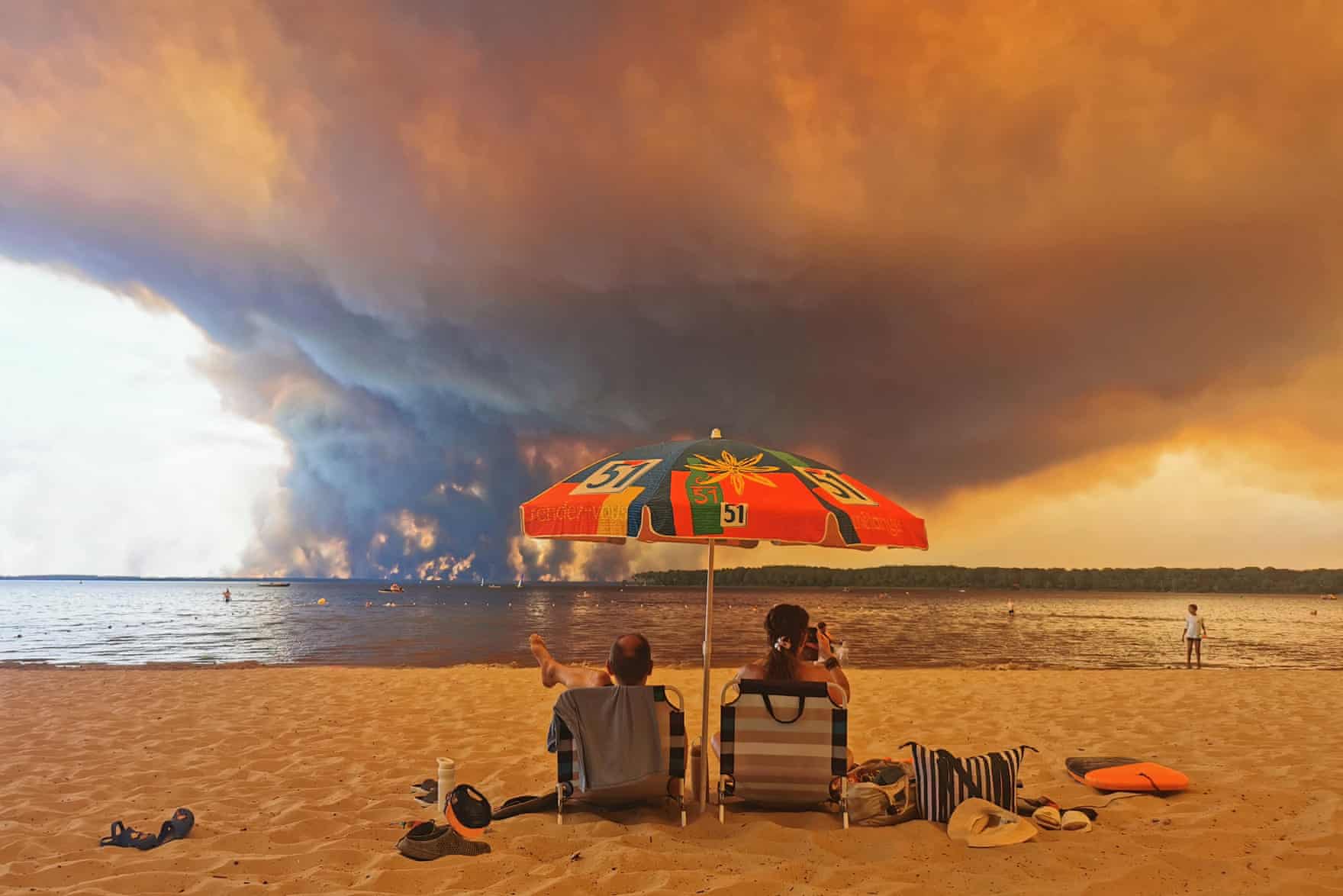
Greek authorities, well acquainted with the dangers of such summers, mobilized nearly 500 firefighters, including teams from France and Romania that had been stationed in the country in advance. They were supported by 19 firefighting aircraft and 11 helicopters.
Local authorities confirmed that homes had been destroyed but said they did not yet have an exact figure. New fires broke out Saturday, and a blaze east of Nafpaktos prompted evacuation alerts in at least four villages.
"The winds are extremely strong and continue to create exceptionally difficult conditions," Greek Climate Crisis and Civil Protection Minister Evangelos Tournas said. Tournas said severe turbulence had prevented some aircraft from drawing water or approaching the fires closely enough to empty their tanks.
New data released by the European Union paints an alarming picture: Weather conditions have broken records this year for this point in the season. Scientists note that climate-change models have been predicting such extreme weather for many years. However, some of the disasters are arriving earlier than expected and with greater intensity.