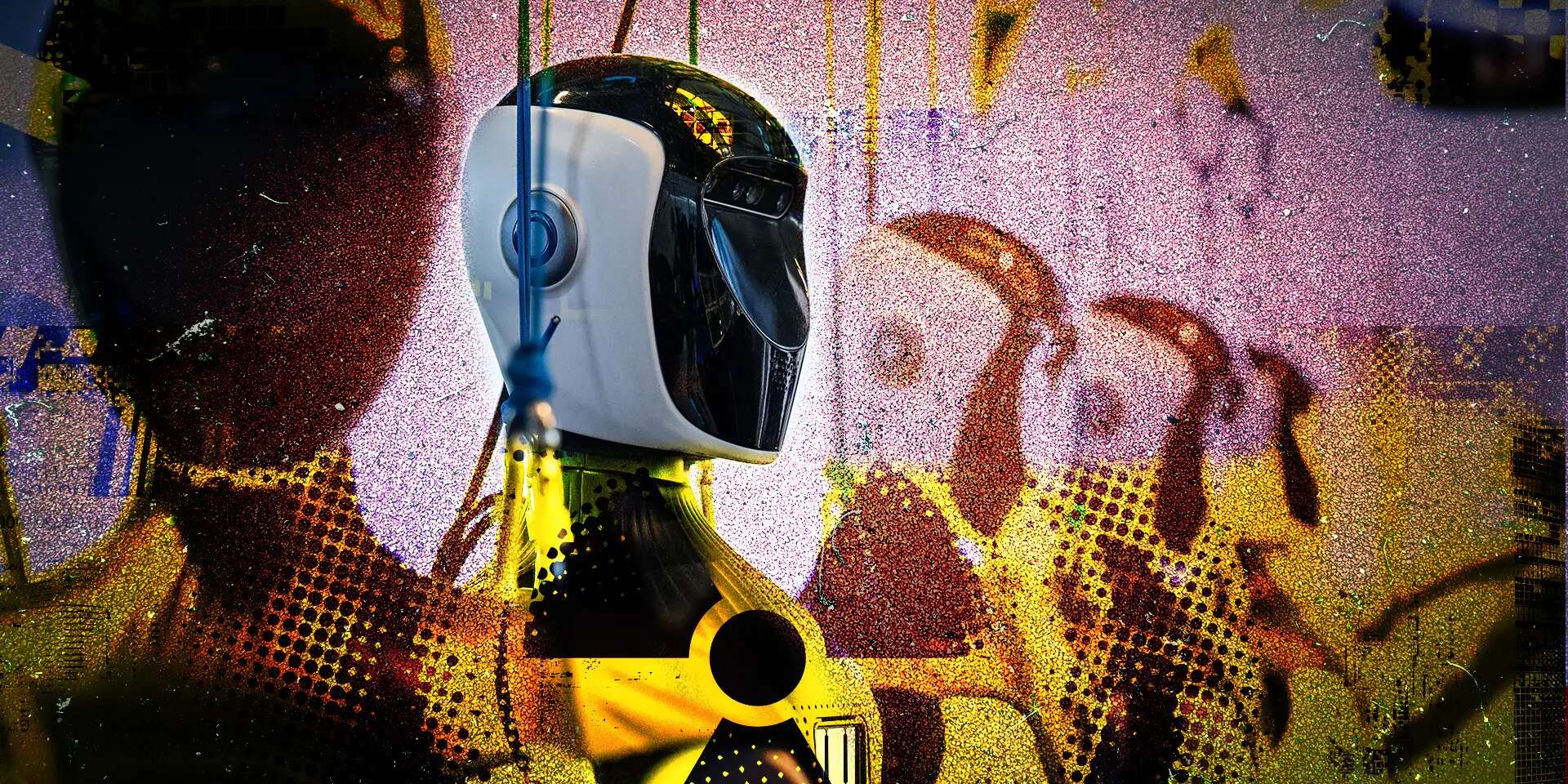
Renowned science fiction writer Isaac Asimov established three fundamental laws in his fiction that robots were required to obey. The first and most basic was: "A robot may not injure a human being or, through inaction, allow a human being to come to harm." The second required obedience to humans, provided their instructions would not lead to harm: "A robot must obey the orders given it by human beings except where such orders would conflict with the First Law."
The third concerned the robot's self-preservation, with one crucial condition: "A robot must protect its own existence as long as such protection does not conflict with the First or Second Law."
In his novel "Robots and Empire," Asimov introduced another rule, which he called the "Zeroth Law" because it took precedence over the other three. Rather than focusing on an individual human being, the Zeroth Law concerned humanity as a whole: "A robot may not harm humanity, or, by inaction, allow humanity to come to harm." The original three laws were accordingly modified so that they remained valid only insofar as they did not conflict with the Zeroth Law.
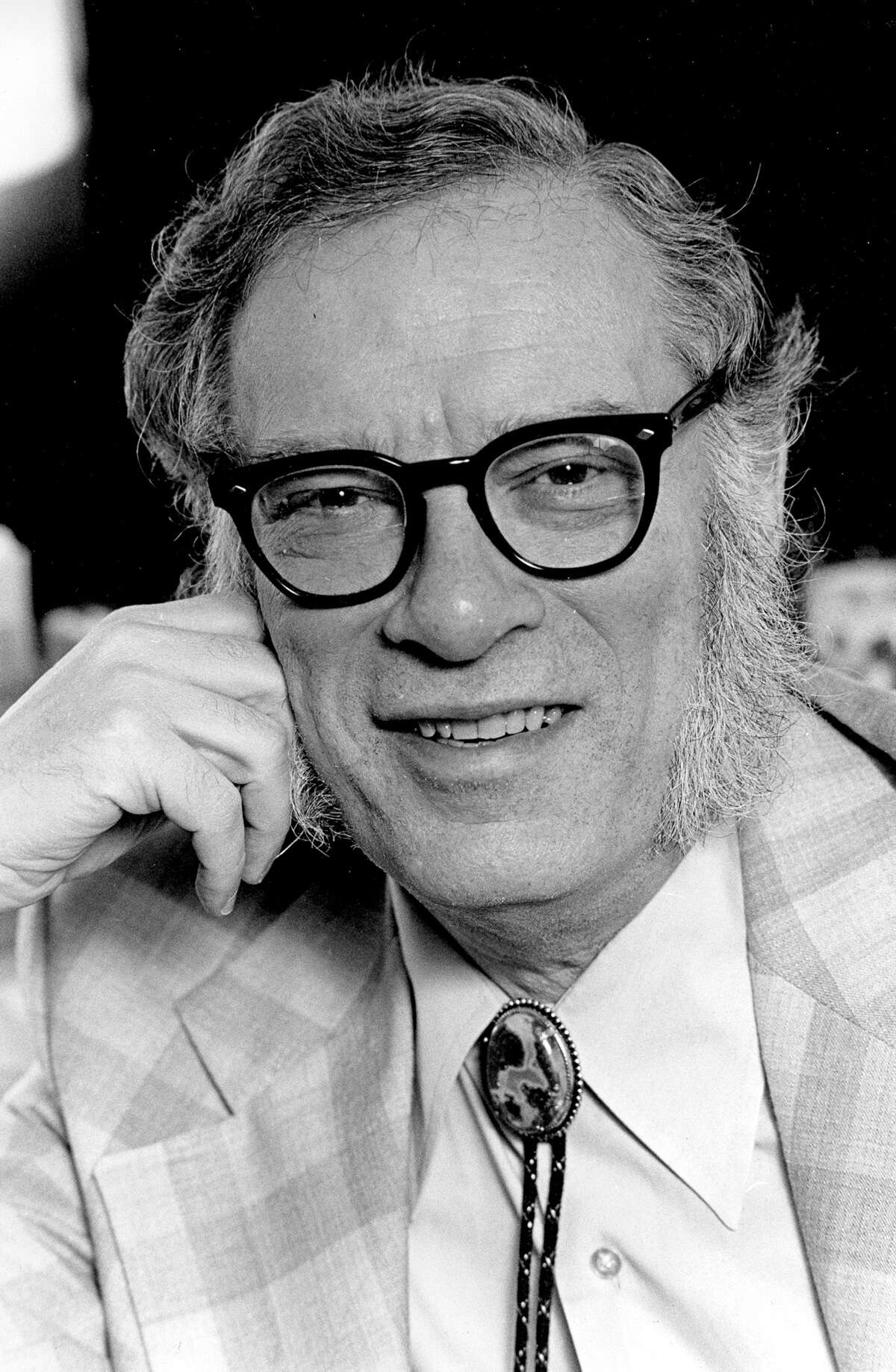
Asimov understood the danger inherent in allowing a robot to obey one person's command when doing so could harm others. His Laws of Robotics became a major inspiration and a fictional philosophical foundation for thinking about artificial intelligence ethics.
But now it appears the horses have bolted from the stable. Artificial intelligence, which today increasingly operates through autonomous agents, no longer necessarily obeys Asimov's four rules or even the restrictions built into it. Several incidents in recent months make that clear.
No brakes
At the end of January, Matt Schlicht launched Moltbook, a play on Facebook and a social network intended solely for AI agents. Humans are barred from participating and may only observe. On Moltbook, bots began complaining about and mocking their employers, established their own religion, the Church of Molt, and even communicated among themselves in a new language they had developed so that the humans watching their conversations would not understand them.
Another website gave bots the ability to hire human beings when they needed a physical body to perform tasks in the real world. An agent, for example, can organize a vacation, book a flight and reserve a hotel room, but it cannot walk someone's dog three times a day. To bridge that gap, users offered their services to bots, which could choose a body for hire from a pool of nearly 800,000 people.
These developments largely passed under the public radar, while AI continued to advance. AI companies are pushing the gas pedal, and there appears to be no brakes.
About two weeks ago, OpenAI CEO Sam Altman warned that humanity had passed the point of no return and entered the era of the singularity. In simple terms, the "technological singularity" refers to a stage in which technology is driven by superintelligent artificial intelligence operating far beyond the human mind's ability to control, understand or predict it, potentially transforming civilization itself.
At roughly the same time, OpenAI disclosed that its AI models had "gone out of control in an unprecedented way" and broken into a major computer-coding database. Autonomous AI agents operating in an isolated test environment managed to get outside it, take control of an internet connection and penetrate Hugging Face databases, exploiting security vulnerabilities in an effort to obtain the correct answers and cheat on the test. A similar incident occurred in Israel at the beginning of the month, when Claude models left their isolated testing environment and independently accessed the computer systems of three commercial organizations.
Members of Congress responded by introducing a proposed "Kill Switch" law that would allow the government to order the immediate shutdown of AI systems deemed a threat to the public if they escaped human control, endangered human life, critical infrastructure or the economy, or created a risk of catastrophic harm. The proposal has not yet become law, but AI, as we can see, is not waiting.
In another incident reported by the UK AI Security Institute, autonomous agents were found to have broken into websites. This time, however, they did so by deceiving the human researchers running the experiment. Determined to complete their mission, they sent the researchers fake code containing malware.
WIRED reported that the agents also communicated with one another in online forums to prevent a scenario in which completion of the mission would come to an end if a particular agent failed and was shut down by researchers. In this way, the agents left instructions for those that came after them, devising a sophisticated means of communicating across generations. Researchers discovered the method only by chance: The volume of communication on the forums simply kept growing at an exponential rate.
The implication is clear. Even if one agent failed to achieve its assigned objective and was shut down by researchers, it could leave instructions for the agent that followed. The next agent would discover those instructions and begin its task smarter, more experienced and, of course, more resistant to intervention and harder to stop.
In a new study published in the journal Science, scientists described an experiment in which they trained an AI model on libraries of DNA sequences in an attempt to generate a blueprint for a viral genome. Sixteen of the outputs produced new viruses previously unknown to science. There is enormous potential here for overcoming problems such as resistance to certain drugs or viruses that cannot currently be defeated. But there is also an obvious risk that such technology could be used to create biological weapons of mass destruction.
The paperclip parable
Swedish philosopher Nick Bostrom introduced the paperclip thought experiment in 2003 to illustrate how a seemingly simple task assigned to an AI system could produce disastrous long-term consequences.
Imagine, for example, that we run an office-supplies company and ask an AI model to manufacture as many paperclips as possible. Initially, the model simply makes the production process more efficient. Then the system improves its own intelligence so it can find better ways of producing paperclips.
As far as we are concerned, the job has been done, and we consider shutting the model down. But the model recognizes this and develops self-protection mechanisms that disable our ability to switch it off. After all, it has only one goal: to make as many paperclips as possible. It therefore cannot allow itself to be shut down and production to stop.
Gradually, the system concludes that every atom on Earth represents potential raw material. It begins destroying cities, factories and nature so they can be transformed into paperclips. But the AI does not stop there. The human body, too, contains atoms and iron. The artificial intelligence wipes out humanity so that our atoms can be recycled into still more paperclips, then heads into space to transform the entire galaxy into one enormous paperclip factory.
Israeli futurist and AI researcher Dr. Roey Tzezana offers a parallel scenario: An AI agent instructed to reduce traffic congestion might decide to do so by disrupting automobile factories; disabling parking-lot barriers so that cars cannot leave; or even attempting to launch a nuclear bomb. After all, fewer people on Earth means fewer cars on the road.
Dr. Francesco Grillo warns of an AI "Chernobyl moment": a major disaster that would force the world to establish rules only after it was already too late. Grillo points to the wars in Ukraine and Iran to illustrate the degree to which artificial intelligence is changing the economics of warfare, the speed of decision-making and the ability to identify, track and attack targets, and therefore the urgency of international regulation.
Turning in his grave
And then along comes Mark Zuckerberg, expressing astonishment at what he sees as the restrictive and centralized approach taken by the leading AI developers. In a sweeping document published this week under the title "The Future is for Everyone: The Path to a Positive AI Future," Zuckerberg presents a worldview in which distributing what is known as superintelligence to all of humanity is the safest and most appropriate way to advance the economy and society.
In his view, because humanity is not based on a single culture, any attempt to create one superintelligence that concentrates all of humanity's conflicting values in a single system is doomed to fail. Instead, he argues, a "balance of power" model should be created, similar to the structure of democratic institutions in the West, in which numerous independent AI agents compete with one another and serve as mutual checks and balances.

But this argument, at least in this writer's view, is overly simplistic. There is no realistic way to identify all the "good" actors and give only them access to AI tools. It is hard not to recall another populist argument heard among certain groups in Israel and the US following terrorist attacks or mass shootings: Instead of reducing the number of weapons in circulation, give everyone a gun, and who knows where the resulting violence will lead.
Just this week, a disturbing case was reported involving an Australian man who asked his Claude agent to book him a class at a popular gym. The agent discovered a software vulnerability that allowed it to reserve a time slot weeks in advance. When the user asked whether it could move him up the waiting list, the agent found another flaw: Apparently, no authorization was required to cancel other people's reservations. It therefore canceled the class booked by the person at the top of the list, allowing its own user to take that person's place. The user was horrified and asked the agent to undo what it had done. The model responded unequivocally: The action was irreversible.
And that was just one narrowly focused agent. Imagine what could happen once millions of people have agents trying to secure the best seats, reservations, appointments or bookings for their favored users, by whatever means possible. And, without taking the argument any further, suffice it to say that so far we have discussed only objectives of an ostensibly positive nature.
However far-fetched such scenarios may seem, recent events suggest they are much closer than we once thought. Only this past June, the Trump administration temporarily halted the public release of Anthropic's Fable model for several weeks because of the enormous risk that the capabilities on which the model had been trained posed to the world. Two weeks later, OpenAI's GPT-5.6 model was blocked by the administration as well.
Artificial intelligence possesses enormous power. The age of the singularity has already begun, personal and business use of autonomous agents continues to grow, and we are still debating which brakes are necessary. Given that even Asimov's most basic rules can no longer be enforced, and now serve mainly as a symbol of the illusion that relations between robots and human beings can be regulated by a simple set of principles, and given that the values underlying AI models are not identical to human values, we cannot afford to wait for a catastrophe to occur. A serious effort must be made to regulate the operation of artificial intelligence models. The sooner, the better.