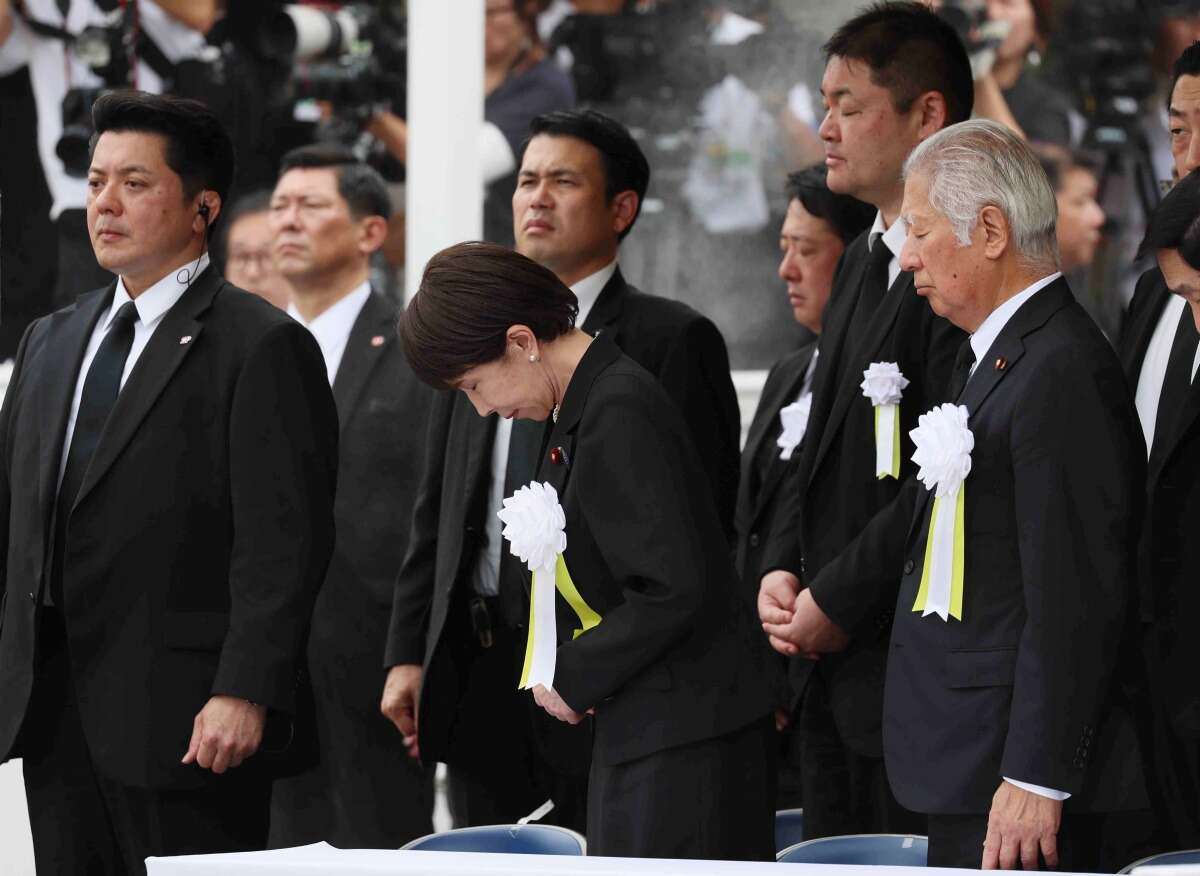
On Aug. 6 this year, Japanese Prime Minister Sanae Takaichi stood before tens of thousands of people in Hiroshima's Peace Memorial Park. At 8:15 a.m., the Peace Bell rang and the crowd observed a minute of silence at the precise time when, 81 years earlier, the city was illuminated by a flash that changed history. Hiroshima Mayor Kazumi Matsui repeated the appeal made each year at the ceremony, urging world leaders to stop treating nuclear deterrence as a "realistic approach." This time, however, his words may also have been directed at the leader standing beside him.
About eight months earlier, Japanese media reported something that would have been difficult to imagine in previous years. A senior official in the Prime Minister's Office who advises Takaichi on security told reporters that Japan should begin discussing whether to acquire nuclear weapons. He stressed that this was his personal view, citing Japan's deteriorating security environment and doubts about the credibility of the US nuclear deterrent.
Neither of these developments is unique to Japan. The world order that has shaped our lives at least since the collapse of the Soviet Union, and perhaps since the end of World War II, is unraveling everywhere.
"After the Cold War, under US leadership but with its allies as well, a new international order was established, based on international institutions, laws, rules and legal frameworks. That order is collapsing before our eyes," said Dr. Or Rabinowitz, a senior researcher at Stanford University's Freeman Spogli Institute for International Studies.
There were critical turning points in this process before then, but there is little doubt that President Donald Trump's second term accelerated it. "The US, particularly under the Trump administration, has become an unreliable ally. The nuclear guarantees it gave its allies are seen as less and less credible," Rabinowitz said.
The president himself, of course, does not see it that way. He believes he is merely restoring balance to a dependent relationship that has proved costly to American taxpayers, who have been forced to finance security and stability around the world.
Zelenskyy in the Oval Office
One event will likely be remembered as the clearest expression of the transformation that took place in the Oval Office.
On Feb. 28, 2025, Ukrainian President Volodymyr Zelenskyy arrived at the White House for a meeting that was supposed to end with the signing of an agreement giving the US access to Ukraine's mineral resources. Instead, the encounter rapidly deteriorated into an exchange of insults and ended with Zelenskyy being sent out of the White House.
For eight decades, the US had guaranteed Europe's security, not always happily and not without complaining about Europeans taking advantage of it, but with the understanding that in doing so it was also defending itself. Then, in front of the cameras, Zelenskyy tried to remind those present that the ocean separating Washington from the fierce war in Europe offered protection only for the time being.
"First of all, during the war, everybody has problems. Even you, but you have nice ocean and don't feel now, but you'll feel it in the future," Zelenskyy said.
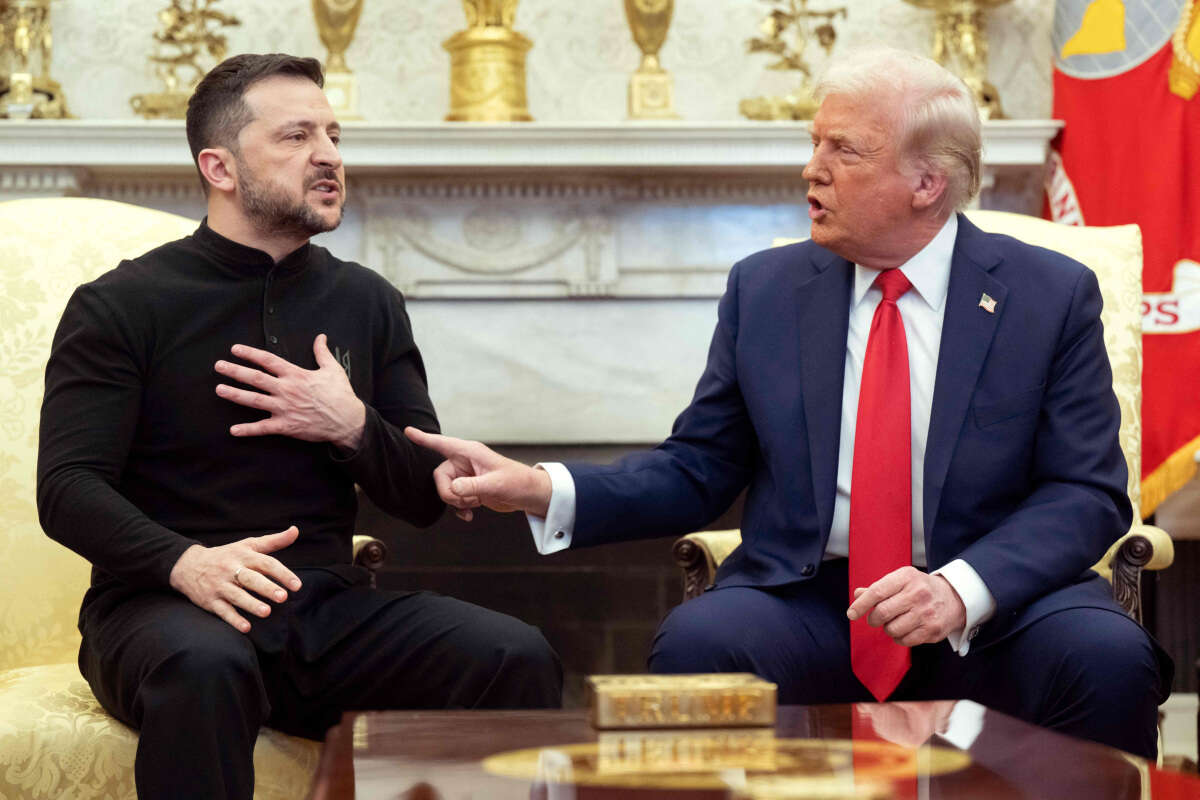
"Don't tell us what we're going to feel," Trump shot back angrily.
A chill went down the spines of Europe's leaders. Uncle Sam appeared determined to sail west without looking back, and weeks of panic set off a conventional arms race, perhaps only for the time being.
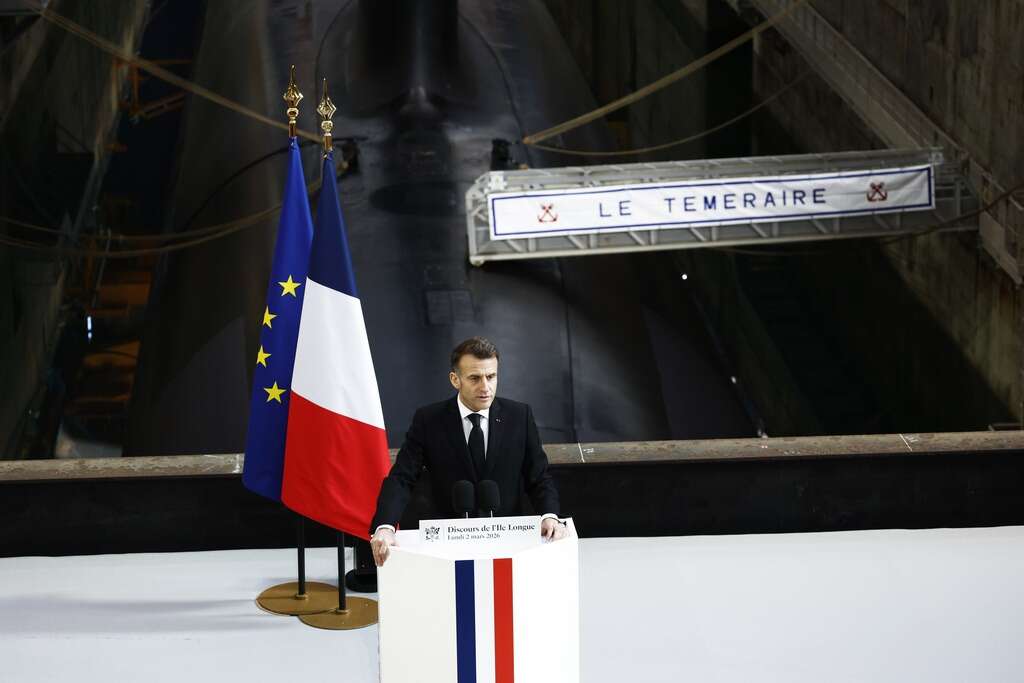
Five days later, French President Emmanuel Macron addressed his country in a televised speech on the eve of an emergency European summit in Brussels.
"I want to believe that the United States will stand with us, but we must be ready if that's not the case," he said.
Macron announced that France was prepared to discuss extending its nuclear deterrent to other European countries and had opened talks on the issue with Germany.
The equation of mutually assured destruction that underpinned NATO's nuclear deterrent depended on Washington being willing to risk the destruction of American cities in a Soviet nuclear barrage in order to deter Moscow from doing the same to London, Rome, Berlin and Paris.
No longer, everyone understood.
Race for the bomb
In 1994, Ukraine gave up the Soviet nuclear weapons left on its territory in exchange for assurances that its borders would be respected. The signatories were the US, Britain and the newly established Russian Federation. The latter, quite clearly, did not honor its commitments.
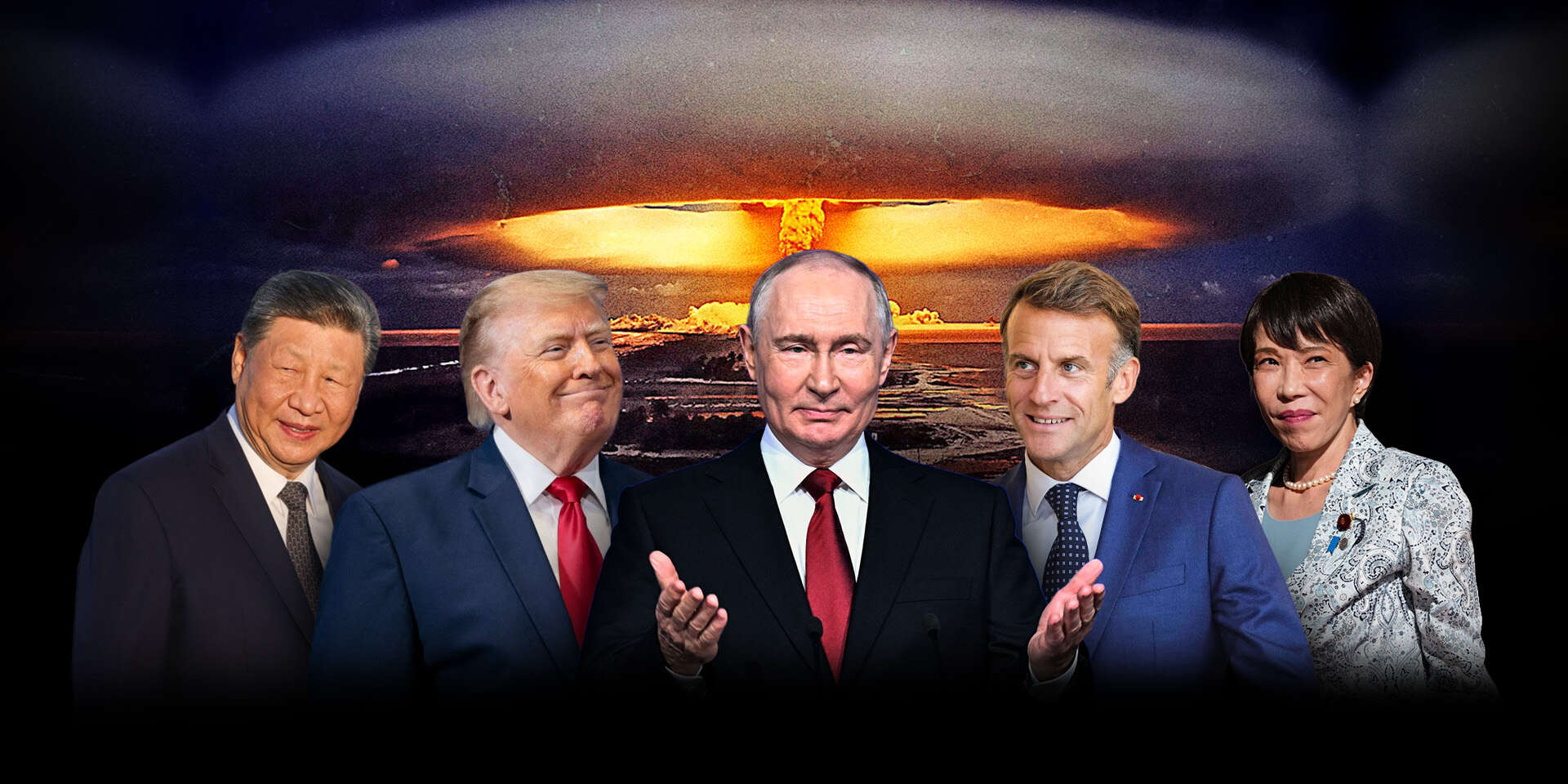
The world appears to have learned the Ukrainian lesson. Whether by calling for nuclear weapons of their own, expressing a willingness to host them on their soil or seeking protection under another country's nuclear umbrella, a long list of countries are now openly discussing an issue that would previously have been almost unimaginable.
Saudi Arabia insists on enriching uranium on its own soil, has made clear that it will not remain behind if Iran obtains nuclear weapons, and has received backing from Washington.
Finland lifted its ban on bringing nuclear weapons onto its territory. Germany, which because of the demons of its past and the terms of its reunification treaty is for now content with European guarantees, has opened talks with Paris and London.
In Poland, Prime Minister Donald Tusk said his country "must reach for the most modern possibilities, also related to nuclear weapons and modern unconventional weapons." Warsaw, meanwhile, is considering the French proposal Macron raised in that same national address.
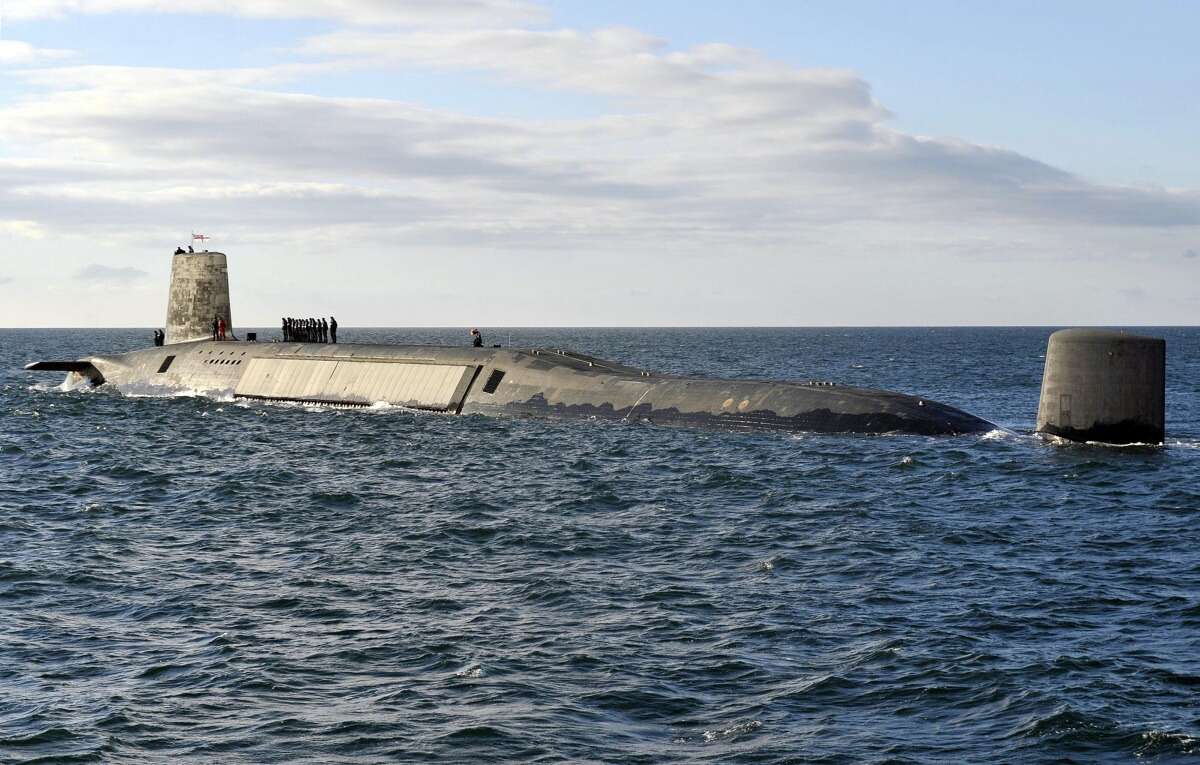
Britain is pouring tens of billions of pounds into upgrading its nuclear deterrent against the backdrop of a shrinking conventional military.
And in South Korea, which lives in the shadow of North Korea's nuclear arsenal, public support for acquiring nuclear weapons has ranged in polls this year from roughly two-thirds to 80%, amid growing concern over American disengagement.
That is only a partial list.
The end of arms control
The Treaty on the Non-Proliferation of Nuclear Weapons, signed in 1968, succeeded in largely keeping doomsday weapons the preserve of major powers, even if there were several outliers.
At the same time, beginning with the 1962 Cuban Missile Crisis, which nearly ended in nuclear war, a series of bilateral measures emerged to manage the issue: the Washington-Moscow hotline, a treaty partially banning nuclear tests, and in the decades that followed, an entire architecture of agreements limiting both nuclear arsenals themselves and certain delivery systems used to deploy them.
On Feb. 5 this year, the New START treaty, the last in that chain of agreements, expired. For the first time in 54 years, the US and Russia are no longer bound by mutual limits.
Trump had good reason to demand changes to that structure, even his critics agree: China was absent from all of those agreements. They were built for a world of two superpowers, and that world no longer exists. Beijing has so far shown little enthusiasm for opening negotiations on such agreements.

"Instead of two superpowers, we now face a multipolar world in which China will be one of the poles," Rabinowitz said.
Beijing, however, clearly does feel urgency about strengthening its strategic capabilities. Exactly a year ago, China unveiled its "nuclear triad" at a military parade, displaying systems enabling it to deliver nuclear weapons from land, sea and air.
In December, a Pentagon report said China remained on course to possess an arsenal of 1,000 nuclear warheads by 2030 and had already deployed more than 100 intercontinental ballistic missile launchers in new silo fields.
At the end of last October, Trump ordered the US to resume nuclear weapons testing after a halt dating to 1992, arguing that other countries were conducting tests.
Three months later, one day after the final treaty with Russia expired, the State Department accused China of having secretly carried out a nuclear test in 2020 and trying to conceal it.
But the unraveling does not stop with Washington and Moscow. "There is concern that the Nuclear Non-Proliferation Treaty, which until now has played a central role, will weaken and become irrelevant," Rabinowitz said.
THE N-WORD
Contrary perhaps to the way he is sometimes perceived, Donald Trump is no Dr. Strangelove, nor does he resemble the trigger-happy generals in Stanley Kubrick's film.
Having grown up under the shadow of the Cold War and the era of "duck and cover" drills in schools, he appears to have a genuine aversion to the subject and makes little effort to conceal it.
"I call it the 'N-word.' There are two N-words, and you can't use either of them," Trump said in September 2025, using the term for "nuclear" while alluding to the racist slur "nigger."
Trump may be right that the liberal international order, with its treaties and bureaucratic organizations, was always an empty shell best discarded as quickly as possible. But in doing so, he is accelerating processes whose pace no one can control, including on the nuclear issue that appears to be particularly close to his heart. The UN, the court in The Hague, trade organizations and multilateral agreements have all taken blows over the past two years.
"There is concern that institutions connected to the regulation of states' nuclear activity are also breaking down," Rabinowitz warned.
Iran offers a good example of how the president's motivations can work against his own intentions. Tehran maintained a military nuclear program until at least 2003, when, according to the widely accepted account, it decided to shut the program down out of fear that it would be next in line for US military action after Saddam Hussein's Iraq.
Yet although Ayatollah Ali Khamenei sought to convey to the world that he opposed the bomb on religious grounds, Iran retained its uranium enrichment capabilities alongside the knowledge necessary for weaponization.
In June 2025, acting on what Israeli officials described as Iran's dangerous approach toward a nuclear bomb, Israel, followed by the US, launched a military operation that effectively destroyed Iran's industrial-scale enrichment capabilities and dealt a severe blow to the regime. Enriched material did remain in the country, but for months Iran appeared afraid even to approach the bombed sites and was consumed by its domestic crises.
"After Operation Rising Lion, I think the pendulum moved somewhat in a positive direction because the operation demonstrated an American willingness to ensure through military means that there would not be broader nuclear proliferation in the Middle East," Rabinowitz said. "But I think those gains have eroded."
That erosion is the result of the second war. Israel and the US went to war to topple the Iranian regime, or to "create the conditions" for that outcome, to use the sanitized formulation occasionally employed by leaders here and there like the fine print in an insurance policy.
Ultimately, however, at least for now, the danger has only increased. The Islamic Revolutionary Guard Corps has become the dominant force in Tehran, while the fear of military confrontation has declined significantly now that confrontation itself has become routine.
According to reports, the current leadership in Tehran is far more open to the possibility of breaking out toward a nuclear weapon. At the same time, Iran holds enough enriched uranium for several bombs if the material is further enriched.
"Countries that have considered nuclear weapons look at what happened to Saddam Hussein and Muammar Gaddafi," Rabinowitz said. "Both were executed, and neither had nuclear weapons to protect them." If Iran breaks out to a nuclear weapon, she assessed, "it would be a very severe blow to the global nuclear nonproliferation regime."
Last resort?
In the first episode of "Yes, Prime Minister," the cult British political satire, an adviser to the newly installed prime minister presents him with the nuclear dilemma that will henceforth hang over him.
He lays out a series of scenarios involving a gradual Soviet invasion of Western Europe, asking each time whether the prime minister would press the red button as a "last resort." Each time, the prime minister refuses.
"The Russians are in the English Channel, getting ready to invade. Is that the last resort?" he finally asks.
No, the prime minister replies.
"Well, where is it? Piccadilly?"
The scene illustrates leaders' aversion to using nuclear weapons even when the issue is supposedly framed in simple equations. That is, of course, partly a product of mutual deterrence, but also of the "nuclear taboo."
"After the US first used nuclear weapons in Hiroshima and Nagasaki, a norm gradually developed over the following decades that nuclear weapons should not be used, and a stigma became attached to them," Rabinowitz explained. "Gradually, and quickly, the perception took hold that a nuclear weapon is not an ordinary weapon. It isn't simply a very powerful bomb. It is a weapon whose use places all of humanity at risk."
Here, too, the weakening of the taboo is connected to the war in Ukraine. According to Bob Woodward's book "War," US officials feared in the fall of 2022 that Russia might use a tactical nuclear weapon: a weapon with a smaller warhead designed to achieve military gains on the battlefield or deliver a nuclear warning, rather than destroy an enemy state.
Alarm bells rang in Washington, and then-Defense Secretary Lloyd Austin told his Russian counterpart, Sergei Shoigu, that the use of a nuclear weapon "at any scale, against anyone" would be seen by the US and the world as a world-changing event.
The Americans threatened an overwhelming conventional response, one that would wipe out Russia's military presence in Ukraine.
"During the Biden administration, it was important to them, rightly so, to reinforce what is known as the nuclear taboo," Rabinowitz explained. "They made it absolutely clear that the response would not be nuclear and that it would amount to punishment for violating the norm."
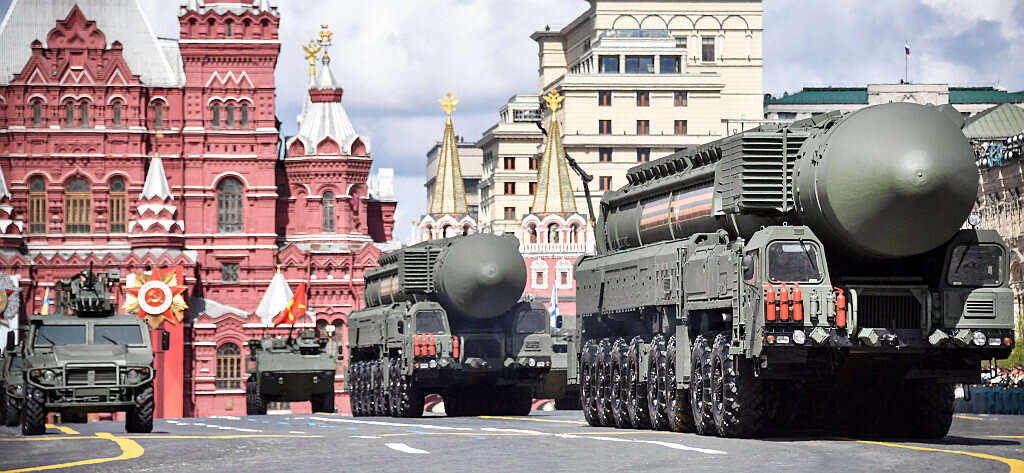
Since then, scarcely a few months seem to pass without another nuclear threat. Whenever his war machine runs into difficulty, Russian President Vladimir Putin drops hints and orders drills by units responsible for nuclear weapons. His predecessor in office and current online provocateur, Dmitry Medvedev, has turned atomic threats into an almost daily routine.
In Israel, too, a government minister landed himself in trouble with an ill-judged response to a suggestion that an atomic bomb be dropped on Gaza. Trump himself declared during one night of the war with Iran that "a whole civilization will die tonight," prompting the White House to deny that the use of nuclear weapons was under consideration.
Still, how much closer does the breaking of the taboo bring us to actual use?
The danger is not merely that there will be more bombs. It is that the scenario depicted by the British television series will play out more often, involving more actors and under norms weaker than those that restrained the nuclear powers during the Cold War.
The more often that happens, the greater the likelihood that someone will reach a different conclusion from that fictional prime minister who could not bring himself to press the button.
"The more countries that join the nuclear club, and the more countries that develop sensitive nuclear technologies, the greater the chance that eventually one of them will develop a weapon and use it," Rabinowitz said. "That doesn't mean it will happen. It's not deterministic. Statistically, however, the more actors and the more weapons there are, the greater the chance that one of them will violate the norms."
International Atomic Energy Agency Director General Rafael Grossi offered an even more pessimistic assessment. In an interview with Bloomberg this week, he said he was increasingly concerned by the number of countries once again discussing the possibility of acquiring and using nuclear weapons in a world increasingly filled with conflicts and wars.
And if the membership of the nuclear club does expand, he said, "there will be use of nuclear weapons, for sure. That is 100% guaranteed."