During one of the "routine" shifts she worked during Operation Roaring Lion, Sgt. N., an Iron Dome operator deployed in northern Israel, never imagined she would have to intercept an enemy target directly threatening members of her own family.
"I live in northern Israel and serve in Battalion 137, which protects the same area," she said in a special interview with Israel Hayom at Palmachim Air Force Base. "At the time, Hezbollah was doing its job very effectively, so to speak, and the northern region was taking quite a beating."
"During one of my shifts in the operation, we identified a target that was expected to land near my home. The moment you realize the target is heading toward an area you know so well, where you know who lives there, it's extremely stressful. You think about your home, your family and all the people you know who are there.
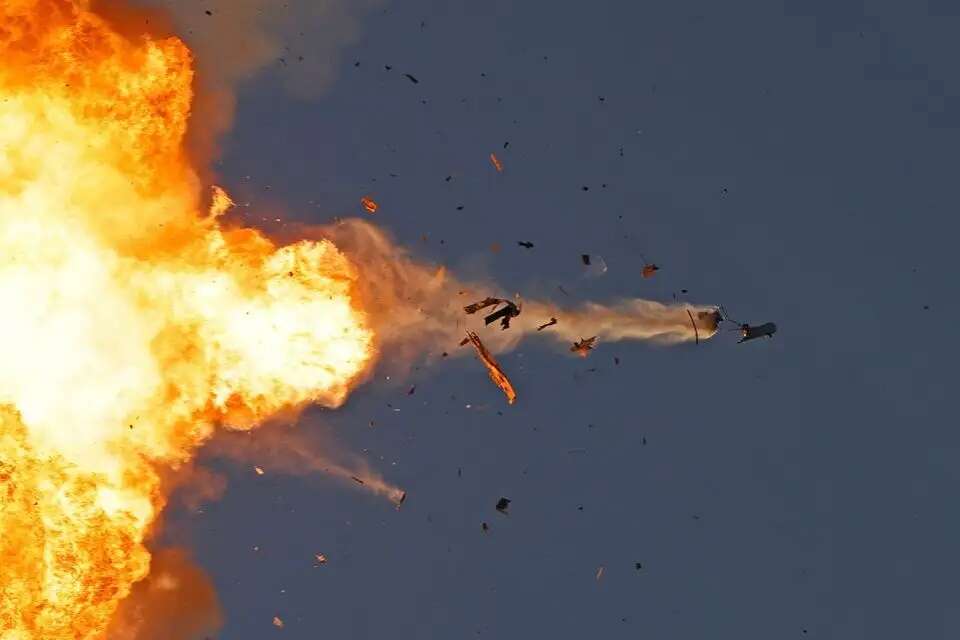
"Even when you have to focus on the mission, at the end of the day we're human beings, not robots. But I understood that I had to do the best I possibly could to protect my home, in the fullest sense of the word. If something goes wrong, it's on me."
In those nerve-racking moments, N. and the other soldiers on duty carried out the necessary procedures and later received confirmation that they had successfully intercepted the target.
"Only then do you feel relief," she said. "I remember that after my shift ended, I called home to make sure everything was OK. During the shift, we don't really know how much damage a target may have caused, even after an interception. We're cut off from what's happening outside and focused on the mission."
Sgt. N. is one of many male and female soldiers working around the clock to defend Israel's skies in the north. They recently learned that they serve in one of the two battalions that recorded the largest number of interceptions over the past three years. Officially, the IDF says each of the two battalions set a record of "thousands of interceptions," at a cost that can be estimated at hundreds of millions of shekels per battalion.
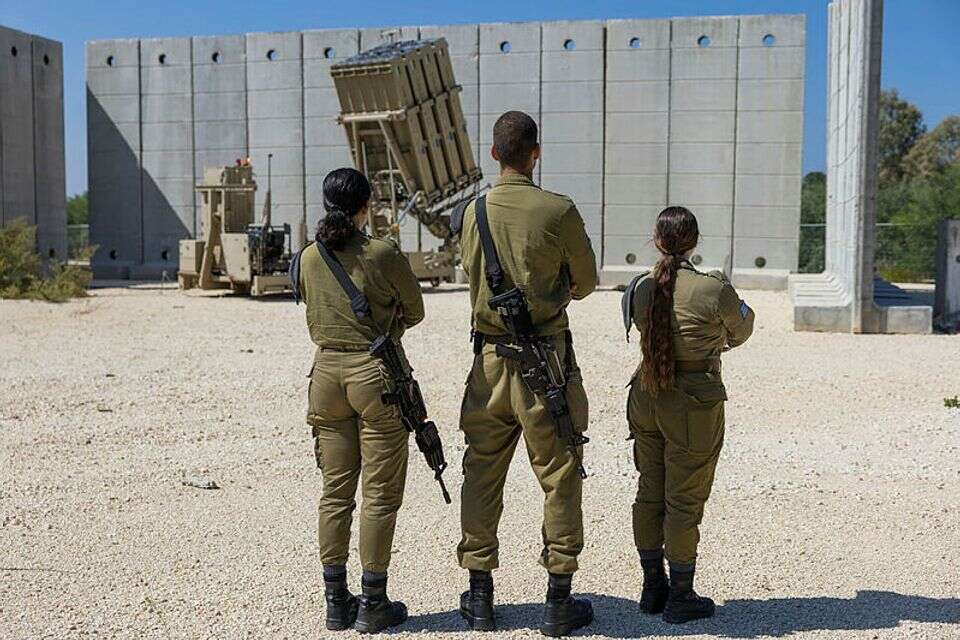
"We intercept every target we deem necessary without hesitation," battalion personnel said, addressing claims of ammunition cutbacks and the challenge of managing munitions stocks after three years of war. At a certain point, I felt there were shifts with less time between them," N. said. "It was a period of very intense barrages, but we managed to handle it."
Staff Sgt. O., another soldier from N.'s battalion who joined the interview, agreed.
"For two months, we faced large-scale Hezbollah barrages," he said. "The terrorist organization is trying to learn how we operate, but we're also trying to learn them. It's like cat and mouse. Once we understand how the organization fires, we can respond more effectively, including which areas it targets, the volume of fire and the times of day it tends to launch."
"The battalion set the record alongside another battalion, but that isn't just because of the batteries themselves. It's because of the people behind them," he added. "We're there at the critical moments, understanding what's happening above us and determining the threat threshold. Right now, we can deal with any threat they launch at us."
'The Iranians are developing quickly'
That statement raises an unavoidable question about the low-altitude threat, known in the IDF by the Hebrew acronym ROKAK, referring to the airspace close to the ground. It poses an enormous challenge for the IDF, which has struggled to counter it.
The threat has also featured in Hezbollah videos filmed by explosive drones, showing Israeli Aerial Defense Array personnel, as well as other soldiers and service members near the drones' flight paths, facing a direct threat.
"The low-altitude front is a relatively new threat, but overall I think we've learned to deal with it properly," O. said. "We know our defense isn't hermetic for us either and that we're targets, but we also know how to protect ourselves when necessary.
"Our enemy is different in a certain sense from the enemy faced by soldiers who cross the border. Their enemy is physical and face-to-face. In our sector, the enemy reaches us through UAVs and missiles. It's important to remember that we're also improving our systems to deal with those threats."
N. added, "Just like any civilian who is afraid, we're afraid sometimes too. We're all targets for our enemies. I also understand people who say we aren't combat soldiers, but I can say in response that we have a very important role in defending the country."
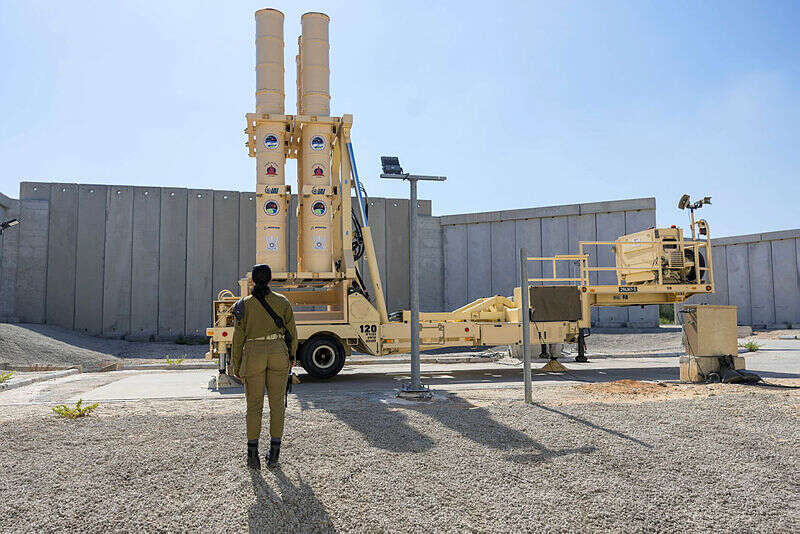
The battalion sharing the record with Battalion 137 may be close to it numerically, but its mission is very different. Staff Sgt. S., an interceptor operator in an Arrow battery, serves in the parallel Battalion 136.
"I'm an interceptor operator in Battalion 136, which operates the Arrow batteries," she said. Those batteries are responsible for intercepting ballistic missiles at high altitudes, both inside and outside the atmosphere. For comparison, a single Arrow 2 or Arrow 3 interception costs between $2 million and $3 million for one interceptor missile.
"It was actually during the campaigns against Iran that I felt we were facing the more intense barrages," S. said. "These were things we hadn't seen before, and we're improving as we go. The Iranians are developing quickly and trying to break through our defenses. Every air defense system has its own defensive layer, and together we create a comprehensive picture to counter those attempts."
Still, over the past three years, Israel has suffered a significant number of strikes on the home front, some of them claiming Israeli lives.
"When there are hits, like the one at Soroka, the feeling is very heavy," O. said, referring to the Iranian missile strike on Soroka Medical Center in Beersheba. "We try to prevent that as much as possible, but ultimately our defense isn't hermetic."
"Despite all the difficulty, I believe incidents like these are something we need to learn from and improve after," S. added. "Every interception, whether successful or unsuccessful, is investigated."

"And beyond that," N. said, "the pain and disappointment can come even after you've saved hundreds of people. It's enough that you failed in the mission when it came to one person, and that can hurt deeply."
N., O. and S. will spend the Sukkot holiday on their bases around Israel as part of the IDF's policy of reinforcing forces during holidays and other special occasions, one of the lessons drawn from the failures of Oct. 7, 2023.
"We understand that this is what we need to do," they said. "We'll celebrate the holiday here with some of our friends, and we'll try to enjoy ourselves here too. We know that this way, our families and friends can celebrate the holiday quietly and safely, and we're happy about that."