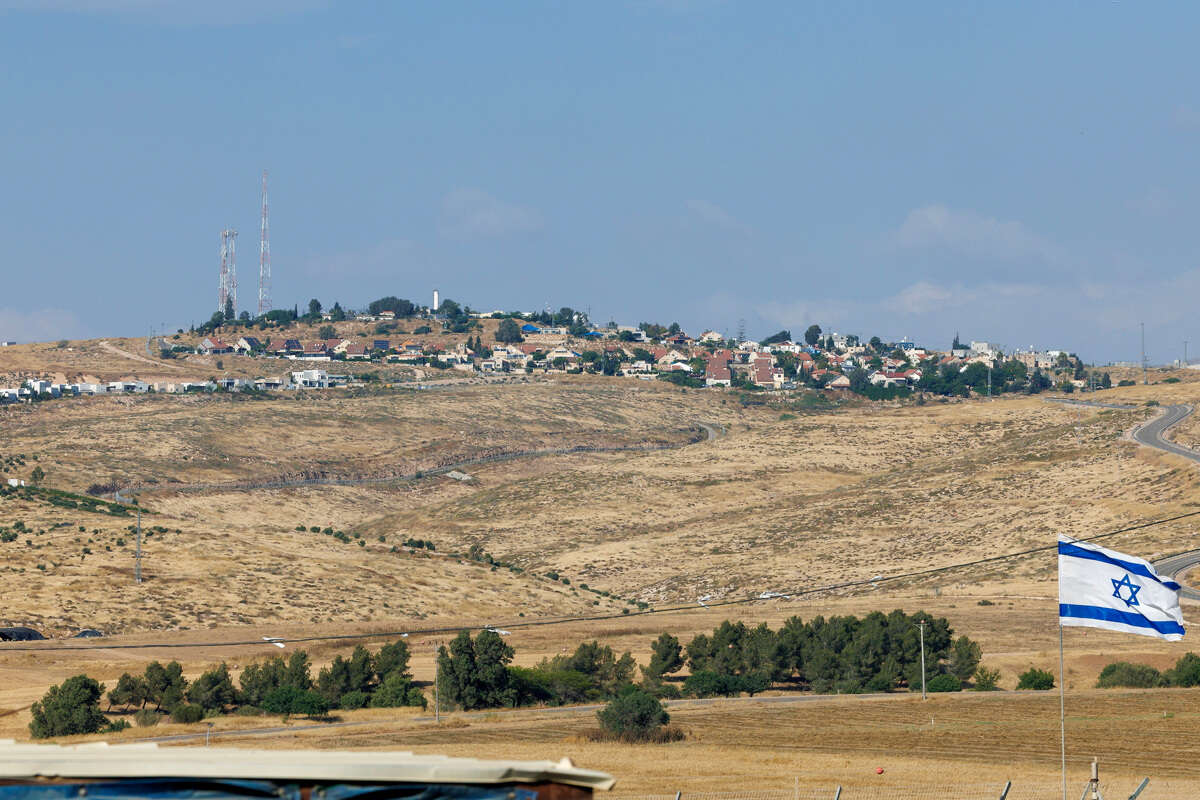
No region in the world is generating more headlines right now than Judea and Samaria. Article after article pours out at a dizzying pace — just last week, a Hamas terror attack claimed the lives of two Israeli soldiers near the Yehuda Junction. The controversial territory, where serious incidents erupt almost daily, and the unrest and exchanges of blows would seem likely to scare tourists away. For members of Texans for a Safe Israel (TFSI), the opposite is true.
Texans in Hebron
"I could give you at least five [Texans] who just rent cars and go up to Hebron," Ann Stacey, director of Texans for a Safe Israel, which connects American Christians with Jewish communities in Judea and Samaria, said.
Stacey's bond with the Jewish people began decades before she ever set foot in Israel. Born in 1948, she traces it back to childhood, watching the Eichmann trial unfold on television. "I watched it at twelve years old, and I kept thinking, 'why didn't somebody help them?' I was always interested in the Jewish people, but from afar, because I didn't know any Jews."
The real turning point came decades later, on September 11, 2001. Stacey was on a business trip in Norway that day when she witnessed an antisemitic outburst that would change the course of her life.
"This guy starts ranting about the Jewish people. There were two couples that traveled with us as friendly competitors. I knew them well, and they were always talking about their church trip to Israel; one of them had been twice. And I thought, 'Well, surely they are going to say something to this guy,' but they didn't. They just were getting their heads closer to their plate, while my husband was nudging me with his leg to say something," she recalled.
"And I did, and I told him that the Jews were God's chosen people, and that He gave them the land, and we're to be a blessing to them, and he was just so mean, and so arrogant, and started talking about the way that poor Palestinians were treated. This was 25 years ago. I didn't know that much about the Palestinians. On the way to the elevator, I said, 'I don't ever want to be in this position again. I'm gonna go see for myself."
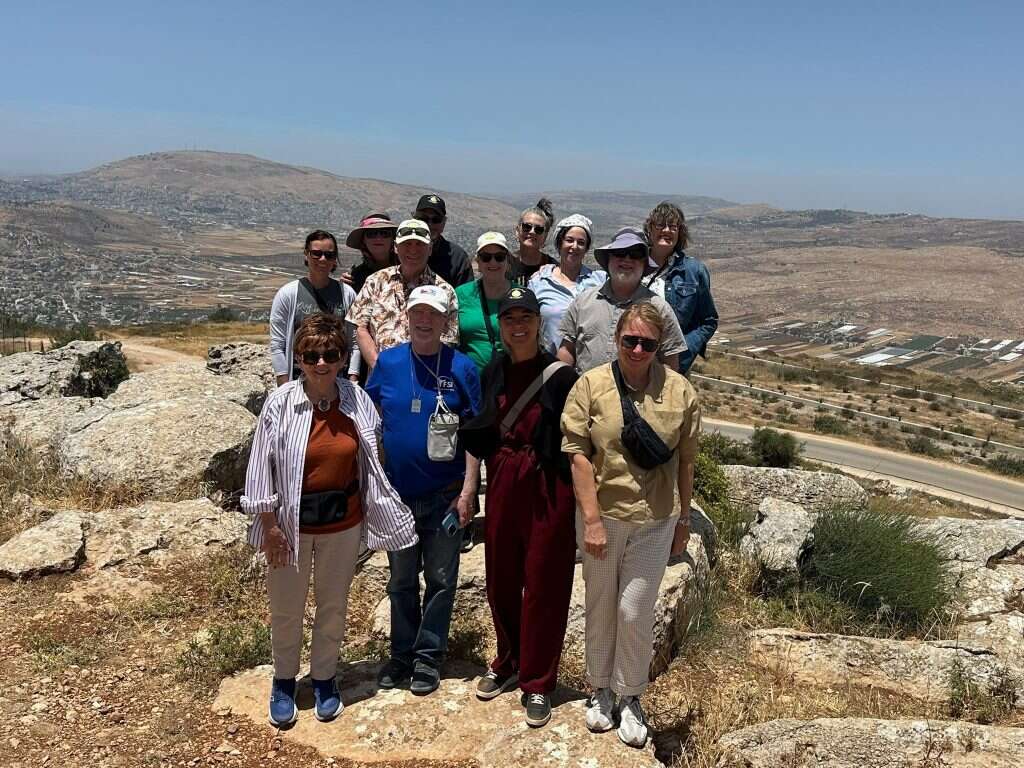
Within weeks, Stacey made good on that promise. In October 2001, at the height of the Second Intifada and against the advice of security officials, she took her first trip to Israel. The group she joined at the last minute, roughly 150 American Christians strong, stayed in Ariel (a city in Samaria), at a hotel that has since shut its doors.
"None of us knew a Jewish person, certainly not a Jew of the land, who believed the Scripture so much that they were doing their part to fulfill the prophecy, even at the risk of their own lives and the risk of their children and their families. Not only did it change me, but it changed all of us," she said.
Forming a relationship
She kept coming back, often with family in tow. But a 2008 trip, which she now calls "the worst trip of my life," convinced her that standard Christian tour packages weren't delivering what she was actually searching for. "They stay at hotels that cater to Christians, in big groups – it's very difficult to have 150 people to really form a relationship. But I wanted to get back to that relationship," she said.
It was the 2011 massacre of the Fogel family, in which a Palestinian terrorist killed five family members – parents Ehud and Ruth and three of their children, Yoav (11), Elad (4), and three-month-old Hadas – in their Itamar home (a Jewish settlement in Samaria), that pulled her back to Israel again.
"I saw it on the internet on that Friday evening, in Dallas, Texas. There was something from the IDF about this horrible tragedy, a massacre, in Itamar. And so on Monday, I called Americans for Safe Israel, because I knew they had a trip coming up in May, and that was back in March. I said, 'Are you going to Itamar?' And they said, 'Of course.' I began to travel with them… and they became my best friends," she said.
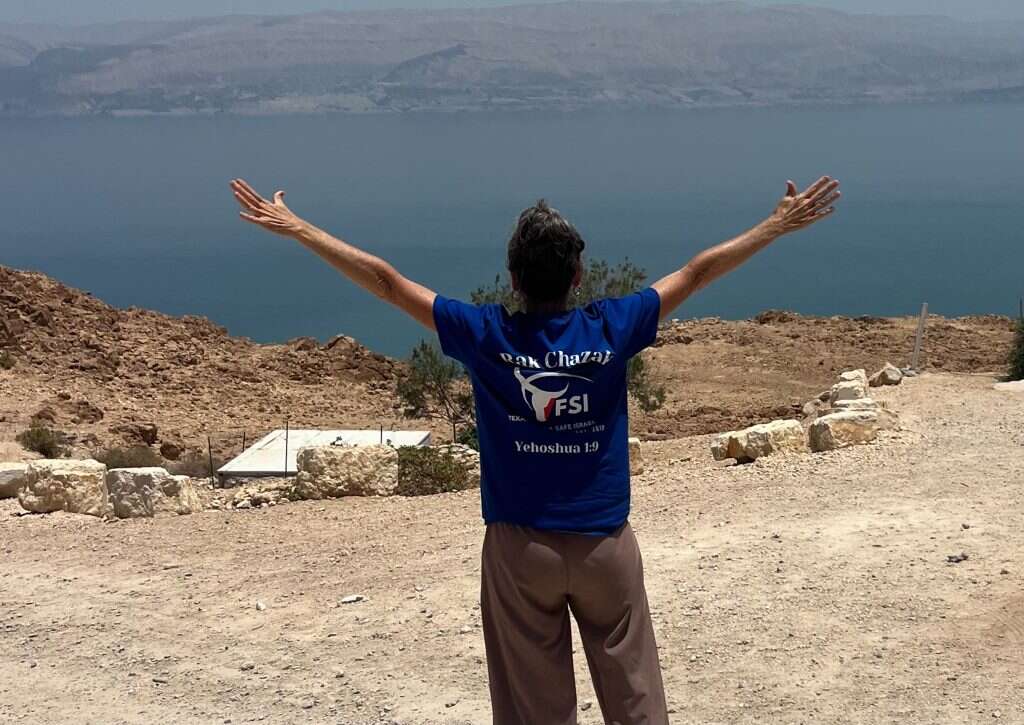
Those twice-yearly visits eventually led her to Hebron, where she befriended English-language spokesman David Wilder, his wife Ora, and other community members. "I felt like if my friends and other people I could bring in could only meet these Jews that I had met, everything would change, and the idea of replacement theology would become displacement theology."
A two-way bridge
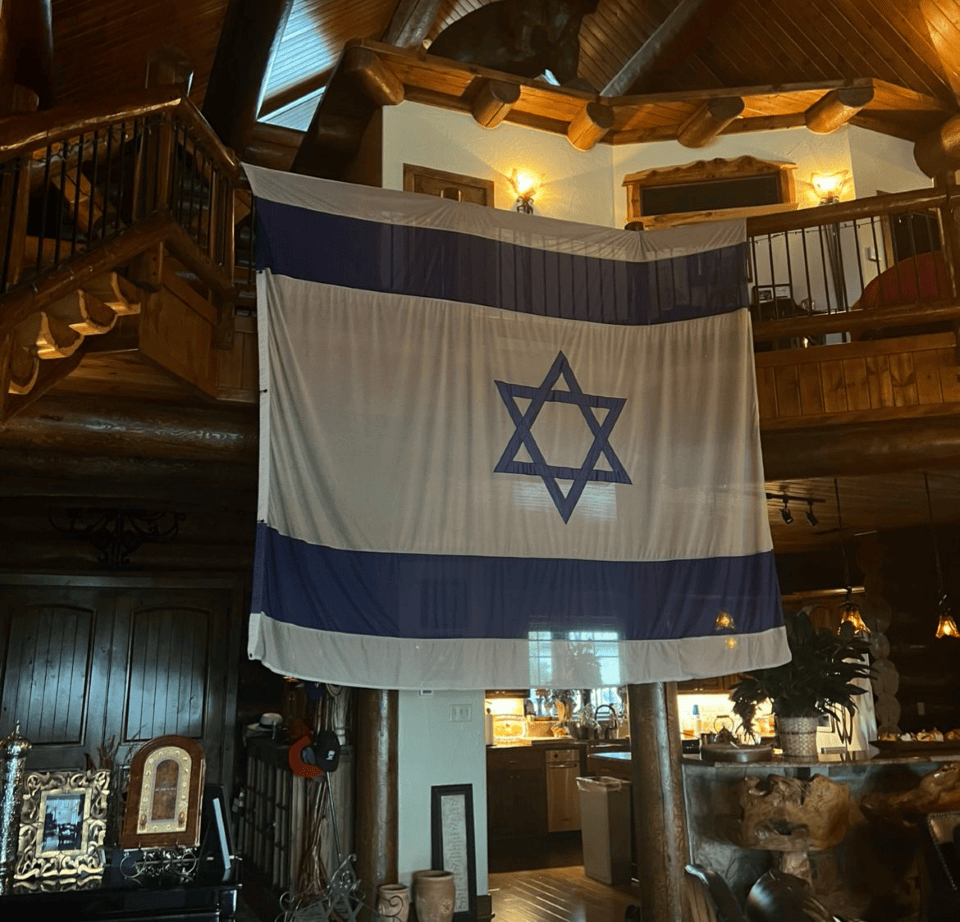
That conviction became a two-way bridge. In 2015, Stacey and her husband bought an abandoned house at Lake Granbury, Texas – left vacant after its previous owner's legal troubles. Through TFSI, she now hosts Jewish guests there, introducing them to the local Texan community so visitors can hear their stories firsthand and meet Israeli Jews face to face. Past guests have included retired ambassador Yoram Ettinger, former Chief of Staff to Israel's Ambassador to the United States Yifa Segal, Holocaust survivors, and more.
But hosting guests in Texas wasn't enough. Stacey wanted to send Americans the other way too, to experience Judea and Samaria firsthand. That ambition crystallized in June 2025, at the height of the fighting with Iran, when she teamed up with Avi Zimmerman, CEO of Sector4 Strategy, a contact from an earlier trip to Israel. Together they launched the Judea Samaria Experience.
"Judea and Samaria offers extraordinary biblical, historical, cultural, agricultural, and community experiences. What's missing is an accessible bridge connecting interested visitors with the local guides, communities, and resources that can make those experiences possible," Avi said, adding, "Our ultimate goal isn't simply to bring more tourists to Judea and Samaria. It's to help people better understand life in the region and develop a meaningful connection with its people."
Based on each visitor's interests, JSE pairs tourists, mostly American for now, with local guides, community members, artists, and even host families for an authentic experience.
"Our measure of success will ultimately be not just how many people we reach, but how deeply those encounters influence their understanding of Israel, their communities, and themselves," Avi explained.
The project has already reached further than expected. Through a blog and podcast on the JSE website, the team recently received inquiries from tourists in Taiwan who already know not just which sites in Judea and Samaria they want to visit, but which local businesses and factories to support.
"If you just sit down and have coffee together, it will change everything," Stacey said, pointing to one success story. A couple from East Texas, who had visited the Granbury house through Ann's program, later decided to travel to Israel with their four children and tour Judea and Samaria themselves, effectively becoming JSE's first "test case."
Q: What would you want Israelis and diaspora Jews to know against this backdrop of rising anti-Israel sentiment?
"I think the best way to fight antisemitism is to know an authentic Jewish person, and that pretty much does it. Anybody who's antisemitic doesn't have a Jewish friend."
For Ann, though, the mission goes further than friendship. "There is not going to be any peace until sovereignty is declared over Judea and Samaria. I believe that with all my heart," she states. "Very quickly, you would find out who the really bad actors are."