The IDF on Wednesday released the rulings of its Military Advocate General's Corps on five exceptional incidents in the Gaza Strip in which dozens of civilians and aid workers were killed. In two cases – the death of child Hind Rajab and the shooting in Tel al-Sultan (a neighborhood in Rafah, southern Gaza) that left 15 Palestinians dead – the military ordered a Military Police Criminal Investigation Division (MPCID) (the IDF's criminal investigative arm) probe. In three other incidents, investigators found no reasonable suspicion of a criminal offense, though command-level disciplinary measures remain under consideration in one.
The decisions followed assessments conducted by the General Staff Fact-Finding Assessment Mechanism (a body established to examine exceptional operational incidents), a body set up to scrutinize unusual operational incidents. Since the war began, the mechanism has completed its review of roughly 150 incidents and forwarded its findings to the Military Advocate General's Corps.
The aid workers' deaths: The case is closed
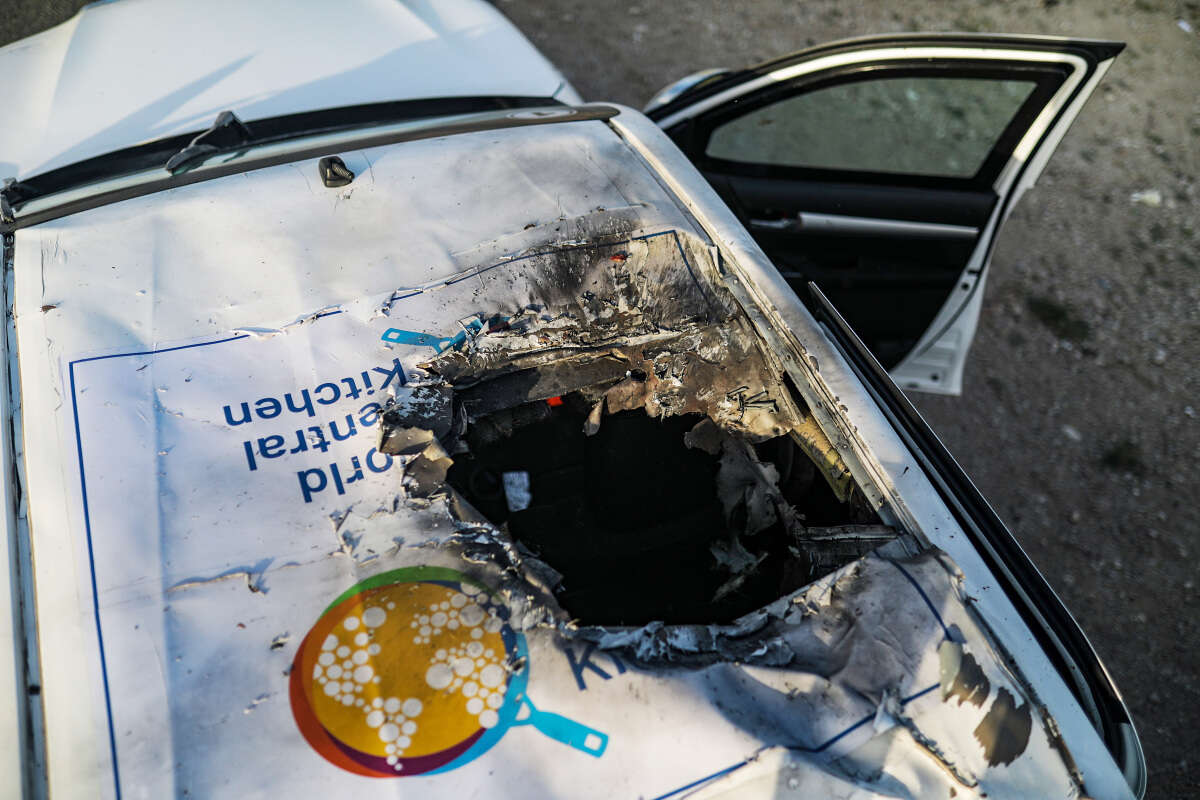
Seven World Central Kitchen (WCK) (a US-based international food aid organization) employees were killed in April 2024 when IDF forces struck the organization's vehicles in Deir al-Balah (a city in central Gaza). The fact-finding review revealed that troops identified an armed individual on an aid truck and concluded that Hamas operatives had seized control of the convoy.

The IDF said the organization had hired an armed security detail to escort the convoy, but its presence had never been coordinated with the military. After the convoy reached a warehouse, several individuals were mistakenly identified as armed and the vehicles began heading south – deviating from the pre-agreed route. IDF personnel attempted to reach the organization's representatives throughout roughly half an hour of surveillance, but were unsuccessful.
In the aftermath, the brigade's aid coordinator and the brigade chief of staff were dismissed, while the brigade commander, the commander of the 162nd Division and the GOC Southern Command all received reprimands. Even so, the Military Advocate General ruled that the commanders' decisions did not cross the criminal threshold, given the chain of suspicious indicators and the operational circumstances at the time. No MPCID investigation will be opened.
The death of Hind Rajab: MPCID probe
In January 2024, IDF forces fired at a vehicle reportedly belonging to the Hamada family after it approached them while moving in the opposite direction on the evacuation route that had been published for residents. Five of the passengers were killed; child Hind Rajab and her cousin Layan survived.
After the two contacted rescue services by phone, a Red Crescent ambulance was coordinated to arrive. According to the claims that emerged, a shell struck the ambulance, killing both paramedics on board. Several days later, the bodies of Hind and Layan were discovered alongside the rest of the family members and the paramedics.
Given alleged failures in coordinating the ambulance's movement, the IDF decided to refer the incident to an MPCID investigation. The military noted that the ongoing probe precludes it from releasing further details.
15 killed in Tel al-Sultan: MPCID probe
An MPCID investigation will also be opened into three shooting incidents that unfolded in March 2025 in Tel al-Sultan, in which 15 Palestinians were killed – among them medical workers, paramedics and a UN employee.
The fact-finding review found that an IDF force set up in an ambush ahead of a raid initially fired at a vehicle identified as belonging to Hamas. About an hour later, five vehicles arrived rapidly, stopped near the force, and their passengers jumped out quickly. The force opened fire. Roughly a quarter of an hour after that, it fired at another vehicle.
The vehicles turned out to be a fire truck, ambulances and a Palestinian UN vehicle. The IDF said six of those killed were identified as Hamas-affiliated. After the incident, the force crushed the vehicles and covered the bodies with an iron mesh net.
Following the review, Brigade 14's commander received a command notation, and the deputy commander of the Golani Reconnaissance unit had his billet ended. The Military Advocate General's Corps ruled that the shootings raise a reasonable suspicion of a criminal offense and ordered an MPCID probe.
The Doctors Without Borders building: Command steps under review
In February 2024, IDF forces fired a shell at a building in Khan Yunis (a city in southern Gaza) that turned out to be a facility belonging to Doctors Without Borders (the international medical humanitarian organization, also known as MSF). Two women were killed and seven others wounded.
The review found the building sat at a commanding position near an axis along which the forces were advancing, in an area where operational control had not yet been secured. The building's lights were off and no movement was visible. The forces had no real-time awareness that the structure was affiliated with the organization, nor could they see the signage on its façade – they were approaching from behind it.
The Military Advocate General's Corps ruled that the fire served a legitimate military purpose and found no grounds for an MPCID investigation. That said, process failures identified in the strike are now being assessed for possible command-level disciplinary action against those involved.
The convoy shooting: No reasonable suspicion found
Two passengers in a Doctors Without Borders convoy traveling through Gaza City were killed in November 2023. The five-vehicle convoy was supposed to move south along a pre-coordinated evacuation axis, but turned back without coordination when passengers feared they would not reach their destination before dark.
The IDF said forces positioned along the route fired warning shots several times as the convoy approached against the established evacuation direction. When it kept coming, additional rounds were directed at the road, at a distance of approximately 100 meters (328 feet) from the vehicles.
The review concluded that the two passengers may have been killed by ricochets from the warning fire, but found no evidence of direct fire at the convoy. The incident was therefore determined not to raise a reasonable suspicion of a criminal offense.