

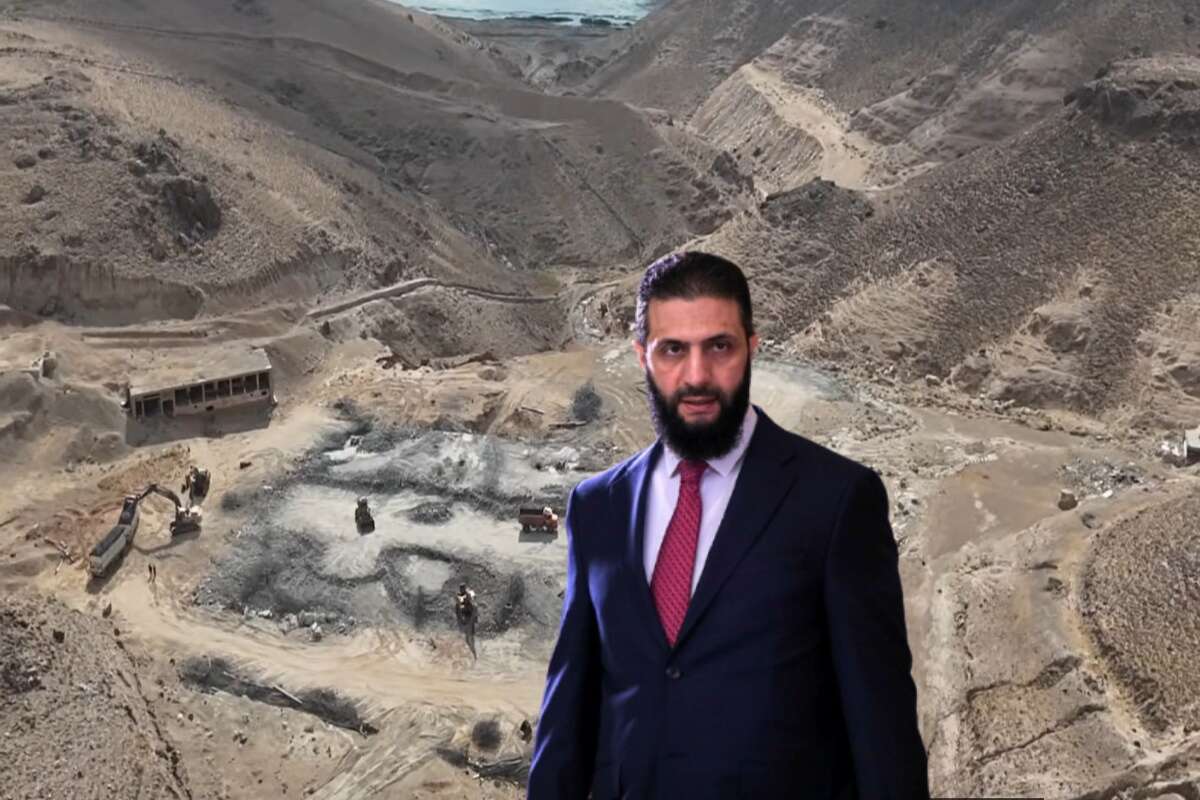
Following a 19-year media absence, fresh visuals have surfaced from Syria purportedly showing the aftermath of the 2007 Israeli strike that leveled the "Al Kibar" nuclear reactor near Deir ez Zor in the northeastern part of the country.
Asharq Bloomberg shared the footage, which could not be corroborated independently by Israel Hayom. A network spokesperson noted that an Asharq Bloomberg crew successfully reached the remote location to gather exclusive material of the destruction.
Israel targeted the reactor in 2007 but did not confirm it was behind the strike until a decade later, presumably in order to prevent an escalation and maintain plausible deniability. The effort successfully thwarted then-President Bashar Assad's efforts to make Syria a nuclear power that posed a major threat to Israel's security. Jerusalem has never confirmed foreign media reports that it had nuclear weapons, but it has vowed to never be the first to introduce such weapons in the region.

Under the recent understandings with the West under the new regime under President Ahmed al-Sharaa, Syria and the international community agreed to resolve the issue of the outstanding nuclear issues related to that nuclear project. During a visit to Damascus on August 17-18, 2026, IAEA Director General Rafael Grossi confirmed the discovery of nuclear material dating back to the old Assad.
صور حصرية تكشف للمرة الأولى .. كأول وسيلة إعلامية ولأول مرة منذ 19 عاما "الشرق بلومبرغ" تدخل موقع مفاعل "الكبر" النووي في سوريا، وترصد آثار الضربات الإسرائيلية التي دمرت الموقع عام 2007 @zyazigi pic.twitter.com/Yuj1h4M7IE
— Asharq News الشرق للأخبار (@AsharqNews) August 23, 2026
"We're talking about a few tons of nuclear material that could be put to bad use, and Syria has decided to open up this site to the inspectors of the IAEA," Grossi said. "This material will be accounted for and will be put within the international safeguard system." Grossi stated that comprehensive excavation and exploration activities are now taking place at the Al-Kibar site to investigate the remnants of the covert facility. "We're talking about a few tons of nuclear material that could be put to bad use, and Syria has decided to open up this site to the inspectors of the IAEA," Grossi said. "This material will be accounted for and will be put within the international safeguard system."
"Myself and my team, we were inside the site of Deir ez-Zor, where very comprehensive work of excavation and exploration is taking place now," Grossi, said at a news conference in Damascus. He noted that another side that had nuclear material was also discovered but did not elaborate, which the inspectors visited as well.
Syria's current Foreign Minister, Asaad al-Shaibani, reassured the international community that the stockpiles pose no immediate danger. He affirmed that the state will maintain possession of the materials under strict IAEA monitoring, reiterating Syria's commitment to exclusively peaceful nuclear applications.
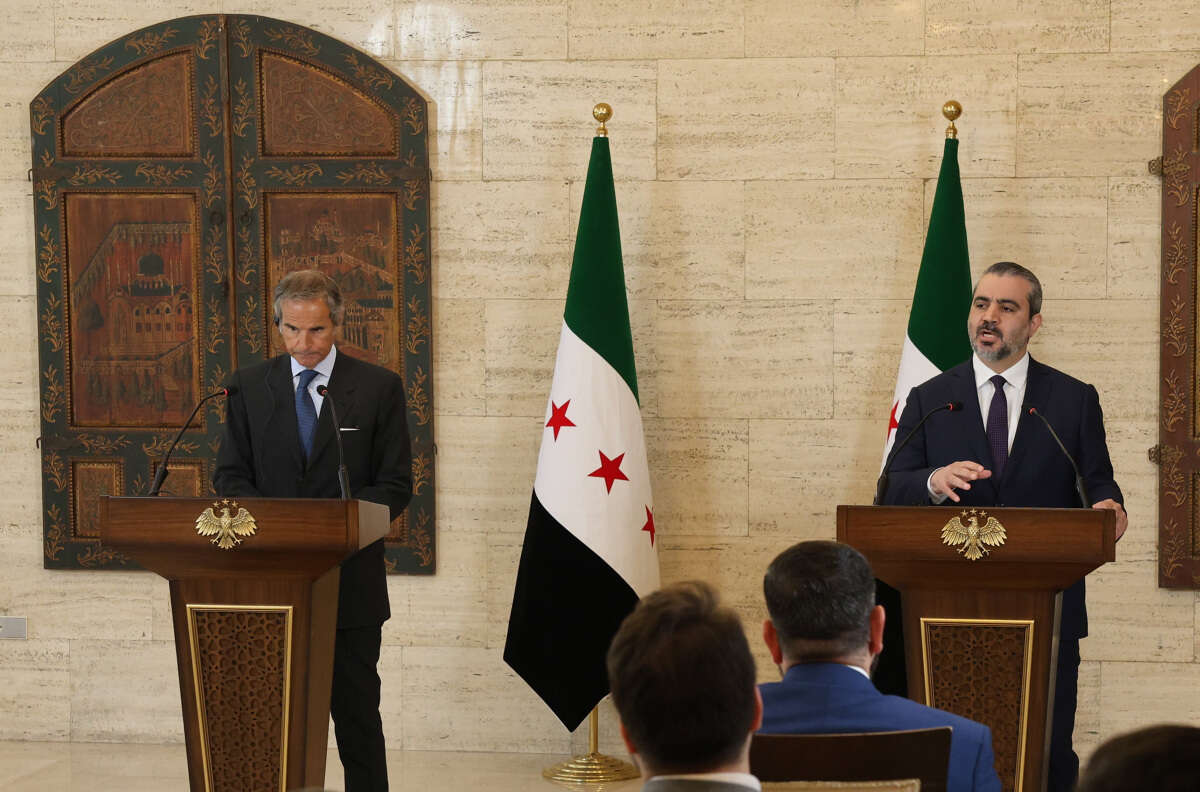
The IAEA will proceed with thorough testing to ascertain the exact isotopic makeup, weight, and origin of the discovered materials. "Syria confirms, based on technical evaluations, that this material does not pose any danger," Shaibani said. "It will remain in Syria's custody and will remain subject to the agency's safeguard system."
According to Asharq Bloomberg's exclusive information, this reactor, "the Al-Kibar reactor, was designed on a model similar to the North Korean Yongbyon reactor, with the aim of producing plutonium and not generating electricity as was publicly presented. North Korea provided the expertise, design, and technical assistance, while the Syrian regime provided the site, cover, and local infrastructure, amid information about support and funding channels linked to Iran." The outlet says that this information was based on "a former official at the Syrian Scientific Studies and Research Center" who shared with the outlet the "details about the project, the method of hiding this project for years, the parties involved in building it, and the tight circle that knew its reality."
"Also, if you look closely at the photos, this is part of one of the entrances that was supposed to lead to internal facilities under the mountain, in addition to the remains of buildings linked to a cooling system that was planned to be connected to the nearby Euphrates River," the reporter concludes.


