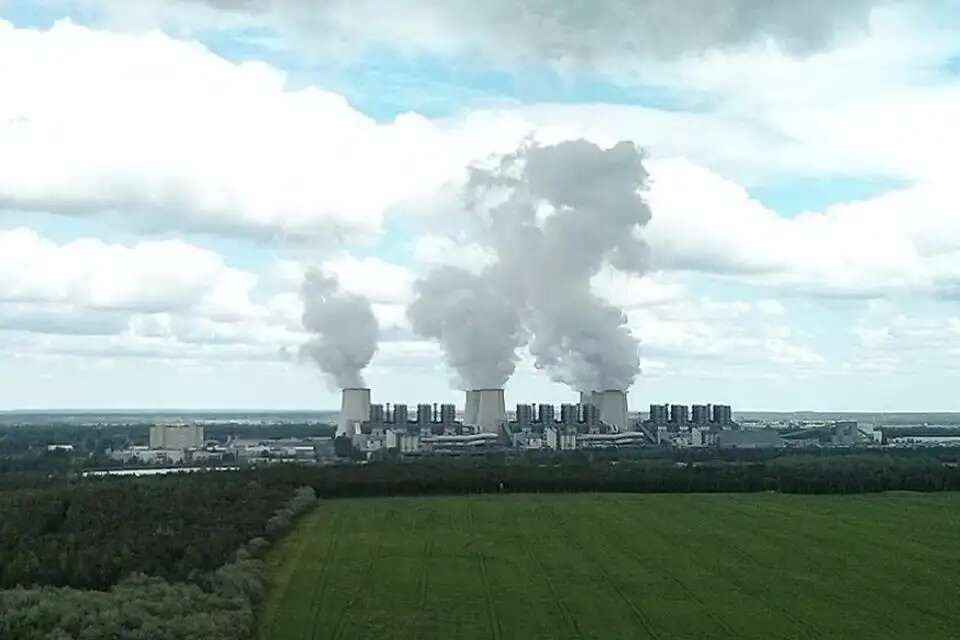
Is Europe on the verge of an open confrontation with Russia? German media reported Tuesday that an apparent attack had targeted a substation near the Jänschwalde power plant in the eastern German state of Brandenburg.
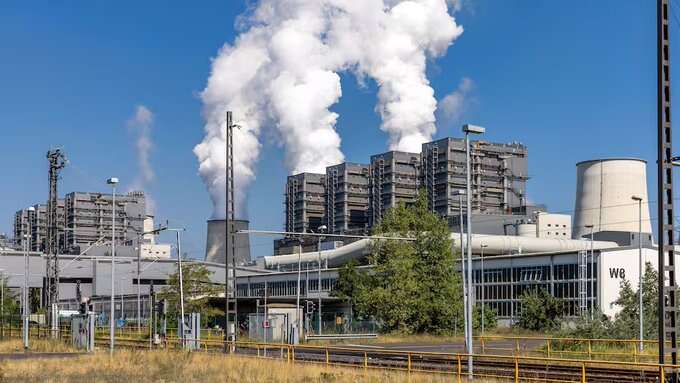
According to the Märkische Allgemeine Zeitung, the Turnow-Preilack substation near the Jänschwalde coal-fired power plant was apparently struck several times. Emergency crews found several devices believed to be homemade rockets loaded with explosives and rendered them safe. The suspected aim of the attack was reportedly to cause a large-scale power outage at the nearby plant, but no such outage occurred.
German police have yet to confirm the reported rocket attack. A police spokeswoman told German broadcaster n-tv that several improvised explosive and incendiary devices had been discovered around a substation in the Spree-Neisse district of Brandenburg. The Brandenburg State Criminal Police Office is investigating.
The incident comes just before Berlin is expected to announce its findings on who was responsible for an attempted explosive-drone attack on Ukrainian aircraft at Leipzig/Halle Airport in early August. During the Aug. 4 incident, a drone carrying explosives was discovered near Ukrainian Antonov cargo aircraft after its explosive device failed to detonate. A second unidentified flying object reportedly collided with a DHL cargo aircraft shortly afterward, damaging the plane but not causing it to crash. Investigators subsequently uncovered additional drones or drone components in the area around the airport, as well as explosives and an improvised antenna and electronic equipment attached to a tree near the airport. Investigators believe the equipment may have been installed to help control the explosive-laden drone.
German media have reported that the government is expected Tuesday to attribute the attempted Leipzig attack to a Russian intelligence service. Foreign Minister Johann Wadephul of the Christian Democratic Union and Interior Minister Alexander Dobrindt of the Christian Social Union are expected to make a special statement Tuesday afternoon on the investigation's findings and the German government's response.
Wadephul interrupted a diplomatic trip to Algeria to return to Berlin for urgent consultations rather than traveling directly to the informal meeting of EU foreign ministers in Wicklow, Ireland, as originally planned. "We will not overreact, but we will respond if we are attacked," Wadephul said Tuesday morning during a visit to Algiers, the Algerian capital, promising a measured but firm German response.
According to information obtained by German news magazine Der Spiegel, investigators uncovered extensive evidence concerning one or more people allegedly involved in the attack, with the trail reportedly pointing clearly toward Russian intelligence. If the German government formally attributes the attack to Moscow, it would mark the first time Berlin has directly blamed Russia for such an attack. Bild was the first outlet to report the expected attribution.
It was initially unclear which Russian intelligence agency was allegedly involved or exactly how Berlin intended to respond. Intensive discussions have been taking place within the German government in recent days over a package of measures aimed at punishing the alleged involvement of Russian state agencies in the attempted attack on German soil.
Measures reportedly under consideration include the expulsion of additional Russian diplomats and possibly the closure of the Russian Consulate in Bonn. Germany is also considering shutting down a Russian "cultural institution" in the country whose diplomatic personnel are known to include Russian intelligence officers. Berlin, however, was not expected to invoke NATO's collective-defense provisions by declaring that Germany had been attacked and asking other alliance members to come to its defense.
The German government could now face pressure to respond more forcefully if the Brandenburg incident proves to have been a Russian attack. Even before reports emerged of the incident at the power facility in eastern Germany, European Union officials expressed concern Tuesday over suspected Russian attacks.

Asked about Germany's expected announcement concerning the Leipzig case, EU High Representative for Foreign Affairs and Security Policy Kaja Kallas said, "What we see in other countries is that the Russians are provoking more and more. So, the question for us is what do we do about this to deter them from going any further."
Kallas said EU defense ministers meeting Tuesday in Wicklow would discuss how Europe could strengthen its ability to respond. "We have some critical capability gaps, and there are ways that we can really enforce and make this process faster so that we can fill the capability gaps, so that we would be also more credible to deter all these attacks," she said. "But it needs a lot of effort from all the Member States."
Because the gathering is informal, Kallas stressed that ministers would not make binding decisions. She said the EU was pushing to unblock funding from the European Peace Facility, with many member states already indicating that money returned to them would in turn be provided to Ukraine, including for urgently needed air-defense capabilities. "We know that the EPF that has been blocked was €6.6 billion," Kallas said, adding that discussions were continuing over how much would go back to individual member states and how much would ultimately go to Ukraine.