Sunday Sep 20, 2026
NEWSLETTER
www.israelhayom.com
  • Home
  • News
    • Israel
    • Israel at War
    • Middle East
    • United States
  • Opinions
  • Jewish World
    • Archaeology
    • Antisemitism
  • Lifestyle
    • Food
    • Travel
    • Fashion
    • Culture
  • Magazine
    • Feature
    • Analysis
    • Explainer
  • In Memoriam
www.israelhayom.com
  • Home
  • News
    • Israel
    • Israel at War
    • Middle East
    • United States
  • Opinions
  • Jewish World
    • Archaeology
    • Antisemitism
  • Lifestyle
    • Food
    • Travel
    • Fashion
    • Culture
  • Magazine
    • Feature
    • Analysis
    • Explainer
  • In Memoriam
www.israelhayom.com
Home Jewish World

'Will I ever atone?' A Jewish policeman's Holocaust confession

Calek Perechodnik could have financed false identity papers for his family, but chose not to because he could not bear to part with a suit and an expensive English coat. When the deportation from the Otwock Ghetto to Treblinka began, he led his wife and daughter to the train, then fled after realizing he had been deceived. In his diary, he agonized over his guilt: "I felt like an executioner leading them to their deaths"

by  Karni Eldad
Published on  09-20-2026 19:15
Last modified: 09-20-2026 21:27
'Will I ever atone?' A Jewish policeman's Holocaust confession

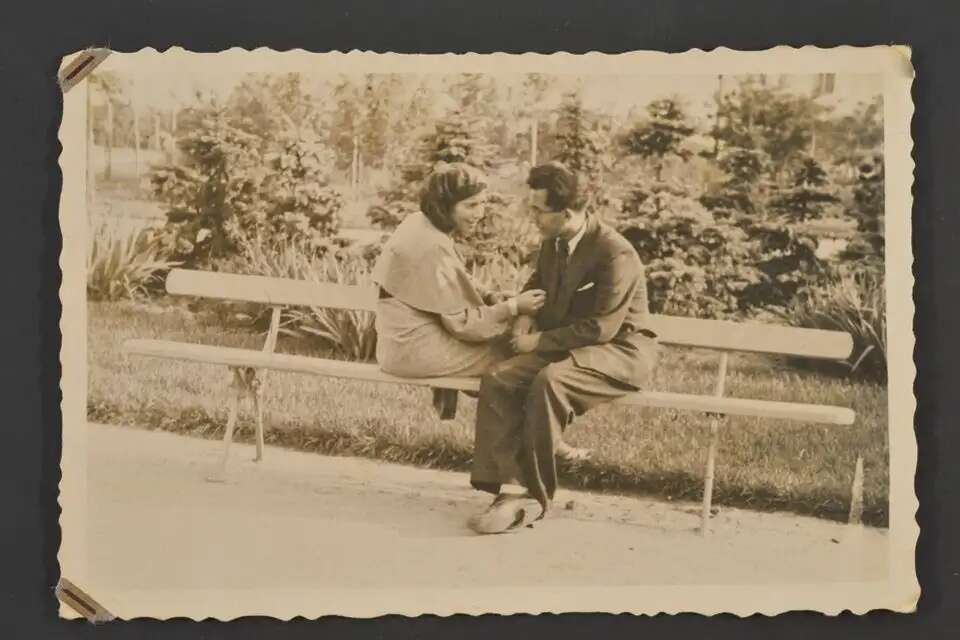
Calek and Anna Perechodnik. Photo: Yad Vashem Archive

Share on FacebookShare on Twitter

Calek Perechodnik was born in 1916 in Otwock, near Warsaw. He married Anna (Anka) Nusfeld, and the couple had a daughter, Athalie, known as Aluska. Before his wife and daughter were murdered at the Treblinka extermination camp, Perechodnik wrote that he could have saved them by arranging false identity papers for them, but had not done so because he did not have the money.

"It is possible that if I had had some ready hard currency, I could have arranged it, just to be left in peace," he wrote in his diary, in a passage cited on a Yad Vashem podcast. "But first of all it was necessary to sell a suit, my English coat, that upset me. Besides, believing in all 'assurances,' I did not have a foreboding of danger."

"Will I ever be able to atone for it? Oh God!" he lamented.

Otwock, about 23 kilometers (14 miles) southeast of Warsaw, developed in the late 19th and early 20th centuries from a small spa town into a thriving health and cultural center for Polish Jews.

On the eve of World War II, Otwock's Jewish community numbered about 14,000 people, more than half the town's population. It was home to dozens of Jewish sanatoriums and convalescent homes, as well as schools, yeshivas, charitable institutions and extensive political activity by Jewish youth movements and parties.

'I walked away without saying goodbye'

After Germany invaded Poland in September 1939, severe restrictions were imposed on the town's Jewish community. In November 1940, the Germans established a ghetto in Otwock, one of the largest in the Warsaw District. It was divided into two sections: an urban residential area and an area containing sanatoriums and convalescent facilities.

Overcrowding, hunger and disease claimed many lives. At its height, the ghetto held thousands of local Jews as well as refugees brought in from surrounding towns. Despite the dire conditions, mutual-aid organizations continued to operate, along with facilities caring for orphans and the sick.

Perechodnik served in the Jewish Ghetto Police. On the day Otwock's Jews were deported, the policemen had been assured that their families would be spared. He told Anka that she was in no danger and would be released. "Anka leaves the cellar," he wrote. "I take my child by the hand, and I lead my wife."

The Germans' promise proved false. The policemen's families were to be deported along with the other Jews. Perechodnik survived while his wife and daughter were sent away, a decision that would torment him afterward. "Our dear ones are going away into the dark night without farewells," he wrote. "From the distance I see only a cloud of dust and silhouettes that I cannot distinguish. All has been lost. Hurry now, policemen, you executioners of your own wives and brothers."

Then came the train whistle. "A long whistle. Anka, you have started off on your last journey. God, have mercy on me!"

Imagining his wife aboard the cattle car, Perechodnik addressed her directly. "You are sitting, and there is one thing that you do not understand. How is it possible? Your Calinka, who loved you for ten years, was loyal to you, guessed at and fulfilled all your thoughts and wishes so willingly, now has betrayed you, allowed you to enter the cattle car and has himself remained behind."

The liquidation of the Otwock Ghetto began on Aug. 19, 1942. Thousands of Jews, including patients from medical institutions and children from orphanages, were rounded up for deportation.

Thousands of Otwock's Jews were deported to the Treblinka extermination camp and murdered, while hundreds of sick and infirm people, along with Jews discovered in hiding, were shot locally and buried in mass graves.

Only a small number of Otwock's Jews managed to flee into the surrounding forests or find shelter with local residents. By the end of World War II, the once-flourishing Jewish community of Otwock had been almost entirely destroyed.


Tags: Holocaust

Related Posts

Yom Kippur 2026: Fast start, end times across Israel

Yom Kippur 2026: Fast start, end times across Israel

by Assaf Golan

Yom Kippur 5787 is here, and for many worshippers the most important practical information is when the fast begins and...

Airport brawl caught on camera as Breslov Hasidim confront antisemitic taunt27A

Airport brawl caught on camera as Breslov Hasidim confront antisemitic taunt

by Sahar Avrahami

Viral video shows Hasidic men retaliate against a passenger's outburst, days after a similar incident at a Manila airport.

Despite 'safest summer,' NYC antisemitic crimes surge

Despite 'safest summer,' NYC antisemitic crimes surge

by ILH Staff

Hate crimes jump 15.8% citywide, with more than half targeting Jews. Increase continues even as New York records safest summer...

Menu

Analysis 

Archaeology

Blogpost

Business & Finance

Culture

Exclusive

Explainer

Environment


Features

Health

In Brief

Jewish World

Judea and Samaria

Lifestyle

Cyber & Internet

Sports


Diplomacy 

Iran & The Gulf

Gaza Strip

Politics

Shopping

Terms of use

Privacy Policy

Submissions

Contact Us

About Us

The first issue of Israel Hayom appeared on July 30, 2007. Israel Hayom was founded on the belief that the Israeli public deserves better, more balanced and more accurate journalism. Journalism that speaks, not shouts. Journalism of a different kind. And free of charge.

All rights reserved to Israel Hayom

Hosted by sPD.co.il

  • Home
  • News
    • Israel at War
    • Israel
    • United States
    • Middle East
    • Sports
  • Opinions
  • Jewish World
    • Archaeology
    • Antisemitism
  • Lifestyle
    • Food
    • Travel
    • Fashion
    • Culture
  • Magazine
    • Feature
    • Analysis
    • Explainer
    • Environment & Wildlife
    • Health & Wellness
  • In Memoriam
  • Subscribe to Newsletter
  • Submit your opinion
  • Terms and conditions

All rights reserved to Israel Hayom

Hosted by sPD.co.il

Newsletter

[contact-form-7 id=”508379″ html_id=”isrh_form_Newsletter_en” title=”newsletter_subscribe”]

  • Home
  • News
    • Israel at War
    • Israel
    • United States
    • Middle East
    • Sports
  • Opinions
  • Jewish World
    • Archaeology
    • Antisemitism
  • Lifestyle
    • Food
    • Travel
    • Fashion
    • Culture
  • Magazine
    • Feature
    • Analysis
    • Explainer
    • Environment & Wildlife
    • Health & Wellness
  • In Memoriam
  • Subscribe to Newsletter
  • Submit your opinion
  • Terms and conditions

All rights reserved to Israel Hayom

Hosted by sPD.co.il