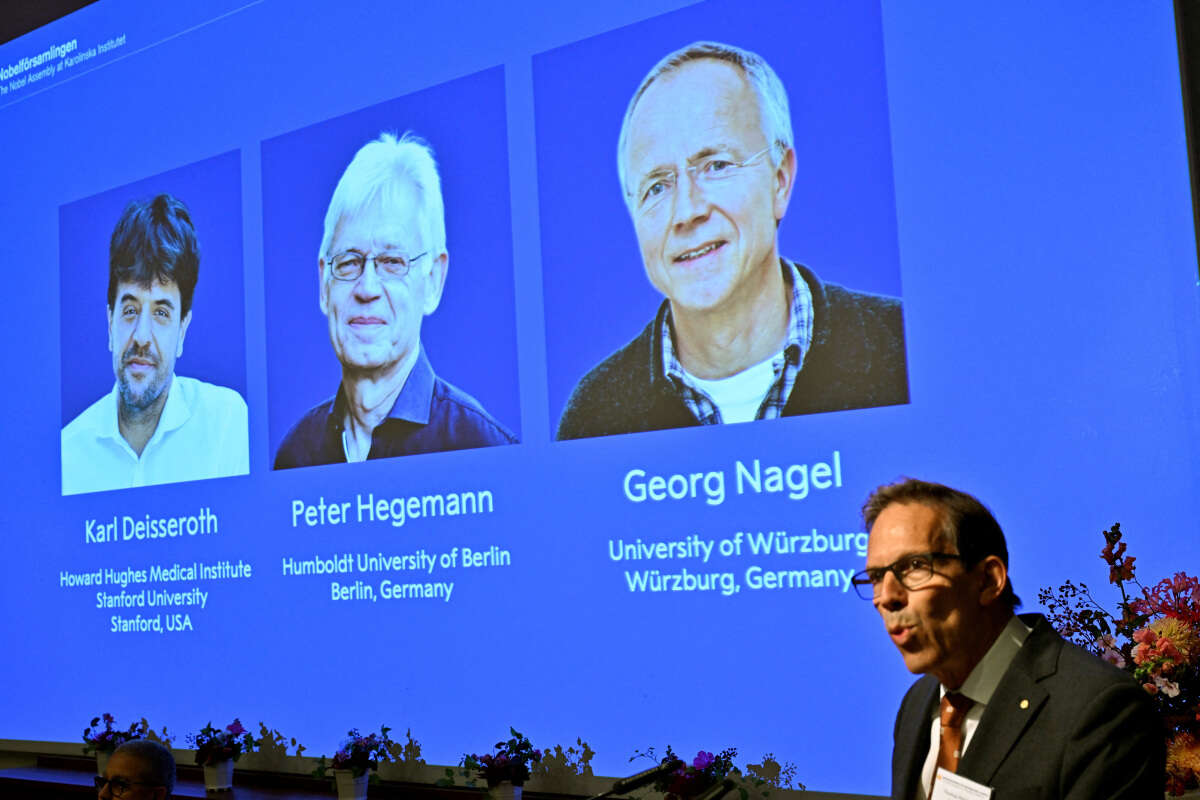
Three researchers behind optogenetics earned the Nobel Prize in medicine on Monday, The Associated Press reported. Karl Deisseroth, 54, Peter Hegemann, 71, and Georg Nagel, 73, developed light-controlled switches for nerve cells. Commending their work, the Nobel Assembly posted on X that the method "is now being used in laboratories around the world to reveal the brain's mysteries."
Deisseroth operates from Stanford University, Hegemann from Humboldt University in Berlin, and Nagel from the University of Würzburg. Receiving the call late at night in Northern California, Deisseroth recalled the moment. "No real sleep was achieved," he told The Associated Press after the announcement, while medicine committee secretary Thomas Perlmann confirmed contacting all three winners.
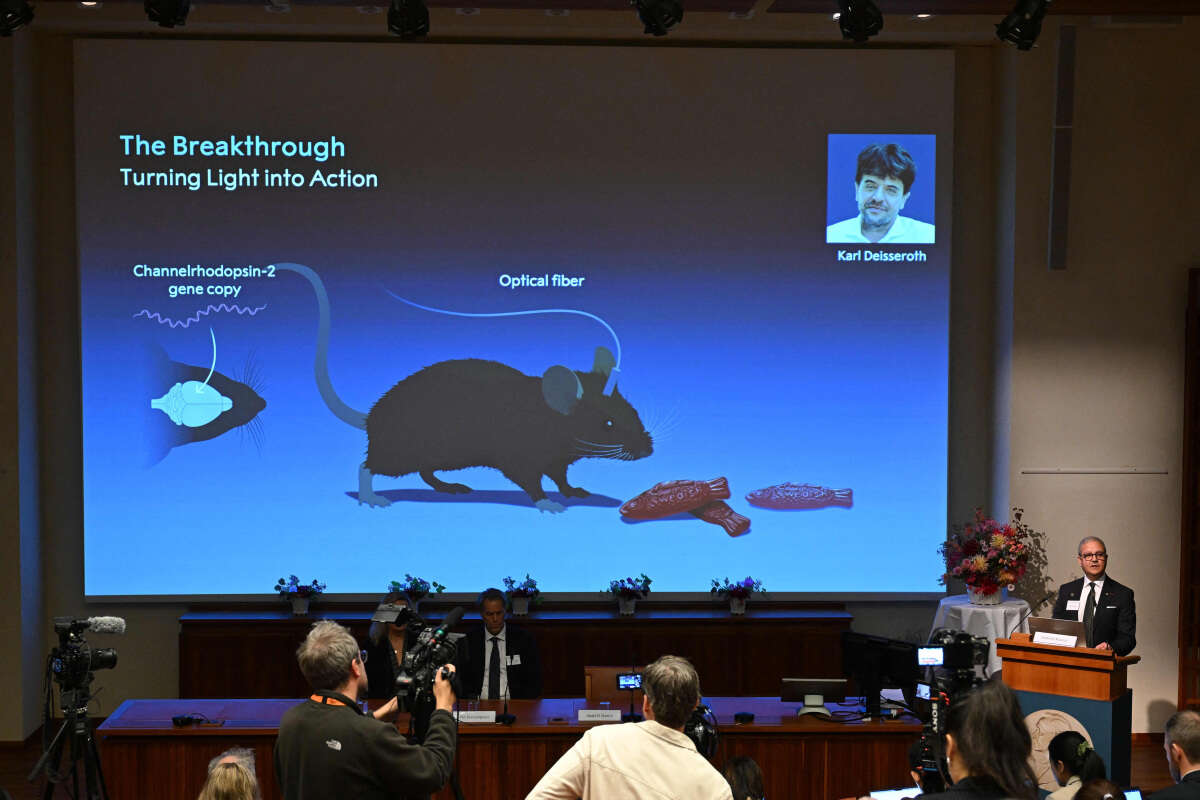
The breakthrough originated when Hegemann and Nagel identified a light-sensitive algal protein, allowing Deisseroth to engineer light-activated brain switches in mice. Unraveling neural networks driving behavior and illness, the discovery inaugurated a revolutionary era in neuroscience, The Associated Press noted.
Unveiled at Stockholm's Karolinska Institute, the 12 million Swedish kronor (about $1.2 million) award opens Nobel week ahead of physics, chemistry, literature, peace, and economics distinctions. The financial sum remains identical whether granted to individual laureates or shared organizations.
Who are the winners?
Karl Deisseroth
At Stanford University, American researcher Karl Deisseroth works actively across bioengineering, clinical psychiatry, and neuroscience. Following his 1992 graduation from Harvard University with a bachelor's degree in biochemical sciences, Deisseroth completed dual doctoral studies at Stanford in 1998 and 2000 for neuroscience and medicine, subsequently finishing his clinical residency, postdoctoral fellowship, and internship at the same institution.
In examining and steering synaptic pathways, Deisseroth converted channelrhodopsin – a light-activated protein identified by Hegemann and Nagel – into a targeted neural actuation mechanism. Through experimental trials in 2005, he triggered protein-bearing neurons via blue light exposure, before successfully executing the method within living rodent brains during 2007.
Peter Hegemann
Born in Munster in 1954, German biophysicist Peter Hegemann established his scientific career in molecular research. After pursuing chemical studies across Munster and Munich, Hegemann earned his doctorate in biochemistry at the Max Planck Institute of Biochemistry in 1984, where he subsequently directed a research laboratory prior to accepting professorships at the University of Regensburg and eventually Humboldt University of Berlin in 2004.
Through investigating how single-celled green algae known as Chlamydomonas reinhardtii sense optical signals to direct movement, Hegemann's lab uncovered channelrhodopsins, which form membrane-embedded ionic channels. Collaborating with Nagel, he proved that these specialized cellular structures enable direct electrical responses to light illumination.
Georg Nagel
Having been born in Weingarten in 1953, German biophysicist Georg Nagel pursued undergraduate coursework in biophysics and biology at the University of Konstanz before attaining his doctoral degree from Goethe University Frankfurt in 1988.
Upon concluding American postdoctoral fellowships at Yale University and Rockefeller University, Nagel returned home to manage a research team at Frankfurt's Max Planck Institute of Biophysics. In 2004, he moved to the University of Wurzburg.
Until 2021, he served as a professor of molecular plant physiology, later transitioning to senior professor status at the Institute of Physiology, where his ongoing study targets synthetic photoreceptors, membrane transport, and optogenetic tools.
By demonstrating that optical energy can induce cellular electrical shifts through channelrhodopsin, joint experimentation by Nagel and Hegemann supplied the indispensable foundation for modern optogenetics.