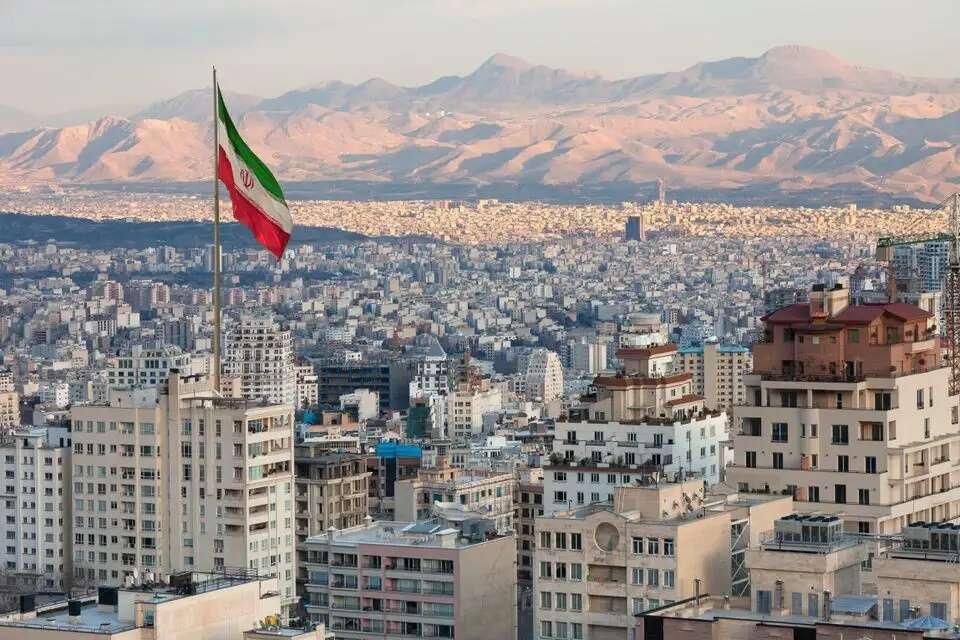
Iranian authorities have launched a crackdown on the country's nightlife and cafe culture after cafes and bookstores in the capital, Tehran, became popular venues for parties and social gatherings among young Iranians.
Col. Ali Rafiei, head of Greater Tehran's Public Places Police, banned live music, DJs and hookahs in cafes and said police would take action against businesses involved in such activities. He warned that businesses would continue to be shut down and sealed if they failed to enforce the compulsory hijab, hosted entertainment events or expressed support for protests.
This is the opening day for a new branch of a chain cafe in #Tehran ☕️ https://t.co/McJAJ499x4
— Living in Tehran (LiT) (@LivinginTehran) June 15, 2024
Over the past year, cafes in Tehran and other major Iranian cities have increasingly become gathering places for young people seeking an outlet amid a crippling economic crisis and the trauma of a prolonged war.
At a press conference, Rafiei said, "Cafes must operate solely within the framework of their trade association. Serving hookahs, holding live music performances, using DJs and activities related to gambling are among the issues against which police will take action."
The warning comes amid restrictions imposed on cafes in recent months, accompanied by business closures, arrests of operators and the revocation of licenses.
Between the beginning of August and Aug. 11, at least 42 cases of businesses being sealed were reported in cities across Iran, including cafes, restaurants, stores, sports clubs and a cultural center. During the same period, the Bol cafe-restaurant in Tehran's Velenjak neighborhood was shut down, while Hossein Salari, the deputy prosecutor in the northwestern city of Ardabil, announced the closure of three cafes and the arrests of 16 people. Other businesses shut down included the Arghavan cafe-bookstore in Mashhad and Zhavan Cafe in Minudasht.
Explaining how police deal with cafes, Rafiei said, "As soon as such cases are identified, police take action against the offending business. On the other hand, businesses operating in accordance with their designated category and license can prevent many of these violations." According to Rafiei, oversight of cafes is not limited to the services provided inside the establishments themselves.
The Tehran police official described Sanaei and Iranshahr streets as "narrow and crowded," saying that "the presence of certain young people without a defined purpose," together with cafe tables placed on sidewalks, contributed to congestion and public dissatisfaction.
He cited the obstruction of sidewalks as one reason cafes could be shut down, adding that before a closure, police warn operators and require them to sign a written pledge. According to Rafiei, continued activity that police classify as a violation can also result in the revocation of a business license.

Pressure on cafe owners is not limited to music and trade-association regulations. In the case of Sadegh Saeedinia, CEO of Saeedinia Real Estate and Industries and a supporter of the January protests, Iran's Supreme Court upheld a sentence that included imprisonment and the confiscation of all his property. Saeedinia was sentenced to 12 years, six months and one day in prison and barred from working in the cafe business for two years following his release. All cafe branches under his ownership were sealed following his arrest.
Iran's judiciary cited the posting of social media stories, participation in rallies, the closure of cafes and stores, and encouraging employees to take part in protests as examples of the security-related charges in the case.
The Saeedinia case, together with businesses being sealed over violations of the compulsory hijab and what authorities describe as "norm-breaking," illustrates how government oversight of businesses extends well beyond trade regulations to monitoring customers, entertainment programs and the political positions of business owners.