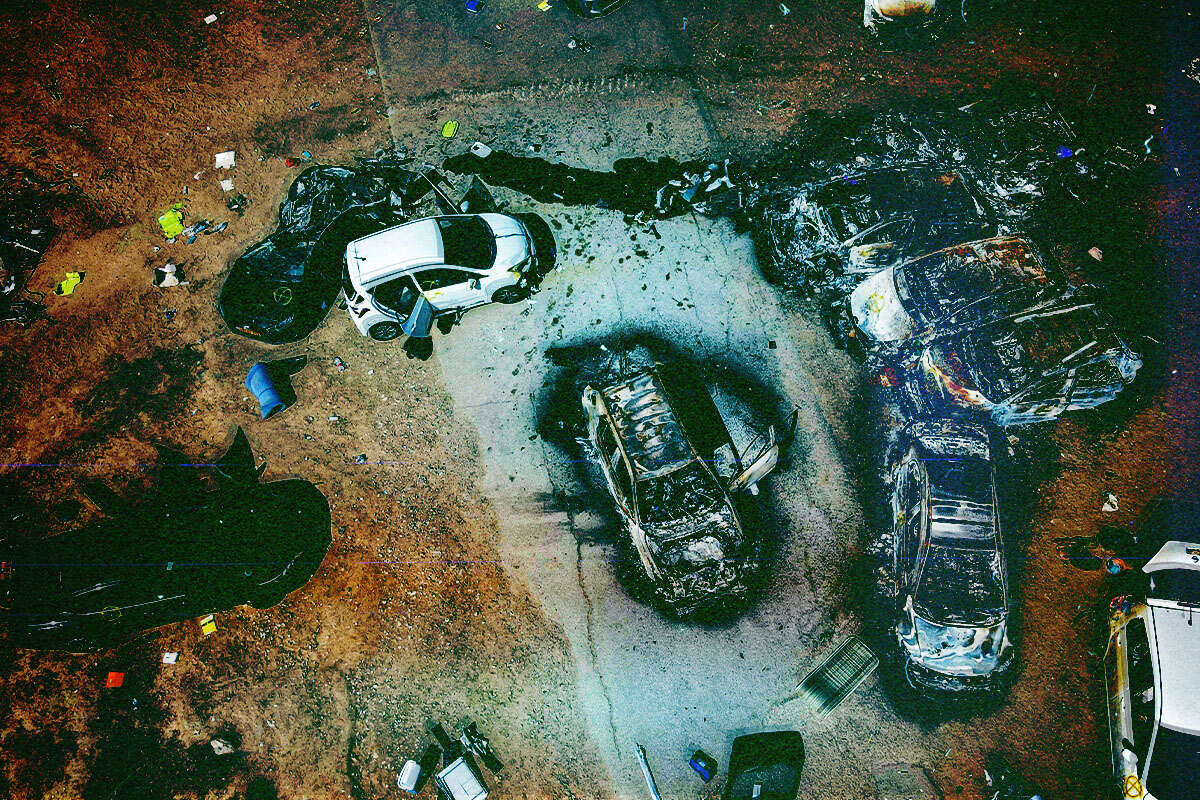
While some of the communities devastated on October 7 have returned to their homes and others are preparing to go back, planning for the national site memorializing that terrible day has not yet begun. Amid an ongoing struggle between the Heritage Ministry and KKL-JNF, and between the need to preserve the evidence and the desire to return to life, open questions remain about money, authority, and who gets to decide what this crucial project will look like.
As expected, the disputes are already playing out on the ground. In Kfar Aza, the debate centers on what will remain of the Dor Tza'ir neighborhood (a section built for young families). In Be'eri, officials have already decided to preserve only one testimony house. In Nir Oz, no decision has been reached yet. Behind the arguments over burned houses, personal objects, and memorial sites lies a far bigger question: who will tell the story, who will decide what gets preserved, and how will the communities' memories become a shared national legacy?
A law exists, a corporation doesn't
In September 2024, the government passed a decision meant to advance the creation of a national memorial corporation and site, after government ministries, the Tekuma Administration (the body overseeing the rebuilding of Gaza border communities), local authorities, public bodies, and individual families had all been commemorating the day separately, sometimes without any clear division of responsibility. In July 2026, the Knesset passed a law to commemorate the massacre and the heroism of October 7, aimed at creating the infrastructure for a national memorial authority, site, museum, archive, and information database in the western Negev.
Noa David-Biton, director of government and policy relations at Atid LaOtef (an advocacy group for Gaza border communities), pushed to bring the voices of border-area residents into the legislative discussions. "We attended every discussion, we were part of presenting positions, we brought the residents' voice to the table," she said. The organization conducted a survey among more than 1,300 participants, examining residents' views on memory and commemoration. "This law addresses the whole issue on a very macro level," she said, stressing that community involvement cannot be limited to voicing opinions during the legislative stage.
In Kfar Aza, as noted, the dispute has centered on the Dor Tza'ir neighborhood, where dozens of residents were murdered and many homes were destroyed. The question of whether to leave the houses as they remained after the massacre, relocate some of them, or build a memorial center elsewhere has become a charged community debate. On one hand, the structures are irreplaceable evidence. On the other, the recovering community needs to return to living there, rather than turning the neighborhood into a permanent tourist site.
After complex discussions involving bereaved families and survivors of captivity, 69% of voters supported the option of partially relocating the testimony houses to a nearby plot and building a memorial center outside the residential area, but the debate has remained charged, and the vote has not ended the dispute. The High Court of Justice is now expected to hold a hearing in November that could affect the rest of the process.
Tzion Regev, the community manager of Kfar Aza, describes the tension between the desire to preserve the disaster site and the need to let the community return to life. "We want to come back and live here, raise children here, and have a routine, but we also don't want the story to disappear or be forgotten," he said. According to him, the commemoration should convey to future generations not only the scale of the destruction, but also the community's resilience. "The story can't be reduced to pictures of burned houses. We also need to tell people about the emergency response team, about the mutual aid, about the courage, and about everything we've been through since."
In Be'eri, officials decided to preserve only one house, while also dismantling the clinic in order to partially reconstruct it. In Nir Oz, where many residents were murdered or kidnapped, no decision has yet been reached regarding the damaged homes.
Emi Palmor, the project director for Nir Oz's recovery, believes a separation is necessary. "Don't mix up the memorial corporation with the need and the right of every kibbutz to do its own internal work," she explained. According to her, if a meaningful national memorial site already existed, some of the disputes over the burned houses might look different. "Theoretically, if it existed, it would change part of the debate. But it's very hard, within three years, to put together something that carries real weight."
Tension between community and state
Meanwhile, Nir Oz residents, who are expected to return to the kibbutz only in the summer of 2027, have set up a memorial space in a building that once served as the kibbutz library, with the help of a donation of roughly 1 million shekels (approximately $278,000) from the Jewish Federation of Chicago. "The memorial space is impressive, moving, and modest, inside what used to be the kibbutz library," Palmor said.
Getting help from the Heritage Ministry wasn't simple either. The kibbutz was required to sign a detailed agreement with the Government Tourism Corporation, which, according to Palmor, includes clauses granting the ministry authority over the exhibit's content and use. "It gives the Heritage Ministry veto power and copyright, at its own discretion, to move the exhibit or translate it into English, for example; what exactly the statements will say is up to its discretion."
For Palmor, the concern isn't just who will preserve the burned houses, but also who will decide in which words Nir Oz's story gets told. At the same time, she stresses that the goal must be a living kibbutz that remembers what happened, not a memorial site where life has stopped.
The Ministry of Heritage rejects any suggestion of improper interference. Heritage Minister Amichai Eliyahu claims that the copyright and authority clauses over the produced materials are part of standard arrangements used whenever the state funds and takes part in a project. According to him, this is a standard mechanism the state uses in projects where it invests resources, not an attempt to control how Nir Oz tells its story.
As for how the event is defined, Eliyahu made clear that, in his view, there is no attempt here to obscure what happened. "They call it a massacre, of course," he said. His remarks came amid the dispute over how the October 7 attack would be presented within the memorial projects, and the allegations of state interference.
Between KKL-JNF and the Heritage Ministry
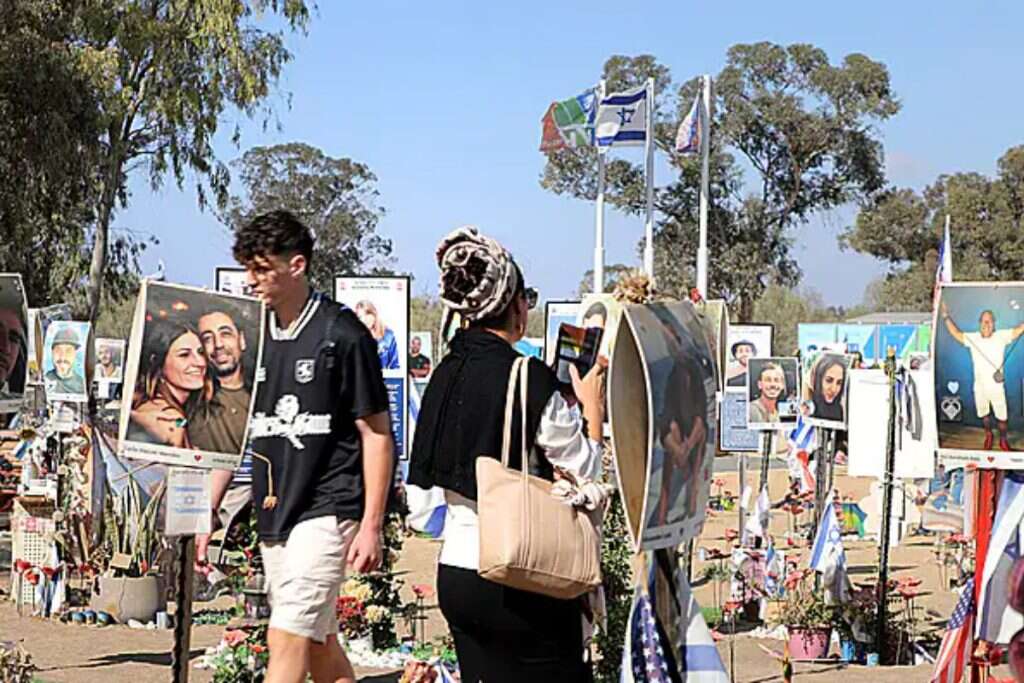
The dispute over the extent of state involvement in local commemoration has drawn in KKL-JNF, which has helped establish memorial sites in the Gaza border communities, including the memorial site for the Nova festival at the Re'im junction, and has promoted the Swords of Iron Forest, where trees have been dedicated in memory of those murdered and fallen.
KKL-JNF chairman Eyal Ostrinsky believes the organization should provide resources and infrastructure, but leave the decision on local commemoration to the communities themselves. In Kfar Aza, he said, 15 million shekels (approximately $4.2 million) were allocated for the memorial plan, without KKL-JNF holding any veto power over the community's decisions. "Getting involved inside communities and dictating how they should tell their own story, that's not appropriate," he said.
The dispute between KKL-JNF and the Heritage Ministry also touched on the Kfar Aza issue, and on how findings and testimony should be preserved and presented. Eliyahu rejects Ostrinsky's claims and argues that what the KKL-JNF chairman is saying is false. According to him, the claim that the Heritage Ministry sought to interfere in the content of the Kfar Aza memorial is not true.
Michal Uziyahu, head of the Eshkol Regional Council, also criticizes the Heritage Ministry's conduct and expresses gratitude for KKL-JNF's support. According to her, the dispute concerns the residents' right to decide what happens on the ground where the disaster unfolded. "Sometimes what's right for one side is the most painful thing for the other. We need to understand that both sides are coming from a good place, and that one person's aspiration is another person's pain," she said. "This is interference in our personal home space."
A race against time
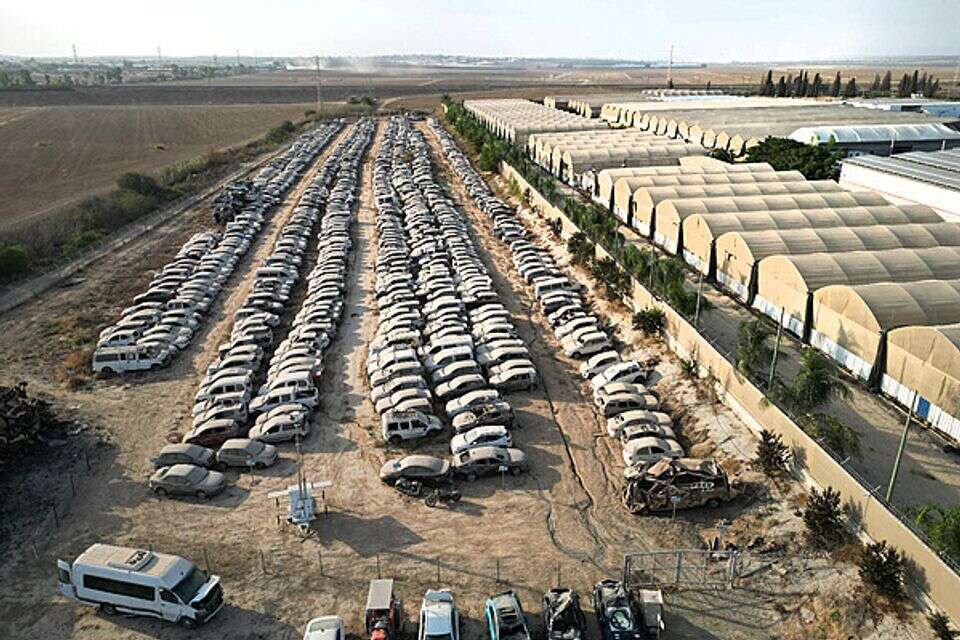
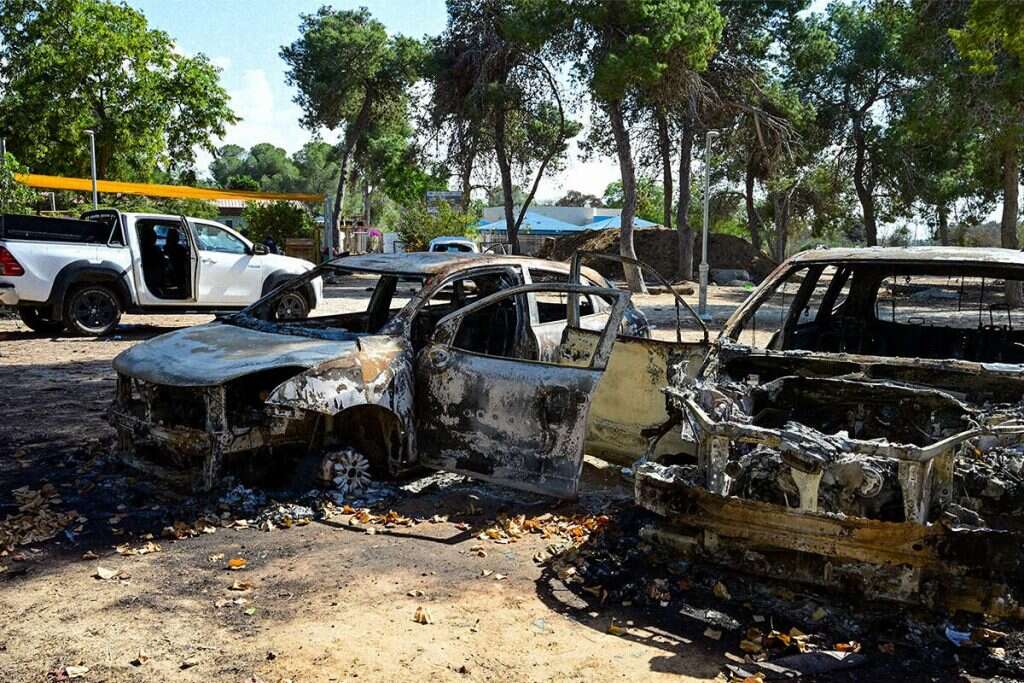
At the same time, the Government Tourism Corporation is advancing memorial projects in about 20 Gaza border communities. Among the projects are a visitor center at Mitzpe Kobi (a lookout point near the Gaza border), a memorial at the Sderot police station, and a site for damaged vehicles, where QR codes lead to information about the events. But the local and national initiatives still aren't operating as part of one clear plan, and the budgets aren't sufficient.
The gap between the pace of reconstruction and the pace of national planning keeps widening. In Kfar Aza, a High Court of Justice hearing is expected in November. In Nir Oz, no decision has been reached yet. And in Be'eri and Nir Oz, residents are preparing to return home in the summer of 2027. Planning for the national memorial site is not expected to begin until January 2027, after the corporation is established.
As a result, communities are being forced to make irreversible decisions about the damaged buildings, without knowing what the national plan will look like or where these structures will even fit into it. On one hand, preserving them may be the only way to keep evidence nothing else can replace. On the other hand, these are also the houses, and the neighborhoods, where people simply want to live again.