Tuesday Nov 10, 2026
NEWSLETTER
www.israelhayom.com
  • Home
  • News
    • Israel
    • Israel at War
    • Middle East
    • United States
  • Opinions
  • Jewish World
    • Archaeology
    • Antisemitism
  • Lifestyle
    • Food
    • Travel
    • Fashion
    • Culture
  • Magazine
    • Feature
    • Analysis
    • Explainer
  • In Memoriam
www.israelhayom.com
Home Archaeology

2,800-year-old curse reveals surprising detail about Kingdom of Judah

Limestone tablet from the Hebron area bears a curse in ancient Hebrew and the earliest known extrabiblical reference to the title "Lord of Hosts". Find indicates the divine name and title were in use in the Kingdom of Judah during the First Temple period. The Stone is now on display in the "Six After the War" exhibition at the Bible Lands Museum Jerusalem. 

by  Assaf Golan
Published on  10-08-2026 06:00
Last modified: 10-08-2026 09:10
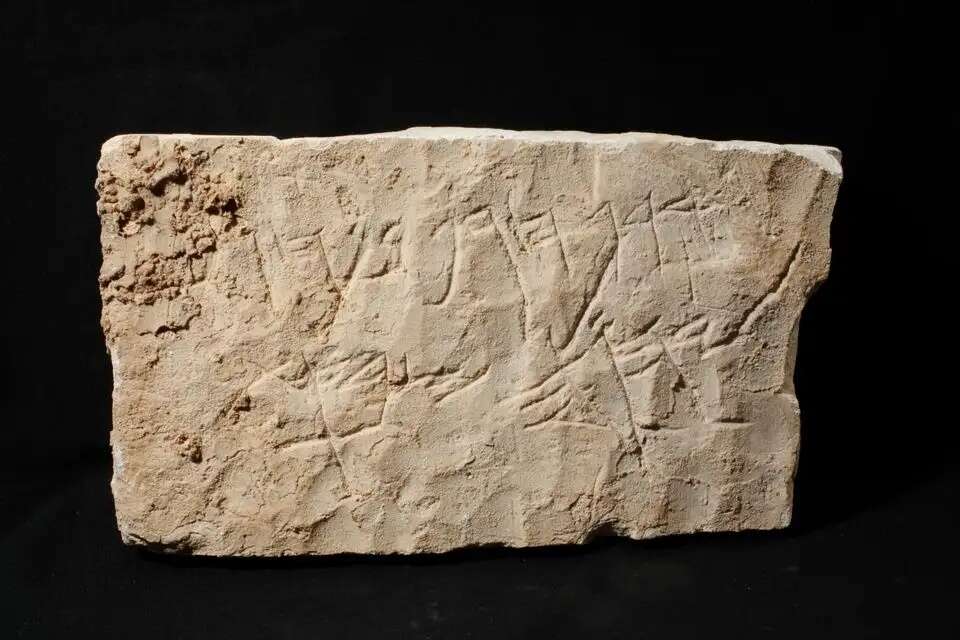
2,800-year-old curse reveals surprising detail about Kingdom of Judah

Ancient Hebrew curse inscription mentioning the "Lord of Hosts," southern Hebron Hills, eighth century BCE | Photo: Bible Lands Museum Jerusalem

Share on FacebookShare on Twitter

An ancient Hebrew inscription discovered on a limestone tablet in the Hebron area offers a rare glimpse into the religious beliefs and language of the Kingdom of Judah during the First Temple period.

The tablet, dated to the eighth century BCE, bears a curse against a man named Hagaf son of Hagav: "Cursed be Hagaf son of Hagav by Yahweh Sabaot." The inscription is considered the earliest known extrabiblical reference to the divine title "Lord of Hosts."  The find indicates that the divine name and the title "Hosts," evoking a God who goes into battle at the head of his people or commands the armies of heaven, were already in use among the inhabitants of the Kingdom of Judah at the time.

Beyond the inscription itself, nothing is known about Hagaf's identity or what he did to incur such a severe curse. The small artifact, however, tells a much broader historical story. The stone is now on public display as part of "Six After the War," an exhibition at Bible Lands Museum Jerusalem exploring ancient wars and enduring questions about victory, peace and the fate of the defeated.

Alongside the curse tablet, the exhibition brings together an unusual collection of historical and artistic objects: an inscription by Assyrian King Sennacherib boasting of his devastation of Judah, juxtaposed with the prophecy of Isaiah that the Lord of Hosts would defend Jerusalem; an Assyrian relief depicting Judean exiles that was confiscated by the Nazis and later returned to Jewish hands; a statue of Egyptian Pharaoh Ramesses II; and a reconstruction of the Battle of Kadesh.

Other exhibits include a bent sword, a replica of which was presented by Israeli Prime Minister Menachem Begin to Egyptian President Anwar Sadat at the signing of the Israel-Egypt peace treaty; a modern rendition of the Shield of Achilles; and photographs from a pop-up exhibition by artist Assi Meshullam inspired by the Lachish reliefs.
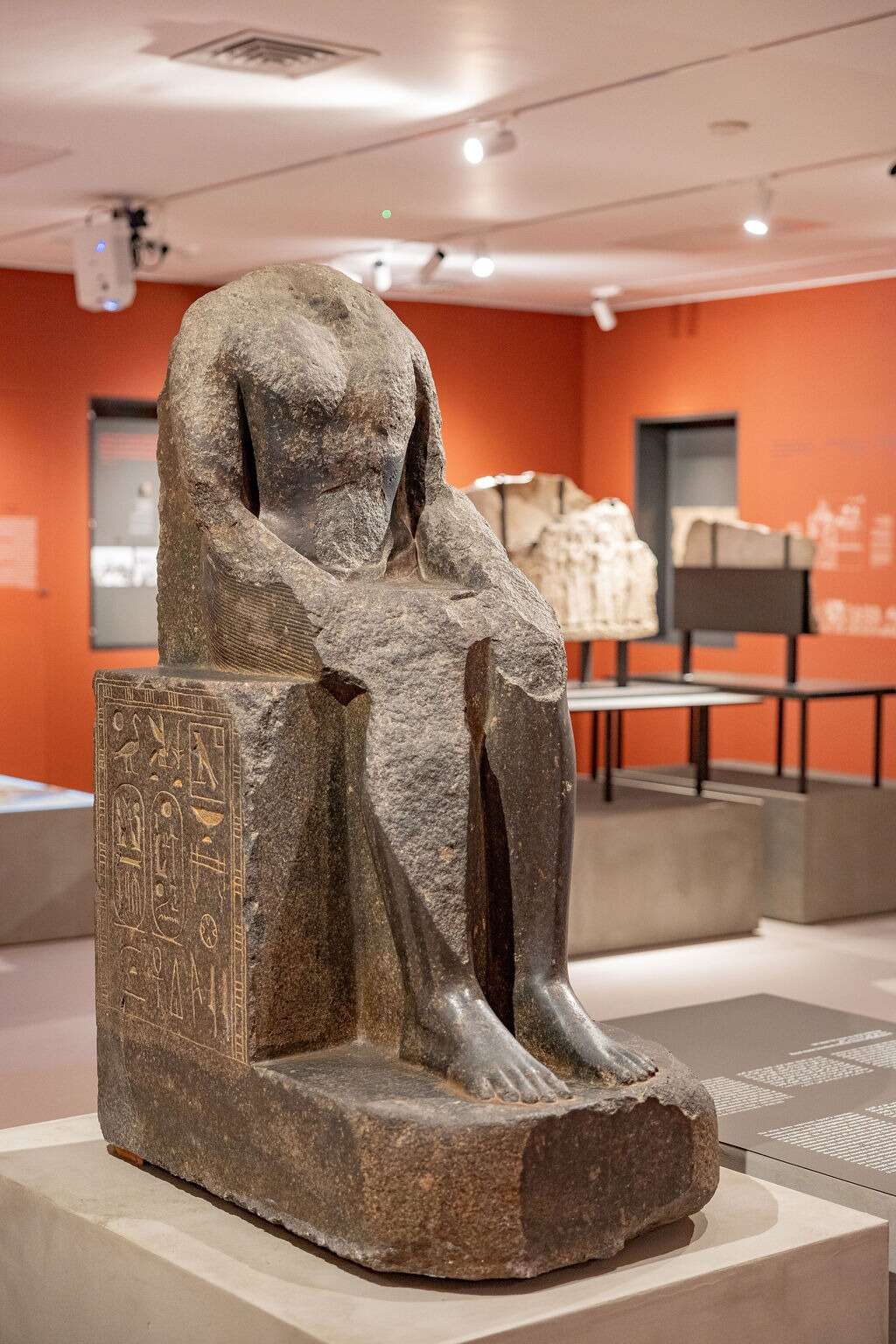
פסל רעמסס השני מגרניט שחור, שהתגלה באסיוט שבמצרים ומתוארך לתקופת שלטונו (1279–1213 לפנה"ס) , יעל אילן, באדיבות מוזיאון ארצות המקרא ירושלים
Black granite statue of Ramesses II, discovered in Asyut, Egypt, and dated to his reign (1279-1213 BCE) | Photo: Yael Ilan, courtesy of Bible Lands Museum Jerusalem

The exhibition takes its name from Czech author Jaroslav Hašek's novel "The Good Soldier Švejk" and the expression "We'll meet at six after the war."

In its final section, visitors encounter ancient symbols of peace: coins depicting Pax, the Roman goddess of peace, carrying olive branches; a winged staff that signaled the opening of negotiations to halt hostilities; and a gilded olive wreath from the third century BCE associated with the Olympic truce.

"Ancient wars turn out to be astonishingly modern, and their stories remain relevant today," said Dr. Risa Levitt, executive director and chief curator of Bible Lands Museum Jerusalem. "There are competing narratives and strategic deception, but there is also room for hope."
Tags: First TempleHebron

Related Posts

Student discovers 3,300-year-old scarab amulet at Tel Gezer National ParkAssaf Peretz, Israel Antiquities Authority

Student discovers 3,300-year-old scarab amulet at Tel Gezer National Park

by Lidor Sultan

Shilo Atoun, 17, reported the cobra-decorated find to the Israel Antiquities Authority. An inspector then collected it for the State...

Did researchers just find Noah's ark? 3D radar scan reveals hidden Turkey structuresGetty Images

Did researchers just find Noah's ark? 3D radar scan reveals hidden Turkey structures

by Assaf Golan

A new radar scan of a mysterious formation in eastern Turkey has revived one of history's oldest debates, whether the...

Rare First Temple-Era figurine mold unearthed in Jerusalem

Rare First Temple-Era figurine mold unearthed in Jerusalem

by Lidor Sultan

A rare mold used to create the face of a female figurine has been uncovered in a recent Israel Antiquities...

Menu

Analysis 

Archaeology

Blogpost

Business & Finance

Culture

Exclusive

Explainer

Environment


Features

Health

In Brief

Jewish World

Judea and Samaria

Lifestyle

Cyber & Internet

Sports


Diplomacy 

Iran & The Gulf

Gaza Strip

Politics

Shopping

Terms of use

Privacy Policy

Submissions

Contact Us

About Us

The first issue of Israel Hayom appeared on July 30, 2007. Israel Hayom was founded on the belief that the Israeli public deserves better, more balanced and more accurate journalism. Journalism that speaks, not shouts. Journalism of a different kind. And free of charge.

All rights reserved to Israel Hayom

Hosted by sPD.co.il

  • Home
  • News
    • Israel at War
    • Israel
    • United States
    • Middle East
    • Sports
  • Opinions
  • Jewish World
    • Archaeology
    • Antisemitism
  • Lifestyle
    • Food
    • Travel
    • Fashion
    • Culture
  • Magazine
    • Feature
    • Analysis
    • Explainer
    • Environment & Wildlife
    • Health & Wellness
  • In Memoriam
  • Subscribe to Newsletter
  • Submit your opinion
  • Terms and conditions

All rights reserved to Israel Hayom

Hosted by sPD.co.il

Newsletter

[contact-form-7 id=”508379″ html_id=”isrh_form_Newsletter_en” title=”newsletter_subscribe”]

  • Home
  • News
    • Israel at War
    • Israel
    • United States
    • Middle East
    • Sports
  • Opinions
  • Jewish World
    • Archaeology
    • Antisemitism
  • Lifestyle
    • Food
    • Travel
    • Fashion
    • Culture
  • Magazine
    • Feature
    • Analysis
    • Explainer
    • Environment & Wildlife
    • Health & Wellness
  • In Memoriam
  • Subscribe to Newsletter
  • Submit your opinion
  • Terms and conditions

All rights reserved to Israel Hayom

Hosted by sPD.co.il