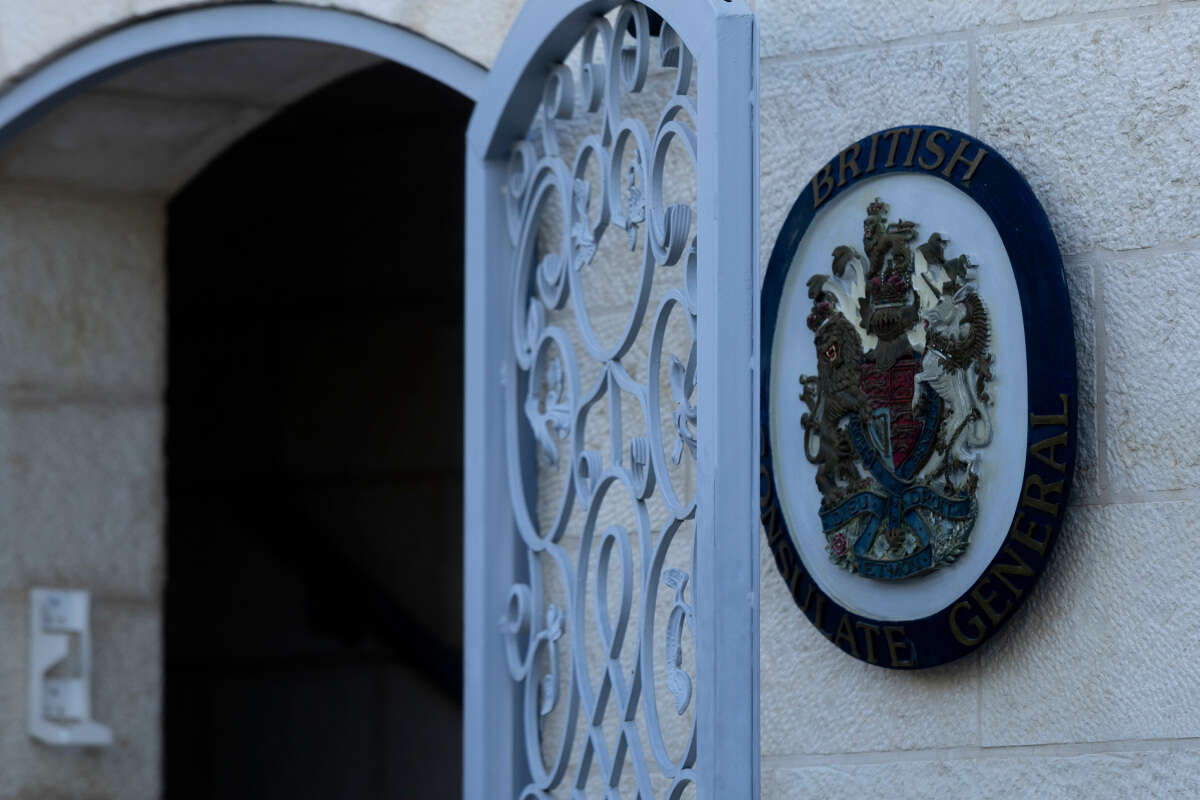
Just weeks after Israel ordered the UK's east Jerusalem Consulate General to shut its doors and its staff to vacate in retaliation for London's anti-settlement measures, the two sides reached an 11th-hour compromise that was announced on Thursday.
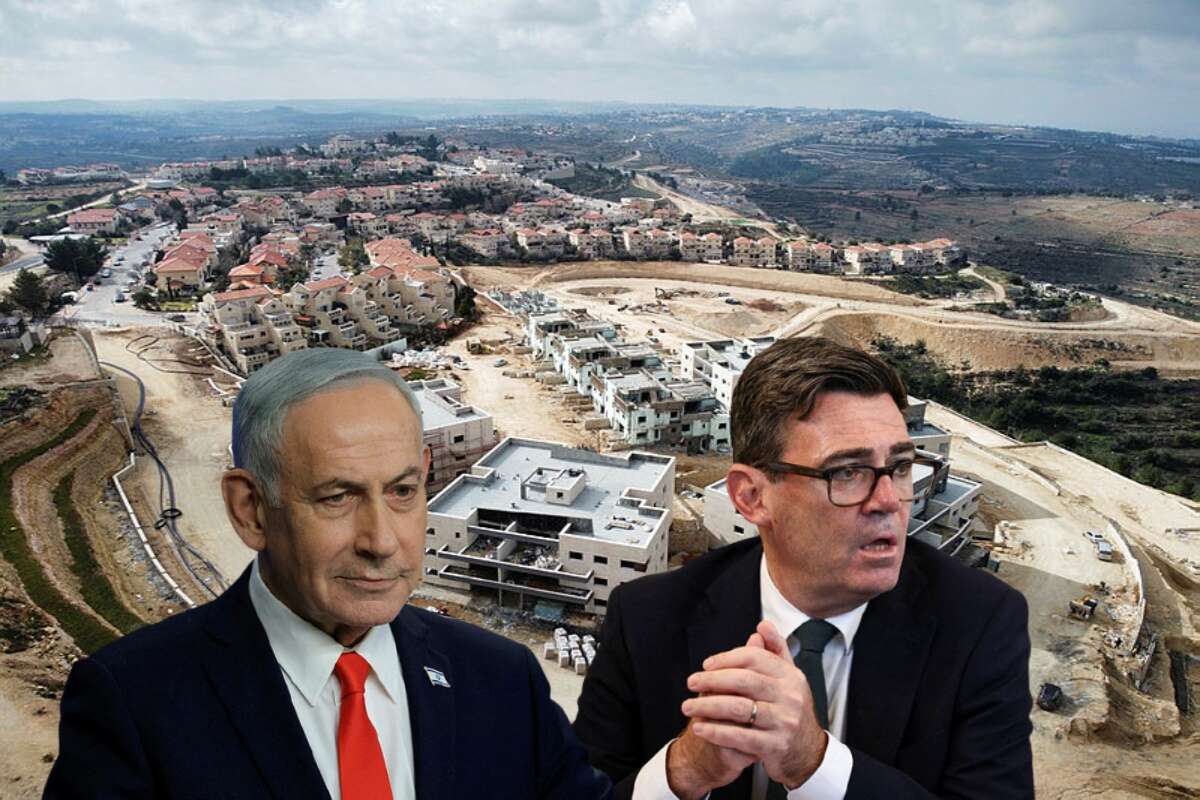
Under understandings reached Wednesday night between Jerusalem and London, the consul general and 19 diplomats will leave Israel. Although the British Consulate General in Jerusalem will no longer have a sign at the building's entrance bearing that title, it will retain its status as an official diplomatic mission serving Palestinians with a scaled-down presence, rebranded as "UK Mission, Jerusalem" and reporting directly to the UK Foreign Office.
"As I announced, the British Consulate in Jerusalem ended its role today. The Consul General and 19 diplomats are ending their assignments and will leave Israel," Foreign Minister Gideon Sa'ar said on X.
The Israeli Foreign Ministry authorized the British to operate a reduced task force of just seven diplomats at the site. The two countries also agreed to continue a dialogue to address the points of contention and prevent further deterioration in relations, with Britain, under the understandings, refraining from taking any further response measures.
A series of sanctions and deteriorating relations
Foreign Minister Gideon Sa'ar addressed the move and made clear that Israel did not want to reach this point, but noted that actions by Britain's Labour government had driven the crisis. He said that since taking office in July 2024, the British government had adopted a series of unilateral measures, including the suspension of defense export licenses, the renewal of funding to UNRWA (the UN agency for Palestinian refugees), and the imposition of sanctions on Israeli ministers and individuals.
Following these measures, the Foreign Ministry carried out a series of response measures announced in early September. The measures included removing British representatives from the international aid center for Gaza in Kiryat Gat, halting British activity training Palestinian Authority forces in Judea and Samaria, and barring a dozen British citizens and elected officials, whom the ministry alleges are involved in anti-Israel activity, from entering Israel.
"The era of acceptance has ended"
Alongside his criticism of London, the foreign minister acknowledged that relations between the two countries were important and included security and intelligence cooperation. As an example, Sa'ar noted that Israel had recently passed Britain vital information in the case involving the Royal Air Force base in Fairford (RAF Fairford).
Regarding the future of relations, Sa'ar made clear that he could not guarantee further crises would not erupt, and stressed that Jerusalem wanted good relations with every country in the world. "I cannot promise that there will not be further crises in the future. If there are, we will face them on the basis of our core principles. It is important to emphasize again that we did not initiate the current situation," he said. "We are interested in good relations with all the countries of the world. But any country that acts against Israel must know that there will be a price for doing so."
Over the past week, we held a dialogue with the British Government with the aim of preventing further deterioration in relations between the countries as a result of the closure of the Consulate.
Last night, we reached understandings based on the following principles:
1. As I announced, the British Consulate in Jerusalem ended its role today. The Consul General and 19 diplomats are ending their assignments and will leave Israel.
2. The building that served as the Consulate is the property of the British Government. We have allowed the British Government to operate a task force of only seven diplomats from the building, which ceased to function as a consulate today. Their scope of activity will be very limited.
3. We agreed on the continuation of dialogue between the governments, within which both sides will be able to raise issues important to them.
We believe in dialogue and will continue to believe in dialogue. Unfortunately, in recent years, no genuine dialogue has taken place with the Labour Government. This is despite good relations with Britain, reflected, among other things, in security and intelligence cooperation. Relations between Israel and Britain are important and have repeatedly proven their value also in protecting the lives and interests of British citizens. Only recently, Israel provided Britain with vital information in the RAF Fairford affair.
All four measures in my statement of 8 September have been implemented.
Alongside this, we reached understandings that serve Israel's interests.
In accordance with the understandings we reached, no measures will be taken against Israel as a result of the implementation of the decisions.
I thank everyone who was involved in the dialogue and discussions and contributed to reaching the understandings on both sides.
I cannot promise that there will not be further crises in the future. If there are, we will face them on the basis of our core principles. It is important to emphasise again that we did not initiate the current situation.
We are interested in good relations with all the countries of the world. But any country that acts against Israel must know that there will be a price for doing so.
It will not gain from this, but quite the opposite.
Israel will no longer turn its cheek to diplomatic attacks against it.
— Gideon Sa'ar | גדעון סער (@gidonsaar) October 8, 2026
Still, he closed his remarks with a firm message, declaring that any country acting against Israel should bear in mind that Israel's attitude has changed. "Israel will no longer turn its cheek to diplomatic attacks against it."
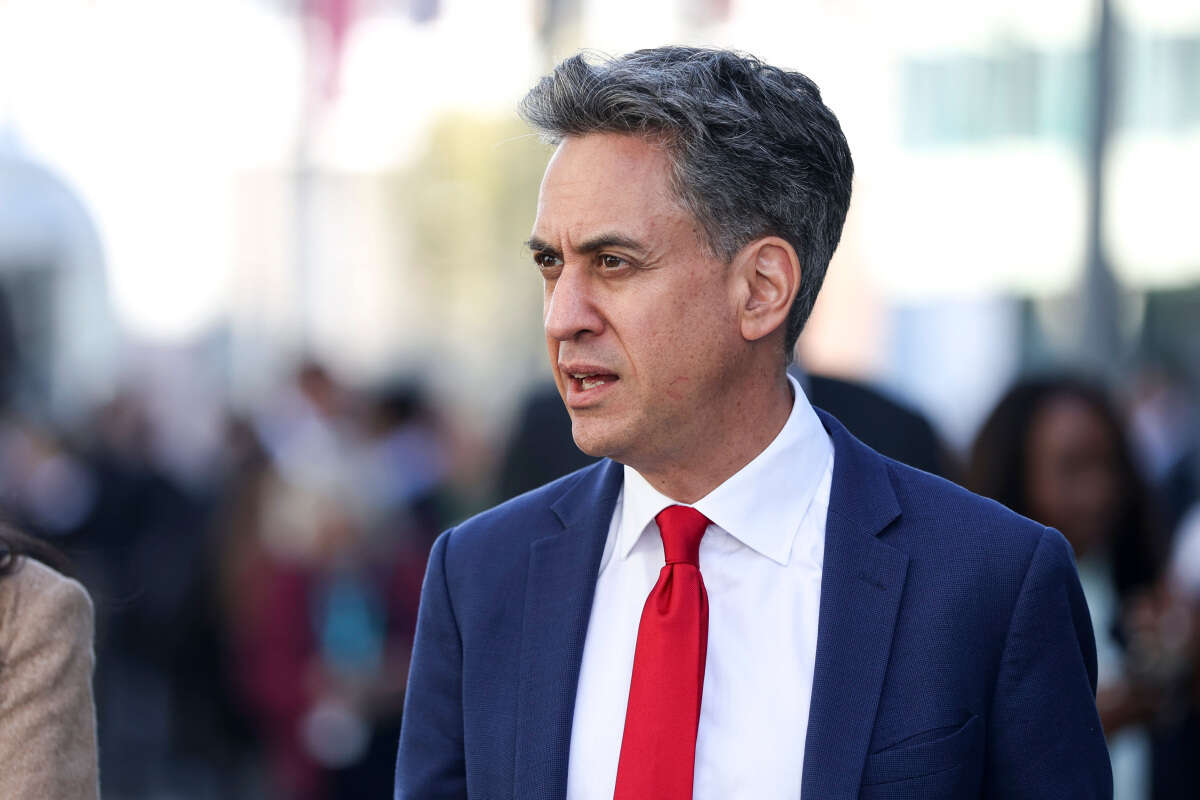
UK Foreign Secretary Ed Miliband struck a defiant tone in a statement published simultaneously. "We have been clear that we do not accept that the Government of Israel has the legal right to close the British Consulate General in Jerusalem, which has been there for nearly 200 years. The UK government reiterates its long-standing view that East Jerusalem is occupied territory. Following discussions with the Government of Israel, our Consulate General building will not be closing, and will be known as the UK Mission, Jerusalem from today. The UK Mission, Jerusalem is independent, operational, and will continue to deliver vital services and our work with the Palestinian people."
He added that the "UK has temporarily withdrawn a number of staff and families to ensure their safety and security," and noted that the newly branded building will continue to serve in the same volume. "We will work in the coming months to build back up our presence, and we will not take reciprocal action while such discussions are underway and credible," he said, adding that it would not back down from its various measures targeting Israeli settlements and settlers. "The UK stands steadfast by the measures we took on 8 September, in concert with the international community, in support of a two-state solution to deliver peace and security for the people of Israel and Palestine."